Haplogroup I2a1a1a1

– 5 min read


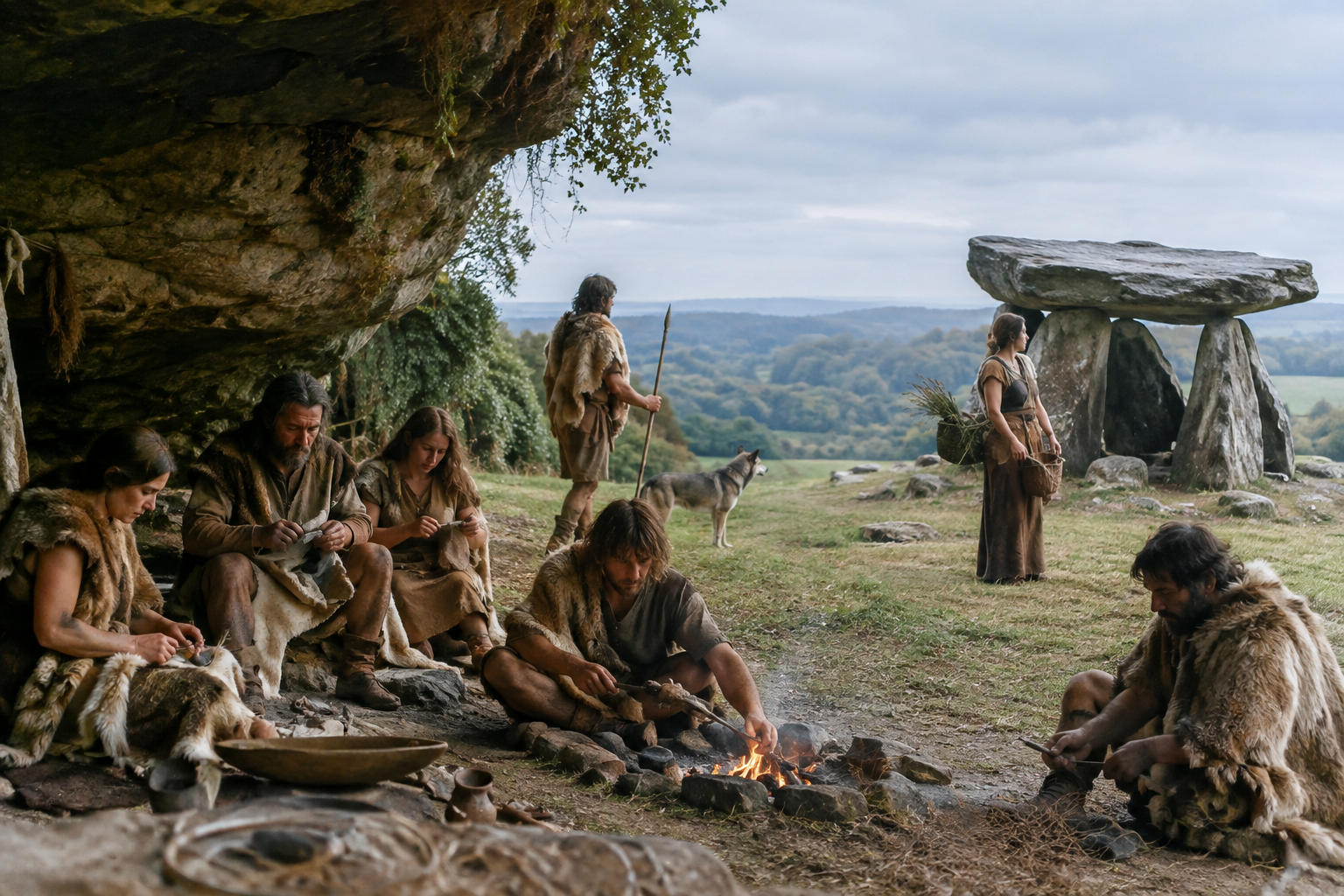
At Abri Sandron in Belgium, several late Neolithic men dated to roughly 2884-2691 BC have been associated with Y-DNA haplogroup I2a1a1a1. That is immediately interesting because Abri Sandron is not a lone burial standing in splendid isolation. It is a small cluster, with individuals including I13633, I13659, I13655, and I13660, all from the same shelter site and all pointing toward the survival of a paternal line that had deep roots in prehistoric Europe even as farming societies were changing the continent.
That is the first thing to keep in view with a lineage like I2a1a1a1: Y-DNA follows one direct paternal line only. It does not describe the whole ancestry of a person or a community. But when the same branch appears repeatedly at a site, and then turns up again in neighboring regions and later periods, it can tell us something valuable about continuity, local male lines, and the complicated human landscape of later prehistory.
The Abri Sandron samples are the clearest concentration in this set. Four men from the site, all late Neolithic in date, are linked here with I2a1a1a1: I13633 and I13659, both around 2884-2863 BC, and I13655 and I13660, around 2691 BC. Even without embellishing the archaeology beyond what is documented in the sample data, that pattern matters. A repeated Y-line at one shelter suggests that this was not a one-off arrival, but part of a local male presence persisting across generations.
Belgium in the later Neolithic was a place of contact, inheritance, and change. Farming had long been established, but older European hunter-gatherer-derived paternal lineages did not simply vanish the moment agriculture arrived. Quite the reverse: some of them continued within farming communities, sometimes quite stubbornly. A broad ancient-DNA picture of western Eurasia, discussed in research on regional adaptation in ancient western Eurasian genomes, has helped underline how local populations could preserve older ancestry components while participating in new economies and social worlds.
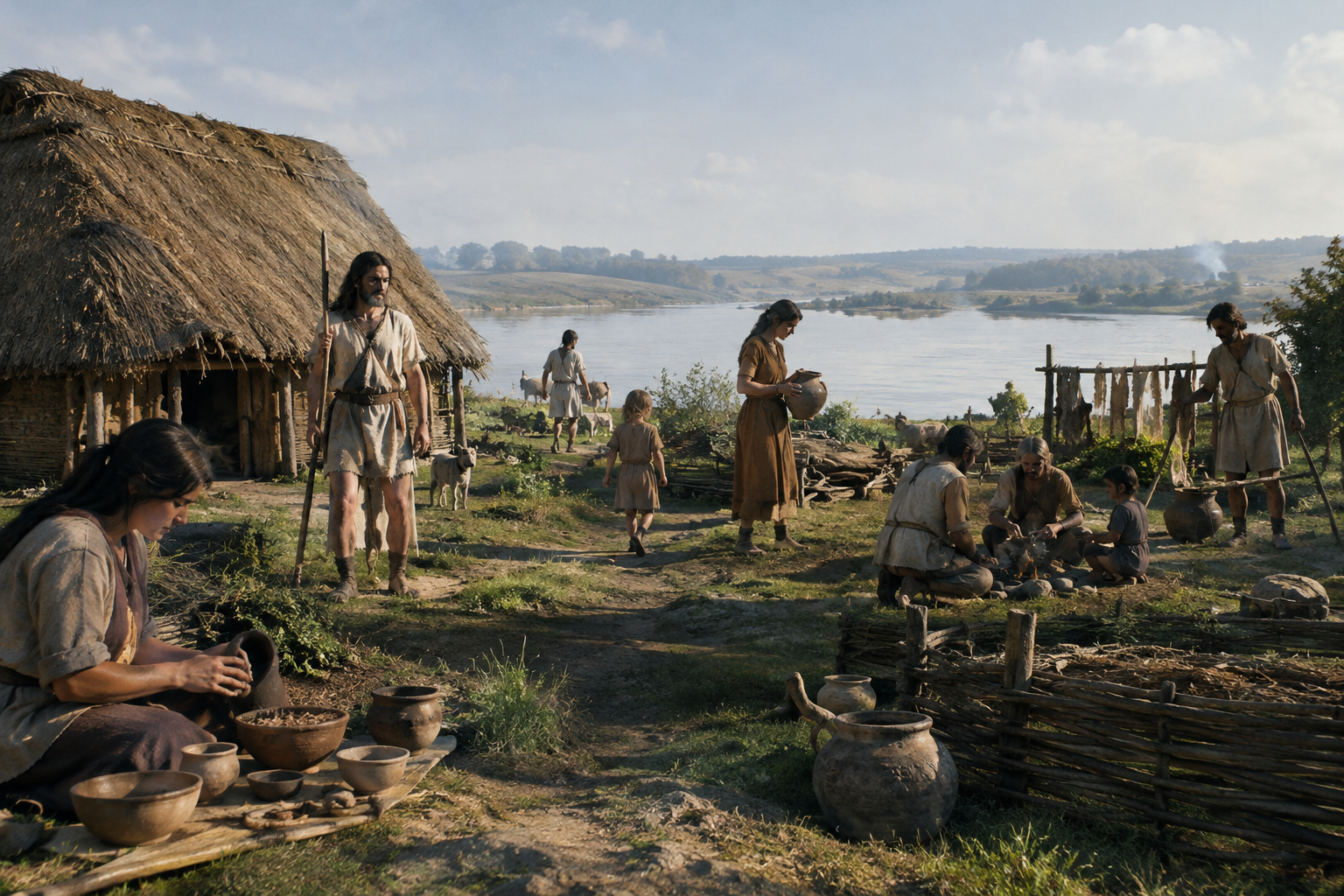
For I2a1a1a1, Abri Sandron therefore offers a useful historical frame. This is not a branch floating abstractly on a tree diagram. It is attached to named individuals at a real place in the Meuse basin world, during a period when communities were negotiating ancestry, territory, and memory in a landscape already thick with centuries of human occupation.
I2a1a1a1 belongs to the wider haplogroup I, one of the old European Y-chromosome families. The wider I2 branches are often associated, in broad prehistoric terms, with lineages present in Europe before and during the spread of farming. But the narrower label in this article is important. One should not lazily pour the entire history of haplogroup I2 into the much more specific container of I2a1a1a1.
What the present evidence does support is that this branch appears here in later Neolithic and early Bronze Age contexts in parts of western Europe, especially around Belgium and France. That places it in communities living after the first great spread of agriculture, yet before the fully transformed social and demographic landscapes of later Bronze Age Europe. In other words, it seems to belong to the long middle chapter of European prehistory, when old lines persisted within new societies.
The pattern does not stop in Belgium. An individual from the Dolmen Des Fades in France, sample FAD3_R1_001, dated to around 2400 BC, is also associated with I2a1a1a1. So too is I16247 from Martincourt in Meurthe-et-Moselle, dated to around 2473 BC. These are valuable comparisons because they show the branch in two different early Bronze Age French settings rather than at a single site alone.
Dolmen Des Fades is especially evocative because megalithic monuments carry a long afterlife. They are not merely graves; they are statements in stone about landscape, ancestry, and communal memory. One must be careful not to assume that every man buried in or around such monuments belonged to the same paternal dynasty, but it is perfectly fair to say that a Y-line turning up in this context has entered a world where descent and remembrance mattered enough to be monumentalized.
A genetic study accessible through this ancient DNA research on Neolithic France has drawn attention to the complexity of ancestry and social structure in French Neolithic populations. Even where the precise site-by-site implications differ, the broader lesson is relevant: paternal lines in Neolithic and early Bronze Age western Europe were not simple proxies for culture. The same Y-branch could persist through cultural transitions, monument reuse, and regional interaction.
Martincourt, in present-day northeastern France, sits in a region that has long been a corridor between the Paris Basin, the Rhine world, and the uplands farther east. Sample I16247, dated to around 2473 BC, gives I2a1a1a1 a place in that frontier zone. That matters because it shows the branch not only in a Belgian shelter cluster and a French dolmen, but also in a region defined by movement and overlap.
This does not prove a single migrating family trekking from one burial site to the next. It does, however, suggest that the branch belonged to populations participating in the interconnected worlds of later Neolithic and early Bronze Age northwestern Europe. Archaeology has long shown that objects, ideas, and burial practices moved across these regions. The Y-DNA evidence hints that some local paternal lines moved through that same network, or endured within it, rather than being replaced wholesale.
The notable thing about this small set is not celebrity, nor royal glamour, but repetition. Four late Neolithic men at Abri Sandron, then early Bronze Age examples in France, point to persistence across both time and region. For anyone interested in prehistoric population history, that is often more revealing than a single spectacular burial.
It also fits a wider archaeological theme now seen again and again in ancient DNA: the spread of farming, megalith-building, and later Bronze Age transformations did not erase every earlier paternal thread. Some male lines with older European roots remained in circulation, sometimes locally concentrated, sometimes carried into new social settings. In that sense, I2a1a1a1 looks less like a transient blip and more like one of the enduring lineages woven into western Europe's later prehistory.
If your direct paternal line falls under I2a1a1a1, these ancient finds place that branch in a firmly prehistoric western European setting, with documented examples in late Neolithic Belgium and early Bronze Age France. The strongest signal in this evidence is continuity: a paternal line present across neighboring regions during centuries of cultural change, rather than a lineage tied to one famous tribe or later dynasty.
That is, in its way, more interesting. It suggests a branch rooted in the real communities who occupied shelters, buried their dead in enduring monuments, and lived through the long transition from Neolithic worlds into the Bronze Age.
Comments