Haplogroup I1a6

– 5 min read


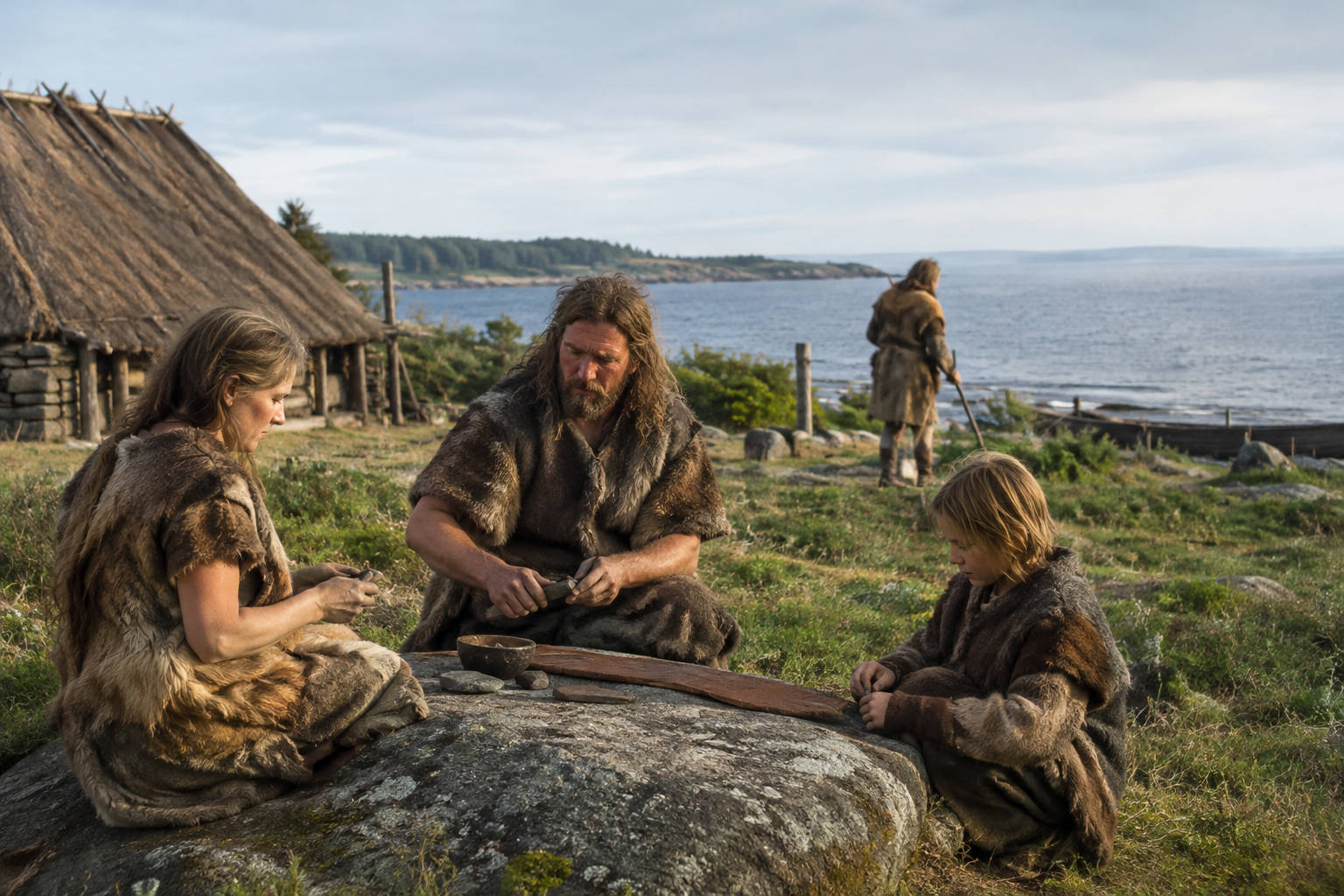
At first glance, FIR001 is just a short label attached to a burial from Bronze Age Sweden: Firse Sten, around 1101 BC. But that is exactly the sort of find that can matter a great deal in Y-DNA history. When a paternal line like I1a6 turns up in a documented ancient individual from southern Scandinavia, it gives the branch a real archaeological footing rather than leaving it floating in the mist of later surname projects and modern distributions.
That matters because I1a6 is not a person's whole ancestry, culture, or identity. It is one narrow line of descent passed from father to son. Yet narrow lines can still be historically revealing. In the case of FIR001, the setting is not the Viking Age that many people instinctively associate with Scandinavian Y-DNA, but the much earlier Nordic Bronze Age, a world of farms, seaways, metal exchange, and striking regional continuity across southern Sweden and Denmark.
The one firmly supplied ancient anchor here is FIR001, dated to about 1101 BC and identified as Nordic Bronze Age Sweden Firse Sten. That date places him in the later part of the Nordic Bronze Age, a period when southern Scandinavia was deeply tied into wider European exchange systems while still maintaining a very recognisable local material culture.
For readers tracing I1a6 today, this is the interesting bit: the lineage is associated here with a man living in prehistoric Sweden more than two millennia before the better-known age of Norse raiding and saga literature. In other words, this branch belongs in the long prehistory of Scandinavia, not only in its medieval fame.
A broader ancient DNA study of Scandinavia, published in Nature, helped sharpen this larger picture by examining long-term population change in the region. Even without squeezing more certainty from FIR001 than the evidence allows, the sample sits comfortably inside that larger archaeological story: Bronze Age Scandinavia was already home to paternal lines that would later become strongly associated with northern Europe.
Germanic languages and genomics
The first thing to say plainly is that I1a6 is a sub-branch within the wider haplogroup I1, a lineage well known in Scandinavia and northern Europe. But it would be careless to take every general statement about I1 and paste it directly onto I1a6. A parent branch can be old and widespread while one of its daughter branches is narrower, younger, or regionally more specific.
So the safest reading is modest and useful. FIR001 shows that a paternal line reported in association with I1a6 was present in Bronze Age Sweden. That does not mean every modern carrier descends from this one man, nor that the branch can be equated with a particular tribe, language community, or political people in 1101 BC. What it does provide is an archaeological waypoint: this lineage was already part of the Scandinavian paternal landscape in the Bronze Age.
That is important because the Nordic Bronze Age was not some isolated northern backwater. It was a connected world. Amber moved south, metal moved north, ideas travelled by sea, and communities in southern Scandinavia developed a distinctive but outward-looking culture. A Y-chromosome lineage found in that setting belongs to a historical environment of mobility, exchange, and local continuity all at once.
It is very tempting to jump straight from a Scandinavian haplogroup to Vikings. Popular history encourages it; so do family stories. But FIR001 reminds us that many paternal lines associated with later Scandinavians were already established long before the first longship reached the British Isles.
That changes the tone of the story. Instead of imagining I1a6 as something that suddenly appears in the early medieval period, it is better to see it against a much deeper northern background. By the eleventh century BC, communities in southern Sweden had been living through centuries of social change, developing elite display, maritime contacts, and regional identities that archaeologists recognise as central features of the Nordic Bronze Age.
In that sense, FIR001 does not just push the branch earlier. He places it in a society that helped form the long foundations of later Scandinavian history. The men of the Viking Age did not spring fully armed from nowhere; they emerged from a deep demographic and cultural past. A lineage like I1a6 may have been part of that inheritance.
Scandinavia before the Bronze Age
One of the most useful lessons from ancient DNA in northern Europe is that continuity and change often happen together. Populations can keep some local ancestry and paternal lines over long periods while also absorbing newcomers, technologies, and cultural fashions. Bronze Age Scandinavia is a fine example of that balance.
For Y-DNA enthusiasts, this matters because a haplogroup is not a fossil tribe-name. A branch such as I1a6 may persist through many historical transformations: from Bronze Age farmers and local leaders, to Iron Age communities, to the populations later labelled Germanic by Roman observers, and onward into medieval Scandinavia and the wider North Sea world. The line may continue, even as languages, burial customs, and political structures shift around it.
That broader northern context also helps explain why modern paternal ancestry can connect so strongly to regions around the Baltic and North Sea without needing a dramatic single migration tale for every family. Some lines may indeed reflect later Viking or medieval movement. Others may descend from lineages already rooted in Scandinavia centuries or even millennia earlier.
North Sea migrations to Britain
With only one explicitly supplied ancient sample, one should not pretend to map the whole career of I1a6 across Europe. Still, FIR001 makes one sensible historical suggestion. If your paternal line falls under I1a6, one plausible deep context is the southern Scandinavian world of the later Bronze Age, where seaways mattered as much as roads and where local communities were tied into a larger northern network.
That does not prove a straight unbroken story from Firse Sten to every present-day tester. But it does place the branch in a region that later played an outsized role in the history of Germanic-speaking populations, Baltic exchange, and migration across the North Sea. The value of ancient DNA is precisely that it gives us these earlier, quieter chapters, before the written sources begin shouting.
And that is perhaps the most appealing thing about FIR001. He is not famous. He is not a king. He is not wrapped in saga legend. Yet a single Bronze Age man from Sweden can tell us that I1a6 belongs to a real archaeological landscape of surprising depth.
The best-supported insight for I1a6 is not a grand claim about dynasties or a promise of Viking celebrity. It is something quieter and, in truth, more valuable: this paternal branch has an ancient foothold in Scandinavian prehistory, with FIR001 from Firse Sten showing its presence in Bronze Age Sweden around 1101 BC. For someone researching their direct male line, that points toward a deep northern background in the centuries before written history, when the societies of southern Scandinavia were already old, connected, and distinctive.
Comments