Haplogroup I1a3a1a1a1

– 4 min read


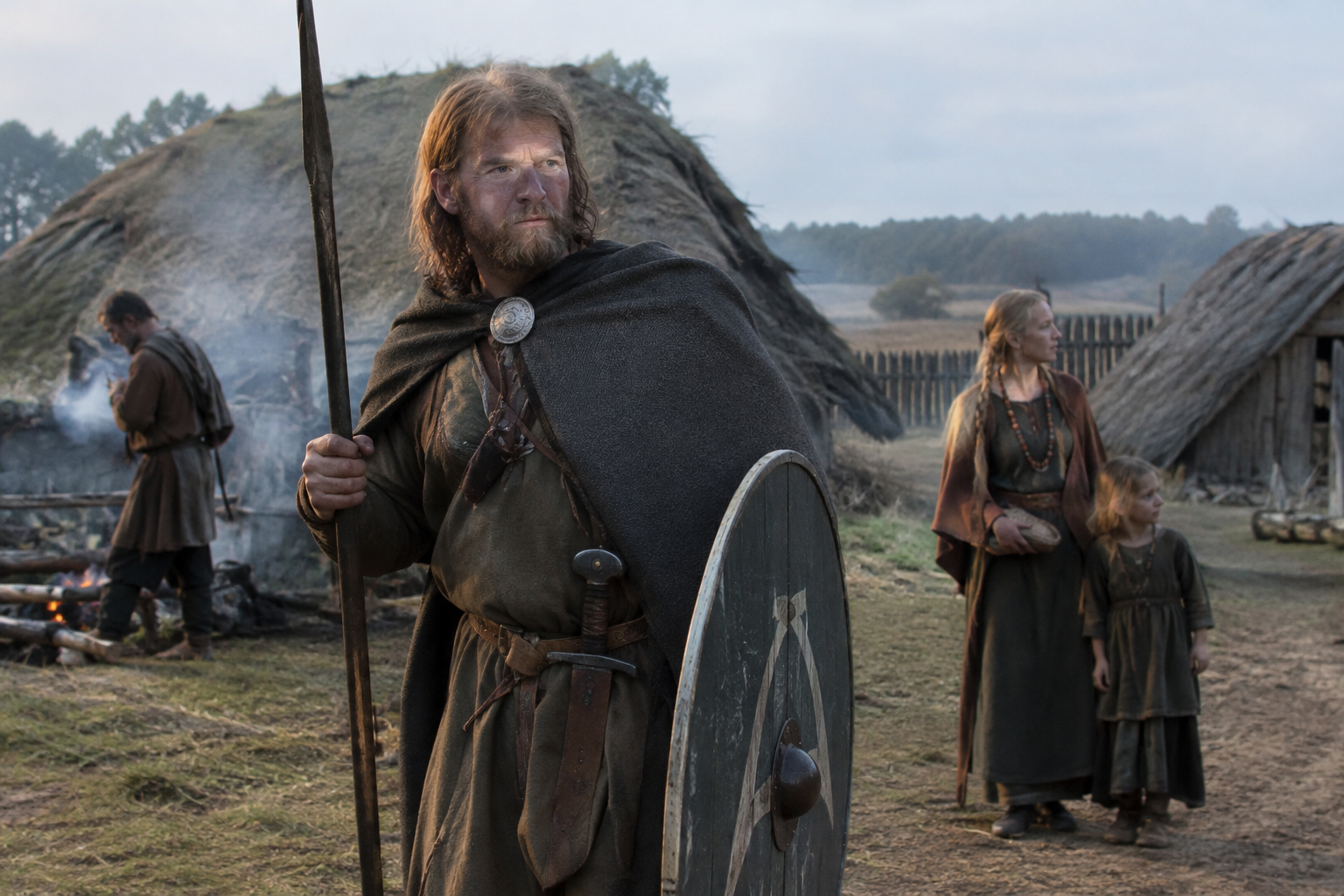
At Grodek in Poland, in a burial connected with the Wielbark cultural world and dated here to around AD 250, one ancient man has been linked in MyTrueAncestry's materials with Y-DNA haplogroup I1a3a1a1a1. He appears in the record as sample PL049, described as a Gothic-associated individual from a cemetery landscape tied to the long, complicated history of the Goths in east-central Europe.
That is a modest piece of evidence, but it is an interesting one. Haplogroup I1 is widely associated with northern Europe, especially later Germanic-speaking populations, yet a precise branch such as I1a3a1a1a1 is much narrower than the broad parent lineage. In other words, PL049 does not stand for "the Goths" as a whole. What it offers is a glimpse of one paternal line present within a community that archaeology connects to the Wielbark horizon and that historians have long placed in discussions of Gothic movement and identity.
The sample label is spare: Grodek, Poland, AD 250, PL049. Even with so little to go on, the setting matters. By the 2nd and 3rd centuries AD, the Wielbark culture covered parts of what is now Poland and is often discussed alongside early Gothic traditions, though archaeology and ethnicity are never quite the same thing. A cemetery can show us habits of burial, regional contacts, and sometimes mobility, but it does not automatically tell us the language a man spoke or the origin story he claimed for himself.
That caution is particularly important with Gothic history because the written sources are late, selective, and often eager to tidy up a messy past. The archaeological record is less tidy. Communities associated with the Wielbark world were not frozen tribes marching in neat lines across a map; they were local populations, linked by fashions, contacts, and shifting political worlds around the Baltic and the frontier of the Roman Empire.
Research on Gothic-period burials in eastern Poland has explored unusual graves and the local cemetery record, including material published at this study of an atypical burial from the Gothic cemetery at Maslomecz. That does not turn every nearby burial into the same story, but it helps place PL049 within a real archaeological conversation about how these communities buried their dead and how varied those cemeteries could be.
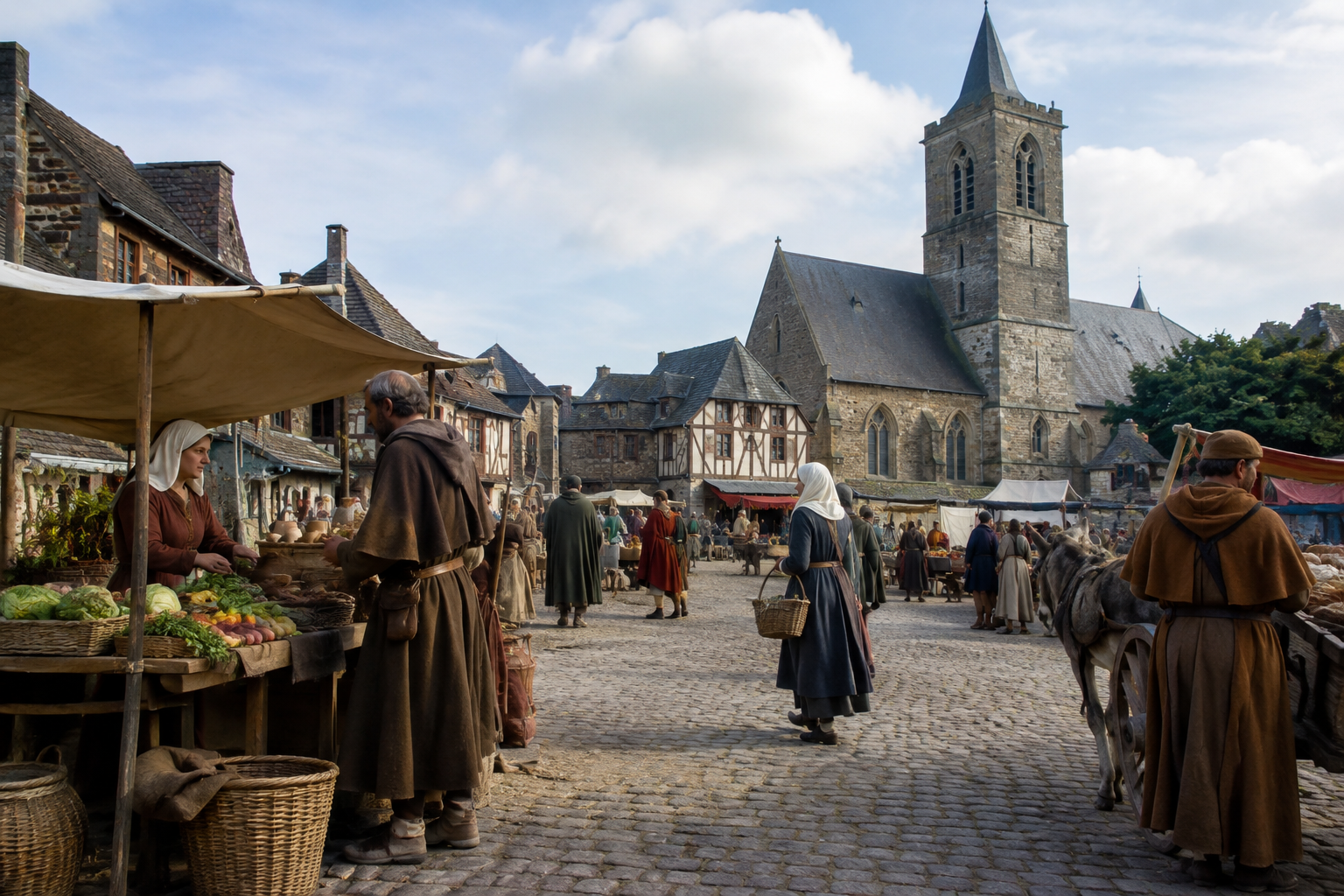
Goths as a multi-ethnic community
For readers tracing this haplogroup today, the first useful point is scale. I1a3a1a1a1 sits inside the larger I1 paternal family, a branch best known from northern Europe. But a deep subclade is not a nickname for an entire people. It tracks one direct male line only: father to son across generations. Each ancient individual also had thousands of other ancestors whose lineages are not captured by the Y chromosome.
That makes PL049 valuable in a very specific way. He shows that one I1-related paternal line was present in a Gothic-associated context in 3rd-century Poland. He does not prove that the branch originated there, nor that everyone in Wielbark cemeteries belonged to the same paternal stock, nor that all later bearers of the haplogroup descend from a Gothic migration. Ancient DNA is most convincing when it narrows a question, not when it is made to carry more history than it can bear.
If one were writing old-fashioned migration history, one might be tempted to draw a bold arrow from Scandinavia to the Vistula basin and onward to the Black Sea. Modern archaeology has been far more careful. Poland matters because it was a contact zone: between Baltic shores and interior river routes, between local traditions and new burial fashions, and eventually between communities that Roman writers would fold into large labels such as Goths.
The Wielbark culture has long been central to these debates because of its burial record and its chronology. It stands at precisely the moment when northern and eastern Europe were deeply connected but not politically unified. A paternal lineage such as I1a3a1a1a1 appearing in this setting fits broadly with the northern European associations of I1, but the real historical interest lies in the mixture of continuity and movement that such cemeteries represent.
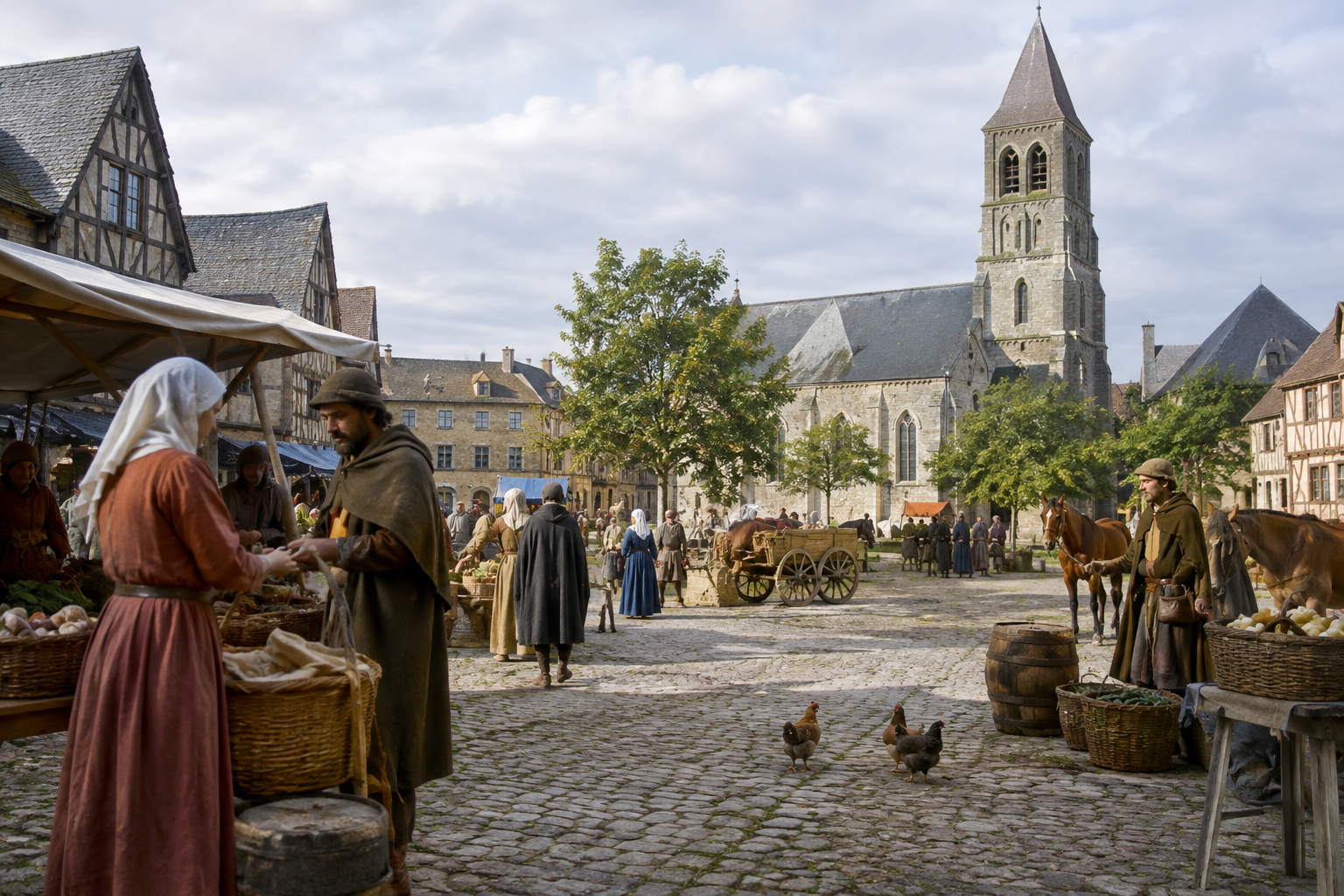
Germanic languages and genomics
One of the most important corrections made by recent ancient-DNA work is that Gothic-associated communities were not biologically uniform. The old image of a single bounded tribe moving intact across Europe has steadily given way to something more plausible and more interesting: communities that could absorb newcomers, maintain local families, and still share cultural signals that archaeologists recognize.
That broader picture makes a lone Y-DNA assignment more meaningful, not less. PL049 belongs to one paternal thread inside a much larger social fabric. In practice, that means a modern tester with I1a3a1a1a1 should think less in terms of "I have proven Gothic blood" and more in terms of "my paternal line fits within a northern European lineage that is attested in one Gothic-associated burial context in Roman-period Poland."
For those interested in how genomics has complicated the old tribal labels, MyTrueAncestry has also highlighted the diversity of Gothic-associated groups in eastern Europe, including posts on the genetic diversity in the late Iron Age Goths of the Masłomęcz group and on mixed origins in late antique Gothic communities in Bulgaria. Those later and separate cases should not be collapsed into the story of PL049, but they do show why historians now speak of Gothic worlds rather than a single, pure Gothic people.
There is something almost pleasingly stubborn about evidence like this. No grand royal pedigree, no dramatic treasure hoard, just one ancient burial, one sample ID, one paternal line. Yet that is often how the past becomes real: not through sweeping claims, but through small anchors that hold fast. PL049 places I1a3a1a1a1 in a defensible archaeological setting tied to the Wielbark sphere of 3rd-century Poland.
So if this is your haplogroup, the strongest historical takeaway is not a fantasy of certainty but a concrete possibility. Your direct paternal line belongs to a branch with at least one attested presence in a Gothic-associated community of Roman-period Poland, in a region crucial to the making of early Germanic history beyond the Roman frontier.

Comments