Haplogroup I1a2b1a

– 5 min read


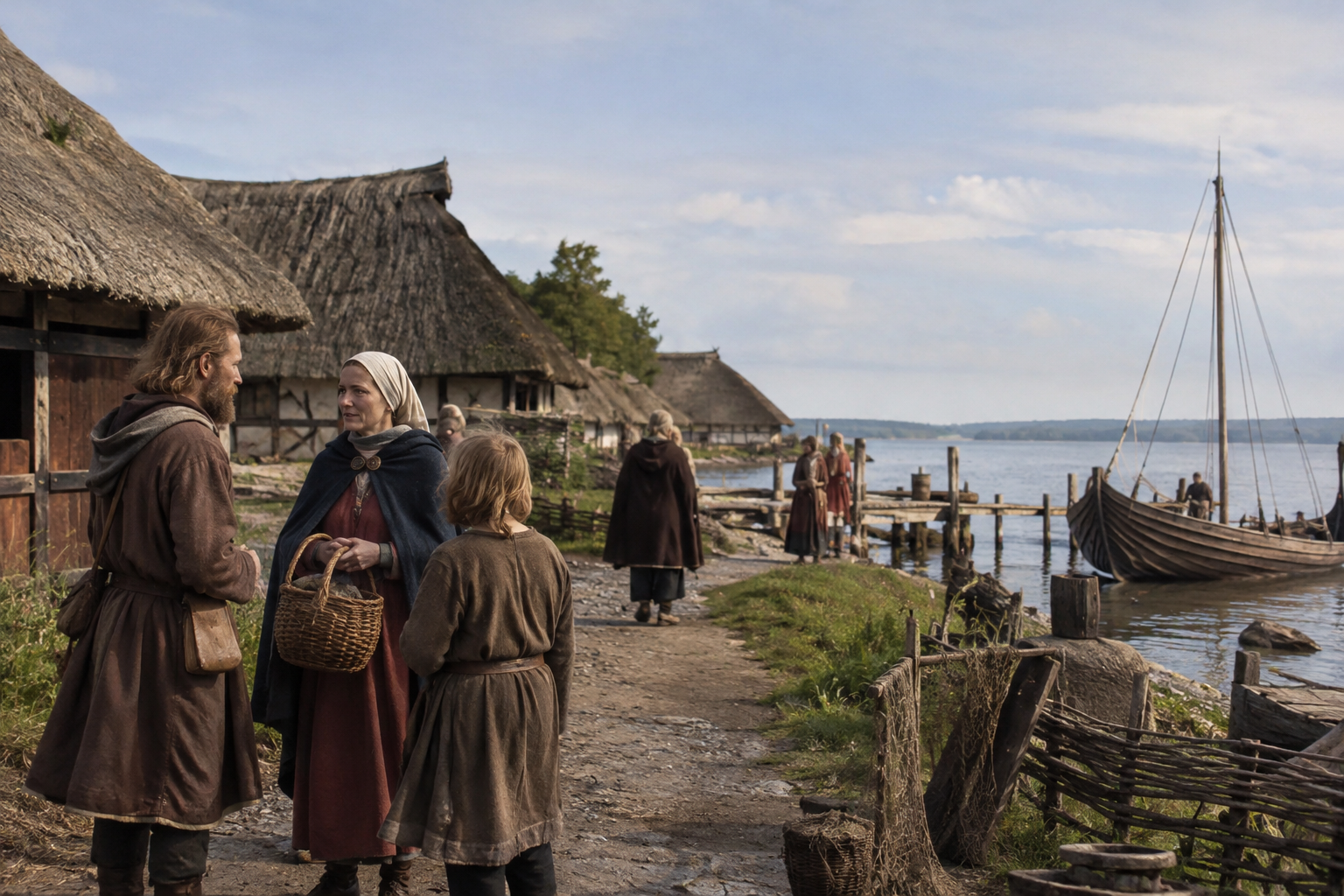
At Holbaek on Zealand, in medieval Denmark, one excavated man dated to around AD 1150 carries a small but telling piece of paternal history. He is recorded as sample CGG101855, and in MyTrueAncestry's classification he is associated with Y-DNA haplogroup I1a2b1a. That may sound like an intimidating string of letters and numbers, but the setting is wonderfully concrete: a real person from a real town in a period when Denmark was changing fast, from Viking-age worlds of regional lordship into a more firmly Christian and urban medieval kingdom.
What makes this sample interesting is precisely its modesty. We are not dealing here with a king in a famous tomb or a saga hero inflated by later storytelling. We have one medieval man from Zealand, living in a landscape of churches, markets, royal power, and sea routes across the Baltic. His Y-chromosome line, which traces one direct paternal line only, offers a narrow but valuable glimpse into the male ancestry present in Denmark after the Viking Age.
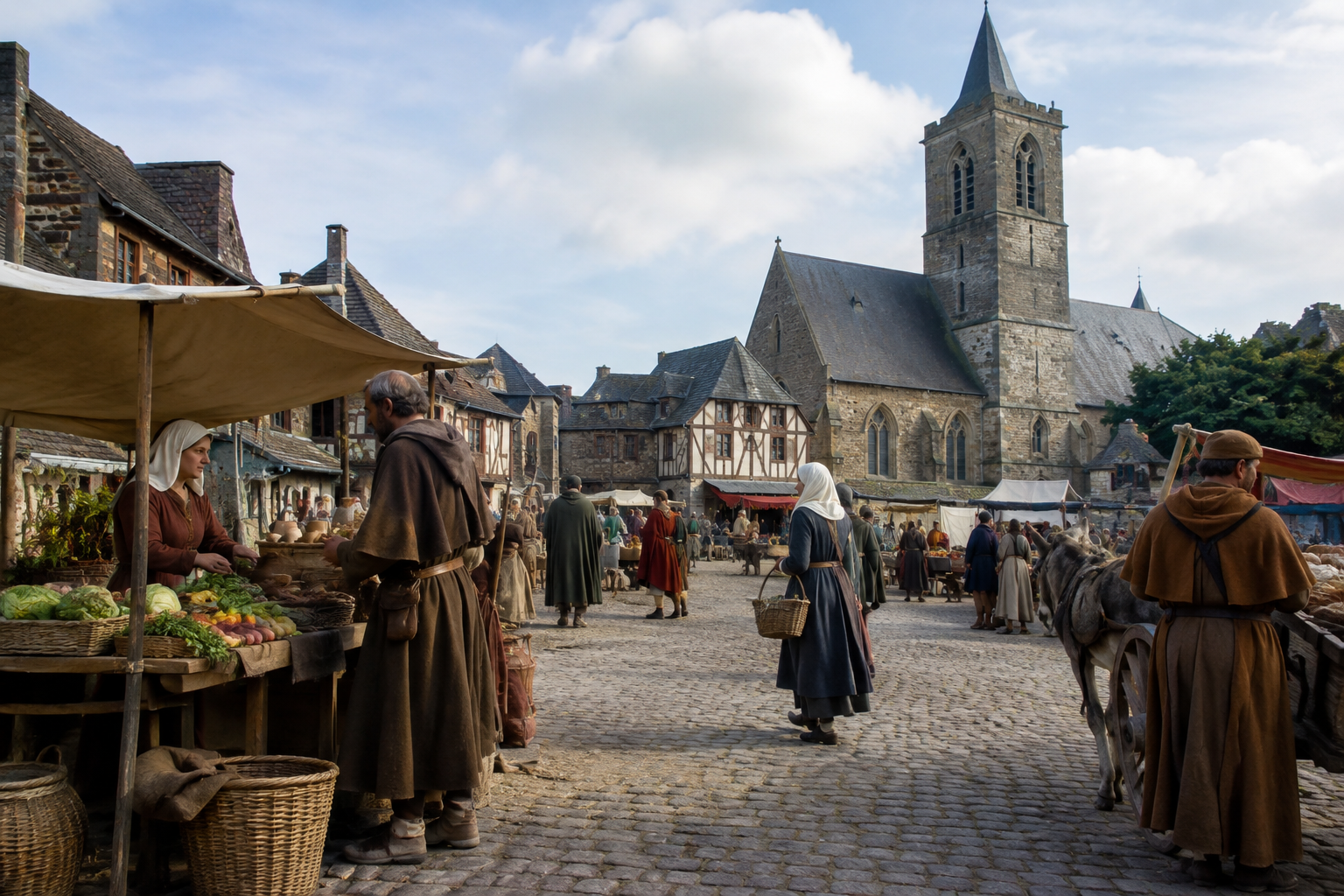
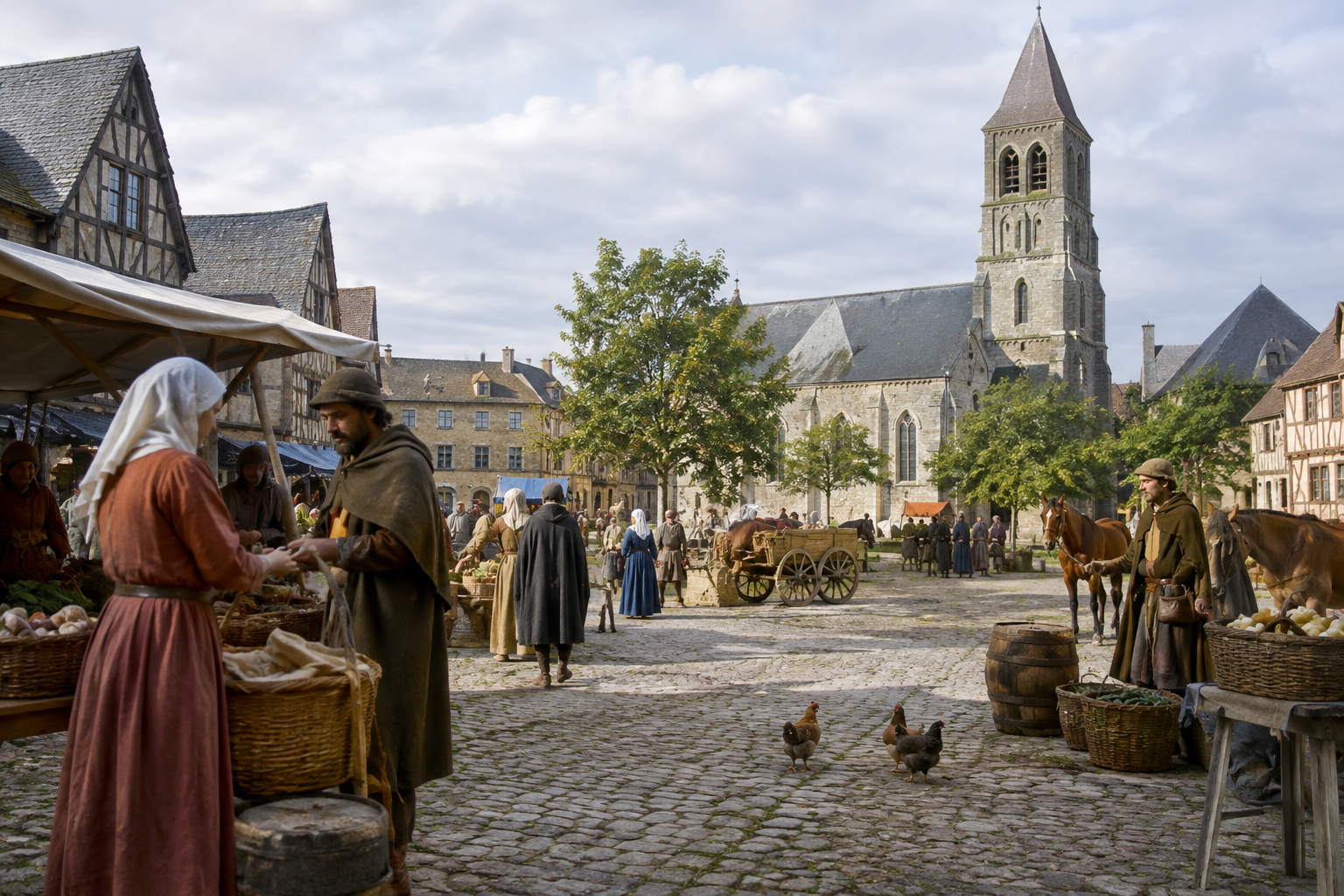
Holbaek lies on Zealand, the island that would become the political heartland of the Danish kingdom. By the twelfth century, this was not some remote frontier. It was a region tied into the consolidation of monarchy, the spread of parish organization, expanding towns, and increasingly structured Christian burial practice.
That context matters for CGG101855. A man buried in Zealand around AD 1150 belonged to a society already shaped by centuries of movement around the Kattegat, Skagerrak, North Sea, and Baltic. His paternal lineage cannot tell us his language, status, or full ancestry on its own, but it can place one strand of his background within the broader male lineages common in Scandinavian history.
A major ancient-DNA study of Denmark, published in Nature, helped clarify how dramatically the population history of the region changed from the Stone Age onward. For a medieval Danish sample like this one, the important point is not that he preserves some frozen "original" ancestry, but that he belongs to the long outcome of repeated demographic turnovers, mixtures, and local continuities in southern Scandinavia.
Denmark's Deep Population History
Haplogroup I1a2b1a is a sub-branch within the wider Y-DNA haplogroup I1, a paternal lineage strongly associated with Scandinavia in both modern and ancient genetic discussions. But this is exactly where caution is needed. The broad story of I1 is not automatically the exact story of every downstream twig. A narrow branch such as I1a2b1a represents a more specific paternal line within that larger Scandinavian-associated framework.
So what can we say responsibly? First, this Holbaek individual shows that a lineage classified here as I1a2b1a was present in medieval Denmark on Zealand in the twelfth century. Second, that fits comfortably with what historians and geneticists would expect in southern Scandinavia, where I1 and its sub-branches are recurrent features of paternal ancestry. What it does not do is identify this man as a Viking raider, a nobleman, or a representative of all Danish men of his time.
The temptation with Y-DNA is always to turn one paternal line into a complete identity card. Medieval reality was messier than that. People moved, married, traded, converted, fought, and settled across regions, and even a locally rooted man could have had ancestors from several different parts of northern Europe when viewed across his whole family tree.
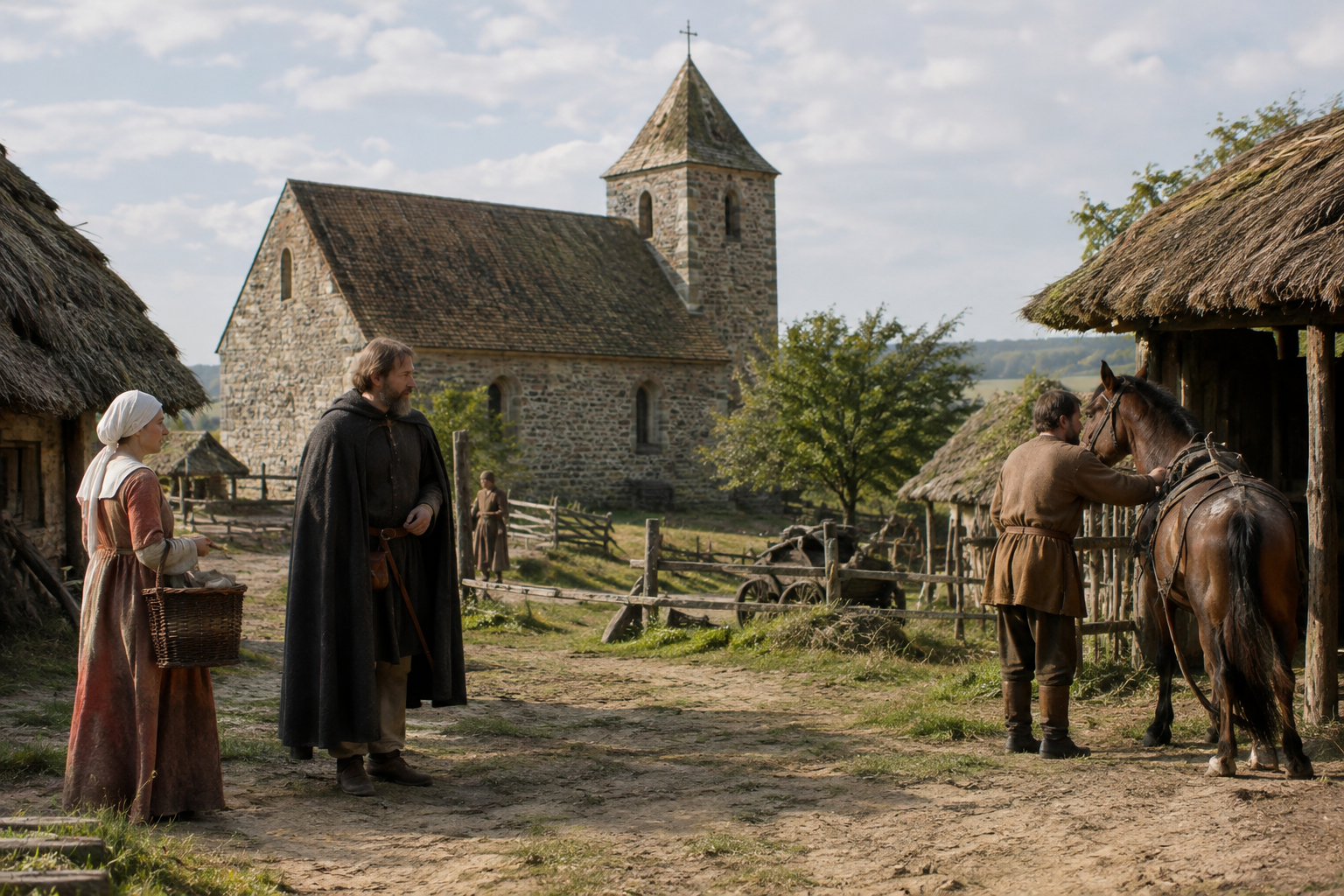
A twelfth-century date places CGG101855 after the classic Viking Age, conventionally ending in the eleventh century, but not after Scandinavian mobility had ceased. Quite the opposite. Denmark in this period remained deeply connected to England, northern Germany, Norway, Sweden, and the Baltic coast. Ports, royal estates, ecclesiastical foundations, and market towns linked Zealand into a busy northern world.
That makes a sample like this useful for a question often overshadowed by more glamorous finds: what happened to Scandinavian paternal lines after the age of longships and runestones? The answer, in this case, is reassuringly ordinary. A Scandinavian-associated branch was still there in medieval Denmark, embedded in a Christian kingdom rather than a pagan chiefdom, surviving not as a legend but as an excavated human being.
This is one of the strengths of archaeogenetics when it is used properly. It does not simply chase spectacular migrations. It also lets us see the persistence of lineages through social transformation: the same broad region, the same island, but a very different political and religious order from the one that produced the Viking-age cemeteries so familiar to popular imagination.
Post-Viking Christian Scandinavia
It is easy to dismiss a single medieval sample as too slight for history. In fact, single samples are often the building blocks from which larger patterns are eventually assembled. CGG101855 gives us a datable point on the map for I1a2b1a in medieval Zealand. For descendants and researchers interested in paternal ancestry, that is not everything, but it is far from nothing.
Archaeology also benefits from these smaller cases because they anchor genetic labels in lived places. "Zealand" is not merely a distribution zone on a map of haplogroups. It was a landscape of settlements, churches, fields, shorelines, and emerging towns. The man behind sample CGG101855 belonged to that world, and his paternal line helps connect family-history questions to the material history of medieval Denmark.
In that sense, the sample belongs to a wider conversation about Germanic-speaking northern Europe, not as a blunt ethnic badge but as part of the long demographic history of the region. If you want the larger linguistic and population backdrop, MyTrueAncestry's discussion of how genomics can illuminate the spread of Germanic languages is a useful companion piece.
Germanic Languages and Genomics
There is another reason this Danish sample deserves attention: Zealand sat at a crossroads. Medieval Denmark was never sealed off. Southern Scandinavia was shaped by traffic across the Baltic as much as by developments within the Danish islands themselves. That means a paternal lineage found at Holbaek can be locally established without implying isolation.
Ancient DNA increasingly shows that medieval northern Europe combined continuity with movement. Communities could preserve familiar regional lineages while also absorbing newcomers over generations. That is especially plausible in a place like Zealand, whose importance in trade and governance made it receptive to both local inheritance and wider North European contacts.
For readers with Scandinavian results, it can be helpful to compare Denmark with nearby regions rather than imagining each country as genetically self-contained. Early medieval Finland, for example, shows a different but related pattern of Baltic entanglements and regional population change.
Baltic Connections in Early Medieval Finland
For now, the clearest ancient anchor for I1a2b1a here is medieval Denmark: sample CGG101855 from Holbaek on Zealand, around AD 1150. That does not create a ready-made pedigree, but it does place this paternal branch squarely within the historical landscape of post-Viking Scandinavia. If this is your haplogroup, the strongest evidence in view points not to mythic certainty, but to a very real northern European setting in which Danish medieval communities carried forward paternal lines rooted in the wider Scandinavian past.
Comments