Haplogroup I1a2a2a3a3

– 5 min read


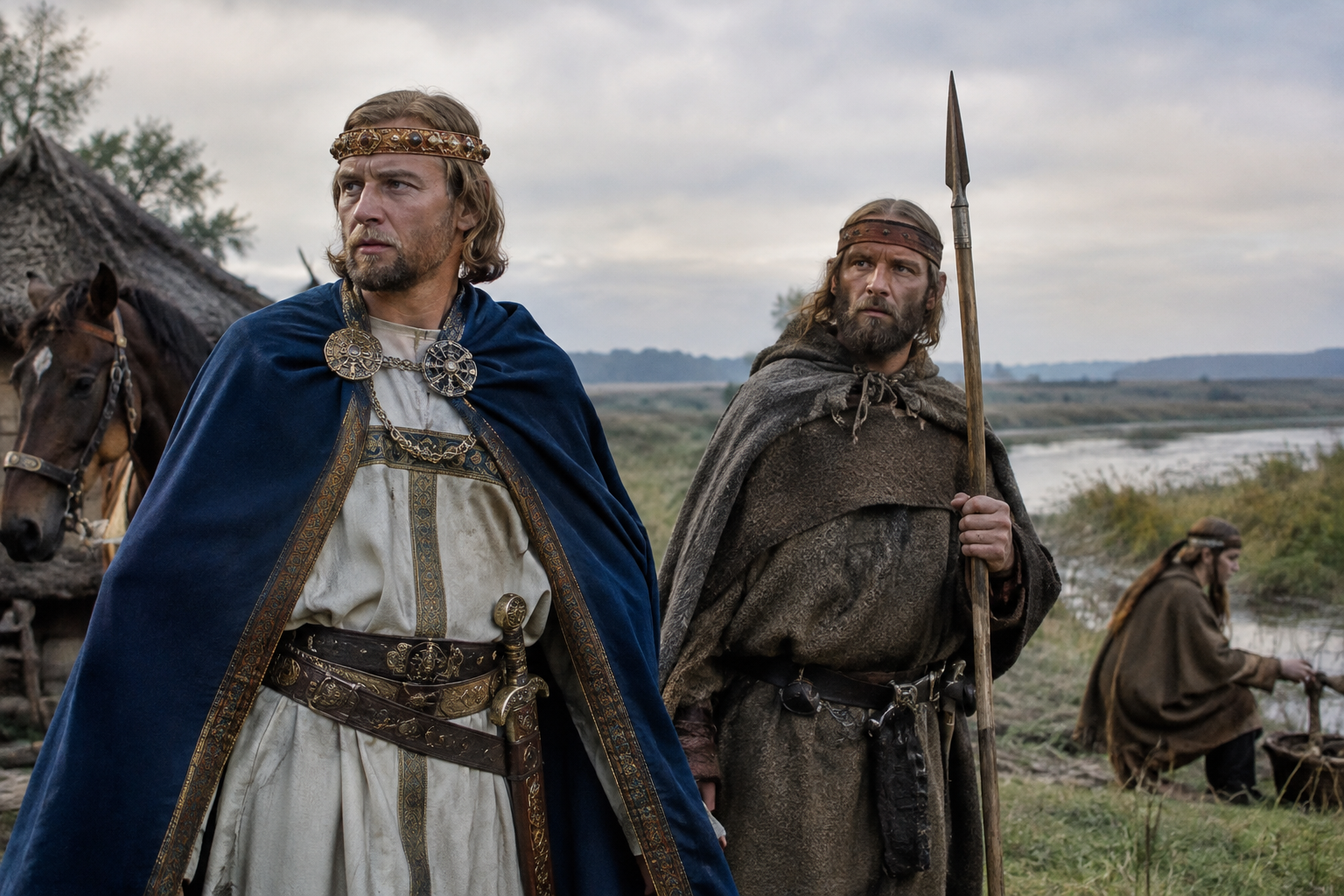
At Ergoldsbach-Doernbacher Feld in Bavaria, one man from around AD 680 stands out because he combines genetics with status. The sample known as ErgDF1, described as a Late Merovingian Bavarian elite individual, carries the Y-DNA haplogroup I1a2a2a3a3. That matters not because a single burial can explain a whole people, but because it places this paternal line inside a very specific historical world: post-Roman southern Germany, where local communities, Frankish power, and older northern lineages were meeting in new political forms.
The second clue comes from much farther north. At Mosede Mose on Sjælland in Denmark, sample CGG107488, dated to around AD 175, links the same haplogroup to Iron Age Scandinavia. Put those two finds together and the picture becomes immediately interesting. I1 is broadly associated with northern Europe, but this narrower branch, I1a2a2a3a3, is not some abstract label floating above the map. In the evidence given here, it appears first in Iron Age Denmark and later in an elite context in Merovingian Bavaria.
The earlier of the two ancient men, CGG107488 from Mosede Mose on Sjælland, belongs to the Roman Iron Age in Denmark, roughly the second century AD. This was a period when southern Scandinavia was not isolated at all. It sat within the economic and cultural wake of the Roman world, trading goods, ideas, and perhaps people, while still remaining outside imperial rule.
That context is important for understanding a lineage like I1a2a2a3a3. A Y-chromosome branch traces one direct paternal line only, not a person's entire ancestry, language, or identity. But when a subclade appears in Iron Age Denmark, it gives us a credible northern anchor for that paternal line. In other words, this is not merely a medieval Bavarian curiosity; it is a branch with evidence in Scandinavia before the great political transformations of the early Middle Ages.
For readers interested in how ancient DNA has been reshaping the prehistoric and early historic story of Denmark more broadly, this background piece is especially useful.
It is tempting to turn a haplogroup into a tribe, a language, or a ready-made migration saga. That is precisely where caution matters most. The wider haplogroup I1 has a strong northern European history, especially in Scandinavia, but the article branch here is the much narrower I1a2a2a3a3. We should not automatically project the entire history of I1 onto this one downstream twig without more sample evidence.
Still, the two ancient points we do have are meaningful. One is Scandinavian and earlier; the other is Bavarian and later, in an elite burial context. That combination suggests that this paternal line was part of the north-to-south human networks that linked Scandinavia and continental Germanic regions in the centuries around the end of the Roman world. It does not prove one individual's journey from Denmark to Bavaria, let alone a single family saga, but it does place the lineage within a historically plausible corridor of contact.
A broader ancient DNA study of populations in this era would be the right sort of evidence for testing such patterns. Research on post-Roman and early medieval central Europe, including the kind of society in which ErgDF1 lived, has increasingly shown that these communities were neither sealed off nor simple ethnic blocs. They were mixed, mobile, and often locally rooted at the same time. One of the research leads associated with this material is this ancient DNA study, which readers may wish to consult for the wider scientific setting.
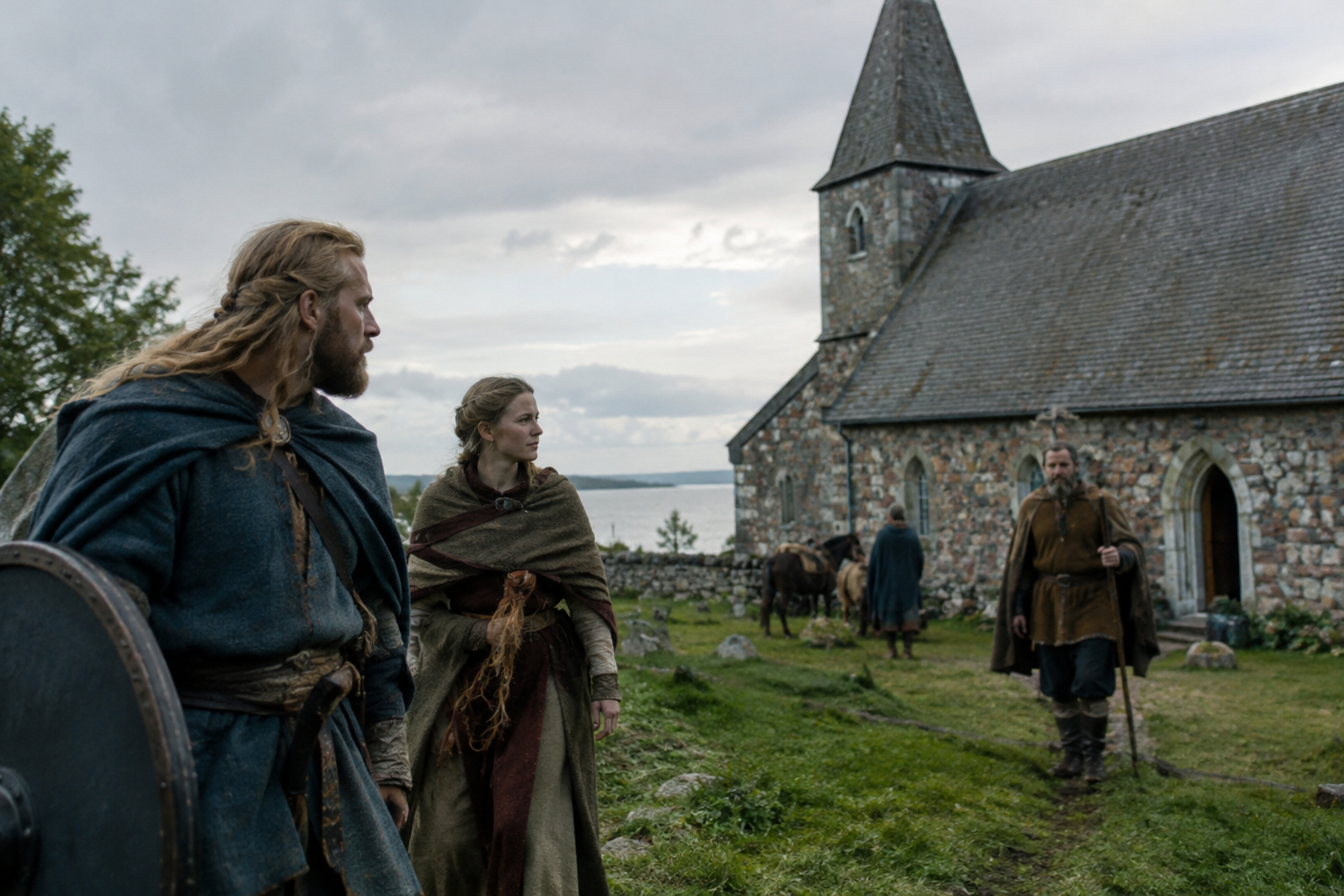
ErgDF1 comes from Late Merovingian Bavaria, around AD 680. That date matters a great deal. Bavaria in the seventh century was a frontier of inheritance and reinvention: Roman provincial structures were long gone, but Christianity, aristocratic power, and links to the Frankish sphere were reshaping the landscape. To find I1a2a2a3a3 here, in an individual described as elite, is to see a northern-associated paternal line not at the edge of the story but within the upper levels of an early medieval society.
We should be careful with the word elite. It tells us something about social rank in the burial context, but not that this Y-line founded a dynasty, represented all Bavarian nobles, or arrived in one dramatic migration. What it does show is that by the later seventh century this paternal branch was present in a high-status setting south of the Danube, in a region where political identities were being actively made.
That is a useful corrective to older, simpler narratives. Early medieval Europe was full of named peoples in written sources, but the archaeology and the genetics rarely line up in neat blocks. A Bavarian elite burial might reflect local continuity, recent ancestry from farther north, or generations of movement within interconnected Germanic-speaking worlds. The most responsible reading is that I1a2a2a3a3 had become part of the social fabric of Merovingian Bavaria by this date.
Readers following the genetic complexity of the post-Roman west may also find this related case from Iberia illuminating, because it shows just how diverse early medieval burial populations could be.
If we place CGG107488 and ErgDF1 side by side, we are looking at roughly five centuries between them. That is both a long time and, in archaeological terms, not such a vast gulf. Across those centuries the North Sea and Baltic worlds were tied into continental exchange networks, and the lands of modern Denmark and southern Germany were repeatedly connected by marriage, military service, trade, and the movement of small groups.
What makes I1a2a2a3a3 interesting is that it appears in both of these worlds without needing us to invent a mythic founder. In the Danish Iron Age it sits in a northern setting that suits the broader history of I1. In Merovingian Bavaria it appears in a socially elevated context that shows how such paternal lines could travel, persist, and become embedded far from their earlier documented occurrence.
Another research lead tied to this material is this preprint on ancient DNA. Even without overclaiming for any one paper, the wider direction of archaeogenetic work is clear enough: early medieval Europe was built from overlapping regional histories, not from one-off replacement events.
For a modern tester, I1a2a2a3a3 is the sort of lineage that may resonate most strongly with family histories rooted in northern Europe, especially in regions shaped by Scandinavian or Germanic connections. But that should be understood historically, not romantically. The ancient evidence here does not award anyone a ready-made Viking, Dane, or Bavarian identity. It shows that one paternal branch was present in Iron Age Denmark and later in high-status early medieval Bavaria.
That is often how the best ancient DNA stories work. They do not hand us a costume drama; they pin a lineage to real places and real periods. If your paternal line falls under I1a2a2a3a3, the strongest supported insight from these samples is that your direct male-line ancestry fits into the northern and central European worlds that remained connected from the Roman Iron Age into the Merovingian age.
For a wider North Sea perspective, this article gives a helpful overview of how migration and continuity interacted over the long term.
What makes I1a2a2a3a3 distinctive in the present evidence is not sheer quantity of samples but clarity of setting. One man lived on Iron Age Sjælland, in a Scandinavian world already entangled with Rome's northern frontier. Another lived centuries later in elite Merovingian Bavaria, in a society built from post-Roman power, Christianization, and regional aristocracy. Between them, they sketch a believable historical range for this paternal branch: northern in its earlier evidence, and fully at home in early medieval central Europe by around AD 680.
That is a modest conclusion, but a solid one, and solid is better than grandiose. In ancestry research, a well-placed lineage is worth far more than a flamboyant legend.
Comments