Haplogroup I1a2a1a1d2

– 5 min read


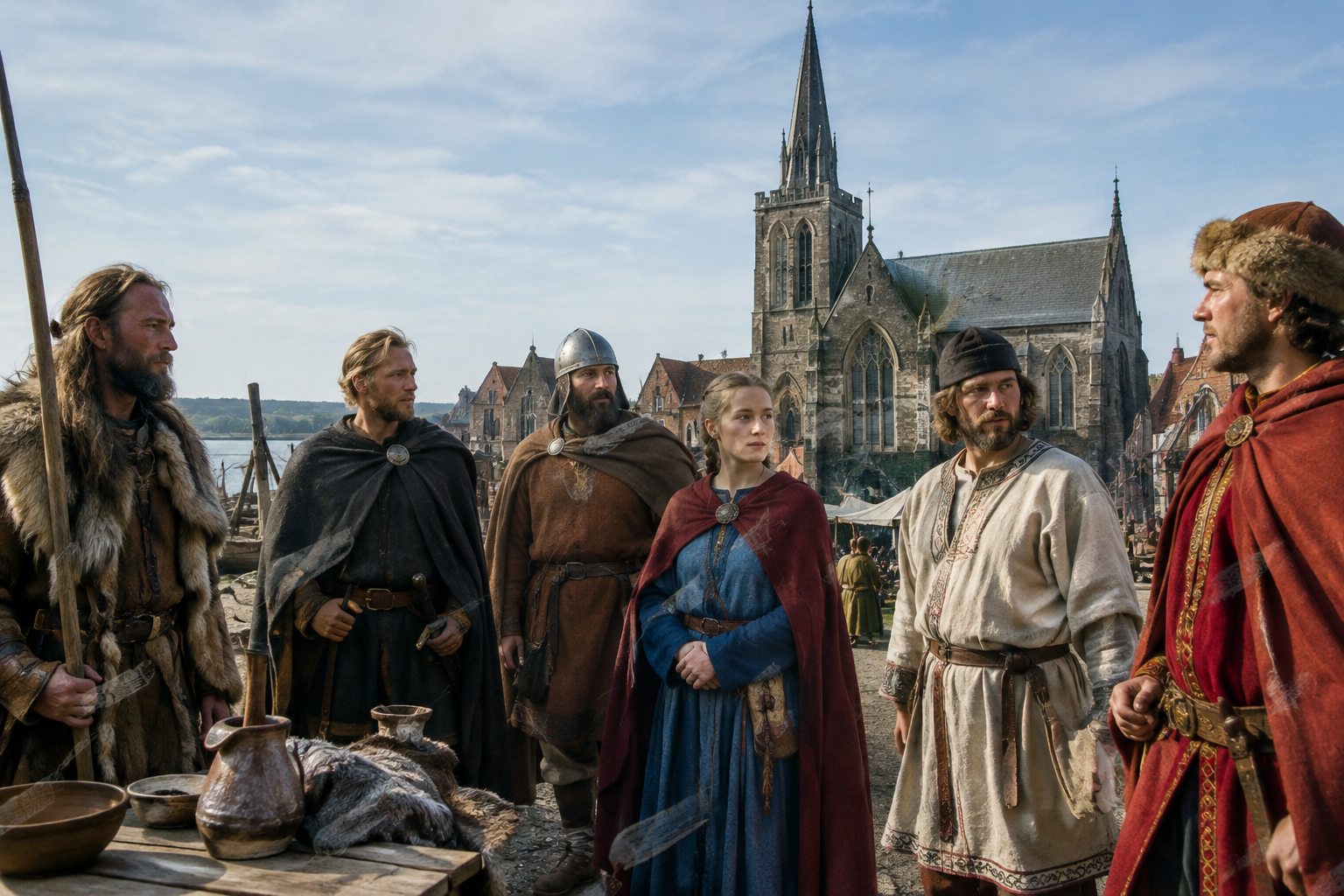
At Sint-Truiden in medieval Belgium, one excavated man from the Onze-Lieve-Vrouwekerk cemetery, sample ST0006, lived around 1345 AD. On its own that might sound like a local story, one parish grave among many. But for the Y-DNA haplogroup I1a2a1a1d2, it is part of a much longer pattern: a paternal line that turns up not only in the later medieval Low Countries, but also in earlier Scandinavian and central European contexts.
That is what makes this branch interesting. Y-DNA follows one direct male line only, not a person's whole ancestry, but when the same narrow paternal branch appears in several different archaeological settings, it gives us something much better than a slogan about "Viking blood" or "Germanic origins". It gives us evidence for continuity, movement, and survival across very different historical worlds.
ST0006 comes from Sint-Truiden, an important town in present-day Belgium with a long ecclesiastical and urban history. By the 14th century, this was not an isolated village world. It was a settled, connected landscape of churches, markets, lordship, craft, and regional exchange, where family lines could persist for generations even as populations mixed through marriage, migration, and town growth.
A recent ancient DNA study of the Sint-Truiden burials has focused attention on exactly that kind of urban setting, exploring how medieval communities could be both locally rooted and genetically varied over time. In that context, the appearance of I1a2a1a1d2 in ST0006 matters because it places this paternal line firmly inside a later medieval population of the Low Countries rather than leaving it stranded in a purely Scandinavian prehistory.
There is a temptation, whenever a lineage associated with the wider I1 family appears in medieval western Europe, to leap straight to tales of raiders, settlers, or noble founders. Better to be more careful. What ST0006 actually shows is that one branch of a wider northern European paternal lineage was present in a real medieval burial community in Belgium. That is already a substantial historical fact.
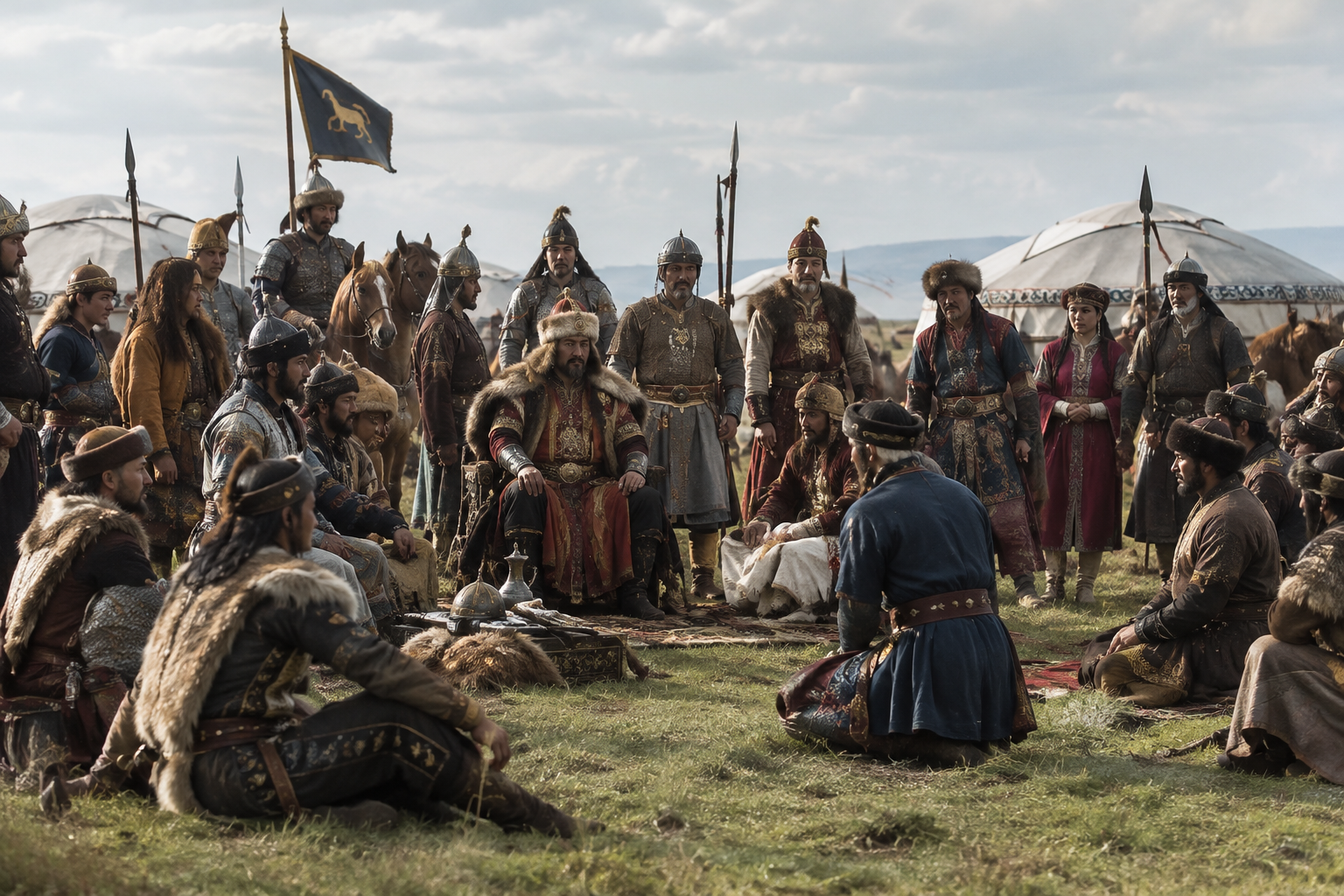
The strongest cluster for this haplogroup, however, lies earlier and further north. Three individuals from Northwest Sjaelland in Denmark, all dated around 175 AD, are associated with this branch: CGG107442 from Asnaes, identified in the record as Danii; CGG107447 from Gedebjerg, identified as Jute; and CGG107502 from Stenlille, again identified as Danii.
Even without forcing the tribal labels too hard, the pattern is striking. These are not one accidental find from one grave. They are several Roman Iron Age males from the same broad region of Zealand, suggesting that this paternal line had a meaningful foothold in eastern Denmark well before the Viking Age and long before the medieval sample from Belgium.
That does not mean every bearer of I1a2a1a1d2 was a "Dane" in the later national sense, nor that these men belonged to one close family. What it does suggest is that the branch belonged to the paternal landscape of southern Scandinavia during the centuries when Roman goods, local elites, and regional identities were all reshaping northern Europe.
Research on ancient Scandinavian populations has increasingly shown that Denmark was not a static cultural block but a zone of long-term demographic change, continuity, and local variation. That wider background helps explain why a branch like I1a2a1a1d2 can appear repeatedly in Zealand: not as a mythic founder's signature, but as part of the lived male-line structure of Iron Age communities.
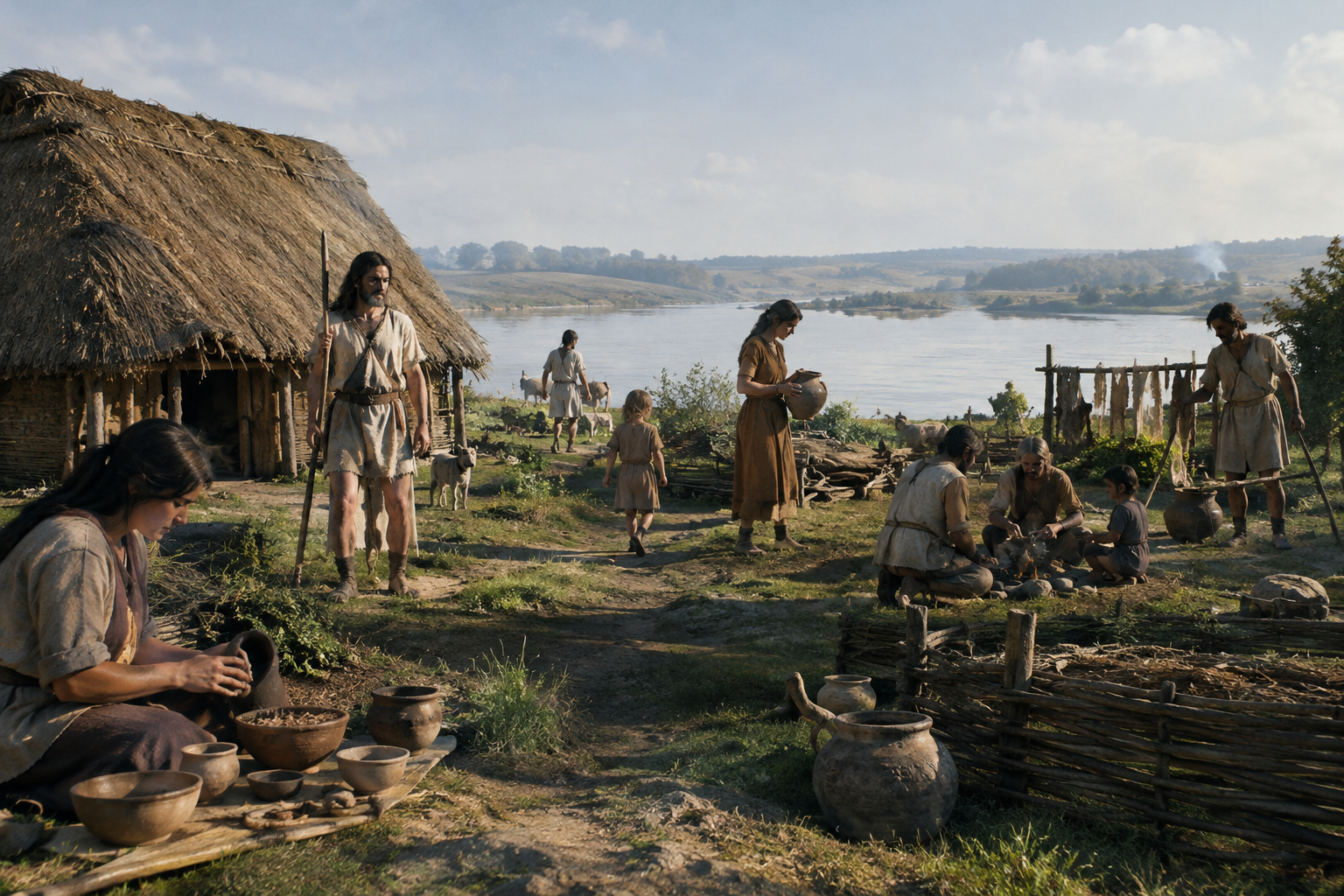
The chronology stretches back further still with CGG105645_CGG105646, an individual from Viken, Fredrikstad in Norway, dated to around 1240 BC in the Early Bronze Age. This is important precisely because it widens the time depth of the branch in Scandinavia. We are no longer in the world of Roman contacts or historically named peoples, but in a much earlier northern European setting.
Now, caution matters here. A single Early Bronze Age sample does not let us draw a straight, unbroken line from one Norwegian man to later Danish and Belgian individuals. But it does show that the paternal ancestry associated with this branch was present in Scandinavia more than a millennium before the medieval period. That is a different sort of evidence from folklore or retrospective ethnic labeling; it is a direct ancient genomic observation.
The broader parent haplogroup I1 is often discussed as a classic northern European male lineage, especially in Scandinavia. What these samples add is finer grain. Rather than talking vaguely about I1 as a whole, the evidence points to I1a2a1a1d2 as one small branch within that larger family, visible in Scandinavia across a long chronological span and later found beyond it.
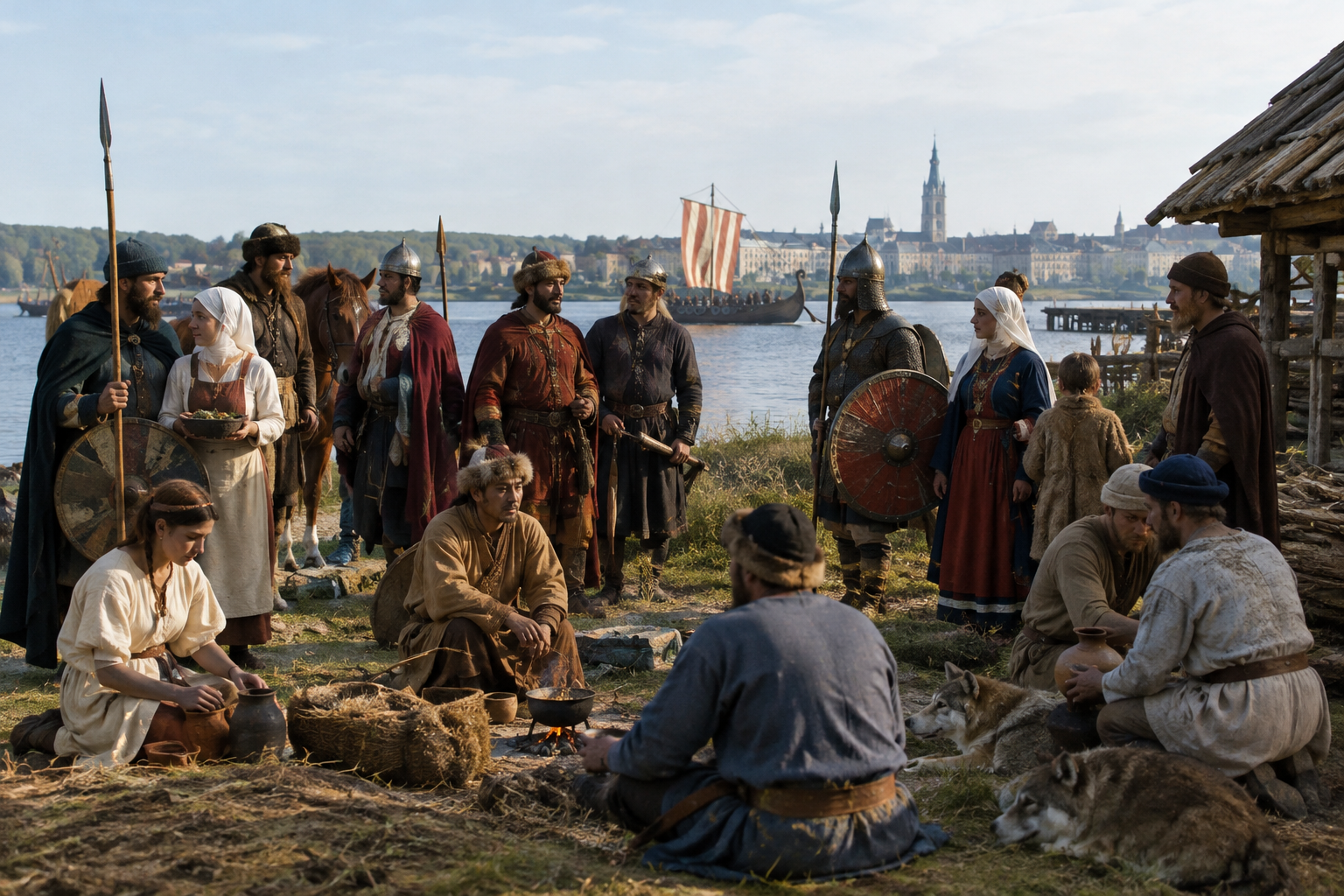
One especially telling sample sits between the Scandinavian evidence and the later Belgian one: KBS28 from Himod-Kaposztas in Hungary, dated around 850 AD and described as Carolingian Border. That phrase alone evokes a world of military frontiers, mixed local populations, and political reordering across central Europe after the collapse of Roman authority and during the age of the Franks.
This is where the story becomes properly historical rather than merely geographical. By the 9th century, the Carolingian sphere was a contact zone. Warriors, settlers, clerics, local elites, captives, and traders moved through it. An ancient DNA study examining early medieval mobility and ancestry in the region helps frame this setting, showing that frontier societies were rarely simple or sealed communities. Within that larger picture, KBS28 suggests that a paternal line seen earlier in Scandinavia was also present on a central European borderland in the early medieval period.
Research published on early medieval populations in this wider frontier world has emphasized how fluid such regions could be. That does not prove KBS28 was a migrant from Denmark or Norway, still less that he belonged to a named ethnic group carried intact across Europe. But it does make I1a2a1a1d2 look less like a purely local Scandinavian relic and more like a branch that participated in the north-to-south and west-to-east movements of the first millennium AD.
Put the samples together and a sensible outline emerges. This branch appears in an Early Bronze Age individual in Norway, in several Roman Iron Age individuals from Zealand in Denmark, in an early medieval frontier context in Hungary, and in a 14th-century man from Sint-Truiden in Belgium. That is not proof of one dynasty, one migrating tribe, or one uninterrupted pedigree known by name. It is, however, a credible archaeological footprint for a northern European paternal branch with both longevity and mobility.
It is also a useful reminder of how historical identities work. The men from Northwest Sjaelland were living in a Scandinavian world centuries before the Viking expansion. KBS28 lived in a Carolingian border region shaped by empire and post-Roman change. ST0006 belonged to a late medieval town community in the Low Countries. Same narrow Y-lineage, very different societies.
That is perhaps the most interesting point of all. A haplogroup does not equal a people, but it can survive through enormous changes in language, lordship, religion, and political order. In that sense, I1a2a1a1d2 looks less like the badge of one moment and more like a thread running through several chapters of northern and central European history.
For someone researching I1a2a1a1d2 today, the strongest evidence points toward a paternal history rooted within the wider northern European I1 world, with especially clear ancient appearances in Scandinavia and later echoes in central and western Europe. The important thing is not to inflate that into a simplistic identity claim, but to appreciate what the archaeology really shows: one male line persisting from Bronze Age Norway to Roman Iron Age Denmark, then appearing again in the early medieval Carpathian frontier and medieval Belgium.
Comments