Haplogroup I1a2a1a1c1a1
– 5 min read


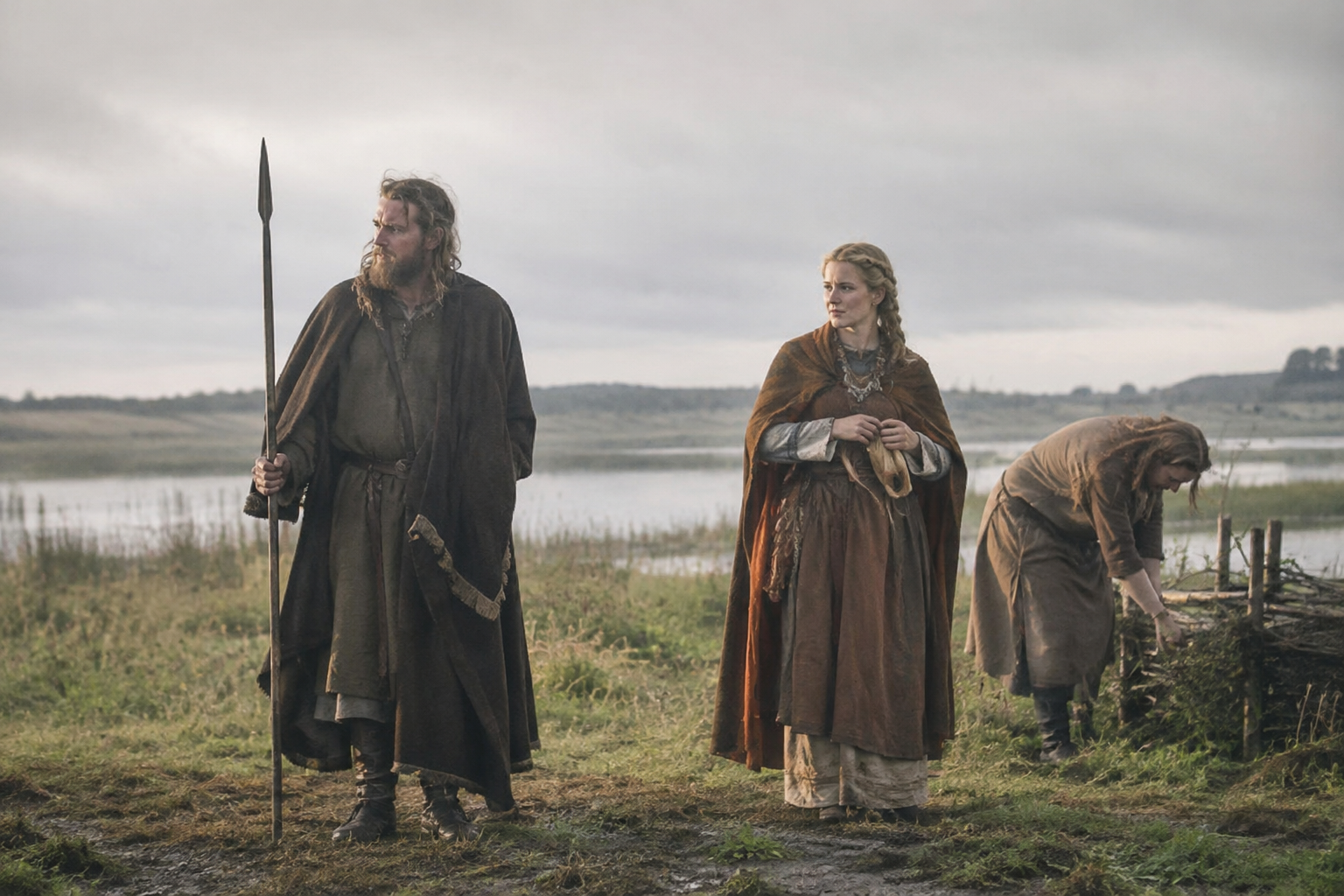
At Mosede Mose on Zealand, one man from Iron Age Denmark has become a surprisingly useful witness to the deep history of a northern paternal line. Dated to around AD 175 and identified as CGG107486, he belongs to the wider Y-chromosome world of I1, and is reported here in connection with the much narrower branch I1a2a1a1c1a1. That combination matters because it places a very specific paternal signature in eastern Denmark during the Roman Iron Age, long before the Viking Age made Scandinavian male lineages famous.
He is not alone. A second Danish individual, CGG107528 from Langdyssegård, dated to around AD 55, points to the same article branch in roughly the same region a century earlier. Two men, two sites on Zealand, and two Roman Iron Age dates do not give us a dynasty or a tribe with a neat label. But they do suggest something more archaeologically useful: this was a paternal line already established in Denmark before the great political formations of later Scandinavian history.
Y-DNA follows one narrow line of descent: father to son, and then father to son again. That makes it powerful for tracing paternal continuity, but also limited. A man carrying I1a2a1a1c1a1 was not "nothing but" that lineage; he also had countless ancestors outside that direct male line, just as everyone does.
The wider haplogroup I1 is strongly associated with northern Europe and is well known in Scandinavian genetic history. The subclade in this article, I1a2a1a1c1a1, is much more specific. With the evidence here, the safest point is not to project the entire history of I1 onto this exact terminal branch, but to note that its ancient appearances in Roman Iron Age Zealand fit a northern European, and specifically Danish, archaeological setting.
A broader context for how Denmark's population formed over much longer timescales can be found in this earlier MyTrueAncestry piece on the region's prehistory.
The most vivid thing about CGG107486 is not an invented life story, but his date and place. Around AD 175, Denmark was not part of the Roman Empire, yet it stood within Rome's economic and political orbit. The Roman Iron Age in southern Scandinavia was a period of local societies linked by trade, shifting prestige networks, and regional power centers, even if they were beyond the imperial frontier.
Mosede Mose lies on Zealand, the island that would later become central to Danish history. For this man to carry a lineage associated here with I1a2a1a1c1a1 suggests that this paternal branch was present in a core Scandinavian landscape well before the medieval kingdom of Denmark took shape. That may sound modest, but modesty is exactly the virtue here: ancient DNA is most convincing when it fixes a lineage in time and place without pretending to answer every larger question.
The available record does not justify claims about his status, occupation, or family rank. What it does justify is treating him as evidence that one branch of I1 was already embedded in the population of eastern Denmark in the second century AD.
An ancient DNA study linked to these Danish remains is available as research on ancient individuals from the region. Without over-claiming details beyond the sample information at hand, the study helps place these finds inside a growing scientific effort to map the genetic structure of Iron Age Scandinavia.
The second sample, CGG107528 from Langdyssegård, is dated to around AD 55. That makes it earlier than the Mosede Mose individual by roughly a century and places the same paternal signature, or a reported association with it, in Zealand during the earlier Roman Iron Age.
This is where archaeology becomes more interesting than genealogy alone. One sample can be an isolated occurrence. Two samples from the same broad island region, separated in time, begin to hint at local persistence. Not proof of close kinship, not proof of a ruling house, and certainly not proof that everyone on Zealand shared the same paternal ancestry - but a useful sign that this line was not merely passing through.
Langdyssegård also reminds us how awkward modern historical labels can be when pushed too hard onto ancient people. These men were not "Vikings" centuries too early, nor should they automatically be assigned to named groups from later written sources. Better to keep them where the evidence places them: Roman Iron Age Denmark, in communities of southern Scandinavia that were already distinctive long before the sagas.
For readers interested in how later Scandinavian populations are illuminated by ancient burials, this Viking and post-Viking case study offers a useful comparison.
Post-Viking Christian Scandinavia
Zealand is not just a pin on a map. In later centuries it became a political heartland, but even in the Roman Iron Age its location mattered enormously. It sits between the Baltic and the Danish straits, in a zone where movement, exchange, and local competition would have shaped communities long before states emerged.
That makes these two samples valuable beyond their individual burials. When the same narrow paternal branch appears in two Iron Age men from Zealand, it strengthens the impression of regional continuity in male lines within southern Scandinavia. Ancient DNA cannot tell us what language these men spoke in daily life, what gods they honoured, or how they saw themselves. Yet it can show that some paternal lines later common in the north were already present in this landscape during the first two centuries AD.
This is one reason Y-DNA results are so compelling for family historians. They do not provide a full portrait of ancestry, but they can anchor one sliver of it in a real historical setting. For someone in haplogroup I1a2a1a1c1a1, Roman Iron Age Zealand is therefore not a romantic fantasy but a concrete point of contact with the ancient record.
Modern discussions of Scandinavian ancestry often rush straight to the Viking Age, as though nothing of importance happened before the longships. These Danish samples are a corrective. They belong to a world before Viking raiding, before Christian kingship, before the classic medieval dynasties of the north. Yet they already show a recognizably northern paternal landscape.
That matters historically because the Viking Age did not spring from nowhere. It emerged from populations with much deeper local roots. Lineages like I1a2a1a1c1a1, when found in Roman Iron Age Denmark, help reveal the older human background from which later Scandinavian societies developed.
If you want to think forward from Iron Age Denmark into the maritime expansion of later centuries, this Greenland-focused article is a good companion piece.
From Iron Age to Viking Expansion
The strongest insight from haplogroup I1a2a1a1c1a1 is not grandeur but placement. With CGG107528 at Langdyssegård around AD 55 and CGG107486 at Mosede Mose around AD 175, this branch is tied to Roman Iron Age Zealand in Denmark. That gives descendants of this paternal line a historically meaningful anchor in southern Scandinavia, in a period before the famous age of Vikings but already within the long formation of northern European populations.
For a wider look at how ancient DNA is transforming exactly these kinds of historical questions, this overview is worth keeping nearby.






Comments