Haplogroup I1a1b3

– 4 min read


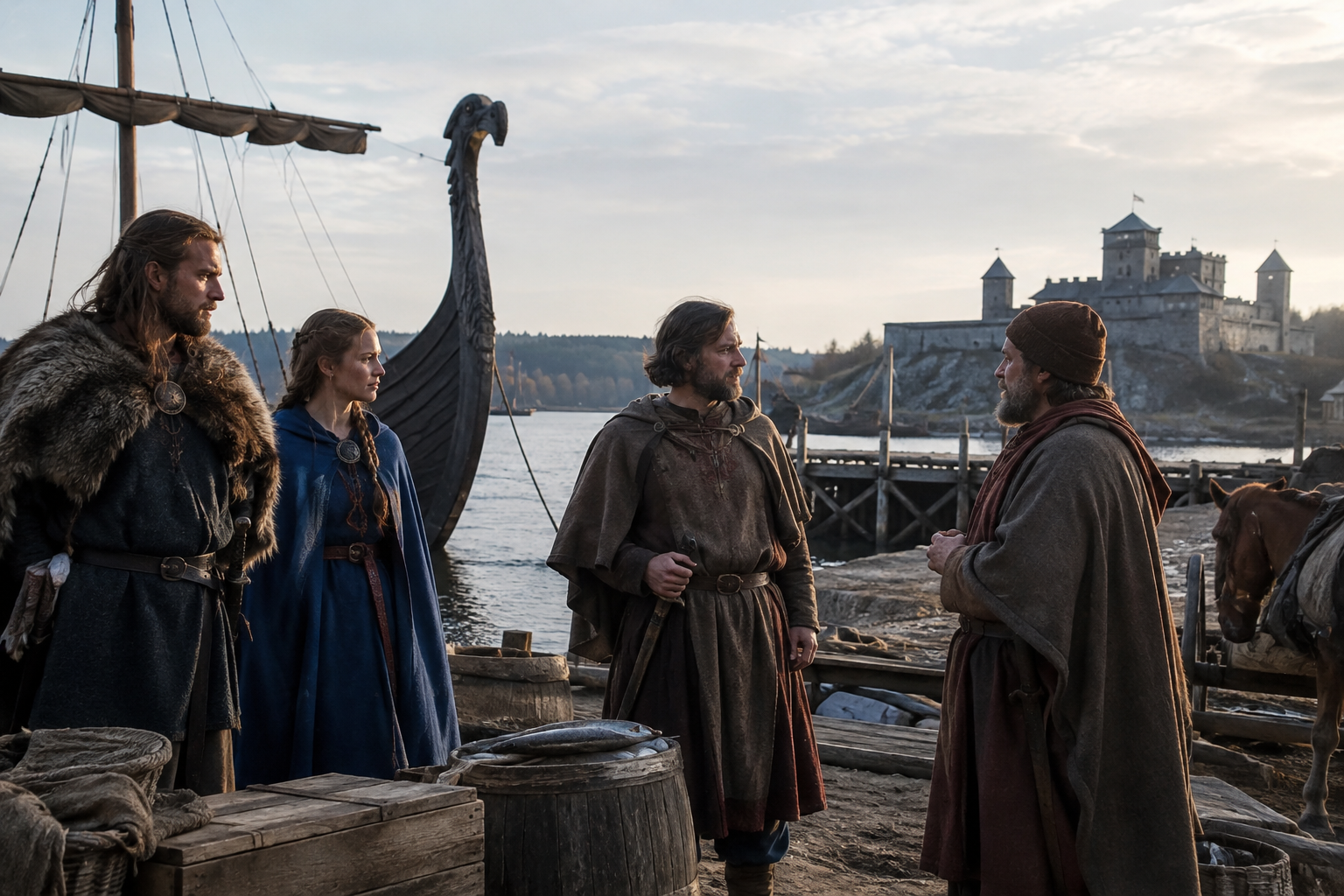
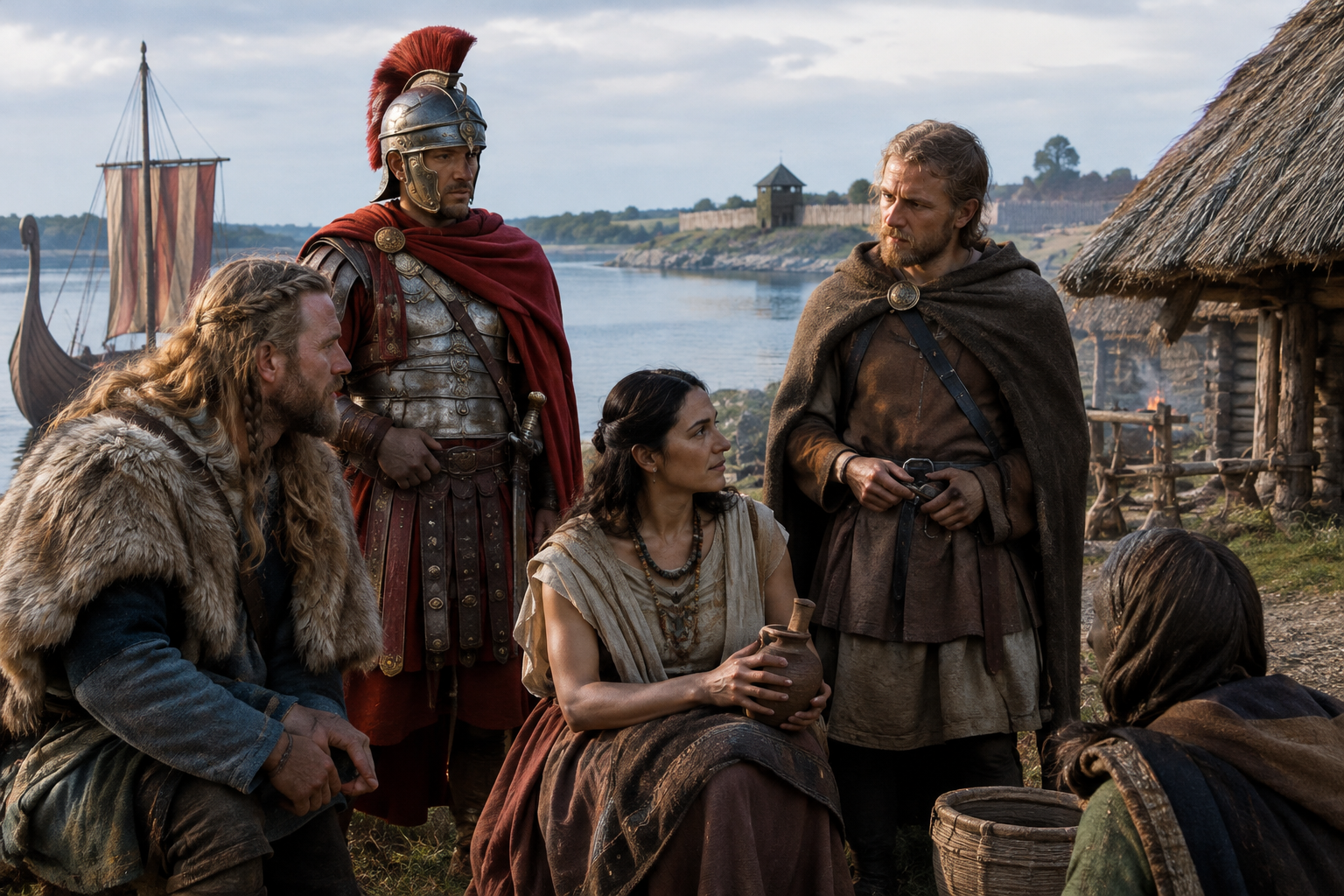
At Viking Age Sigtuna, one of the earliest towns of Christian Sweden, two men dated to about AD 935 appear in the ancient DNA record with a reported association to Y-DNA haplogroup I1a1b3: samples gtm029 and nuf005. That is immediately interesting, not because two graves can stand for a whole people, but because Sigtuna was exactly the sort of place where lineages, loyalties, and identities were being reshaped. This was a royal and ecclesiastical centre in the making, a town tied into Baltic exchange, kingship, conversion, and the new urban life of Scandinavia.
The value of a lineage like I1a1b3 lies in that setting. Y-DNA follows one direct paternal line only, not a person's whole ancestry, yet it can still show how particular male lines were present in real historical communities. Here, the evidence places this branch in central Sweden in the Viking Age and again in medieval Jamtland, giving us a small but useful archaeological trail rather than a legend.
Sigtuna was founded in the late 10th century near Lake Malaren, in a landscape already dense with power, cult, trade, and communication. By the time of the two individuals linked here, the region was moving through a period historians love to tidy up with labels such as "Viking" or "early Christian", but the reality was much messier. Towns were growing, rulers were experimenting with new forms of authority, and people were buried in ways that reflected both continuity and change.
That is why gtm029 and nuf005 matter. Two male individuals from the same town and approximate period, both associated with I1a1b3, suggest that this paternal branch was not some remote curiosity but part of the male population present in a key Scandinavian urban centre. Without inventing kinship or social rank, we can still say that the branch belonged to men living in a town central to the political consolidation of early Sweden.
A major ancient DNA study of the Viking world, published in Cell, helped establish just how varied Viking Age populations could be across Scandinavia and beyond. Sigtuna fits that wider picture well: not an isolated village, but a place where local Scandinavian lines existed within a broader world of mobility, contact, and cultural change.
The haplogroup name in this article is I1a1b3, a downstream branch within the broader I1 family, which is well known in northern Europe and especially associated with Scandinavian paternal history. But one must be careful here. It is easy to slide from "I1 is common in Scandinavia" to "this exact sub-branch must therefore explain all Scandinavian history", and that is precisely the kind of leap the evidence does not support.
What we can say more safely is narrower and more useful. The reported presence of I1a1b3 in two Viking Age Sigtuna males and two medieval Vasterhus males places this branch in documented Scandinavian contexts across several centuries. That does not prove an unbroken local dynasty, nor does it map a single migration route, but it does show continuity of a paternal line within historically important Swedish settings.
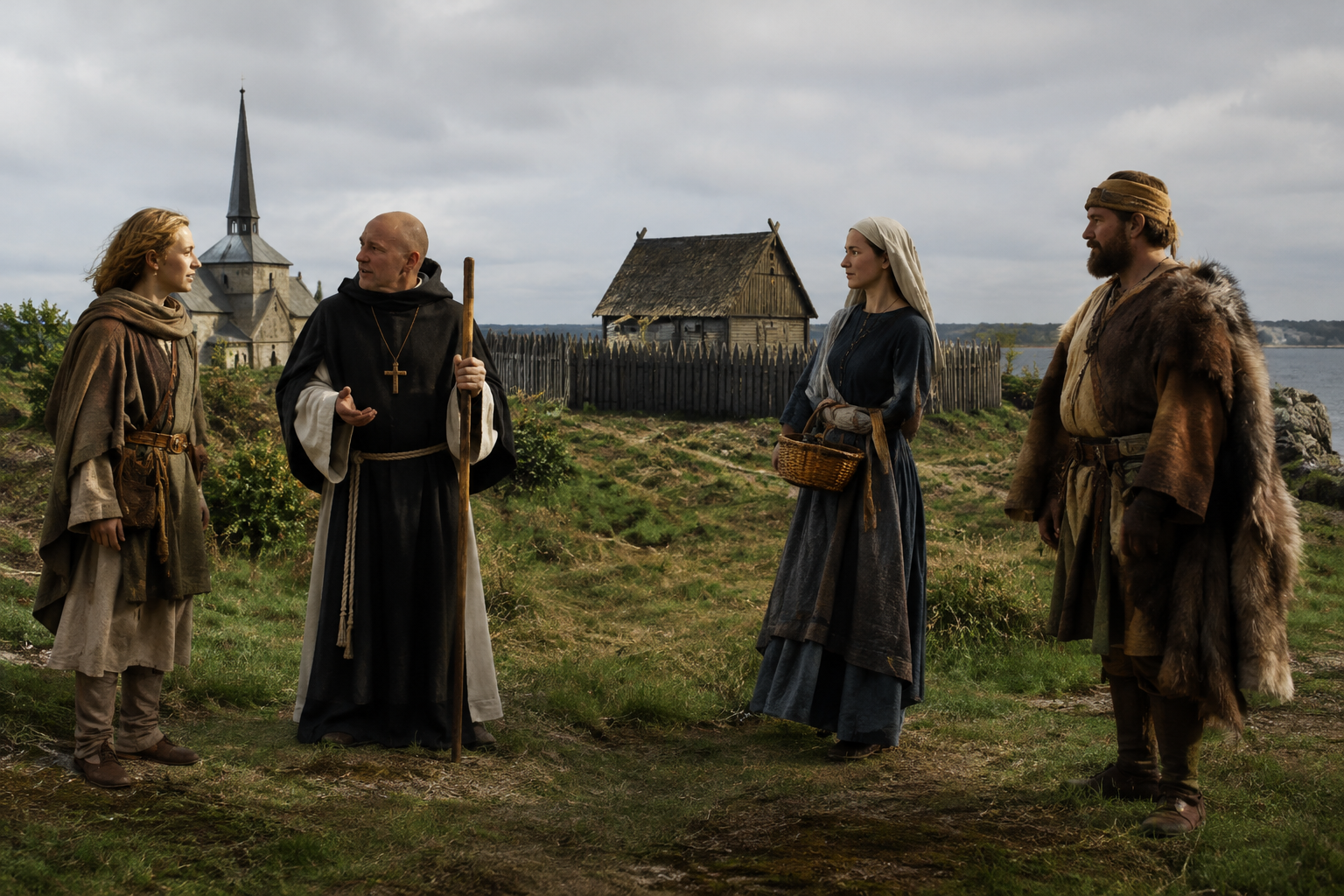
The later evidence comes from Vasterhus in Sweden, with two medieval individuals dated to about AD 1313: mbv240 and mbv191. Vasterhus is famous in Scandinavian archaeology because its church and cemetery offer an unusually valuable glimpse of an ordinary medieval community. This is not a saga battlefield or a royal mausoleum. It is, in some ways, more informative than that: a place where the dead of a settled Christian population accumulated over generations.
That change of setting is important. Between the Sigtuna men of about AD 935 and the Vasterhus men of about AD 1313 lies a transformed Scandinavia. Kingdoms had hardened, dioceses had taken root, parishes structured local life, and churchyards became the normal geography of remembrance. To find the same article haplogroup associated with men in both worlds suggests that this paternal branch persisted through the long transition from Viking Age society into fully medieval Sweden.
Research on medieval Swedish burials, including work connected to Vasterhus and other multiple-burial contexts, has explored how biological kinship and social relationships appeared in the archaeological record. A relevant project outline can be found here. Even without over-claiming details for these two men, that line of research reminds us that churchyard populations were made up of real family networks, not anonymous statistics.
One of the most attractive things about this little cluster of evidence is its social range. Sigtuna was plugged into power. Vasterhus represents a more local medieval world, structured around parish life and burial in consecrated ground. The same reported haplogroup appears in both. That gives I1a1b3 a story grounded not in fantasy pedigree, but in the spread of everyday and urban male lines across Swedish history.
There is also a geographical point worth noticing. Central Sweden and Jamtland are not the same historical region, and medieval Scandinavia was never culturally flat. Yet both belong to the wider northern world in which local communities, regional identities, and long-distance contacts all overlapped. A branch found in both places sits comfortably within that pattern of Scandinavian diversity rather than contradicting it.
If you are interested in how genetics illuminates population change around the Baltic and in neighboring regions, early medieval Finland offers a useful comparison in a different but connected northern setting.
Single ancient Y-DNA assignments are intriguing; repeated ones are better history. With gtm029 and nuf005 at Viking Age Sigtuna, then mbv240 and mbv191 at medieval Vasterhus, we are not looking at a one-off occurrence. We are seeing a paternal branch turn up more than once, in more than one place, and in two clearly different historical moments.
That still does not make I1a1b3 "the Viking haplogroup", nor does it attach the branch to a named dynasty or noble house. What it does do is anchor the lineage in excavated Scandinavian lives. For family historians, that is often the most valuable thing ancient DNA can offer: not romance, but context.
For a broader look at how post-Viking burial communities in Scandinavia can illuminate kinship, religion, and continuity, the early Christian graves of Sweden make an especially useful companion case.
The strongest insight from I1a1b3 is not grandeur but placement. This branch is associated here with men from Viking Age Sigtuna and medieval Vasterhus, linking it to two real Swedish communities separated by roughly four centuries and by major historical change. If you carry this haplogroup today, the ancient evidence does not name your family or promise a saga hero, but it does place your direct paternal line within the kind of Scandinavian world where towns formed, parishes endured, and male lineages passed quietly through history.
Comments