Haplogroup I1a1b1b1a2

– 4 min read


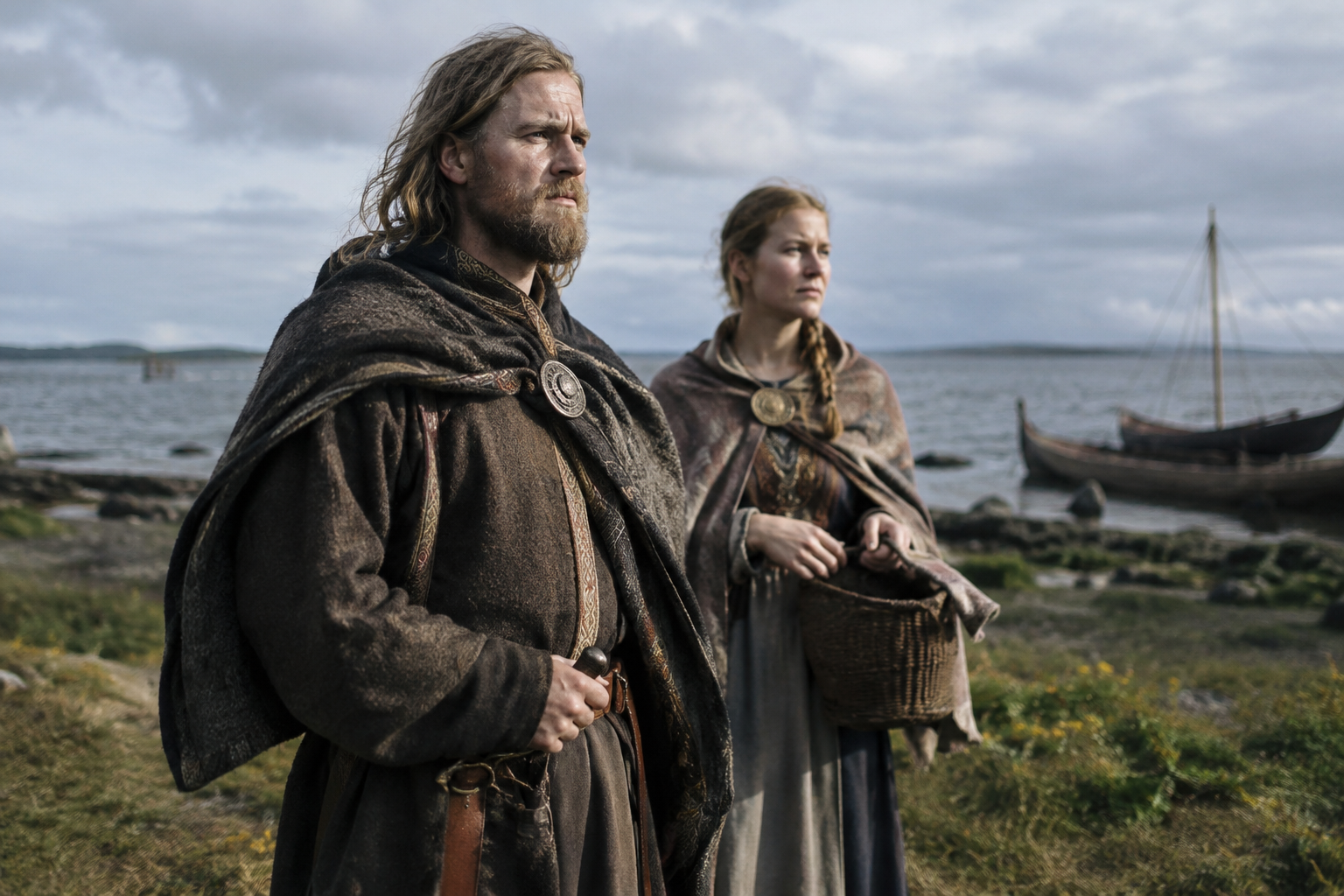
One of the clearest ancient signposts for haplogroup I1a1b1b1a2 comes from Salme on the island of Saaremaa in Estonia, where the sample VK510 is dated to around AD 725. Salme is not just another Viking Age site on the Baltic fringe. It has become one of the most discussed early Scandinavian-era finds in the eastern Baltic because it captures a moment when seaborne movement, raiding, alliance, and migration were pulling the northern world into tighter contact.
That matters for this Y-DNA branch because I1, the wider paternal lineage above I1a1b1b1a2, is strongly associated with northern Europe and is especially frequent in Scandinavia today. A subclade such as I1a1b1b1a2 is much narrower, and one ancient individual does not map its whole history. But VK510 gives this branch a securely early medieval foothold in a real archaeological setting: the Baltic world at the dawn of the Viking Age.
The Salme finds are famous because they push us into a period slightly earlier than the great saga age of kings, settlers, and Atlantic voyages. Around the early eighth century, the Baltic was already a busy corridor. Saaremaa sat in a strategic position between Scandinavia, the eastern Baltic, and the trading and raiding routes that linked these shores to wider northern Europe.
In that setting, VK510 is especially interesting. The sample ties I1a1b1b1a2 to a man from a place where mobility was not theoretical but archaeological fact. Y-DNA traces one direct paternal line only, not a person's full ancestry, but paternal lines can still be historically revealing when they appear in places known for movement and contact. Here the significance is not that one man "proves" a migration story all by himself, but that this branch was present in a community caught up in the early expansion of Scandinavian-linked activity across the Baltic.
An ancient DNA study investigating these northern populations was circulated at this research preprint, which is one of the reasons sites like Salme have become so important in discussions of mobility and population history in the Viking Age world.
Baltic links in early medieval Finland
There is always a temptation to squeeze too much history out of a long haplogroup label. The wider lineage I1 has a deep and complicated northern European history, but the article branch I1a1b1b1a2 is a much finer twig on that tree. Without a larger set of securely published ancient examples, it would be careless to assign this exact subclade a grand migration route, a founding tribe, or a single ethnic identity.
What we can say, more carefully, is that the branch appears here in an early medieval Baltic setting strongly connected to Scandinavian activity. That fits a broader picture in which some paternal lines within I1 were carried by men moving through maritime networks linking Sweden, the eastern Baltic, and beyond. It does not mean everyone at Salme belonged to the same paternal family, nor that every later carrier of this subclade descends from Viking warriors. Ancient DNA rarely gives us such neat stories.
Saaremaa was no backwater. In the first millennium AD it lay on one of the great watery crossroads of the north. The eastern Baltic was a zone of encounter where local communities, visiting crews, traders, and armed groups overlapped. Archaeology across the region keeps showing that the sea did not divide these societies nearly as much as it connected them.
That is why a haplogroup like I1a1b1b1a2 appearing at Salme is historically suggestive. It places this paternal line inside a world of ships, seasonal expeditions, and cross-Baltic contact. The important point is not romance but geography: some lineages spread because men moved, settled, fought, married, and died far from where their paternal ancestors had lived centuries earlier. Salme offers one hard data point for exactly that kind of world.
Germanic languages and ancient genomics
In broad terms, I1 is one of the paternal lineages most often discussed in connection with Scandinavia and populations influenced by Scandinavian expansion. That does not make every I1 branch identical, and it certainly does not turn a Y-chromosome into an ethnic badge. Still, when a branch under I1 turns up in an early medieval Baltic context like Salme, historians and geneticists alike take notice because it sits in a plausible archaeological frame.
This is where public discussions sometimes go astray. People often want a haplogroup to correspond neatly to "Viking," "Swede," "Gotlander," or "Germanic." Real past populations were less tidy. A lineage may persist through many language shifts, political changes, and social identities. What Salme shows is not a simple label, but the presence of a paternal branch in a maritime contact zone central to the formation of the Viking Age world.
For readers interested in the wider genetic background to these early medieval northern populations, MyTrueAncestry's discussion of Viking Age genetics gives a good sense of how varied these communities could be.
The strength of VK510 is that it is anchored in a place and period that already matter historically. Salme has become a key site because it belongs to that liminal moment before the Viking Age fully erupts in written history. The sample therefore helps bridge two kinds of evidence: the archaeological record of movement around the Baltic, and the paternal lineages that can sometimes be tracked within it.
That does not mean I1a1b1b1a2 began at Salme, or that Saaremaa was its homeland. Rather, this ancient individual shows the branch participating in the eastern Baltic story by the eighth century AD. As more ancient Y-DNA results accumulate from Scandinavia, Estonia, Finland, and the wider North Sea world, such isolated points can begin to form patterns. For now, Salme remains the most concrete anchor in this article's evidence.
If your Y-DNA falls under I1a1b1b1a2, the most responsible historical takeaway is not a fantasy pedigree but a northern connection with at least one documented early medieval appearance in the Baltic sphere. The ancient sample VK510 from Salme places this branch in a world shaped by Scandinavian-era seafaring and contact around AD 725. That is a vivid clue, and a useful one, even if it is not the whole story of the lineage.
In other words, this haplogroup is best understood not as a badge of a single people, but as part of the paternal landscape of northern Europe at a time when the Baltic was becoming one of the great highways of medieval history.



Comments