Haplogroup I1a1b1a4a2f1a1a5b

– 4 min read


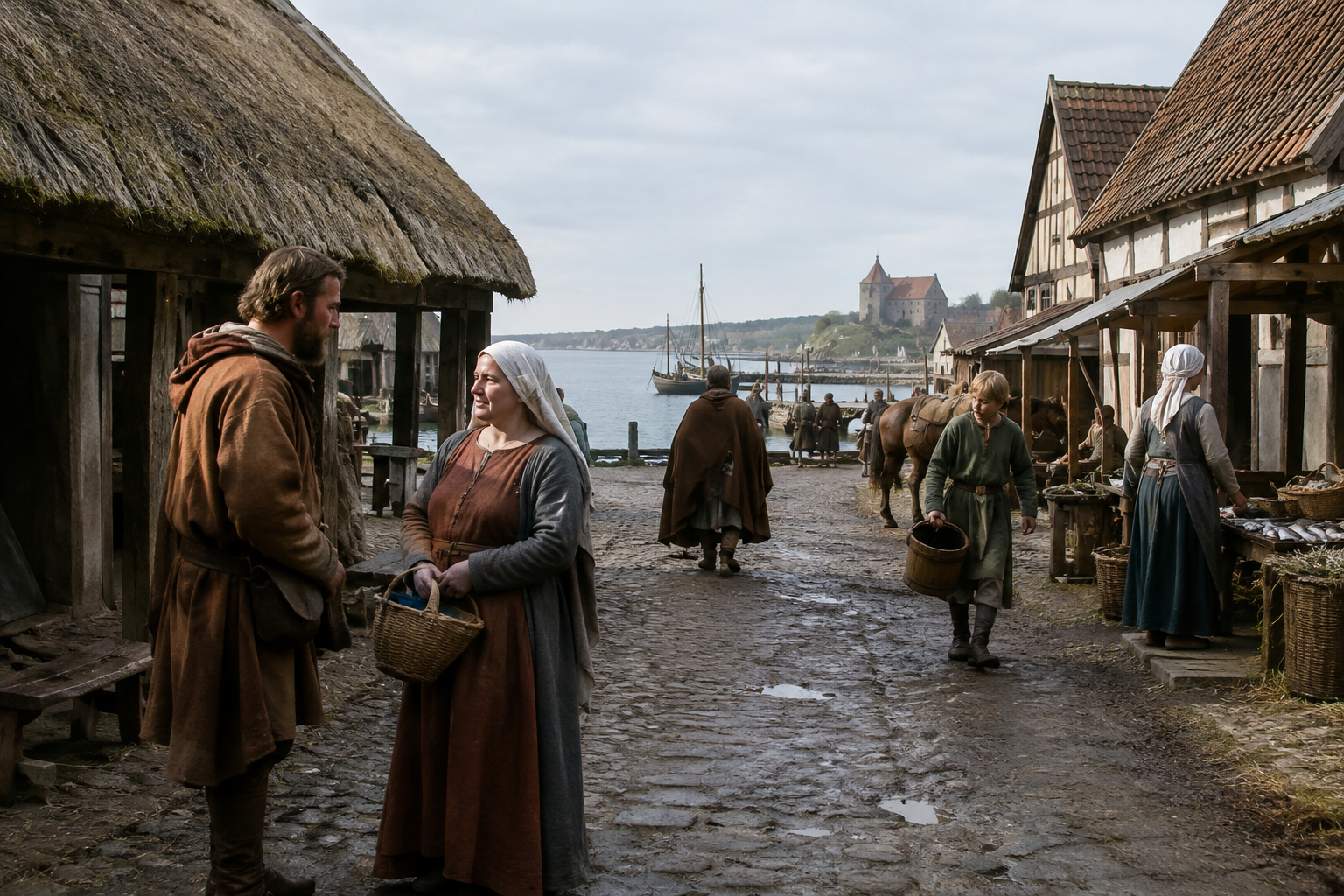
In around AD 1400, one man in Holbaek on Zealand entered the archaeological record with a label so plain it almost hides its interest: CGG101837, a medieval individual from Ahlgade. Yet for Y-DNA researchers, even a single well-placed man can matter a great deal. This individual is associated here with the paternal haplogroup I1a1b1a4a2f1a1a5b, a very narrow branch inside the wider I1 lineage that is strongly tied to northern Europe, especially Scandinavia.
That may sound forbiddingly technical, but the historical point is quite straightforward. A Y-chromosome branch like this tracks one direct paternal line only: father to son across the centuries. It does not define a whole person's ancestry, language, or social identity. What it can do, especially when matched to excavated people in dated settings, is pin a paternal line to a real landscape. In this case, the landscape is late medieval Denmark.
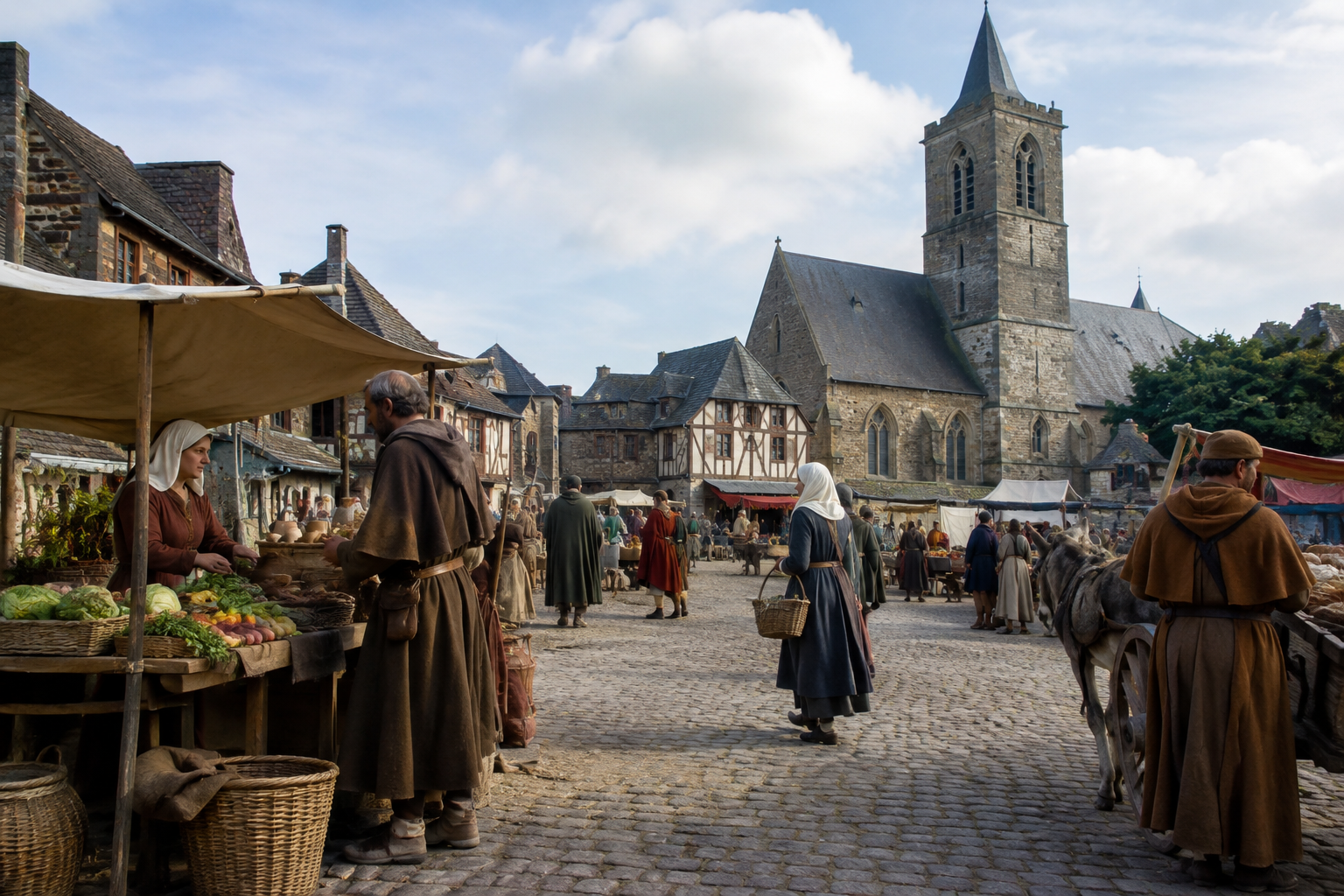
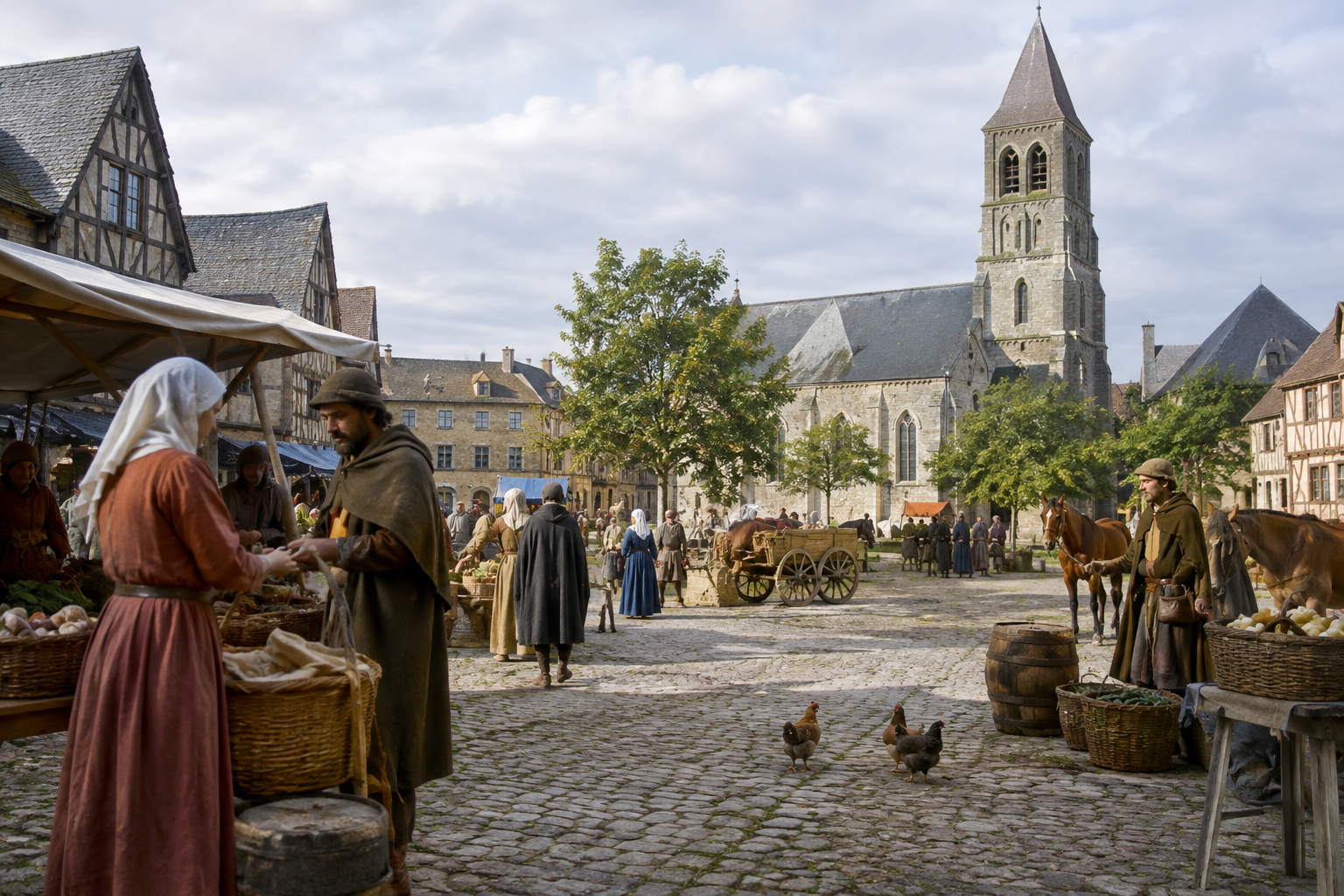
Holbaek sits on Zealand, the island that has long been one of the political and demographic centers of Denmark. By around AD 1400, this was no remote Viking outpost but part of a settled, Christian, commercially connected kingdom. Ahlgade itself is today known as a central street in Holbaek, and the sample's importance lies less in courtly glamour than in its ordinary placement within a lived medieval townscape.
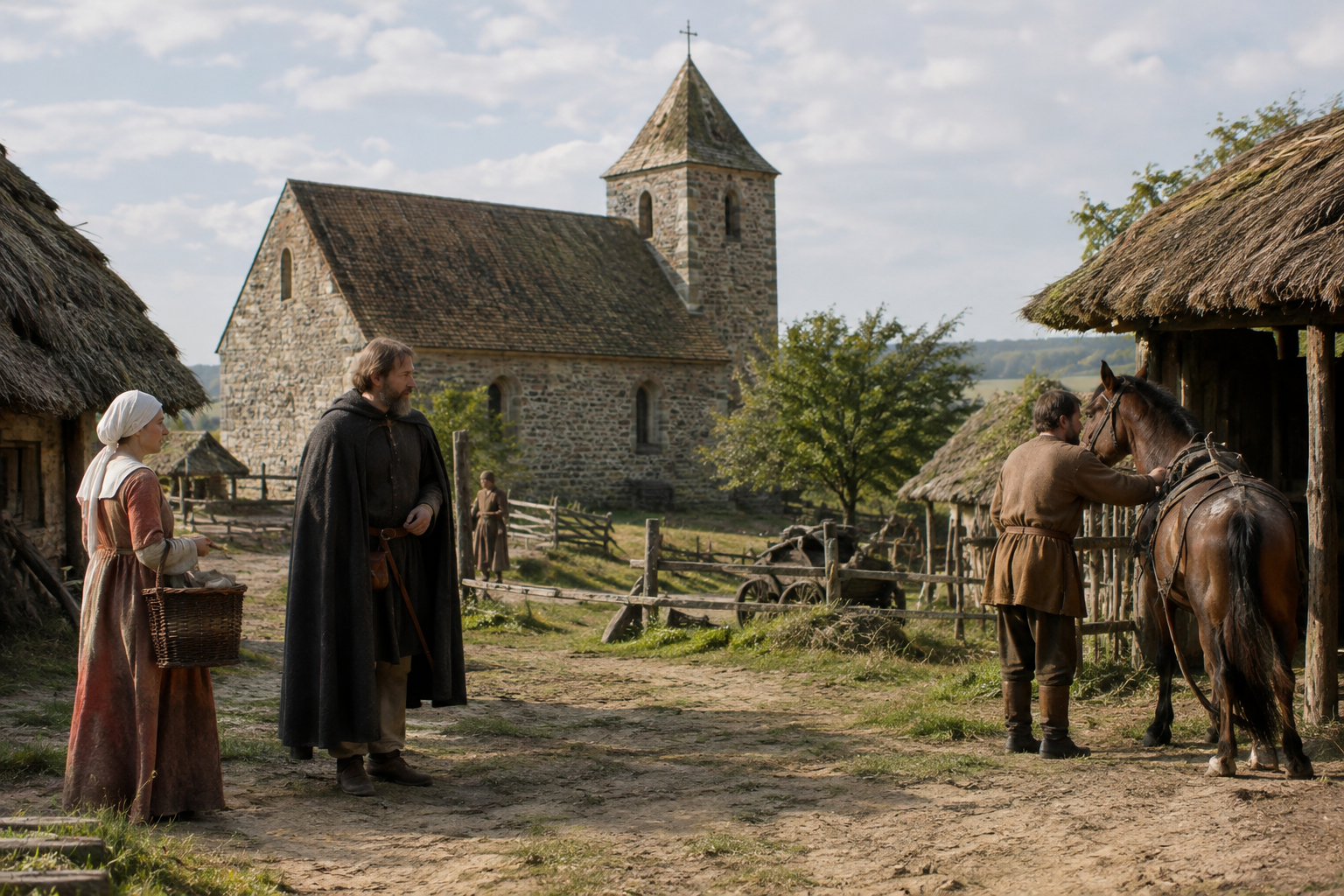
That matters because Y-DNA often becomes most interesting when it is not attached to kings and legends, but to people embedded in normal communities. CGG101837 gives us a paternal line present in medieval Zealand after the Viking Age, after conversion, and after the formation of a more recognizably medieval Danish society. Instead of treating I1 as a purely saga-age phenomenon, this sample anchors one of its downstream branches in the everyday population of later medieval Denmark.
An ancient DNA study examining these Danish materials is linked through this research preprint. Without inventing details beyond the record at hand, it is enough to say that such work is part of a larger shift in archaeology: medieval burials are no longer only sources for churchyard history or town development, but for reconstructing how paternal lineages persisted through major social change.
The wider parent haplogroup here is I1, one of the best-known Y-DNA lineages in northern Europe. It appears frequently in discussions of Scandinavian population history, Germanic-speaking regions, and later North Sea migrations. But the article's branch, I1a1b1a4a2f1a1a5b, is much more specific than that. A terminal or near-terminal label of this kind marks a twig on the tree, not the whole trunk.
That distinction is crucial. We should not lazily pour the entire prehistory of I1 into this one tiny subclade and pretend the matter is settled. What the Holbaek individual really gives us is something more careful and more useful: evidence that this very specific paternal line, or a line reported as belonging to this branch, was present in medieval Denmark. For people researching their own direct male ancestry, that is often the most valuable kind of clue - not a fantasy of heroic founders, but a firmly dated appearance in a real historical population.
There is a habit in popular history of speaking as if Scandinavian male lineages belong only to the Viking Age, and then somehow vanish when the longships do. Archaeology says otherwise. Medieval Denmark was not a break with the earlier north so much as a transformation of it: older populations passed through Christianization, urbanization, changing political authority, and expanding trade networks.
A sample like CGG101837 sits exactly in that transformed world. By AD 1400, Denmark had monasteries, market towns, written administration, and dynastic politics quite different from the early Viking period. Yet the paternal line survives within that altered setting. In other words, the significance of this haplogroup here is not conquest but continuity: a northern European male line still present in Zealand deep into the later Middle Ages.
Germanic Languages and Genomics
If this same branch had turned up in a peripheral or highly mobile frontier setting, the historical reading might be different. But Zealand is central terrain. It sits within the heartland of Danish state formation, close to the routes linking the Baltic and the Kattegat, and near the islands and coasts that shaped medieval Danish power.
That does not prove that every man of this lineage was local for countless generations, nor that one burial can stand in for all of Denmark. But it does make the placement historically resonant. A paternal branch associated with I1a1b1a4a2f1a1a5b is not appearing here in some improbable corner: it appears in one of the most historically meaningful regions of Scandinavia.
The setting also fits broader archaeogenetic interest in Denmark's long population history, from prehistoric transitions to historic communities. For readers wanting wider context on how Denmark changed over much longer timescales, the deeper background is worth exploring.
With only one named ancient individual in view, the responsible approach is restraint. We cannot turn CGG101837 into a dynasty founder, a Viking raider, or a representative of all medieval Danes. We cannot infer his profession, status, or family history from the haplogroup alone. Nor should we confuse a medieval Danish context with a claim about the exact place where this subclade first formed.
But one sample is still evidence. It tells us that a highly specific paternal line linked to the broader Scandinavian-associated I1 family was present on medieval Zealand around AD 1400. That is already historically meaningful, because it places a living branch of the Y-chromosome tree inside a documented post-Viking, Christian, urban Danish world.
That kind of evidence also helps bridge two conversations often kept apart: family history and archaeology. Genealogists tend to ask, "Where was my paternal line?" Archaeologists tend to ask, "Who lived in this town, and how did medieval society change?" Here, the answer to both questions briefly meets in Holbaek.
Baltic Connections in the North
The most distinctive thing about haplogroup I1a1b1a4a2f1a1a5b in the present evidence is not an imperial pedigree or a dramatic migration story. It is that one direct male line can be placed, however modestly, in late medieval Holbaek on Zealand through sample CGG101837. For someone carrying this haplogroup today, that does not guarantee descent from any famous house, but it does suggest a paternal history that fits convincingly within the Scandinavian and specifically Danish historical world.

Comments