Haplogroup I1a1b1a1e2b

– 5 min read


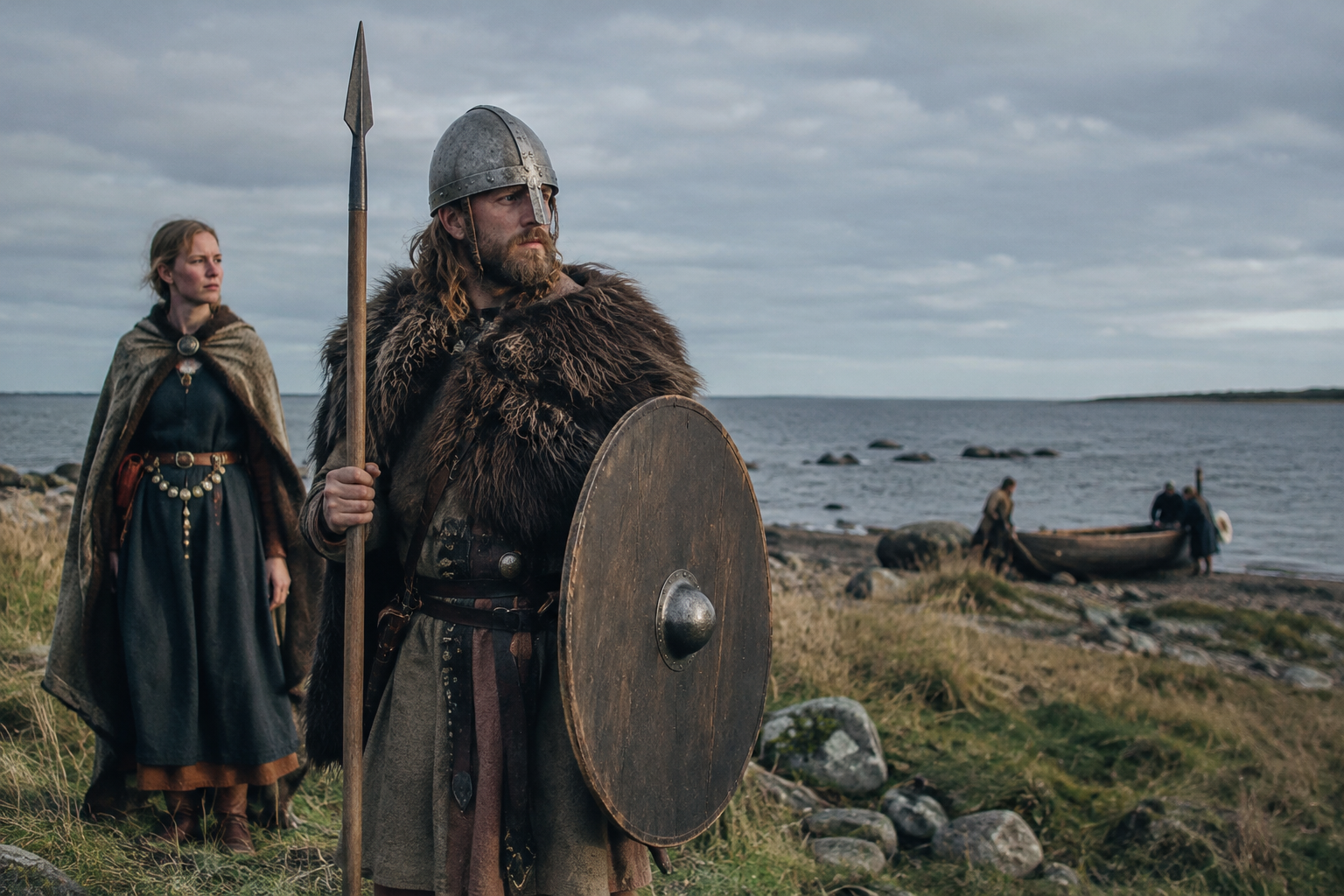
In around AD 725, a man labeled VK509 was buried at Salme on the island of Saaremaa, off the coast of present-day Estonia. He belongs to the dramatic Salme find, one of the most discussed early Viking Age discoveries in the Baltic: a group of Scandinavian-associated dead recovered far from the later royal capitals of Scandinavia, in a region that sat on a busy and dangerous maritime frontier. In MyTrueAncestry terms, VK509 is associated with the Y-DNA haplogroup I1a1b1a1e2b, a very specific branch within the broader I1 paternal lineage.
That matters because Salme is not just another Viking burial ground. It captures a moment before the classic Viking Age was fully underway, when seaborne expeditions, raiding, diplomacy, and local conflict were already linking Scandinavia and the eastern Baltic. A Y-chromosome lineage traces only one direct paternal line, not a person's whole ancestry or identity, but in a case like this it helps place one excavated man inside the larger story of early northern Europe.
The Salme burials became famous because they seem to preserve a violent episode connected with Scandinavian seafaring in the eastern Baltic. The date attached here for VK509, around AD 725, places him in a formative period: earlier than the great Viking kingdoms, yet already part of a world of ships, weapons, and organized groups moving across the sea. Saaremaa was no peripheral backwater. It stood on a strategic route between Scandinavia, the Gulf of Riga, and the wider eastern Baltic.
For the haplogroup I1a1b1a1e2b, this is the key anchor point in the present evidence. We are not looking at a vague modern distribution map or a romantic claim about "Viking blood". We are looking at one ancient individual from a named site, with a period and place that fit a historically meaningful zone of contact. That is the real value of ancient DNA when it is used carefully.
An ancient DNA study examining these burials and related Scandinavian-era material was circulated through research on early medieval and Viking-period population history in the Baltic sphere. Without pretending that one paper or one skeleton can settle every question, Salme has become one of the clearest archaeological windows onto the human side of early Scandinavian expansion eastward.
The broader haplogroup I1 is strongly associated in ancient DNA with northern Europe, especially Scandinavia and nearby regions during the Iron Age and early medieval period. But the article haplogroup here is not I1 in general. It is the much narrower branch I1a1b1a1e2b, and that distinction matters. A tight terminal branch can point to a more recent paternal clustering than the parent lineage, but only when enough ancient and modern evidence exists to map it with confidence.
With the evidence provided here, caution is essential. VK509 offers a concrete ancient association for this branch, yet one sample does not define the whole history of the subclade. It does, however, place the branch in a recognizably Scandinavian-connected maritime setting in the early eighth century. That alone is historically interesting, because it ties a paternal line not to legend, but to an excavated community caught up in Baltic mobility and conflict.
It is tempting to imagine the Viking world as beginning suddenly with famous raids in the British Isles. Archaeology tells a messier and more interesting story. Long before the later sagas and royal dynasties, the Baltic was full of movement: traders, raiders, mercenaries, and local powers testing one another across short but hazardous sea lanes.
Saaremaa, where VK509 was found, sits in exactly that sort of landscape. The island lies between Scandinavia and the eastern Baltic mainland, and its position helps explain why the Salme dead matter so much. They are evidence for organized overseas ventures at an early date, showing that the social and military habits associated with the Viking Age were already developing in this zone.
For someone carrying a branch like I1a1b1a1e2b today, this does not prove descent from a named Viking, nor membership in any single "tribe". What it does suggest is that this paternal line was present in the northern world that fed into early Scandinavian expansion. In other words, the lineage sits comfortably within the real historical geography of the north Baltic rather than in some vague mythical past.
Germanic languages and ancient genomics
Modern surname projects and present-day haplogroup frequency charts can be useful, but they often flatten history. Ancient DNA does the opposite. It restores chronology. It tells us that a lineage was not merely "northern" in the abstract, but present in a particular person, in a particular burial setting, at a particular historical moment.
VK509 gives I1a1b1a1e2b that chronological footing. He was living in the centuries when post-Roman Europe was reorganizing itself and when Scandinavian maritime networks were becoming more assertive. This was also the period in which identities that later appear in written sources as Danes, Swedes, and other northern peoples were still fluid and regional. Genetic lineages do not map neatly onto those labels, but Salme shows the kind of world in which such labels were taking shape.
That wider pattern fits neatly with other MyTrueAncestry discussions of northern and early medieval population change. The Baltic and Scandinavian story is best read alongside evidence from neighboring regions, where mobility, warfare, and cultural blending were equally important.
Early medieval Baltic connections
One reason the Salme evidence has attracted so much interest is that it resists easy national storytelling. The dead at Salme were found in Estonia, but the find is deeply tied to Scandinavian seaborne culture. That is precisely the sort of mixed setting in which Y-DNA becomes useful: not because it gives us a complete identity, but because it adds one more hard data point to a historically mobile world.
For the branch I1a1b1a1e2b, the important lesson is context. This is not merely a lineage floating somewhere in "Germanic" history. Its best-attested ancient appearance here is in an early medieval Baltic setting shaped by Scandinavian connections. That aligns well with broader archaeogenetic work on northern Europe, where maritime corridors mattered enormously in moving people as well as objects and ideas.
If you want a broader view of how these northern lineages traveled and mixed, it helps to compare Salme with studies from later Viking and post-Viking settings. The point is not that they are all the same population, but that they belong to the same changing northern seascape.
The clearest ancient face of I1a1b1a1e2b in the evidence here is VK509 from Salme I on Saaremaa, around AD 725: a man from an early Scandinavian-connected Baltic burial context at the threshold of the Viking Age. That does not turn every present-day carrier into a direct heir of one famous expedition. But it does place this paternal branch within a real archaeological world of ships, violence, and movement across the northern seas.
For family historians, that is often the most useful kind of result: not fantasy pedigree, but a securely historical setting. In this case, the setting is early medieval Saaremaa, where one paternal line now called I1a1b1a1e2b was carried by a man buried in one of the most striking northern discoveries of the age.
Comments