Haplogroup I1a1a2b

– 5 min read


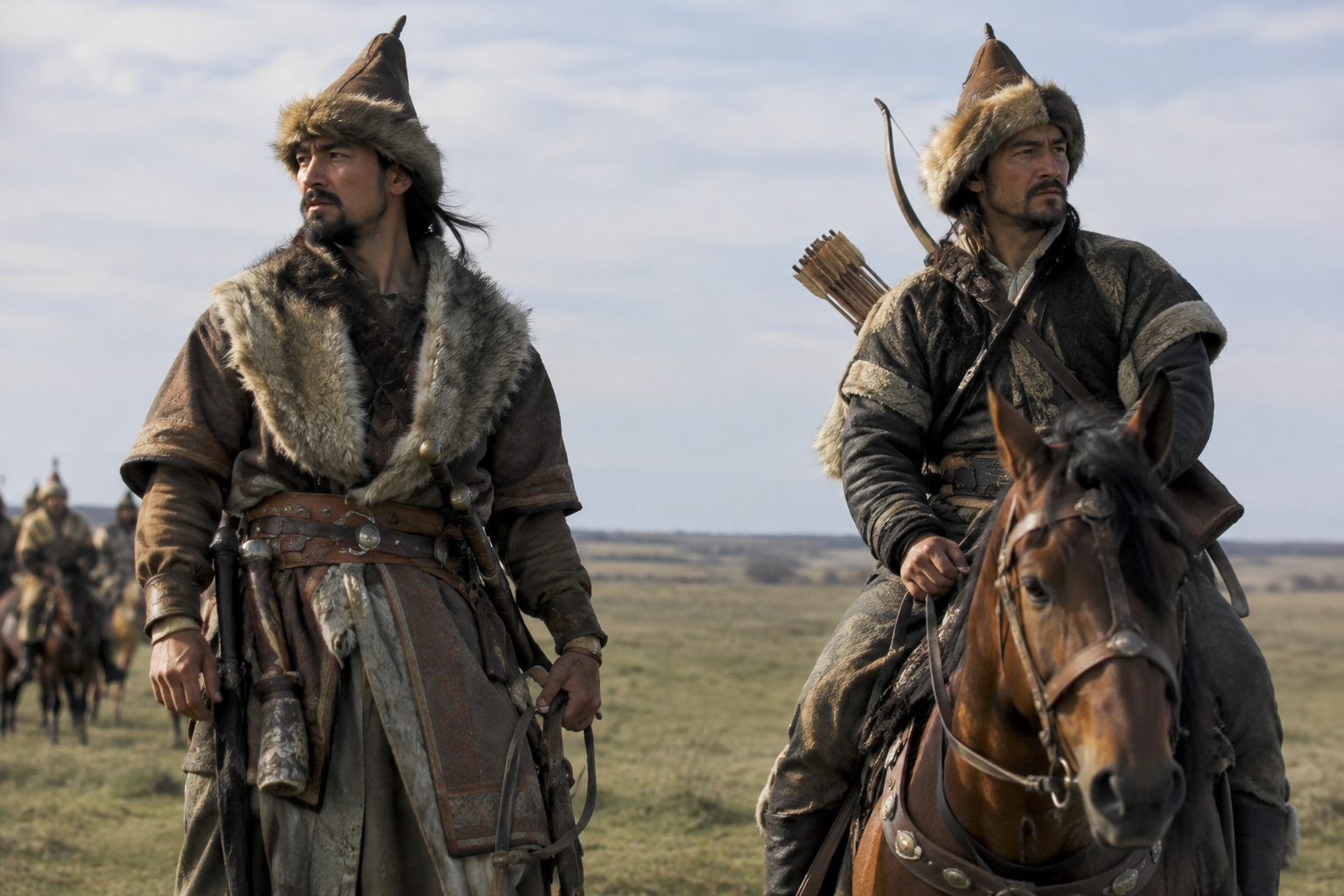
At Magyarhomorog in eastern Hungary, two men buried in the age of the Hungarian Conquest stand out for a very specific reason. The individuals labelled MHper15_GE and MHper16_GE, dated to around AD 950, were reported with the Y-chromosome haplogroup I1a1a2b - a paternal line more often associated with northern Europe than with the steppe world usually invoked in popular accounts of the conquering Magyars.
That matters because the 10th-century Carpathian Basin was not populated by a single, neat "tribal genome". It was a frontier of alliances, recruited followers, older resident populations, and incoming groups. A Y-DNA lineage traces one direct paternal line only, not a man's whole ancestry, but when the same branch appears twice at one conquest-period cemetery, it becomes a useful clue to the social variety inside early medieval Hungary.
Magyarhomorog belongs to the archaeological landscape of the later Hungarian Conquest period, when communities tied to the new Hungarian polity were being buried across the Great Hungarian Plain. The two relevant burials here, MHper15_GE and MHper16_GE, are both dated to about AD 950 and classified as Hungarian Late Conqueror individuals.
Even with sparse sample-by-sample details, the pairing is important. Two men from the same site and period carrying I1a1a2b suggest that this paternal line was not an isolated accident in the cemetery record. That does not automatically make them close relatives, nor does it tell us whether the lineage had arrived recently or had deeper roots in the region. But it does show that a northern-associated paternal branch had found a place within a conquest-period population in Hungary.
A genetic study of Hun, Avar, and conquering Hungarian period groups brought attention to exactly this sort of diversity in the Carpathian Basin, where paternal lines linked to different parts of Eurasia appear side by side in elite and non-elite contexts alike. For the broader research context, see this study of Y-chromosome haplogroups from nomadic-period populations in the Carpathian Basin.
Haplogroup I1 is a well-known branch of European Y-DNA, with especially strong later associations in Scandinavia and other parts of northern Europe. But this article is about I1a1a2b, a narrower sub-branch, and one should be careful not to dump the entire history of I1 onto these two men as if a broad family tree could substitute for evidence.
What can safely be said is more modest and more interesting. By the mid-10th century, a branch assigned here as I1a1a2b was present among men buried in a Hungarian conquest-period cemetery. That fits a world in which the Carpathian Basin was deeply connected to the Baltic, the forest-steppe, central Europe, and the Pontic zone. Armies, tribute systems, marriages, fosterage, and the movement of retainers could all carry paternal lines far beyond the place where they had first become common.
In other words, an I1a1a2b result at Magyarhomorog is not evidence that these men were "really Scandinavians" in some simple ethnic sense. It is evidence that paternal ancestry linked to that branch had entered the human mixture from which 10th-century Hungarian communities were formed.
For years, older historical writing liked tidy labels: nomads from the east, settlers from the west, locals underneath. Ancient DNA has made that picture harder to maintain. Conquest-period cemeteries repeatedly show that early Hungarians were biologically varied, even when they shared archaeological customs or political allegiance.
The two Magyarhomorog men fit that larger pattern rather well. A community could be culturally part of the conquering Hungarian world while containing paternal lines with very different deeper histories. That should not surprise us. Early medieval confederations were built precisely by combining groups, not by preserving some sealed ancestral purity.
Readers interested in how this complexity appears in high-status Hungarian burials may also want to compare later work on medieval elites and conquest-period ancestry in the kingdom's ruling strata.
If one strips away modern nationalism for a moment, the early medieval map looks gloriously messy. The Carpathian Basin sat at the meeting point of steppe corridors, Danubian routes, and central European networks. Scandinavian-connected traders and warriors had moved along the rivers of eastern Europe for centuries; Germanic-speaking groups had earlier crossed and settled the region; and local post-Roman populations had hardly vanished into thin air.
So a lineage like I1a1a2b does not need a melodramatic single migration story. It could reflect older movement from the north into central Europe, incorporation of men from frontier populations into Magyar-led groups, or inheritance from communities already present before the conquest. With only these two Magyarhomorog samples, we cannot choose one route with confidence. What we can say is that the conquest-period population was open enough, and connected enough, for such a branch to be there twice over.
This is where archaeology and genetics have to work together rather than elbowing each other aside. Archaeology tells us these are late conqueror burials in a real local community. Genetics tells us that at least two men there shared a paternal branch not stereotypically associated with a purely steppe profile. History supplies the mechanism: early medieval power was made through coalition.
One sample can always be waved away. Two men from the same place and time are harder to dismiss. MHper15_GE and MHper16_GE hint that I1a1a2b may have had some continuing local presence within this cemetery population, whether through kinship, household-level continuity, or a wider cluster of related male lines.
That does not mean the whole cemetery belonged to one paternal clan, and it certainly does not mean all conqueror communities looked the same. But repetition matters. Ancient DNA becomes historically useful not only when it identifies spectacular kings, but when it shows ordinary patterns inside a burial ground: which lineages recur, which ones do not, and how varied a supposedly single people really were.
The same broader lesson appears in studies of migration-period and frontier communities elsewhere in Europe, where archaeological labels often cover genetically mixed groups rather than biologically uniform ones.
If your paternal line falls under I1a1a2b, the Magyarhomorog evidence gives you something precise but properly limited: this branch was present among at least two men in a late 10th-century Hungarian conquest-period cemetery. That places the lineage inside the mixed human world of the early medieval Carpathian Basin, where northern, central European, steppe, and local elements met in the same communities.
That is the real interest of I1a1a2b here. Not a fairy-tale of one people replacing another, and not a promise of royal descent, but a glimpse of how a specific paternal line could travel into a society built out of movement, alliance, and adaptation.
Comments