Haplogroup I1a1a2
– 5 min read


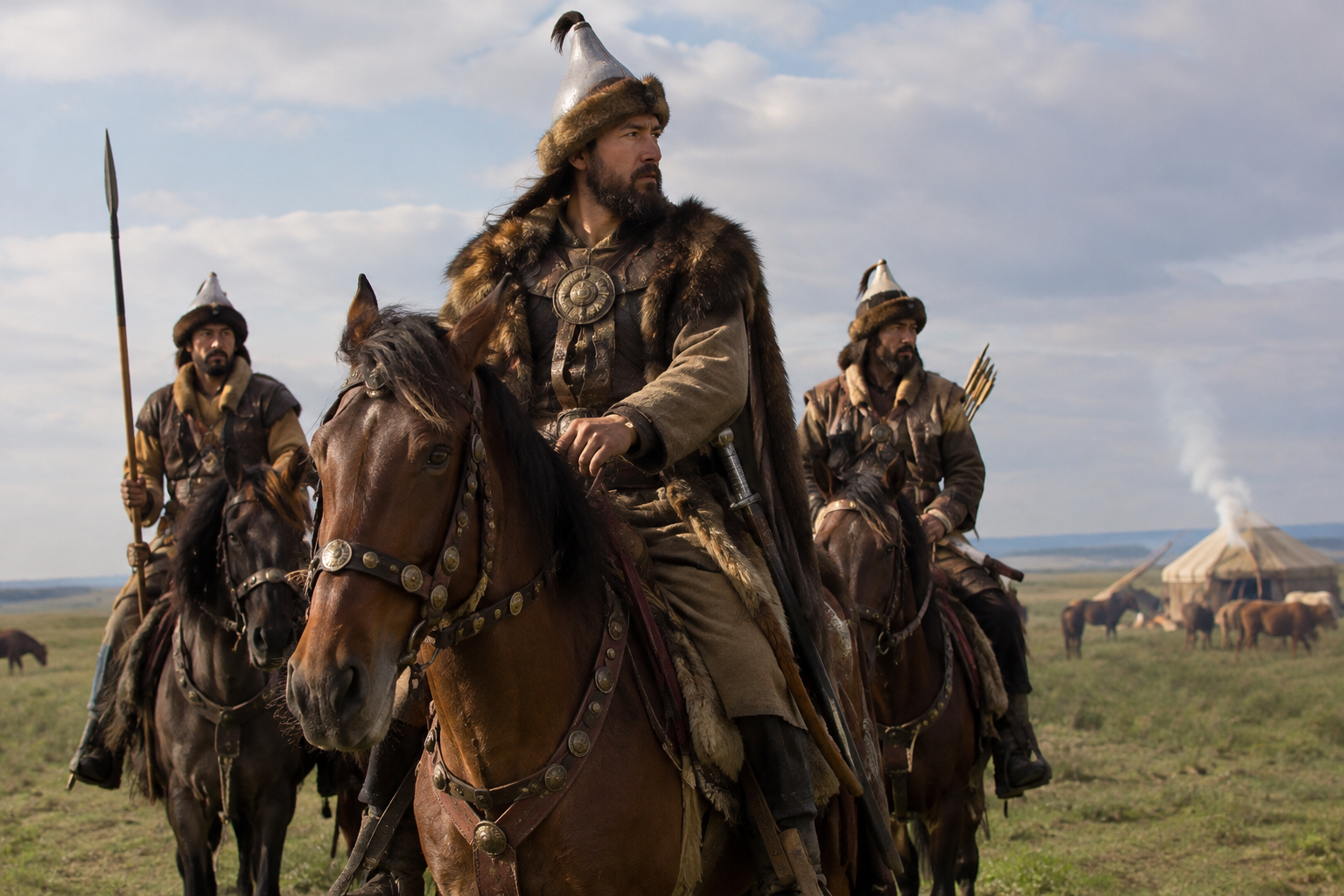
At Magyarhomorog in eastern Hungary, one man from the tenth century has become an unexpectedly useful guide to a much larger story. He is recorded simply as MHper9_GE, a Hungarian Late Conqueror individual dated to around AD 950. In reports connected with conquest-period burials in the Carpathian Basin, his paternal line is associated with I1a1a2 - a branch nested within the broader Y-DNA haplogroup I1.
That may sound like a tiny genetic footnote, but it matters because the Hungarian conquest period was anything but genetically simple. The conquering Magyar world was formed at a crossroads: steppe traditions, local Carpathian populations, and wider European connections all met there. A single Y-chromosome lineage does not tell us a person's whole ancestry or identity, but it can reveal one direct paternal strand moving through this turbulent historical landscape.
Magyarhomorog is one of the burial sites that help anchor the archaeology of the Hungarian conquest period in real people rather than grand national narratives. By the middle decades of the tenth century, the Carpathian Basin had already been transformed by the arrival of Magyar-speaking groups whose political power spread rapidly across the region. Cemeteries from this period preserve a population that was clearly varied, not a single uniform tribe marching in lockstep across the map.
Within that setting, MHper9_GE stands out because I1a1a2 is a paternal lineage more often discussed in connection with northern Europe and Germanic-speaking populations than with steppe-nomadic elites. That does not make this man a "Germanic warrior" in any simplistic sense, nor does it dissolve him into a stereotype of migration-period Europe. What it does show is that conquest-period Hungary contained paternal lines with very different deeper histories.
A research discussion of conquest-era, Hun, and Avar period Y-chromosome results in the Carpathian Basin can be found here: https://www.researchgate.net/publication/337189359_Y-chromosome_haplogroups_from_Hun_Avar_and_conquering_Hungarian_period_nomadic_people_of_the_Carpathian_Basin. For this article, the important point is modest but significant: an individual from a conquest-period Hungarian context is reported with a paternal line tied to I1a1a2, placing a recognisably northern European Y-lineage inside a famously mixed medieval frontier population.
The first thing to say, soberly, is that I1a1a2 is not the same as the whole of I1. Haplogroup I1 is a wider paternal branch with a long history in northern Europe, especially Scandinavia and nearby regions. The narrower label used here identifies only one downstream part of that tree. Without a fuller set of securely published sample-by-sample SNP details, it would be reckless to assign this branch a neat little migration route and call the matter settled.
Still, the broader context is useful. When an I1-related paternal line appears in tenth-century Hungary, it fits a historical world in which northern, central, and eastern Europe were thoroughly entangled. Warriors, retainers, local recruits, marriage networks, and older communities from earlier migration-period centuries all formed part of the human background of the Carpathian Basin. In other words, the interesting thing is not that an "unexpected" lineage turns up there, but that we would be surprised at all.
That perspective also helps avoid one of the common traps in popular DNA history: treating a Y-line as a ready-made ethnic label. MHper9_GE was a man buried in conquest-period Hungary. His paternal line is one clue about ancestry along a single male line, not a complete verdict on language, culture, status, or personal identity.
To understand why this one lineage matters, it helps to remember that the Carpathian Basin had already been layered for centuries before the Magyar conquest. Roman frontier populations, post-Roman communities, Hunnic and post-Hunnic groups, Avar period societies, Slavic-speaking populations, and many others had all left descendants or at least demographic traces. The basin was less a sealed homeland than a collecting point in European history.
So a conquest-period cemetery is not simply a photograph of incoming Magyars. It is more like an archive of contact. Some paternal lines point toward steppe-linked backgrounds; some reflect local continuity; others suggest connections reaching into central or northern Europe. The presence of I1a1a2 in this setting is therefore valuable precisely because it reminds us that the conquest was not a biological replacement event in any crude sense. It was a political and cultural transformation enacted by a population that was already mixed and became more mixed still.
That point has grown clearer as archaeogenetics has expanded. Studies of medieval Hungary increasingly show that elite and non-elite burials alike can preserve varied ancestry profiles, sometimes combining steppe-related elements with European ones. A lineage like I1a1a2 fits that broader pattern of diversity rather well.
If one were writing bad history, this is the moment to conjure a Viking, a mercenary chief, or a lost Saxon adventurer. Better not. The evidence we actually have is narrower and more interesting. By the tenth century, northern and central European paternal lines could reach the Carpathian Basin through many routes, some older than the Magyar conquest itself.
Germanic-associated lineages had circulated through the region for centuries, during the Roman and post-Roman periods and the age of the so-called Migration Period. Long before AD 950, peoples moving between the Danube, the northern plains, and the steppe had been recruiting, intermarrying, and settling. Later conquest-period society inherited that human complexity. So the appearance of I1a1a2 need not point to one dramatic episode; it may instead reflect the accumulated history of Europe's middle zone.
This is where ancient DNA is at its most useful. It does not always deliver a heroic origin story. More often, it punctures them. In the case of MHper9_GE, the lineage suggests that conquest-period Hungary included men whose paternal ancestry linked them, at some remove, to a wider northern European genetic world, even while their burial belongs squarely to a Hungarian conqueror context.
The broader I1 family becomes especially interesting in early medieval studies because it often appears in discussions of northern Europe, Scandinavian-linked movements, and Germanic-speaking regions. But one of the lessons of recent ancient DNA work is that such lineages do not stay obediently within the boundaries of textbook maps. They move with people, and people move in ways that are often socially messy.
That matters for anyone reading too much into a modern haplogroup match. A present-day man with I1a1a2 is not automatically "from Scandinavia" in any simple recent sense, just as MHper9_GE was not reducible to a northern label because of his Y chromosome. What the medieval evidence suggests is a networked Europe, where paternal lines spread across cultural zones long before the neat national histories of later centuries were written.
In that sense, the conquest-period sample from Magyarhomorog belongs to the same bigger historical conversation as other early medieval studies of movement and mixture across Germanic-speaking and frontier regions.
If your paternal line falls under I1a1a2, MHper9_GE offers one clear, evidence-based insight: this branch was present in the Carpathian Basin by the tenth century, within a conquest-period Hungarian context. That does not pin your own line to one tribe, one kingdom, or one migration. But it does place your haplogroup inside a documented medieval world of mobility, mixture, and political upheaval, where northern European paternal ancestry could be woven into the society of conquering Hungary.
It is a rather good reminder that paternal ancestry is often most illuminating not when it confirms a tidy legend, but when it shows how untidy the past really was.

Comments