Haplogroup H1

– 5 min read


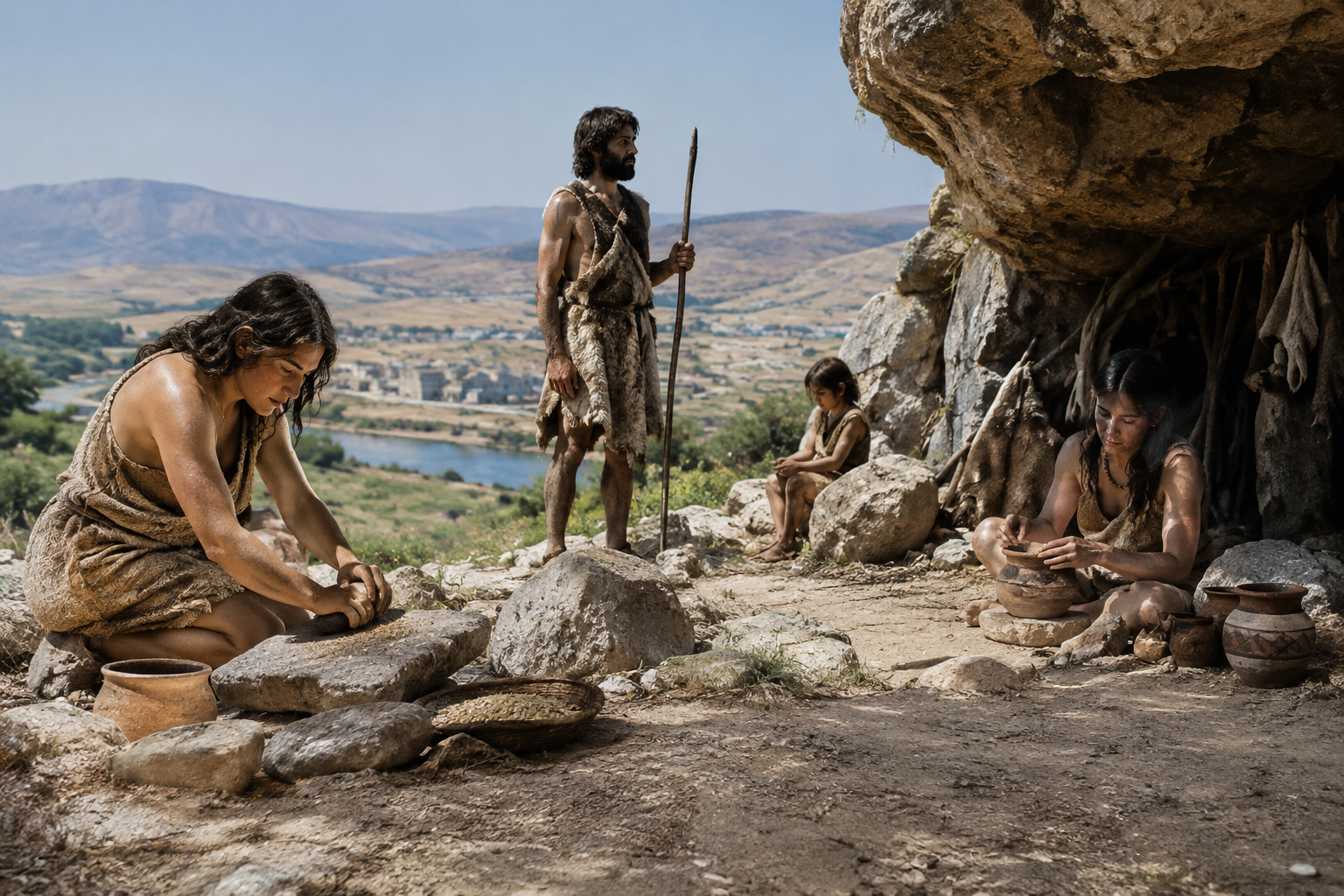
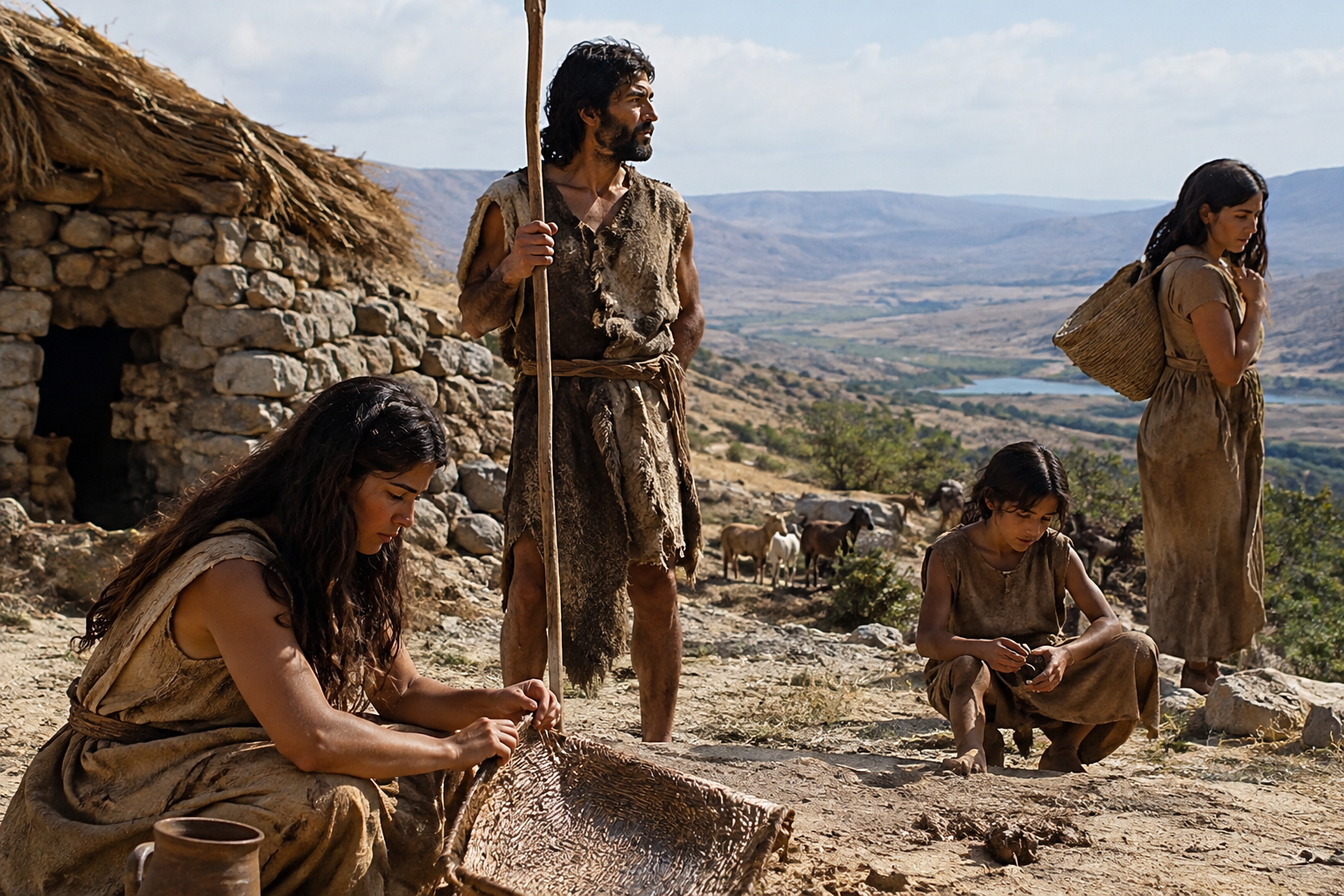
At Ain Ghazal in present-day Jordan, archaeologists uncovered one of the great settlements of the early Neolithic Near East: a place of plastered houses, dense community life, and some of the earliest large ritual figures ever found. Among the ancient individuals linked to this world is sample I1709, dated to around 7900 BC. For anyone interested in Y-DNA haplogroup H1, that is a striking starting point, because it places this paternal line in one of the formative landscapes of early farming.
That matters all the more because H1 is not one of the lineages most people first associate with Neolithic archaeology in western Eurasia. Yet here it appears in a community that was part of the profound social and economic shift from mobile foraging to settled agricultural life. Y-DNA follows one direct male line only, not a person's whole ancestry, but a find like I1709 shows that haplogroup H1 was present within this early village world at a very deep date.
Ain Ghazal sits just outside modern Amman, and in prehistory it belonged to the Pre-Pottery Neolithic B horizon, a period when communities in the Levant were building substantial settlements long before the widespread use of ceramics. The site is famous not because of a single burial, but because it captures a whole new way of living: architecture, food production, ritual practice, and long-term settlement on a scale that would have seemed extraordinary a few millennia earlier.
Within that setting, sample I1709 connects haplogroup H1 to an early farming population in the southern Levant. That does not make H1 "the farmers' haplogroup", nor does it prove an unbroken line from this one man to later populations. But it does place H1 inside the human story of the Neolithic at a very early and archaeologically important moment.
An ancient DNA study examining early Near Eastern populations helped establish the broader genetic framework for sites like Ain Ghazal, showing how distinctive early farming communities could be even when they shared similar ways of life across the region. For readers following the archaeology of these first village societies, the research context is worth exploring in this ancient DNA study.
The label in this article is simply H1, and that is important to state plainly. Haplogroup H is a broad Y-chromosome lineage with deep roots outside the usual headline narratives of later European prehistory, and H1 is one branch within it. With ancient samples, the reported resolution is not always fine enough to support grand claims about narrower downstream lines, so it is best to stay with the level actually given.
In other words, these ancient men are evidence for the presence of H1, not proof of a single tightly defined dynasty or a neatly mapped migration trail. Ancient Y-DNA can show where a paternal lineage appears in time and space; it cannot by itself tell us the language a man spoke, the community identity he claimed, or the full ancestry carried by the rest of his genome.
The second key sample is I3214 from Cueva de la Paloma in Spain, dated to around 3250 BC. Now the setting is entirely different. We have moved from the earliest farming settlements of the Levant to later prehistoric Iberia, thousands of years on and at the far western edge of the Mediterranean world.
That geographical spread is the interesting part. H1 is not confined here to a single early Near Eastern village or one isolated region. With I3214, the lineage also appears in prehistoric Iberia, showing that by the later Neolithic or Chalcolithic world, this paternal branch could be found in communities very distant from its earlier Levantine appearance.
Cueva de la Paloma belongs to the broad story of Iberian prehistory, where caves, collective burials, farming communities, and regional interaction all shaped the archaeological record. One sample cannot stand in for all of Iberia, of course, but it does demonstrate that H1 was present within that western prehistoric mosaic. That alone makes it a useful lineage for thinking about how varied male ancestry could be in Neolithic and Copper Age Europe.
It is tempting to draw a bold arrow on the map from Ain Ghazal to Iberia and call that the history of H1. Archaeology is rarely so tidy. The two samples do not prove a direct movement from one site to the other, still less descent from I1709 to I3214 in any genealogical sense.
What they do show is something subtler, and arguably more interesting: haplogroup H1 turns up in two major prehistoric settings that belong to the long expansion and transformation of farming societies across western Eurasia. One appearance is in the early Neolithic Levant, where settled life was still new. The other is in prehistoric Spain, where farming had long since taken root and developed local regional forms.
That pattern fits the larger lesson of archaeogenetics. Ancient populations were not made from a handful of tidy, exclusive lineages. They were mixed, regionally specific, and often surprising. A lineage that seems rare or unexpected in later populations may have had a much wider or more complex prehistoric distribution than modern assumptions suggest.
Research on prehistoric Iberian and western Mediterranean populations has repeatedly shown that local continuity, incoming ancestry, and regional diversity all mattered. Readers interested in how ancient DNA is reshaping Iberian population history may enjoy this discussion of genetic change in prehistoric western Eurasia, which helps frame finds like I3214 in a wider setting.
Part of the appeal of H1 is that it resists simple storytelling. Some Y-DNA branches are discussed so often in connection with later Bronze Age expansions or famous medieval dynasties that readers can start to expect every paternal lineage to behave the same way. H1 does not. Its ancient appearances can look scattered, and that is precisely why each securely reported sample matters.
At Ain Ghazal, H1 is part of the human landscape of one of the earliest substantial farming communities known anywhere. At Cueva de la Paloma, it appears in a later prehistoric Iberian context, reminding us that western Europe's Neolithic populations were not genetically uniform. The same haplogroup label bridges both finds, but the societies themselves were separated by millennia, by ecology, and by very different local histories.
For members of the MyTrueAncestry community with haplogroup H1, the strongest supported insight is not a single grand migration claim, but a deep archaeological presence. This paternal line is documented in an early Neolithic settlement at Ain Ghazal and again in prehistoric Iberia at Cueva de la Paloma. That places H1 within the long, complicated history of the first farmers and their descendants across very different parts of the ancient world.
If you carry H1 today, these ancient samples do not tell you that you descend from one famous tribe or one named historical family. They do something better: they place your direct paternal line inside real excavated communities, from one of the earliest great villages of the Levant to later prehistoric Spain, where ancient DNA continues to show just how varied the past really was.
Comments