Haplogroup G2a2b2b1a1a2d

– 5 min read


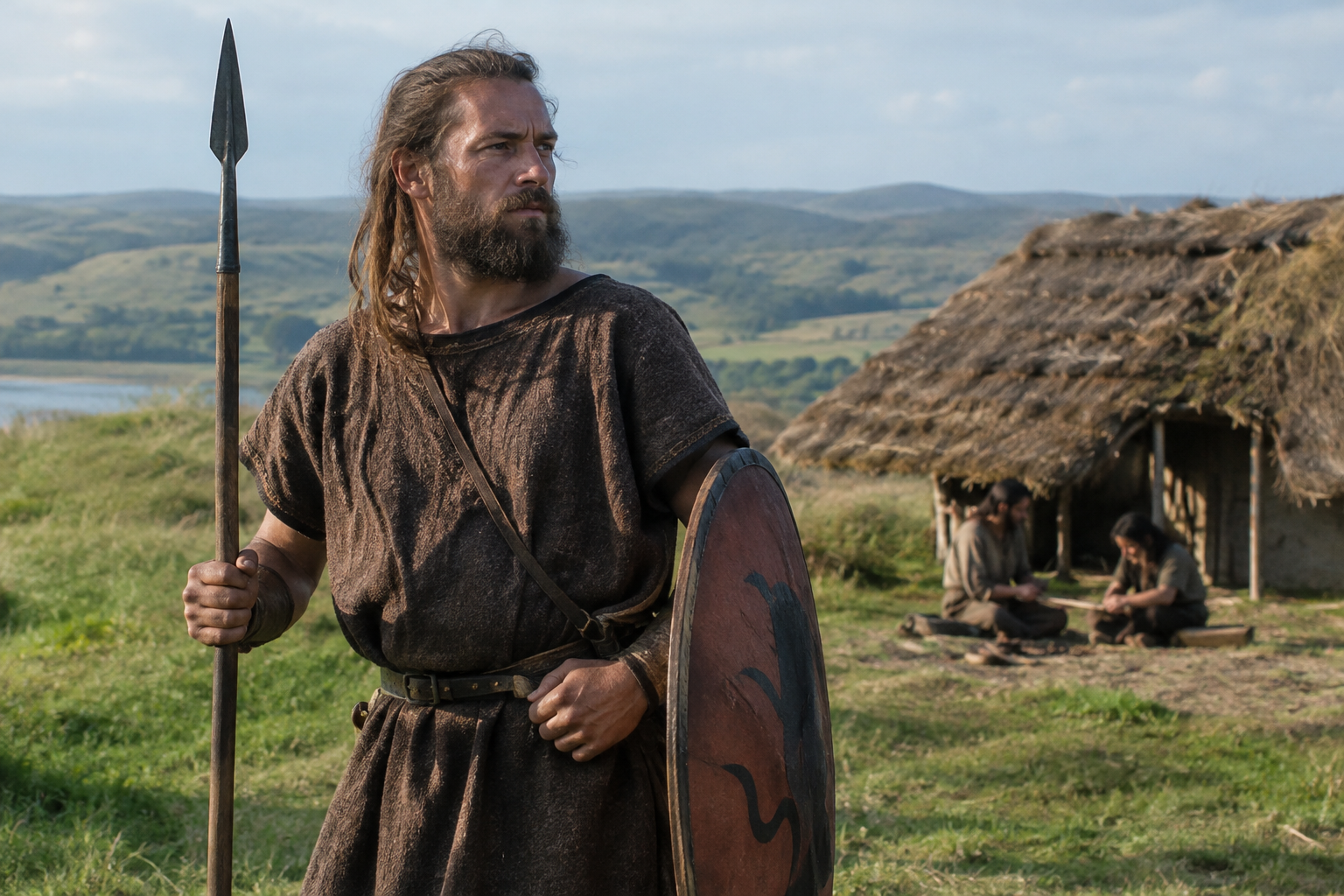
One of the more intriguing traces of the Y-DNA haplogroup G2a2b2b1a1a2d appears in an Iron Age individual from Hungary, sample DA198, dated to around 550 BC. That date places him in the Carpathian Basin at a moment when the region was anything but quiet: communities there sat between the worlds of central Europe, the Balkans, and the steppe, absorbing influences without becoming reducible to any single one of them.
That is exactly why this lineage is interesting. G2 is a very old and well-known branch in European prehistory, especially in discussions of early farmers, but a precise subclade such as G2a2b2b1a1a2d is not a synonym for "the first farmers" or for any one ancient people. What the evidence from DA198 gives us is something more careful, and in many ways more revealing: a direct paternal line turning up in Iron Age Hungary, long after the great Neolithic expansions, in a society shaped by centuries of movement, mixture, and local continuity.
The label attached to DA198 matters. He is described as an Iron Age outlier from Hungary, and that word "outlier" is archaeologically useful. It suggests that, in the wider genetic landscape of the sampled population, this individual stood apart in some meaningful way, whether because of ancestry, mobility, family background, or the simple fact that Iron Age communities were more diverse than older tidy narratives allowed.
In other words, this is not merely a man with an unusual Y-chromosome result. He represents the kind of person ancient DNA keeps bringing back into view: someone living in a recognisably local archaeological setting, yet carrying ancestry signals that remind us the Iron Age was full of personal histories we would never guess from artefacts alone.
A major ancient DNA study of southeastern Europe, published in Nature, helped establish just how dynamic this broad region was across prehistory and later periods. Even where the paper's focus is regional rather than biographical, that wider context is essential for understanding why a Hungarian Iron Age male lineage can be historically significant without needing to belong to a famous dynasty or a dramatic migration event.
DNA in the Little Hungarian Plain
Haplogroup G2 has deep roots in the story of Europe's first farming populations. That much is true, and it is why many readers will recognise the broader label immediately. But the temptation is to stop there, as if every later G2 lineage were simply a fossil of the Neolithic still wandering about unchanged. That would be far too simple.
By around 550 BC, the Carpathian Basin had already seen millennia of demographic change. Neolithic farmers, Copper Age groups, Bronze Age expansions, and later Iron Age networks had all left their mark. A man carrying G2a2b2b1a1a2d in this setting is therefore not best understood as a museum piece from an earlier world, but as part of an Iron Age population in which older paternal lines could persist, reappear, or move through new cultural landscapes.
Y-DNA traces one narrow line of descent, from father to son to son again. It does not describe a person's whole ancestry, still less his language or identity. For DA198, the value of the haplogroup lies in how it adds one precise paternal thread to a much broader historical fabric.
Hungary in the Iron Age was a frontier only if one imagines frontiers as neat lines on a map. In reality, the Carpathian Basin functioned as a meeting ground. Ideas, goods, marriage partners, and people moved through it from multiple directions. Archaeology has long shown that the region cannot be written as a simple tale of replacement, and genetics has only sharpened that point.
That makes an "outlier" especially valuable. Outliers tell us where the tidy averages break down. They hint at local communities containing newcomers, descendants of older populations, or families whose paternal origins differed from their neighbours' while their daily life remained fully embedded in the same society.
For those interested in how language spread and population movement intersected in later prehistoric Europe, there is a useful wider comparison in MyTrueAncestry's post on central European linguistic expansion and genomics.
Celtic Languages and Ancient Genomics
That does not mean DA198 can be assigned to a named tribe or language community from his Y-line alone. It means only that he lived in exactly the sort of region where cultural labels and genetic lineages refuse to line up neatly, which is, frankly, the normal state of human history.
One of the most useful lessons from ancient DNA is that paternal lineages can have very long afterlives. A branch associated in broad terms with early farmers may still appear many centuries later in populations that look very different culturally and genetically from the first agricultural settlers of Europe.
That is the deeper importance of G2a2b2b1a1a2d here. Its presence in Iron Age Hungary suggests continuity of a male line at some point in the past, but not continuity of culture in any simple sense. Between the Neolithic and the Iron Age lie enormous transformations: metallurgy, shifting settlement systems, new exchange networks, changing burial customs, and repeated episodes of admixture.
So when this lineage appears in DA198, what we are seeing is not a frozen survival but a lineage that has travelled through history. It may have remained local for long stretches, or moved in smaller-scale ways through kin groups, marriage networks, or regional mobility that never produced a grand migration legend.
There is a tendency, when reading ancient DNA results, to focus on the majority pattern and treat everything else as noise. Archaeologically, that would be a mistake. Real settlements and cemeteries were made up of individuals, and individuals often carried histories not visible in pottery styles or burial layouts.
DA198's significance lies partly in that friction between the personal and the statistical. If he stood apart genetically within his sampled group, then he reminds us that Iron Age communities in Hungary were not sealed ethnic boxes. They could include people with different ancestral backgrounds who nevertheless lived, died, and were buried within the same social world.
This is a theme that turns up repeatedly in later European contexts as well, including frontier and post-Roman populations where genetic diversity and local belonging coexisted quite comfortably. MyTrueAncestry's piece on Roman and "barbarian" blending along the German frontier offers a later but comparable example of how misleading rigid population labels can be.
If your direct paternal line belongs to G2a2b2b1a1a2d, the most responsible historical takeaway is not a claim to one tribe, one kingdom, or one exclusive ethnic origin. The evidence here points instead to durability. This is a paternal line that could still be found in the Carpathian Basin in the Iron Age, carried by a man whose ancestry stood out enough to be noticed in genomic analysis.
That is a useful kind of ancestry story: not a fantasy of pure descent, but a documented glimpse of how old lineages persist through changing worlds. In DA198, this branch appears in a real person from real archaeological time, in a region famous for movement and mixture. That makes G2a2b2b1a1a2d less a badge of a single ancient people than a witness to the long, complicated survival of paternal lines across European history.
Comments