Haplogroup G2a2b2b

– 5 min read


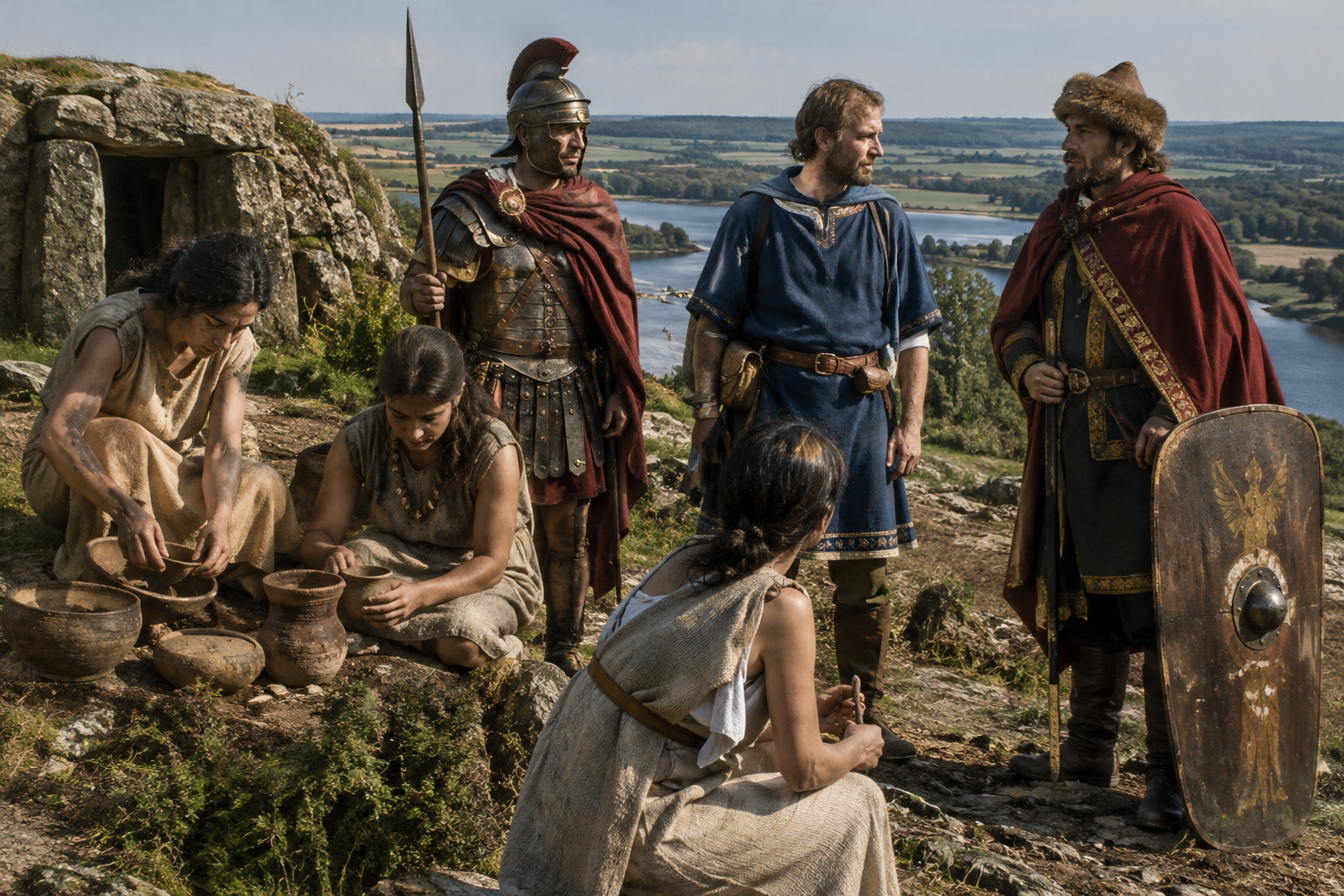
At Anghelu Ruju in Sardinia, two Neolithic men dated to around 4000 BC, samples I15947 and I15944, carry the Y-DNA haplogroup G2a2b2b. That matters because Anghelu Ruju is not just any prehistoric site. It is one of the island's best-known burial landscapes, part of the deep Mediterranean world of early farming communities. When a paternal line turns up there twice, in the same broad setting and period, it stops looking like an isolated curiosity and starts to look like a real thread in the making of Neolithic Sardinia.
G2a, the wider haplogroup to which G2a2b2b belongs, is strongly associated in ancient DNA with many of Europe's first farming populations. But the narrower branch in this article should not be treated as if it automatically tells the whole story of Neolithic expansion on its own. Y-DNA follows one direct male line only, not a person's entire ancestry. Even so, the known appearances of G2a2b2b, from Neolithic Sardinia to Chalcolithic Romania and then into much later burials in Hungary and Poland, make it a particularly interesting case of long persistence across very different historical worlds.
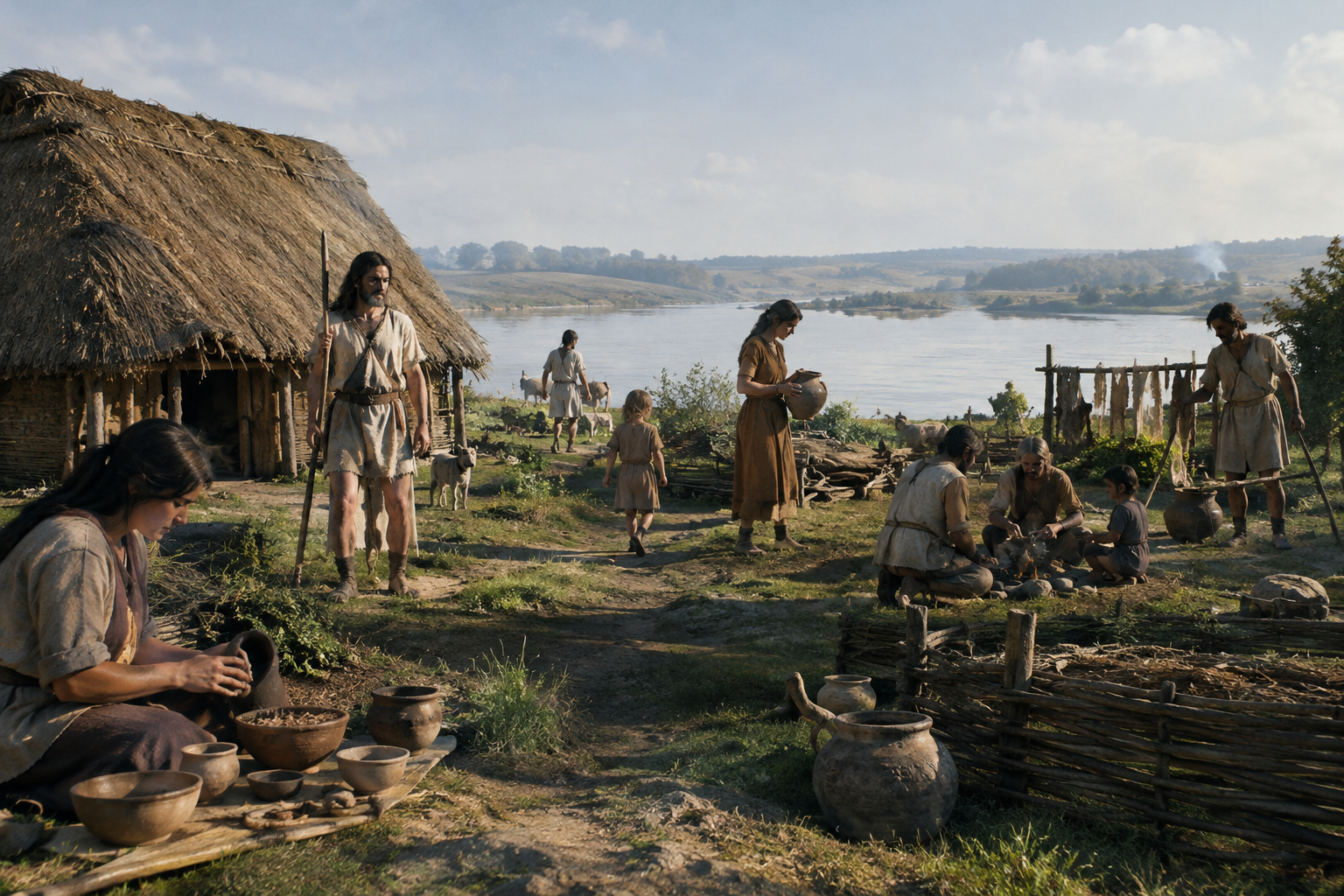
The Sardinian evidence is the clearest starting point because it places G2a2b2b in an unmistakably early agricultural context. Anghelu Ruju, near Alghero, is famous for its prehistoric funerary use and its importance for understanding island prehistory. The presence of both I15947 and I15944 suggests that this paternal line was part of the male population living within Sardinia's Neolithic communities, rather than a one-off arrival preserved by chance.
That fits the broader picture from ancient DNA research on early European farmers, where G2a lineages appear again and again in communities descended largely from people who spread agriculture westward from Anatolia through the Balkans and across the Mediterranean. A major ancient DNA study of island populations, published in Science, helped clarify how places like Sardinia preserved important traces of these early farming ancestries over long periods. G2a2b2b belongs in that wider Neolithic conversation, but with the welcome advantage here of named individuals and a real archaeological setting.
Sardinia often appears in popular writing as if it were some sealed prehistoric vault, untouched by later history. That is too simple. Islands are connected places, and Sardinia certainly was. But ancient DNA has shown that it can still preserve unusually strong signals from early farmer populations. For a lineage like G2a2b2b, that makes the island evidence especially valuable: it gives us a glimpse of one paternal branch in a setting where Neolithic ancestry remained historically visible for a very long time.
The sample I2532, from Chalcolithic Romania and dated here to around 5614 BC, pushes the story of G2a2b2b into southeastern Europe. Even if one is careful with exact dating conventions and site-specific interpretation, the broader significance is clear enough. This is the world of the Balkan and lower Danubian farming frontier, where some of Europe's earliest and most complex agricultural societies developed.
That matters because southeastern Europe was not merely a corridor through which farming passed on the way west. It was one of the great laboratories of early European settled life, where incoming farmer ancestry mixed in different ways with local hunter-gatherer populations and where new social forms emerged. A large-scale study of prehistoric genomes from the region, published in Science, emphasized just how dynamic the Balkans and neighboring zones were across the Neolithic and Copper Age.
So if G2a2b2b appears in Romania and also in Neolithic Sardinia, the sensible historical reading is not that one sample directly fathered the other world's descendants, but that this branch belonged to the broader male-line diversity carried by early farming populations moving through and out of southeastern Europe. It is exactly the sort of pattern archaeology and genetics together are now good at revealing: not one heroic migration, but repeated local histories connected by kinship and movement.
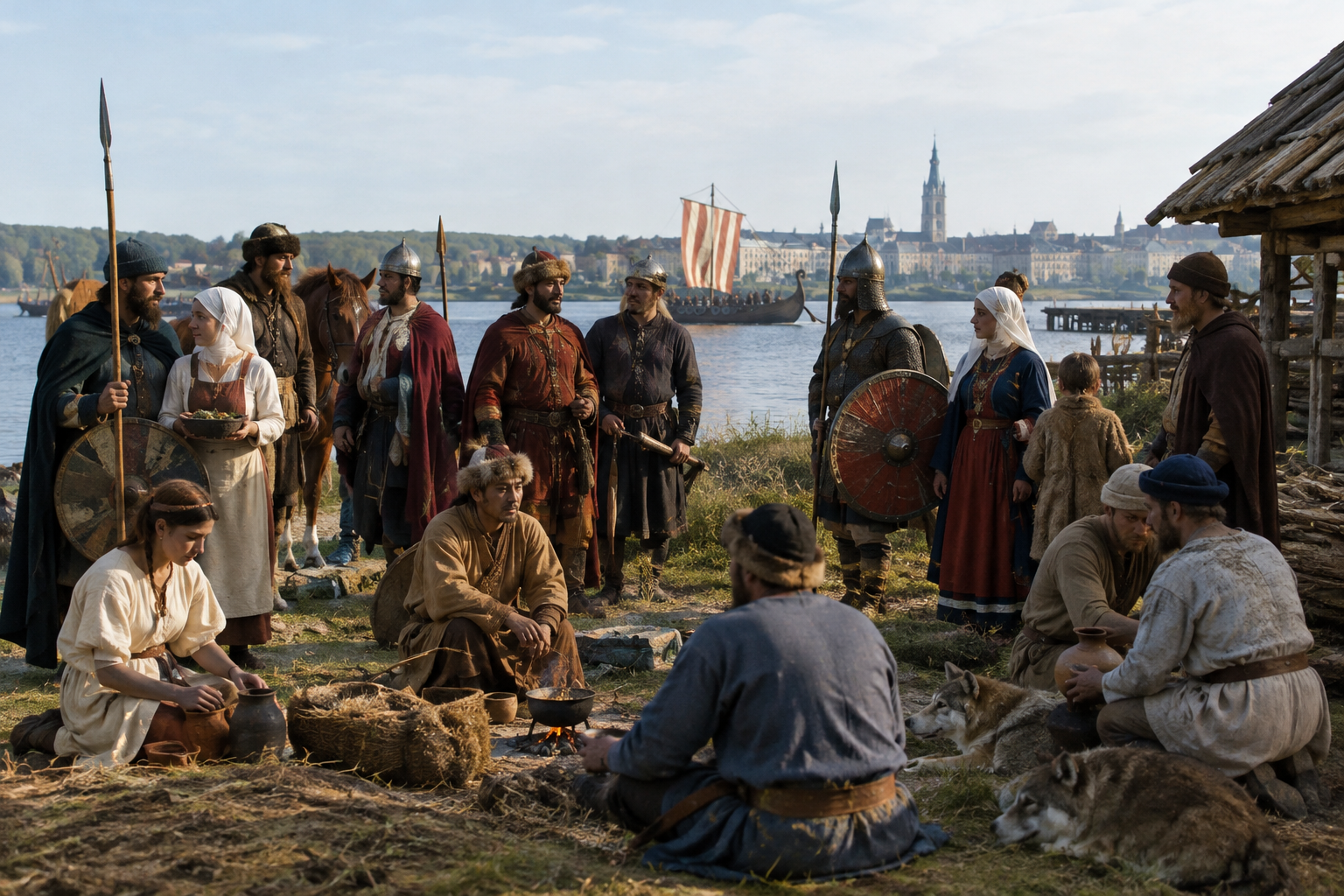
By the time we reach HMU046 from Scarbantia-Hegykő-Barbaricum in Hungary, dated to about AD 525, we are in a completely different historical landscape. This is the age after the western Roman Empire, when Pannonia and the Carpathian Basin were zones of political fragmentation, mobility, military settlement, and cultural mixing. A man carrying G2a2b2b here was living in a world shaped by Romans, post-Roman provincial communities, and the peoples conventionally labeled "barbarian" in late antique sources.
The striking thing is not that the same haplogroup proves ethnic continuity from the Neolithic to late antiquity; it does not. What it shows is that one paternal branch associated in part with early European farmers could still be found in a much later frontier society. In other words, lineages endure even while languages, empires, burial customs, and identities change around them.
That is particularly apt for the Carpathian Basin, where ancient DNA has repeatedly revealed continuity mixed with new arrivals rather than any neat replacement tale. One male line can survive through countless unrecorded generations and turn up centuries later in a setting that would have been utterly unrecognizable to its Neolithic bearers. Haplogroups are rather good at reminding us how misleading tidy historical boxes can be.
The latest sample in this set, Skoki_S50 from Skoki in the Wielkopolska Voivodeship of the Kingdom of Poland, dated around AD 1400, shows G2a2b2b still present in medieval east-central Europe. By this point we are firmly in the Christian Middle Ages, in a society of parishes, lordship, market exchange, and written record. Yet the Y-chromosome line itself reaches back beyond all of that, into prehistory.
There is a useful methodological lesson here. Medieval burials can tempt us into trying to match DNA too directly with named peoples or dynasties, but a single sample does not authorize grand genealogical claims. What it does offer is evidence that G2a2b2b had not vanished beneath later demographic changes. It remained one of the many paternal threads woven into the population history of medieval Europe.
The Polish context is also a reminder that unusual or notable burial settings do not automatically imply unusual ancestry. Discussion of medieval Polish graves, including atypical burials, has shown how careful archaeologists must be when interpreting funerary practice. Genetics can add one layer to that picture, but not replace the archaeological one.
On present evidence, G2a2b2b looks less like the signature of one famous people and more like a durable branch within the old farming populations of Europe and their descendants. Its best-supported early appearances here are in Neolithic Sardinia and Chalcolithic Romania, both settings closely tied to the spread and development of agricultural life. Its later appearances in Hungary and Poland show that paternal lines can persist through huge shifts in political order and cultural identity.
For someone researching this haplogroup today, that is the useful takeaway. G2a2b2b may point toward a paternal line with deep roots in Europe's early farming past, but its history is not trapped there. The ancient evidence suggests continuity through change: the same direct male line surviving from prehistoric village worlds into Roman frontier society and medieval Christian Europe.
Comments