Haplogroup G2a2b2a1a1c

– 5 min read


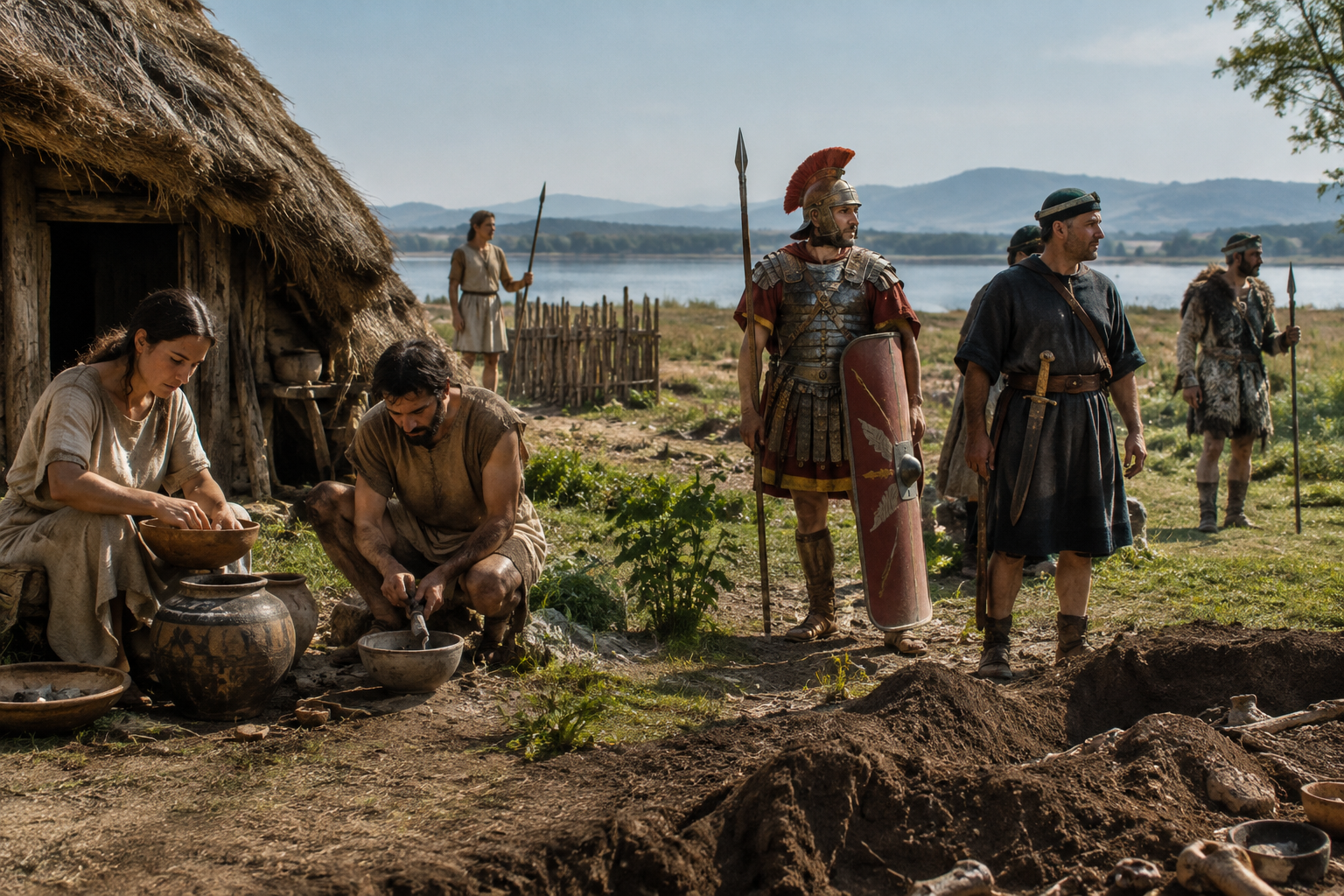
At Urziceni in Romania, two men dated to about 4000 BC stand out for anyone following the paternal line G2a2b2a1a1c. One is listed as Urzi68, the other as I15623 from the Bodrogkeresztur horizon at the same place. That matters because this is not a lone, stray appearance of the lineage. It is a small but useful cluster in a Chalcolithic community on the eastern side of the Carpathian world, exactly the sort of evidence that turns an abstract haplogroup label into a human historical setting.
These Urziceni finds place the branch in a farming landscape of southeastern Europe long before the Roman Empire, long before Iron Age kingdoms, and long before the better known medieval lineages of later records. Y-DNA traces one direct paternal line only, not a person's whole ancestry, but even that single line can be revealing when it appears repeatedly in well-dated archaeological contexts. In this case, G2a2b2a1a1c is best approached not as a grand imperial signature, but as part of a much deeper Balkan and Carpathian story.
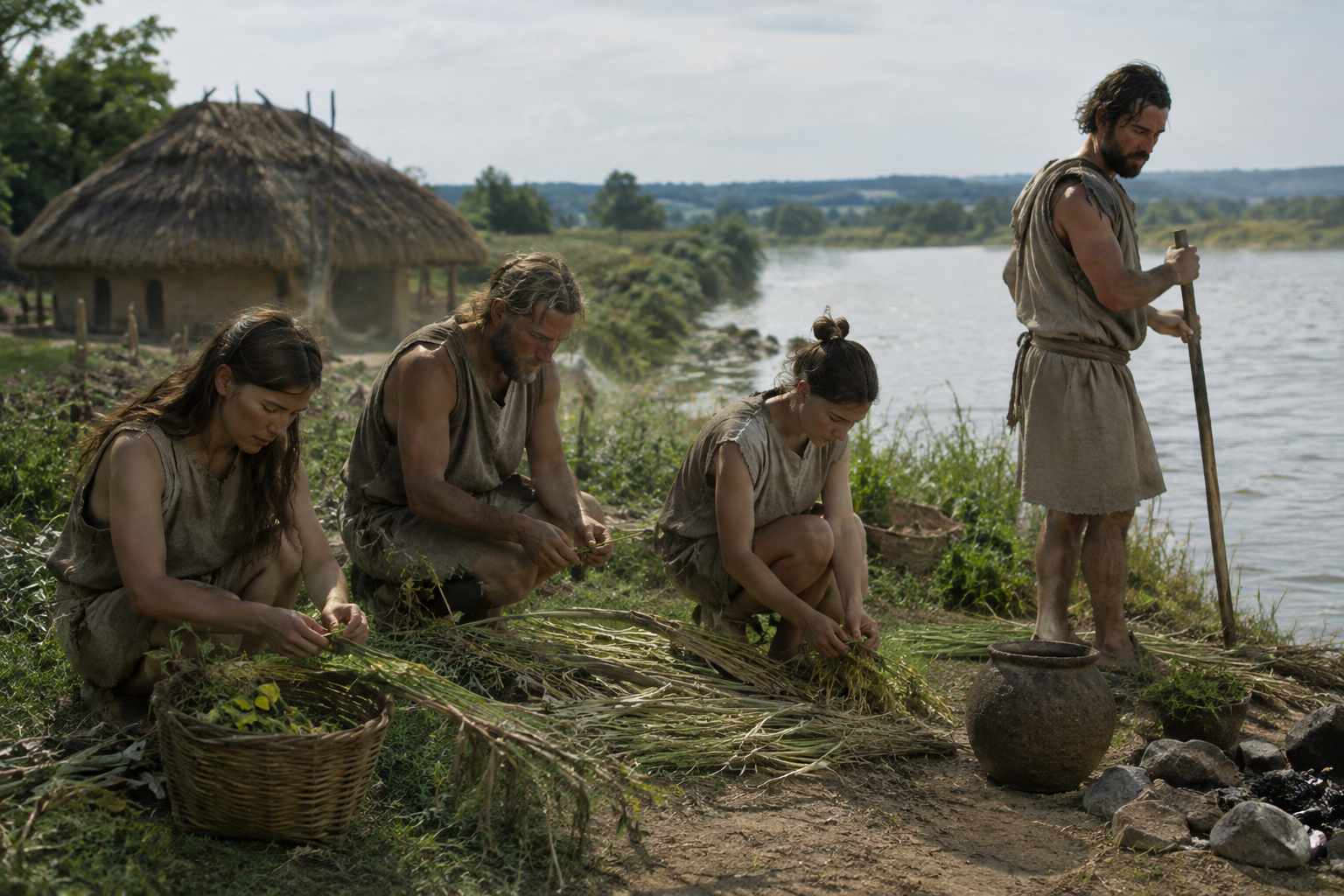
The paired Urziceni evidence is the best place to begin because it is both early and local. Urzi68 is recorded from ancient Romania around 4000 BC, and I15623 is specifically described as Chalcolithic Romania, Bodrogkeresztur, Urziceni, also around 4000 BC. The Bodrogkeresztur cultural sphere belongs to the Copper Age of the Carpathian Basin, a period when farming villages, exchange networks, and new forms of social differentiation were taking shape.
What these two men suggest is continuity of a paternal branch within that Copper Age world, rather than a one-off arrival. That does not mean every man at Urziceni carried the same Y-DNA, nor that the site was some kind of dynastic center. It does mean that G2-related paternal lines, already well known in Europe's early farming populations, were still very much present in communities east of the Tisza and near the lower Danube interaction zone during the 5th to 4th millennium BC.
A major ancient DNA study of southeastern Europe and nearby regions helped establish just how important such early farming populations were to the genetic history of the Balkans and the Carpathian Basin, even as local mixtures and later population shifts complicated the picture over time. For the broader prehistoric backdrop, see this genetic study of the region.
5th Millennium Carpathian Basin
The wider haplogroup G2a is one of the classic paternal lineages associated with the spread of early farming into Europe from Anatolia and the Aegean. But that broad statement should not be lazily copied onto every much narrower branch beneath it. Your article haplogroup, G2a2b2a1a1c, is a specific subclade, and the evidence here is not enough to assign it a neat single homeland, migration path, or ethnic identity.
What can be said, rather more carefully, is that the supplied ancient examples place this branch in southeastern and central European contexts across a very long span: Chalcolithic Romania, Iron Age Hungary, and Roman-period Serbia. That spread is historically interesting because it hints at endurance. Many paternal lines appear in one archaeological phase and disappear from our current record. This one, at least in the evidence available here, keeps turning up in the middle Danube and lower Danube world across several thousand years.
The next sample, I18227, comes from Komarom-Esztergom in Hungary and is dated to about 530 BC, in the Iron Age. That is a very different world from Chalcolithic Urziceni. By the 6th century BC, the Carpathian Basin was tied into a wide zone of movement and exchange linking central Europe, the Balkans, and the steppe margins. Archaeological labels in this period can be politically and culturally slippery, and it would be rash to pin one Y-chromosome directly onto a named people from classical texts.
Still, I18227 matters because it shows that this paternal branch, or an assignment associated with it, did not vanish with the Copper Age societies of southeastern Europe. Instead, it appears again in an Iron Age setting further west within the wider Danubian corridor. That is exactly the sort of pattern that reminds us how misleading it can be to imagine Europe's paternal history as a sequence of total replacements. Some branches do persist, even while languages, material culture, and political structures change around them.
The Carpathian Basin is particularly important here because it so often acts as a hinge region rather than a sealed container. A lineage found there may connect local continuity, small-scale mobility, intermarriage, and periodic incoming groups all at once. G2a2b2a1a1c, on current evidence, looks more like part of that layered regional history than the badge of a single dramatic migration.
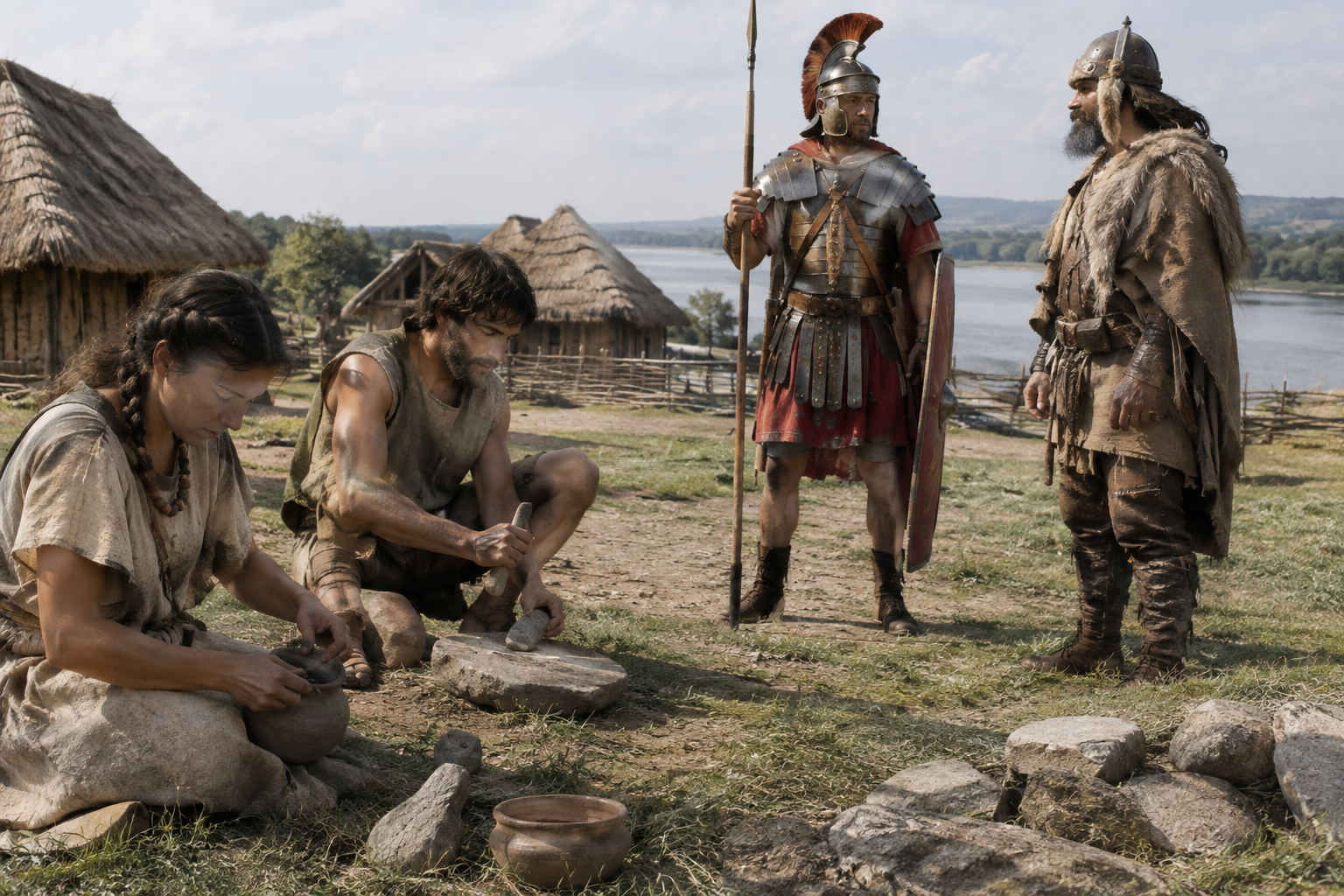
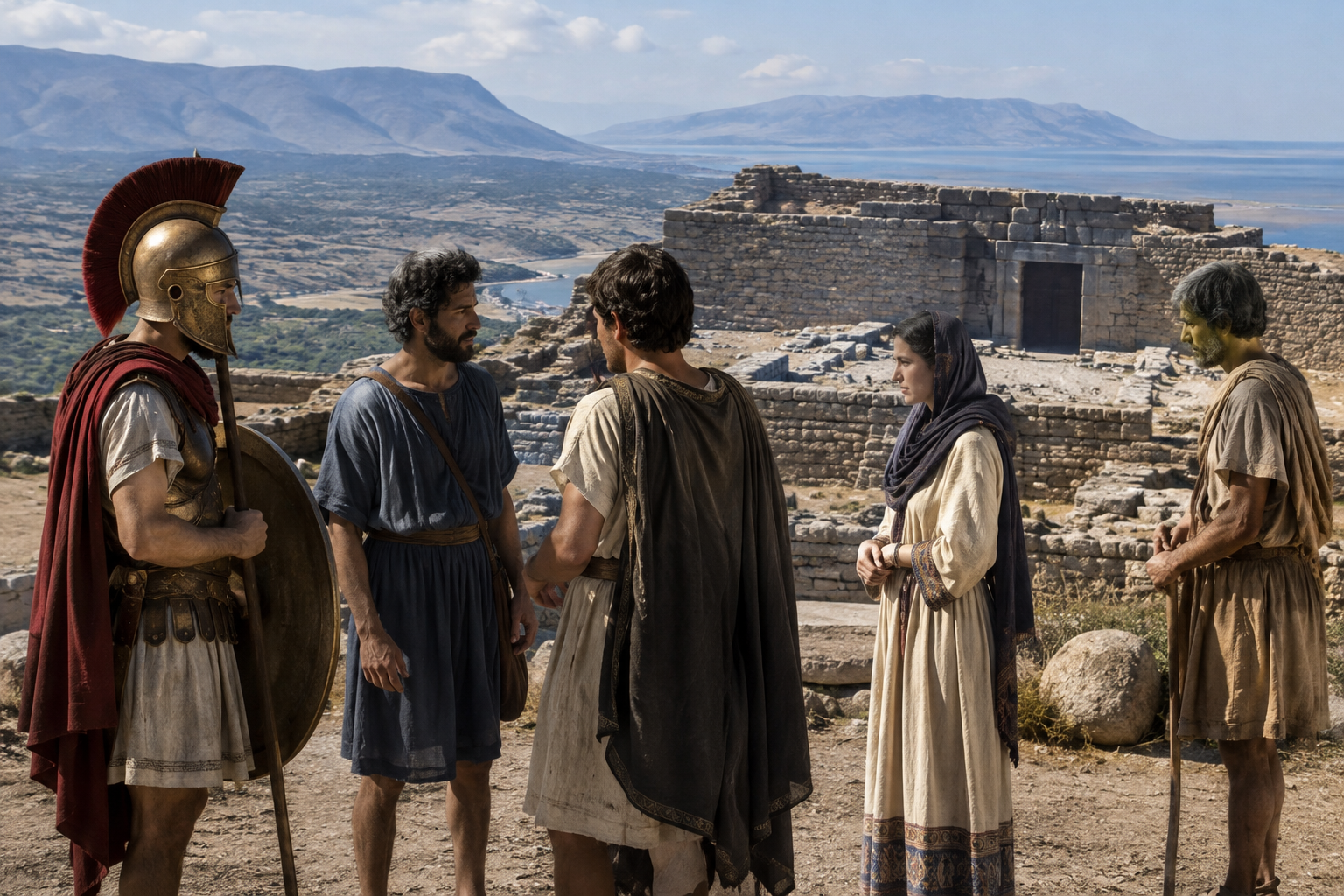
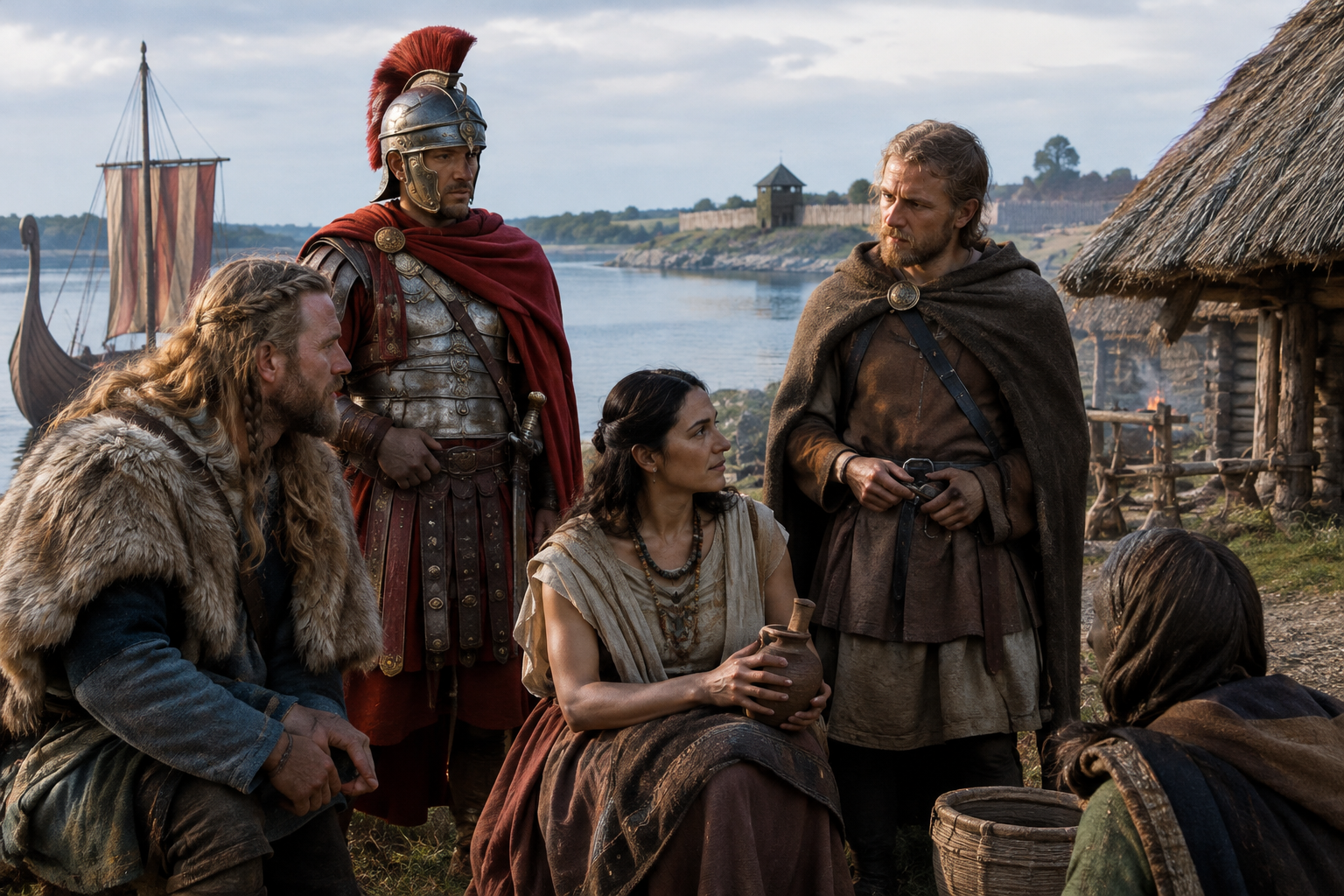
The Roman-era sample I15521 comes from the Grobalja Necropolis at Viminacium in Serbia, dated around AD 250. Viminacium was one of the great urban and military centers of the Roman Balkans: legionary base, provincial capital, and cemetery landscape on a large scale. By this point we are not looking at a prehistoric farming village or an Iron Age regional community, but at a thoroughly imperial setting where soldiers, traders, families, and migrants could all end up buried in the same necropolis.
That makes the presence of this haplogroup especially useful. It shows that a paternal line associated here with G2a2b2a1a1c existed not only in prehistoric southeastern Europe but also within the mixed social world of the Roman Danube. One should not leap from that to the claim that the Viminacium man was descended directly from the Urziceni men in any genealogical sense. But taken together, the samples suggest that this was a durable regional paternal thread, capable of surviving enormous historical change.
Research on the Roman frontier and its neighboring populations has repeatedly shown that the Danube was not a neat civilizational border so much as a contact zone. An ancient DNA study examining mobility and mixture in this wider part of Europe can be found here. That broader context helps explain why a lineage with deep prehistoric roots might still appear in a Roman cemetery without seeming remotely out of place.
Put the four samples side by side and a pattern emerges. Two early appearances at Urziceni around 4000 BC anchor the lineage in Chalcolithic Romania. An Iron Age example at Komarom-Esztergom shows it again in the middle Danube zone. A Roman-period individual at Viminacium carries the story into the 3rd century AD in Serbia.
This is not proof of an uninterrupted male pedigree across 4,000 years. Ancient DNA rarely gives us anything so tidy. But it does show that the branch belongs, in the evidence presently available, to a broad southeastern and central European arc running through the Carpathian Basin and the Danubian world. That is a stronger and more interesting conclusion than any attempt to attach it to a single tribe, kingdom, or modern nationality.
Paternal Shifts in the Balkans
For someone researching a present-day paternal line, G2a2b2a1a1c points toward a branch with visible ancient roots in the Balkans-Carpathian region and later survival into the Roman Danube. The most distinctive thing about it here is not royal glamour or a single famous burial, but repeated appearances in different historical worlds occupying roughly the same broad region. In other words, this looks like a lineage of long regional depth.
That is often how the past really works: not as a parade of isolated peoples replacing one another, but as communities changing shape while some family lines continue through them. For this haplogroup, Urziceni, Komarom-Esztergom, and Viminacium together make that point rather well.
Comments