Haplogroup G2a2b2a1a1b1a1a3a1

– 5 min read


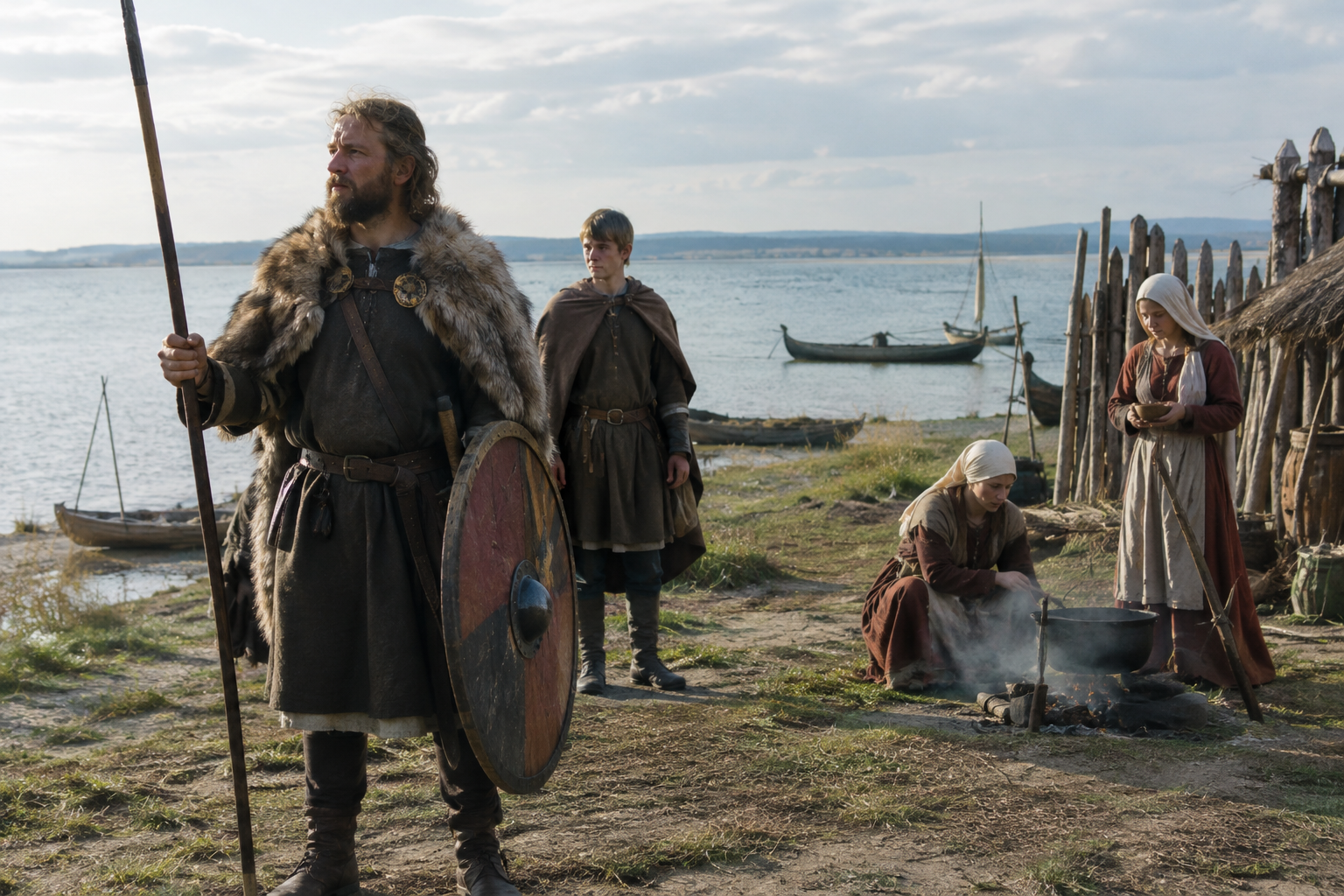
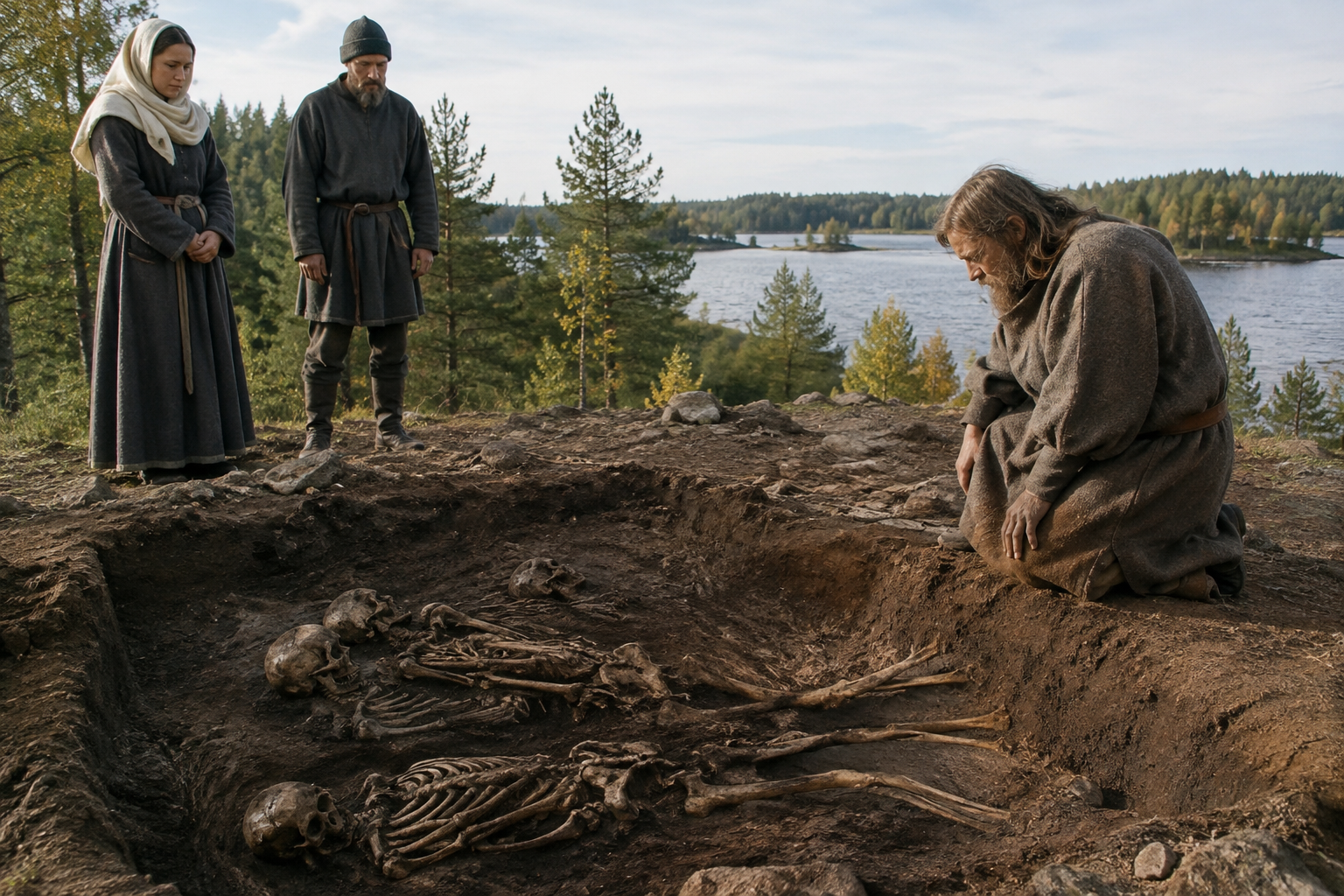
At Balatonszemes on the south shore of Lake Balaton in Hungary, one excavated man from around AD 475 offers a very sharp glimpse of a complicated age. He is recorded as sample Bal_146, described as a post-Roman Longobard-period individual from Pannonia. His reported paternal line is the very specific Y-DNA branch G2a2b2a1a1b1a1a3a1, a lineage that sounds forbiddingly technical but becomes far more interesting once it is placed back into its real historical setting: the fractured world that followed the end of Roman power in the western provinces.
That setting matters. AD 475 was not the deep prehistoric age often associated with haplogroup G, nor was it a simple story of one people replacing another. In the Carpathian Basin, Roman provincial traditions, incoming groups, military retinues, and local communities overlapped uneasily. A Y-chromosome traces one direct paternal line only, not a person's whole ancestry or identity, yet even one well-contextualized male lineage can illuminate how varied these post-Roman societies really were.
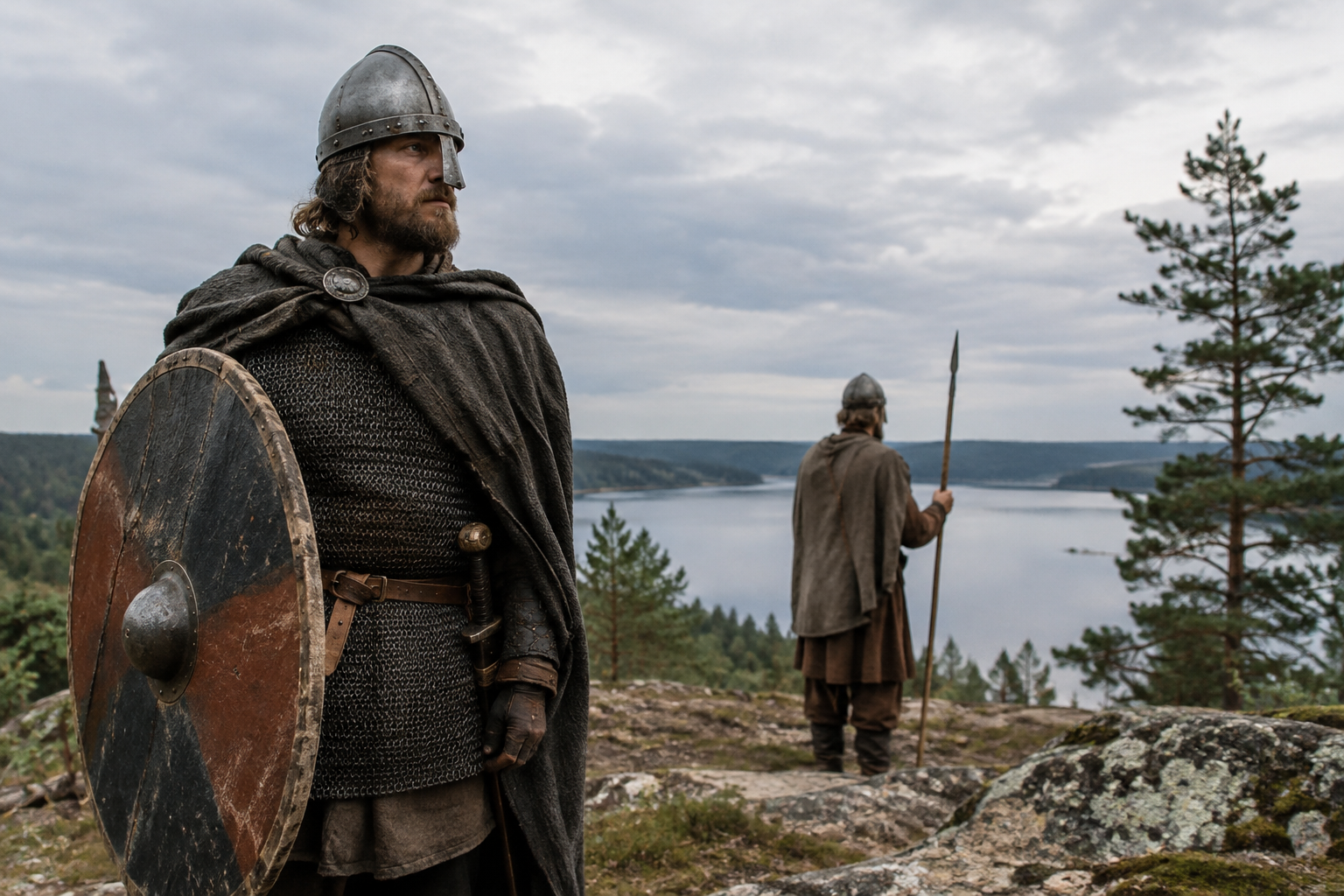
Pannonia had been a Roman frontier zone for centuries, threaded with roads, forts, estates, and towns. By the late 5th century it was also a zone of political collapse and reassembly. Groups later labeled Longobards would become prominent in this region before moving onward into Italy in the 6th century, but the archaeology and genetics of the period show that such communities were not biologically uniform blocs marching under a single ancestral banner.
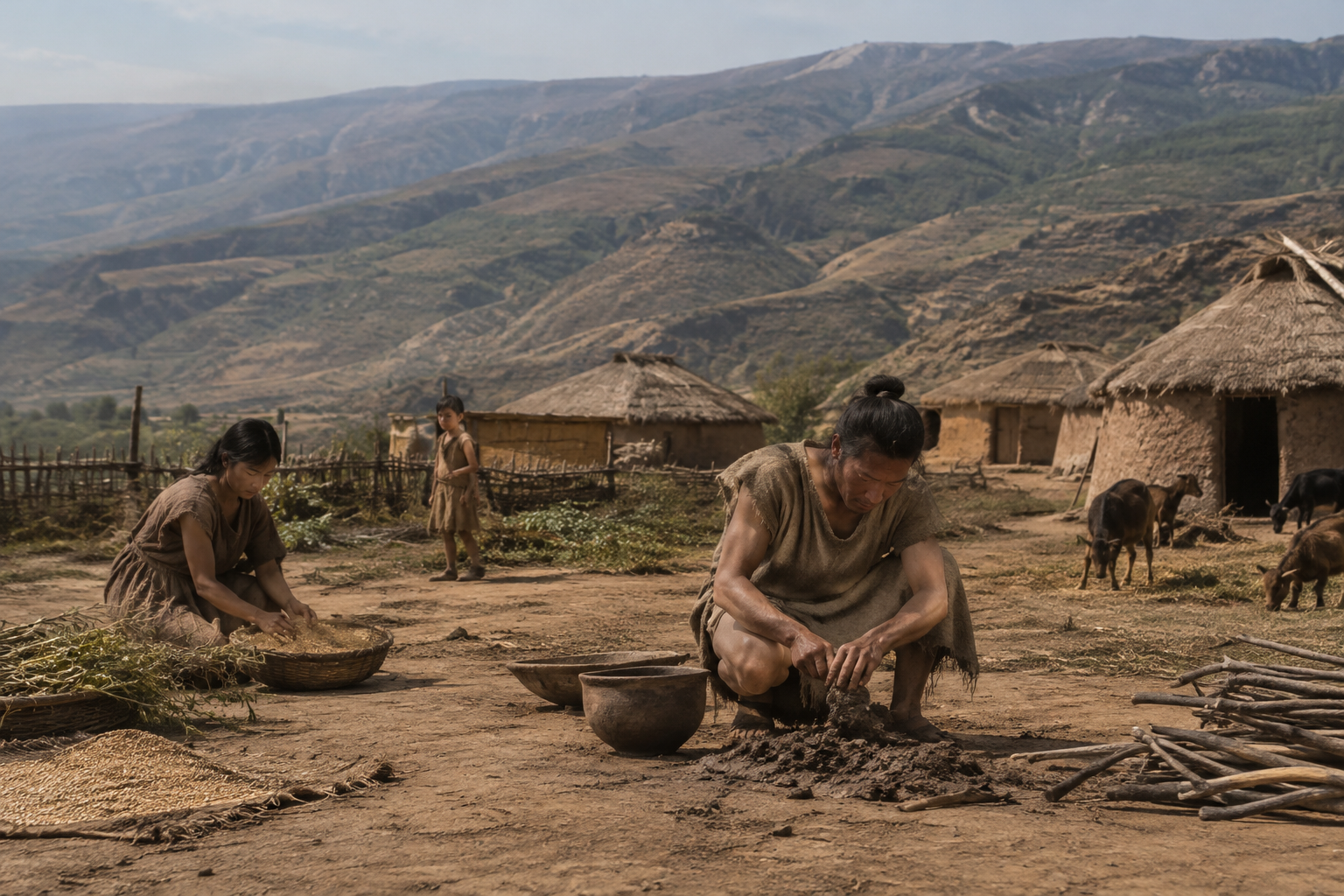
That is what makes Bal_146 valuable. Instead of giving us an abstract "Longobard" type, he gives us one real paternal lineage anchored to one real burial community in post-Roman Hungary. The branch G2a2b2a1a1b1a1a3a1 sits within the broader haplogroup G family, a lineage with deep roots in West Eurasia and a strong presence in early farming populations, but it would be a mistake to flatten that long history into a neat tale of uninterrupted descent from the Neolithic to one man by Lake Balaton. What the sample actually shows is survival and presence: a paternal line from the wider G family still visible in a Migration Period population of the Middle Danube.
An ancient DNA study of post-Roman populations in the region is associated with this research project, which has helped place burials like those from Pannonia into a broader genomic frame. Even without overstating the exact conclusions for this one individual, the context is clear enough: Late Antique and early medieval communities in Hungary included men whose paternal ancestry cannot be reduced to a single "Germanic" or "Roman" line.
Haplogroup G has an oddly double life in European history. On the one hand, it is famous among geneticists because branches of G appear repeatedly in early Neolithic farming populations across Europe. On the other, by the Iron Age and early medieval period, many regions show a much wider mixture of paternal lines, and G is no longer the headline act. So when a precise downstream G branch turns up in a 5th-century burial from Pannonia, it is historically useful precisely because it complicates expectation.
It reminds us that Migration Period populations were assembled from many strands. Men buried within communities identified archaeologically or historically with the Longobards need not all share the same paternal background, and they very often did not. Some paternal lines may reflect long local continuity in the Middle Danube. Others may reflect earlier movements through the Balkans, the Alpine world, or other parts of Europe. With only one named sample here, the responsible conclusion is modest but important: this branch was part of the male-line diversity present in post-Roman Pannonia.
That distinction between the broad parent haplogroup and the exact subclade matters. One cannot simply say that because ancient farmers often carried haplogroup G, Bal_146 therefore represents a direct "Neolithic farmer identity." Genetics does not work like that, and neither does history. Between Europe's first farmers and a man buried around AD 475 lies millennia of population change, social reorganization, mobility, and mixture.
Balatonszemes was not perched at the edge of nowhere. The Lake Balaton region sat inside one of central Europe's most strategic landscapes, linking the Danube basin to routes running west toward the Alps and south toward the Balkans and northern Italy. By the late Roman and post-Roman periods, that meant repeated military passage, settlement shifts, and political bargaining over land, service, and allegiance.
In archaeological terms, burials from this region matter because they belong to communities living through a major transformation rather than a clean civilizational break. Roman institutions weakened, but landscapes remained occupied. Old provincial populations did not simply vanish, and newly prominent elites did not arrive as biologically isolated nations. A man such as Bal_146 therefore belongs to the messy, human middle ground between textbook categories.
This is where Y-DNA can be especially evocative when used carefully. A lineage like G2a2b2a1a1b1a1a3a1 does not tell us his language, legal status, or self-description. But it does tell us that one paternal thread in this post-Roman setting was outside the narrow stereotypes often attached to Migration Period groups. In that sense, the haplogroup helps archaeology do what it does best: rescue real complexity from historical shorthand.
The word "Longobard" can mislead modern readers because it sounds more fixed than the evidence usually allows. In written sources, the Longobards emerge as a named people. In cemeteries and genomes, however, what we often meet are communities formed through alliance, kinship, service, marriage, and local recruitment. That is not a contradiction. It is how early medieval societies often worked.
So Bal_146 should not be treated as "the Longobard haplogroup," nor as proof that this exact branch characterized an entire people. He is better understood as evidence that a Longobard-period burial population in Pannonia contained a paternal line from a branch of G. That may sound restrained, but it is exactly the kind of restraint that makes archaeogenetics useful rather than misleading.
Comparable work on other early medieval populations has repeatedly shown that cultural identity and biological ancestry do not map onto each other in a simple one-to-one way. That broader lesson is highly relevant here as well. If your own paternal line falls under a rare or highly specific branch, that does not make your ancestry obscure; it may mean your line survived through centuries of reshuffling inside communities that were themselves mixed from the start.
For someone exploring G2a2b2a1a1b1a1a3a1 today, Bal_146 provides a securely ancient point on the map: the branch, or an immediately relevant placement associated with it, appears in a man from post-Roman Pannonia around AD 475. That does not prove a direct genealogical link to any modern tester, and it does not assign the lineage to one ethnicity, kingdom, or migration route. But it does show that this paternal line belonged to the living fabric of the Middle Danube during one of Europe's most transitional centuries.
That is the real historical value of the evidence. Not a fairy-tale pedigree, not a grand claim about a conquering tribe, but a documented reminder that the 5th-century world around Lake Balaton was populated by men whose paternal histories ran deeper and were more varied than old labels ever suggest. In Bal_146, haplogroup G2a2b2a1a1b1a1a3a1 is not just a string of letters. It is a surviving male line in a post-Roman landscape where old worlds were ending and new ones were being improvised.
Comments