Haplogroup G2a2a

– 6 min read


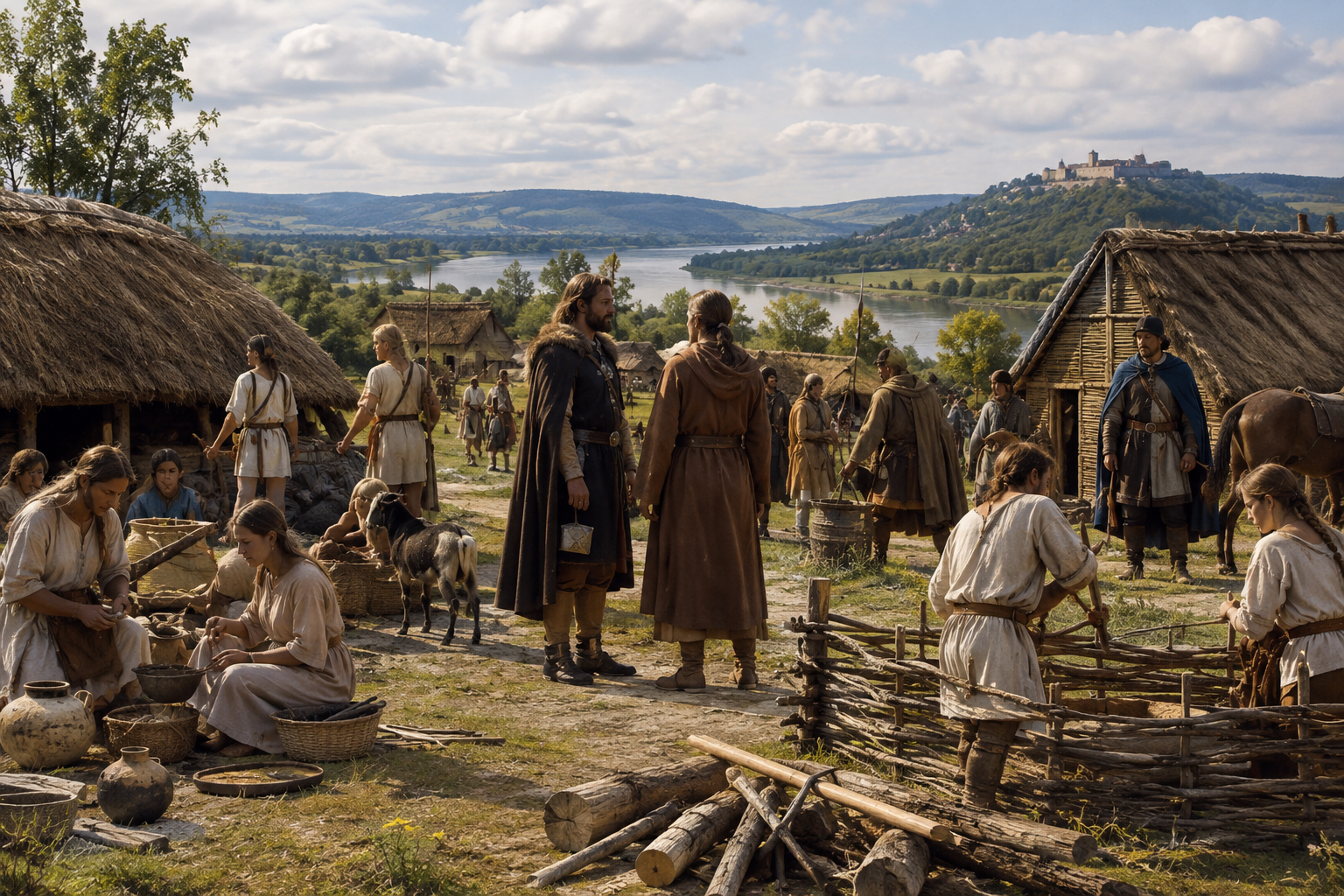
Haplogroup G2a2a is one of those paternal lineages that makes ancient DNA feel almost uncannily intimate. Long before castles, chronicles, and surnames, this branch was already present among some of the first farming communities to spread across Europe. If you want a haplogroup that takes you right into the deep foundations of European prehistory, G2a2a is an excellent place to start.
There is an important caution at the outset. Y-DNA haplogroups trace only one line of ancestry: the direct paternal line, father to son to son across the centuries. They do not describe a person's whole ancestry, culture, language, or identity. But they are still remarkably useful. In the case of G2a2a, ancient DNA has shown that this lineage appears again and again in early farming contexts, and then continues to surface in later Mediterranean and central European settings. That makes it historically interesting not because it belongs to one people forever, but because it lets us watch paternal lines moving through changing worlds.
Within the wider Y-chromosome tree, G2a2a belongs to haplogroup G, a major branch often associated in ancient DNA research with early agricultural populations of western Eurasia. For G2a2a, the strongest pattern in the evidence supplied here is its repeated appearance in Neolithic Europe. That matters because the Neolithic was not just a change in tools or diet. It was the remaking of the continent through farming, settlement, livestock, and new forms of kinship and inheritance.
In practical terms, G2a2a appears to have been part of the paternal landscape carried by early farming groups as they moved into Europe and established communities from the Balkans into central Europe. That does not mean every early farmer belonged to G2a2a, nor that later carriers must descend from one neat, uninterrupted chain. But the recurrence of this lineage in early agricultural burials strongly suggests that it was one of the important paternal signatures of that world.
For readers interested in the broader background to these first European farming expansions, the MyTrueAncestry community has a useful companion piece on that larger story.
Explore the Neolithic Expansion
The earliest and clearest evidence in this dataset comes from Neolithic burials in Germany. At Fellbach-Oeffingen in Baden Wuerttemberg, several Linearbandkeramik, or LBK, individuals dated to 5100 BC carry this haplogroup: FO146, FO47, FO127, and FO131. The LBK world was one of longhouses, fields, and some of the earliest large farming settlements in central Europe. Finding G2a2a there is significant because it places the lineage in one of the classic archaeological cultures of early European farming.
The same pattern appears elsewhere in early Neolithic Germany. At Niederpoering, sample NP410 from 5200 BC offers another central European appearance. At Halberstadt-Sonntagsfeld, two more early Neolithic individuals, I0056 and I0048, dated to 5052 BC, reinforce the point: G2a2a was not a one-site curiosity. It was spread across multiple early farming communities.
There is an equally striking southeastern European marker in Ancient Bulgaria. Sample I11270 from Veliko Tarnovo, dated to 5725 BC, shows this paternal line in the Balkans at an early date. That matters because the Balkans were one of the great corridors through which farming spread into Europe. In other words, G2a2a appears both in the southeastern gateway and in the central European farming zones beyond it.
Then the story widens. In Switzerland, a substantial cluster of Late Neolithic individuals from Aesch carries G2a2a: Aesch7, Aesch22, Aesch12, Aesch1, Aesch21, Aesch20, Aesch19, Aesch13, Aesch23, Aesch17, Aesch4, and Aesch14, ranging roughly from 3015 BC to 2820 BC. Add MX219 from Oberbipp, dated to 3300 BC, and you can see that this was not a fleeting paternal trace. In at least some Alpine and Swiss Late Neolithic communities, G2a2a was very well established.
That concentration is especially interesting because it hints at local continuity across generations within settled communities. It does not prove that all these men were close paternal relatives, but it does suggest that this lineage could remain prominent in particular regions over long spans of time.
Readers interested in how genetics and archaeology illuminate these early settled societies may also enjoy this broader introduction to the field itself.
Discover the Rise of Archaeogenetics
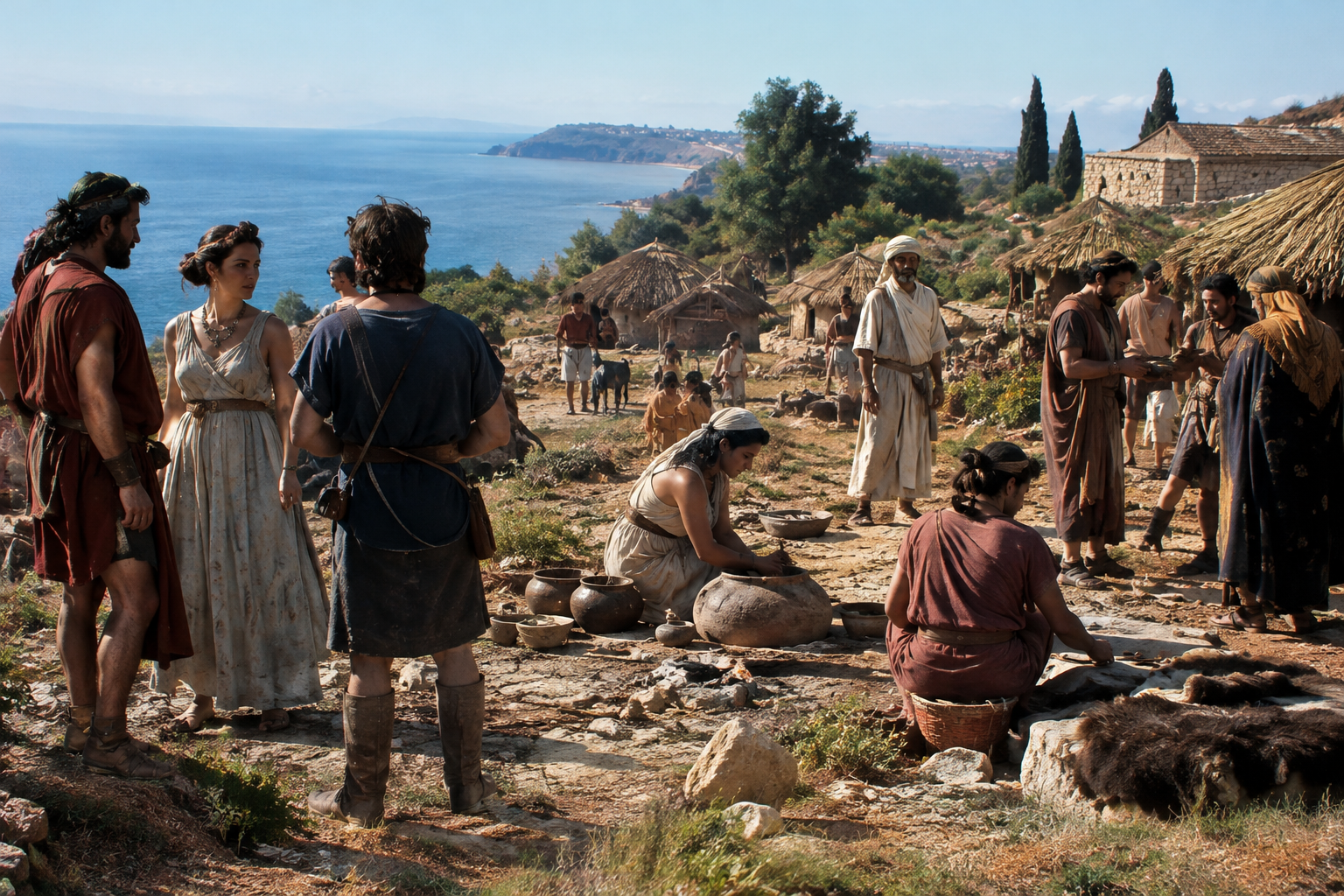
By the Bronze Age, the haplogroup appears in more varied settings. XAN051 from Minoan Period Crete Chania, dated to 1575 BC, places G2a2a in the Aegean world. That is a useful reminder that paternal lineages associated with early farmers did not vanish when palaces, ports, and maritime exchange appeared. They continued into more complex Mediterranean societies.
Likewise, GCP002 from Grotta Regina Margherita in Italy, dated to 1550 BC and described as an Italic Tribe individual, places the lineage in prehistoric Italy. Again, caution is needed: one sample does not define an entire Italic-speaking world. But it does show that G2a2a persisted in peninsular contexts as Bronze Age societies developed.
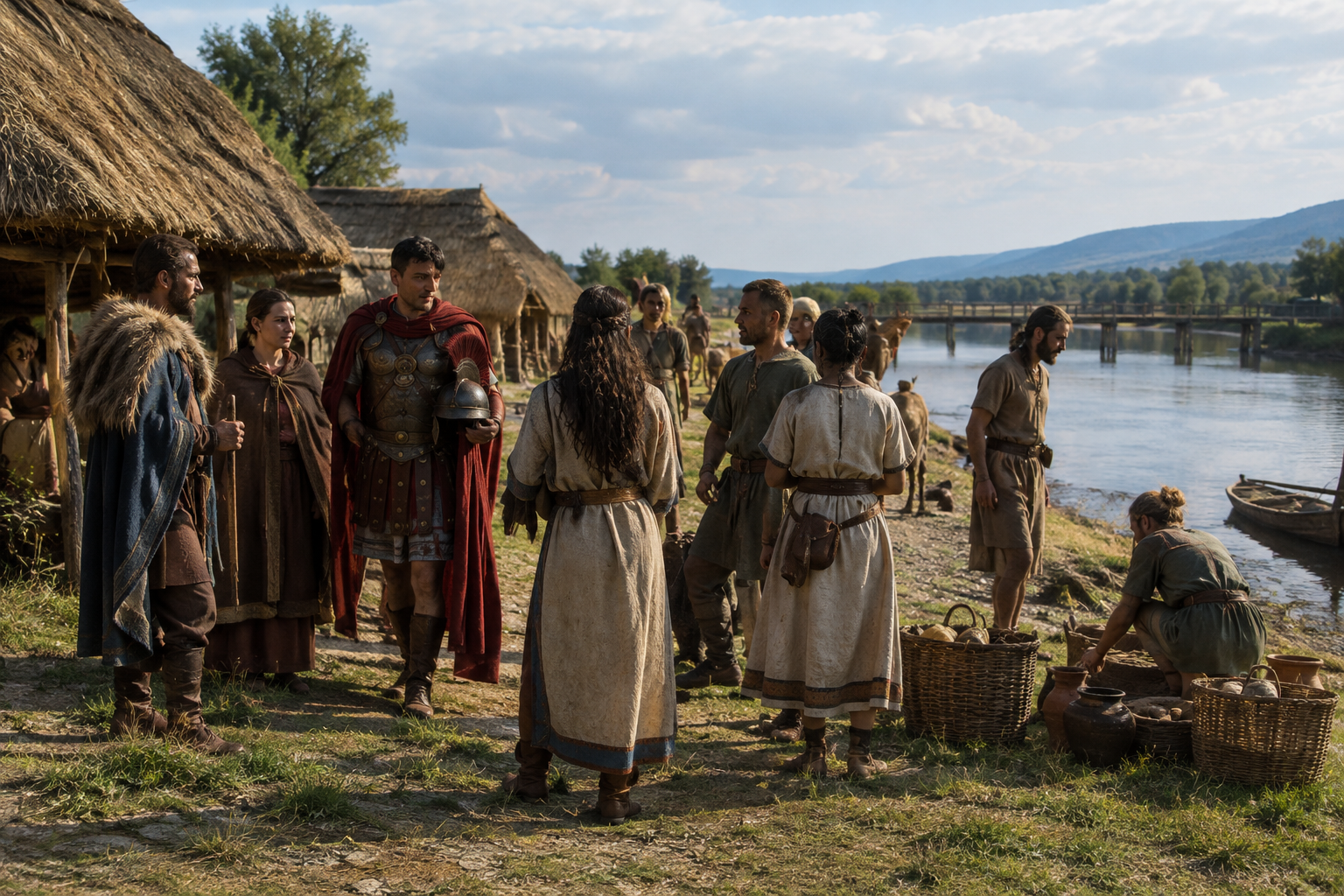
And then there is MFC001, from the Longobard Roman Borderlands Pannonia Arrabona Menfocsanak Barbaricum in Hungary, dated to 550 AD. This is a splendidly messy frontier context, exactly the sort of place where simple ethnic labels begin to fall apart. By this time, Roman systems, post-Roman identities, mobile war bands, and local communities were all entangled. G2a2a here is not the badge of one tribe. It is evidence that an old paternal lineage was still moving through the human complexity of late antiquity.
For more on that turbulent Carpathian and post-Roman setting, see this related MyTrueAncestry article.
If there is one big lesson in G2a2a, it is that paternal history is rarely a tale of replacement so complete that older lines vanish altogether. This lineage appears strongly among early farmers, remains visible in later Neolithic Switzerland, turns up in Bronze Age Crete and Italy, and is still present on a post-Roman frontier in Hungary. That does not mean uninterrupted elite descent from one famous ancestor. It means that some paternal lines can survive through immense cultural change.
Archaeology and written history often tell different kinds of story. Archaeology may show settlement, burial custom, trade, and diet. Written history, where it exists, tends to care about rulers, wars, and institutions. Ancient DNA adds a third angle: biological continuity and movement. G2a2a is a good example of how these three perspectives can complement one another. The men buried under Neolithic fields, the islander in Minoan Crete, the Bronze Age Italian, and the man on the Hungarian frontier were not members of one known family tree. But they do show that one paternal lineage could belong to many different worlds.
In this case, no associated noble families or castle details were supplied in the input. That is worth saying plainly, because it helps keep the historical method honest. It would be easy, and quite wrong, to take a lineage with deep European roots and start attaching it to medieval houses, dynasties, or ancestral strongholds by guesswork. We should not do that.
Still, the absence of named noble families here makes a useful point of its own. Haplogroups like G2a2a remind us that the deeper history of paternal ancestry long predates heraldry and stone keeps. Castles preserve family memory from the medieval period onward; Y-DNA can reach back into the far older landscapes beneath them. The two kinds of evidence are complementary, but they are not interchangeable.
If you enjoy that intersection of genetics and later aristocratic history, one of the most relevant broader dynasty articles in the community is the story of Hungary's ruling house, especially apt given the later G2a2a find from Pannonia.
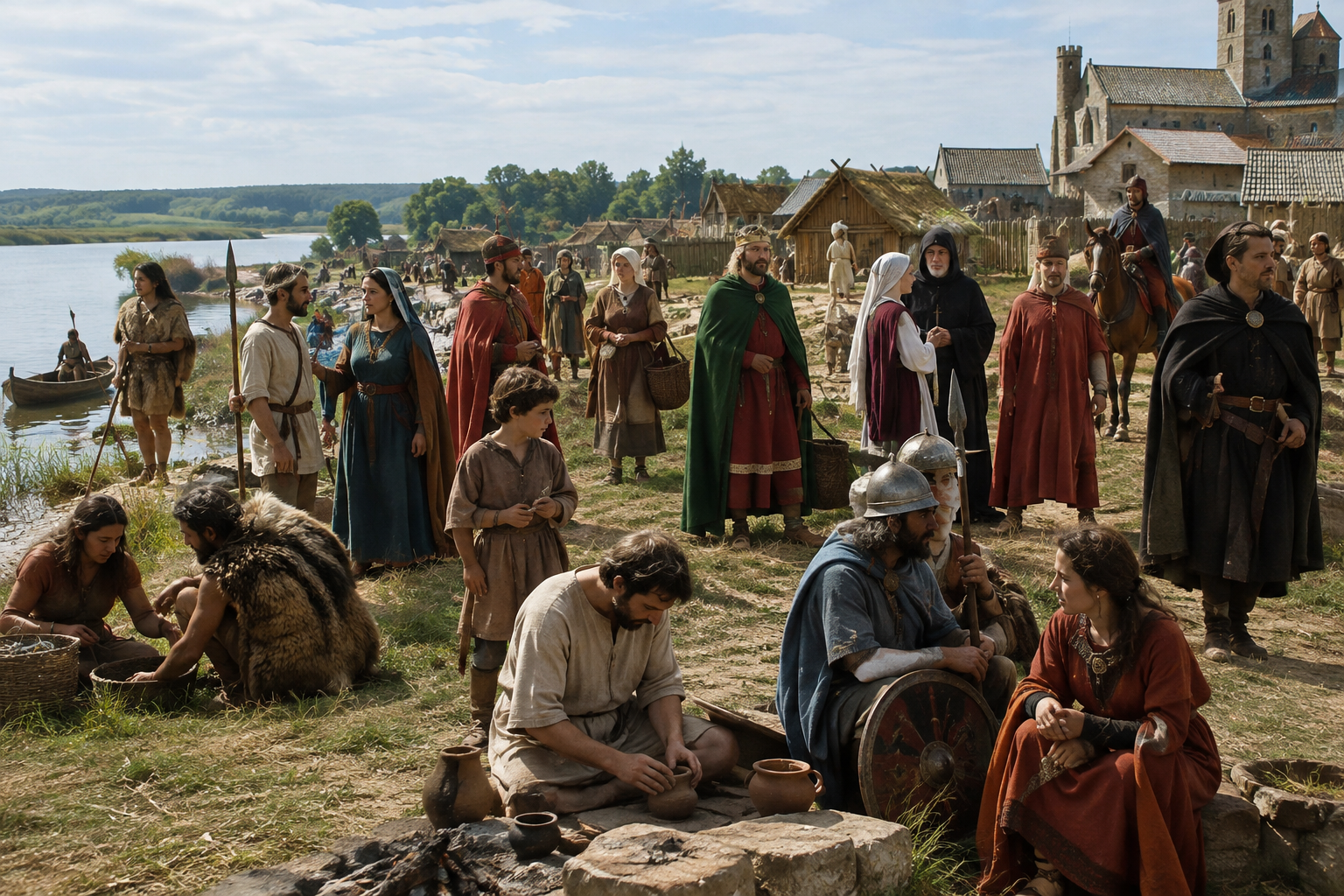
G2a2a matters because it helps put real ancient men back into the long human story of Europe. It appears in some of the earliest farming cemeteries of Germany, in the Balkan zone that helped transmit agriculture westward, in clustered Swiss Neolithic communities, in Bronze Age Mediterranean settings, and in a late antique frontier world in Hungary. That is a remarkable historical spread.
What it reveals is not a single people marching intact through time, but something more interesting: paternal lines can endure while languages change, cultures merge, political systems collapse, and new identities emerge. Ancient DNA gives us a way to glimpse that continuity without pretending it is the same thing as a documented family pedigree.
If your own Y-DNA belongs to G2a2a, or to one of its related branches, MyTrueAncestry can help you explore how your direct paternal line fits into this much larger archaeological story. You may discover genetic similarities to ancient individuals such as FO146, NP410, XAN051, GCP002, or MFC001. That does not prove direct descent from a particular ancient person or connection to a noble house, but it can offer a fascinating window into the ancient populations that shaped your ancestry.
Comments