Haplogroup E1b1a1a1d1

– 5 min read


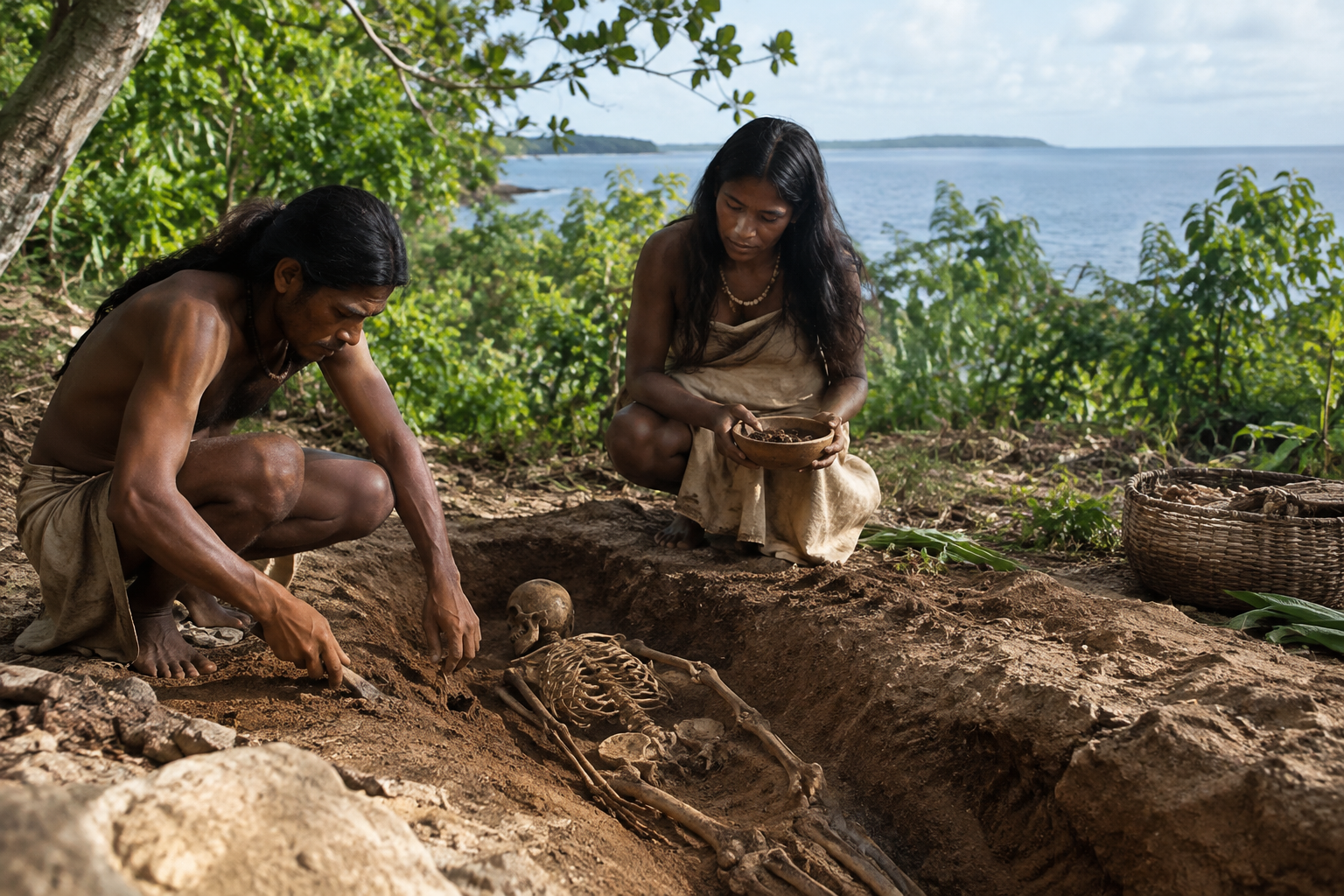
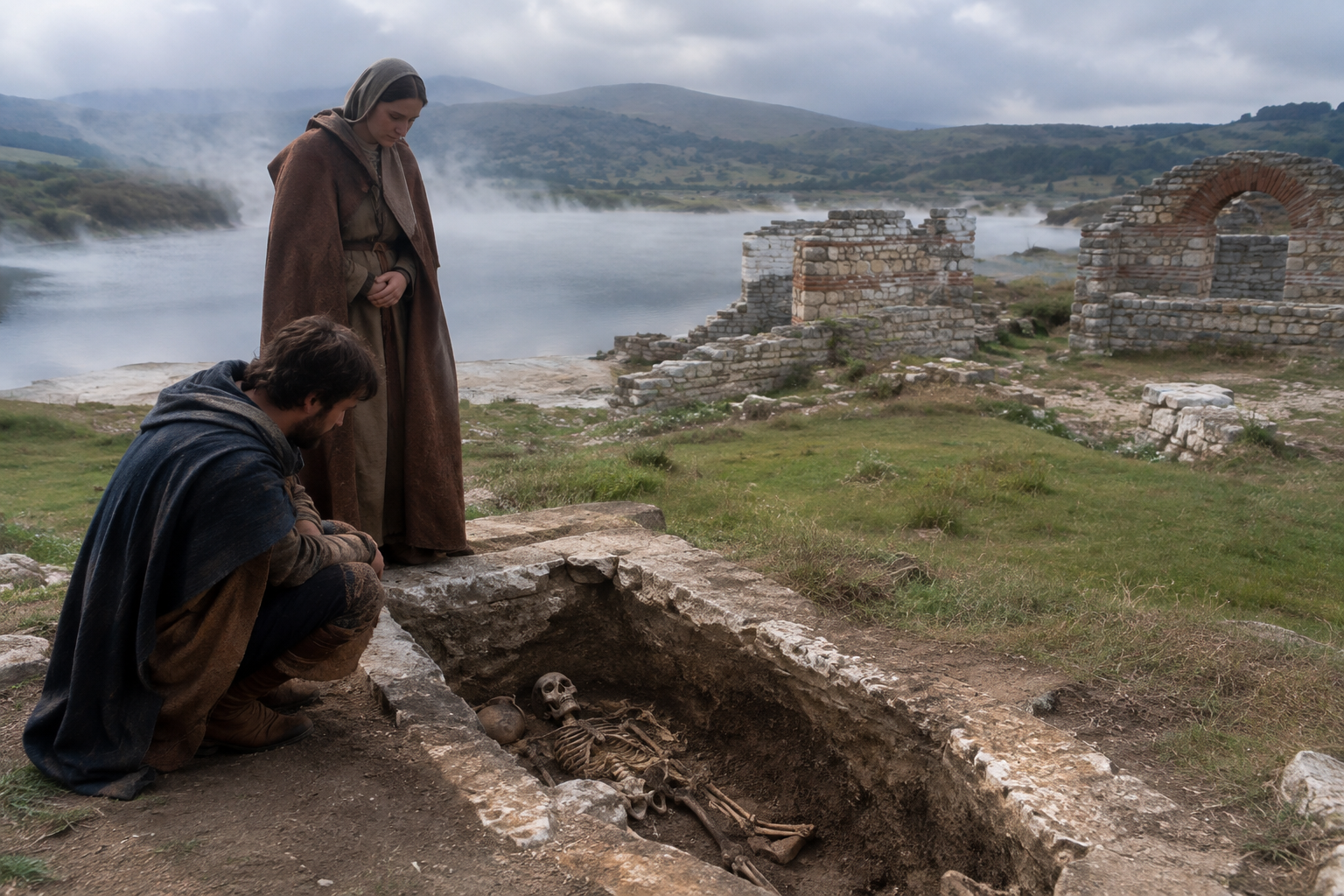
At Canimar Abajo in Cuba, one ancient burial has become unexpectedly important for the history of a Y-chromosome line far better known elsewhere in the world. The individual labelled CAB_142, dated to around 51 BC, comes from a site that has helped transform our view of the pre-Columbian Caribbean. In this case, the reported association with E1b1a1a1d1 is striking not because it lets us tell a simple origin story, but because it forces us to think carefully about how paternal lineages, island populations, and ancient mobility do - and do not - line up.
That caution matters. Y-DNA traces one direct paternal line only: father to father to father. It is not a shorthand for a person's whole ancestry, language, or identity. With a lineage as specific as E1b1a1a1d1, and with only a single ancient sample supplied here, the real task is to place the evidence in its proper archaeological setting rather than to inflate it into a grand certainty.
Canimar Abajo is one of the most informative archaeological sites in Cuba for understanding early and pre-ceramic populations of the Caribbean. For a long time, island prehistory was often told as a sequence of broad migrations and cultural blocks, tidy on paper and rather less tidy in real graves. Ancient DNA has complicated that picture in the best possible way by showing both continuity and diversity within communities that older narratives tended to flatten.
The individual CAB_142 belongs to that more complicated world. A genetic study of ancient Caribbean populations, published in Nature, helped show that pre-contact Caribbean people cannot be reduced to a single homogeneous background. For readers interested in the wider preservation challenges behind such work, the Caribbean is a particularly demanding environment for ancient DNA, which makes every successful genome from a site like Canimar Abajo especially valuable.
That is why CAB_142 matters. Even one paternal lineage, when securely associated with a dated burial from a well-studied region, becomes a data point in a much larger argument about who lived in the islands before European contact, how communities were connected to mainland populations, and how much local continuity there was across time.
The haplogroup in question, E1b1a1a1d1, is a narrow branch within the much broader Y-chromosome haplogroup E1b1a. Broad parent branches can have large and complicated histories spanning wide regions and many millennia. But a subclade this specific should not automatically inherit every migration story ever told about its parent lineage.
That distinction is often where public discussions go astray. A broad branch may be common in one region today, but an ancient individual carrying a downstream line does not by itself prove recent movement from that region, still less a simple ethnic label. In the case of CAB_142, the responsible reading is narrower: this burial shows that a paternal line reported as E1b1a1a1d1 was present in pre-Columbian Cuba by the late first century BC.
That is already interesting enough. It tells us that paternal diversity in the ancient Caribbean could be greater, and historically less predictable, than older textbook summaries implied.
Archaeologists are often wary of over-interpreting isolated finds, and rightly so. One man from one burial is not the entire island, still less the whole Caribbean. But a lone ancient Y-line can still matter for at least three reasons.
First, it provides a fixed point in time. Modern distributions of haplogroups are shaped by later demographic upheavals, including colonialism, enslavement, disease, and population collapse. An ancient burial from before those events gives us a rarer glimpse of the pre-contact landscape.
Second, it adds a paternal signal to a field where broader genome-wide ancestry often receives more public attention. Genome-wide data can reveal the larger mix of ancestries in a person, while Y-DNA focuses on a single male line. Those two scales do not always tell the same story, and that mismatch can be historically revealing.
Third, island archaeology magnifies the importance of movement. In the Caribbean, even small shifts in voyaging, exchange, marriage networks, or settlement history can leave outsized traces. CAB_142 does not prove a particular route by itself, but it reminds us that paternal histories in island communities were not necessarily simple or uniform.
There is a temptation, especially in popular writing, to treat pre-Columbian Cuba as a vague prelude to the colonial period. The archaeology says otherwise. Sites like Canimar Abajo preserve evidence for long-lived communities with their own burial traditions, subsistence strategies, and regional histories. Ancient DNA has begun to restore those communities as populations with depth, structure, and local continuity rather than as nameless stepping stones in a migration diagram.
That broader setting makes the presence of CAB_142 more than a technical footnote. A reported E1b1a1a1d1 lineage in this context belongs to a person embedded in an established island society before the upheavals of the modern Atlantic world. The chronology matters: around 51 BC is centuries before Spanish conquest, African forced migration, and the profound demographic changes that later reshaped Caribbean genetic history.
In other words, this sample belongs firmly to ancient indigenous Cuba, not to the colonial overlays that often dominate genetic assumptions about the region. That is precisely why the burial deserves attention.
One of the larger lessons from Caribbean archaeogenetics is that mainland affinities and island continuity can coexist. Populations may preserve long local histories while still reflecting older connections to continental source regions. That is not contradictory; it is how human settlement often works, especially across island chains linked by seafaring.
For a haplogroup article, that means resisting a common trap. It would be easy to turn E1b1a1a1d1 into a simple badge of origin and then read the entire biography of CAB_142 from that one paternal thread. But archaeology is seldom so obliging. What we can say is that this paternal line, or a reported placement within it, appears in a late pre-contact Cuban burial from Canimar Abajo. What that meant socially within the community - whether common, rare, local for generations, or introduced through older movement - requires a wider sample set than one individual can provide.
Ancient Diversity in the Americas
Still, the finding sits comfortably with a bigger archaeological truth: the Indigenous Caribbean was dynamic. Its communities were connected, mobile, and historically layered. Paternal lineages could therefore preserve histories that do not map neatly onto later colonial categories or modern expectations.
For someone researching E1b1a1a1d1 today, CAB_142 offers something rare: an ancient, pre-Columbian Caribbean point of reference. Not a dynasty, not a sweeping ethnic label, and not a guaranteed family connection - but a real archaeological signal from Cuba around the first century BC. Its importance lies in that combination of specificity and restraint. This haplogroup reaches us here not through legend, but through one excavated burial from a site that has become central to rewriting Caribbean population history.
Comments