Haplogroup E1b1a1a1a2a1a3b1a2

– 4 min read


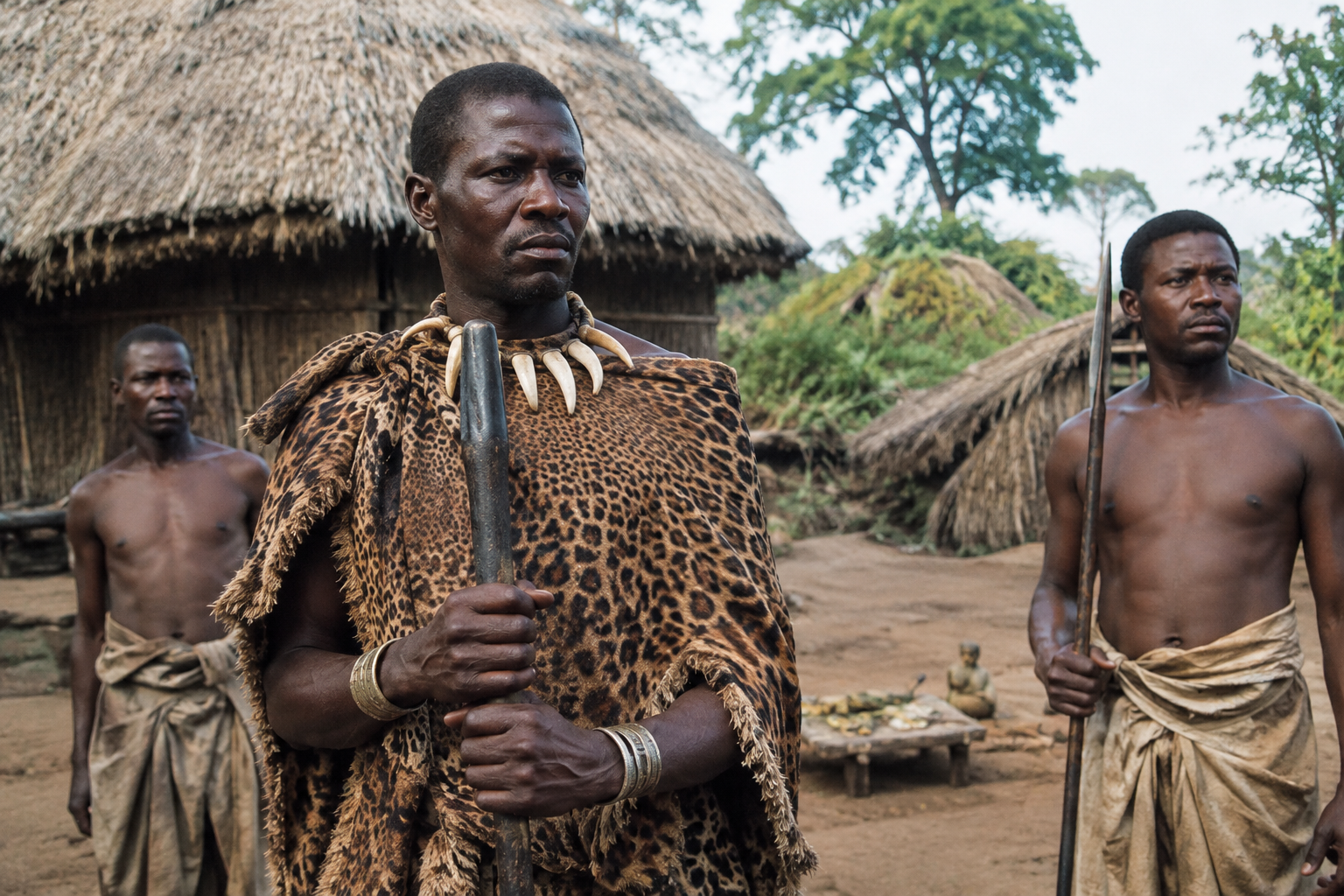
In Kindoki in the Congo, one documented ancient individual dated to about AD 1750, sample KIN002, provides a rare fixed point for the Y-DNA haplogroup E1b1a1a1a2a1a3b1a2. That may sound like a forbidding string of letters and numbers, but for anyone tracing a paternal line it matters enormously: it places this branch in a real person, in a real place, in the late precolonial history of Central Africa.
That is already interesting, because ancient DNA from West and Central Africa is still much scarcer than material from Europe. So even a single securely identified male lineage can illuminate a historical landscape that written records only partly capture. In this case, the broader haplogroup background points toward the great expansion of Bantu-speaking populations across much of sub-Saharan Africa, while the exact branch name, E1b1a1a1a2a1a3b1a2, is a much narrower paternal twig within that larger story.
KIN002 comes from Kindoki in the Congo and is dated around AD 1750. That date places him in a world of established farming communities, regional exchange, and political formations already centuries old in west-central Africa. It is easy, from the outside, to imagine Central African history only once Europeans appear in the written record. Archaeology and genetics insist on something much more substantial: these were deeply rooted societies with their own long histories of settlement, movement, and interaction.
The value of KIN002 is not that he represents every man in the region. He does not. Rather, he gives us a direct paternal marker from one historical community in the Congo at a moment when older regional patterns and newer Atlantic-era disruptions were beginning to overlap. Y-DNA traces one strictly paternal line, not a person's whole ancestry, but that one line can still be historically revealing when anchored to an excavated individual.
A wider ancient DNA study of Africa, published in research on ancient population history across the continent, helped show just how dynamic African population history has been, with regional continuity in some places and major shifts in others. That larger framework makes a sample like KIN002 more meaningful, not less: he belongs to a local history, but also to a continental one.
African DNA population history
The parent haplogroup behind this article, E1b1a, is one of the major Y-chromosome lineages associated with many populations in western, central, and southern Africa. It is especially important in discussions of the Bantu expansion, the long-term spread of farming, ironworking, and languages over large parts of the continent. But one must be careful here. The exact branch E1b1a1a1a2a1a3b1a2 is not the same thing as the whole of E1b1a, and it should not be treated as if it single-handedly explains every migration connected with the parent group.
What the long name tells us is that this is a downstream lineage: a much later, more specific paternal branch nested within a bigger family tree. In practical terms, that means men with this haplogroup share a paternal ancestor more recent than men who belong only to the wider E1b1a umbrella. Ancient DNA rarely gives us a full documentary biography, but it does allow us to say that this particular branch was present in the Congo by the eighteenth century.
In Eurasian archaeology, articles about haplogroups often lean on dozens of male burials from cemeteries, dynasties, or whole cultural horizons. Central Africa is different, not because its history is thinner, but because preservation, sampling history, and research priorities have left the ancient genetic record much patchier. That makes KIN002 disproportionately important. He is not dramatic because he is a king or a conqueror; he is important because he is evidence.
There is a useful historical lesson in that. The paternal branches common in many present-day African populations did not appear suddenly in the modern era. They were already embedded in local communities before colonial rule transformed political borders, forced labor systems, and population movement on an unprecedented scale. A sample from about AD 1750 captures a world on the edge of those upheavals, but not yet defined by them.
African settlement and malaria
By the eighteenth century, the Congo region was no historical blank. It contained old networks of rivers, trade routes, farming zones, and political communities. Some were linked to larger kingdoms and regional spheres of influence; others were shaped by more local patterns of kinship and authority. A paternal lineage such as E1b1a1a1a2a1a3b1a2 would have moved through that world not as an abstract genetic marker, but through fathers, sons, households, and communities.
That is worth stressing because haplogroups are sometimes mistaken for ethnic labels. They are nothing of the sort. The same Y-line can be found among people speaking different languages or living under different political systems, and one community can include multiple paternal lines. What KIN002 gives us is not a tribal badge, but a sharply defined thread inside the much larger fabric of Congolese history.
The late date is also a strength. Too often, discussions of African prehistory stop with very broad reconstructions of ancient expansions. Here, instead, we can glimpse continuity into a historically recent African past. That helps bridge the false divide between "ancient" and "historical" Africa. Archaeogenetics is at its best when it reminds us that both belong to the same human story.
If your Y-DNA falls under E1b1a1a1a2a1a3b1a2, KIN002 offers something quite solid: evidence that this paternal branch was present in the Congo around AD 1750. That does not prove that every modern carrier descends from the same recent local community, nor does it confine the branch to one modern country. But it does show that this lineage belongs to the documented historical landscape of west-central Africa, not merely to a statistical map of living populations.
For MyTrueAncestry users, that is the real significance. This haplogroup is not attached here to a legendary dynasty or a speculative migration tale. It is attached to a man from Kindoki, in the Congo, living in the eighteenth century. Sometimes one well-placed ancient individual tells us more than a page of grand claims, because he pins a paternal line to the ground of history.
For descendants exploring this branch today, the most responsible conclusion is also the most interesting one: E1b1a1a1a2a1a3b1a2 belongs within the lived history of Central Africa, and KIN002 shows that clearly. As more African ancient DNA is recovered, this narrow paternal line may yet be placed into an even richer map of communities, movements, and family histories.

Comments