Haplogroup C2b1a

– 5 min read


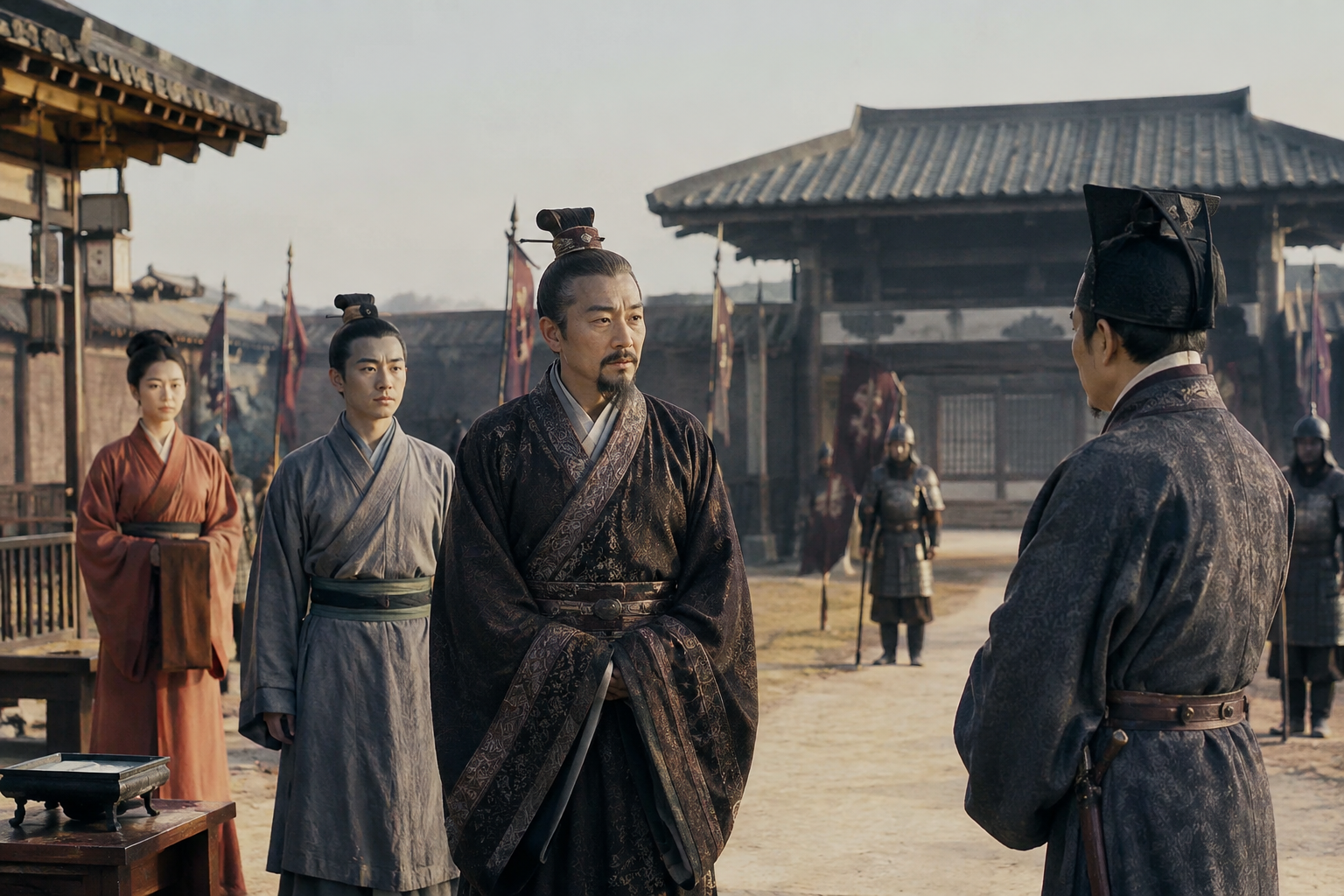
At Linzi in modern Zibo City, the old capital region of the ancient Qi state, one male burial dated to around 100 BC has become a small but telling marker in the history of East Asian paternal lines. The individual, identified as M34, belongs to the Western Han period, when imperial unification was already reshaping northern China politically, economically, and demographically. In that setting, the appearance of Y-DNA haplogroup C2b1a is interesting precisely because it is not a grand royal legend or a neat tribal badge, but a real paternal line found in a documented Han-era context.
That matters because Y-DNA follows one direct male line only: father to son across generations. It does not describe a whole person's ancestry, language, or identity. But when a lineage like C2b1a turns up in an excavated Han-period burial, it gives us something wonderfully concrete: evidence that this branch was present among the men living within the world of early imperial China, not just in later steppe histories or modern surname traditions.
Linzi had a long life before the Han ever arrived. It was the famous capital of Qi during the Eastern Zhou era, a major political and intellectual centre in what is now Shandong. By the Western Han period, the old kingdom had been folded into a much larger imperial system, but places like Linzi did not simply lose their past. They became points where older regional populations, new administrative elites, soldiers, migrants, and trading networks all overlapped.
That is the immediate importance of M34. A man carrying C2b1a was buried not in some vague "northern Asia" but in a historically specific landscape with a deep pre-imperial pedigree and a clear Han-era date. The branch therefore belongs, at the very least, inside the paternal diversity of northern China in the late first millennium BC.
Research on ancient East Asian Y chromosomes has increasingly shown that paternal history in the region cannot be reduced to one simple story of a single heartland population expanding unchanged in all directions. Different lineages appear in different settings, and some that later became strongly associated with northern or steppe-linked populations were already woven into the human geography of early Chinese states and empires. A useful wider companion to that picture is MyTrueAncestry's piece on Ancient Y chromosomes in East Asia.
Haplogroup C is one of the old major Y-chromosome branches of Eurasia and beyond, with a long and complicated history. Its descendant branches appear across a vast arc including East Asia, Siberia, Inner Asia, and parts of the Pacific world. C2b1a, however, is not the same thing as the whole of haplogroup C, still less the whole of C2. One should be careful here: the narrower branch in this article must not be made to carry every migration story ever attached to its much larger parent lineage.
What the Linzi sample allows us to say is more modest and more useful. C2b1a was present in a Western Han male from the former Qi region. That places the branch inside the demographic world of early imperial northern China. It may reflect local continuity, movement from other northern zones, or the long mixing that accompanied warfare, colonisation, marriage, and administration in the centuries around Qin and Han state formation. But the sample itself does not license a fantasy of direct descent from a named general, court clan, or conquering tribe.
This is often where ancient DNA is at its best: not solving every historical problem in one flourish, but making old maps less tidy and more human. One burial can show that a paternal line had already entered a region and social world where older historical writing might never have noticed it.
The Western Han empire is sometimes imagined as a neatly integrated civilisation spreading outward from a central core. Archaeology tells a messier and more interesting story. Han rule connected former kingdoms, borderlands, military colonies, long-distance exchange routes, and communities with different local histories. Cemeteries from the period are therefore valuable not because they reveal a single "Han type", but because they capture the varied people who actually lived under Han institutions.
M34 from Linzi fits that broader pattern. The former Qi homeland sat on the eastern side of the North China world, but it was never isolated. Long before the Han, Shandong had links by land and coast to the Central Plains and beyond. Under empire, such connections only intensified. So a C2b1a lineage there should not be treated as an anomaly in need of melodrama; rather, it is evidence of how mixed the paternal landscape could already be.
For readers interested in how ancient DNA is reshaping our picture of Chinese historical populations more generally, the article on 6,000 Years of Genomic History in the Middle Yellow River gives a broader regional frame for the long population history behind later imperial China.
There is another reason Linzi matters. The old Qi state was not a remote frontier, but one of the major historical centres of early China. Finding C2b1a here helps remind us that paternal lines often crossed the categories modern readers instinctively separate: "Chinese", "steppe", "local", "migrant". Those are useful historical labels in some contexts, but Y-DNA does not respect them neatly. Men carrying related lineages could be incorporated into states, armies, farming communities, and urban populations in very different ways.
That wider northern context has become clearer as more ancient genomes from China and Inner Asia have been published. The region between the Central Plains, the northeast, the steppe margin, and the Yellow River corridor was never a sealed set of boxes. It was a zone of repeated contact. A recent ancient DNA study of East Asian paternal history, published in BMC Biology, highlights exactly this larger point: ancient Y chromosomes reveal both coastal and inland patterns of movement that shaped the paternal landscape of East Asia over long periods.
That does not mean every bearer of C2b1a took the same route or belonged to the same people. It means the branch belongs to a population history in which movement, incorporation, and regional diversity were normal features, not exceptions.
One sample can never stand for an entire province, dynasty, or ethnic group. Yet single finds are often historically valuable when they are securely placed. M34 is important because he gives C2b1a a firm archaeological foothold in Western Han Linzi. That anchors the branch in a recognisable historical moment: after the age of Warring States competition, during the consolidation of empire, in a place already famous for centuries of political life.
There is a useful parallel here with other MyTrueAncestry work on later Chinese burials, especially where DNA reveals how family structure and ancestry can sit inside very different historical settings. The article on Song Dynasty remains is later in date, but it shows how much nuance can emerge once excavated individuals are studied genetically rather than reduced to dynastic labels.
If your paternal line is C2b1a, the most responsible takeaway is not a dramatic claim about one tribe or one imperial house. It is something subtler and, in truth, more impressive. This branch was present in the human world of northern East Asia deeply enough to appear in a documented Western Han burial at Linzi, a place tied to one of ancient China's great historical regions. That puts your direct paternal line into a landscape shaped by old states, imperial expansion, migration, and long-term mixing across northern China and its neighbouring zones.
In other words, C2b1a is not merely a label on a modern test result. In the case of M34, it is a lineage with a clear archaeological footprint in early imperial China.



Comments