Haplogroup C2a1a3a6

– 5 min read


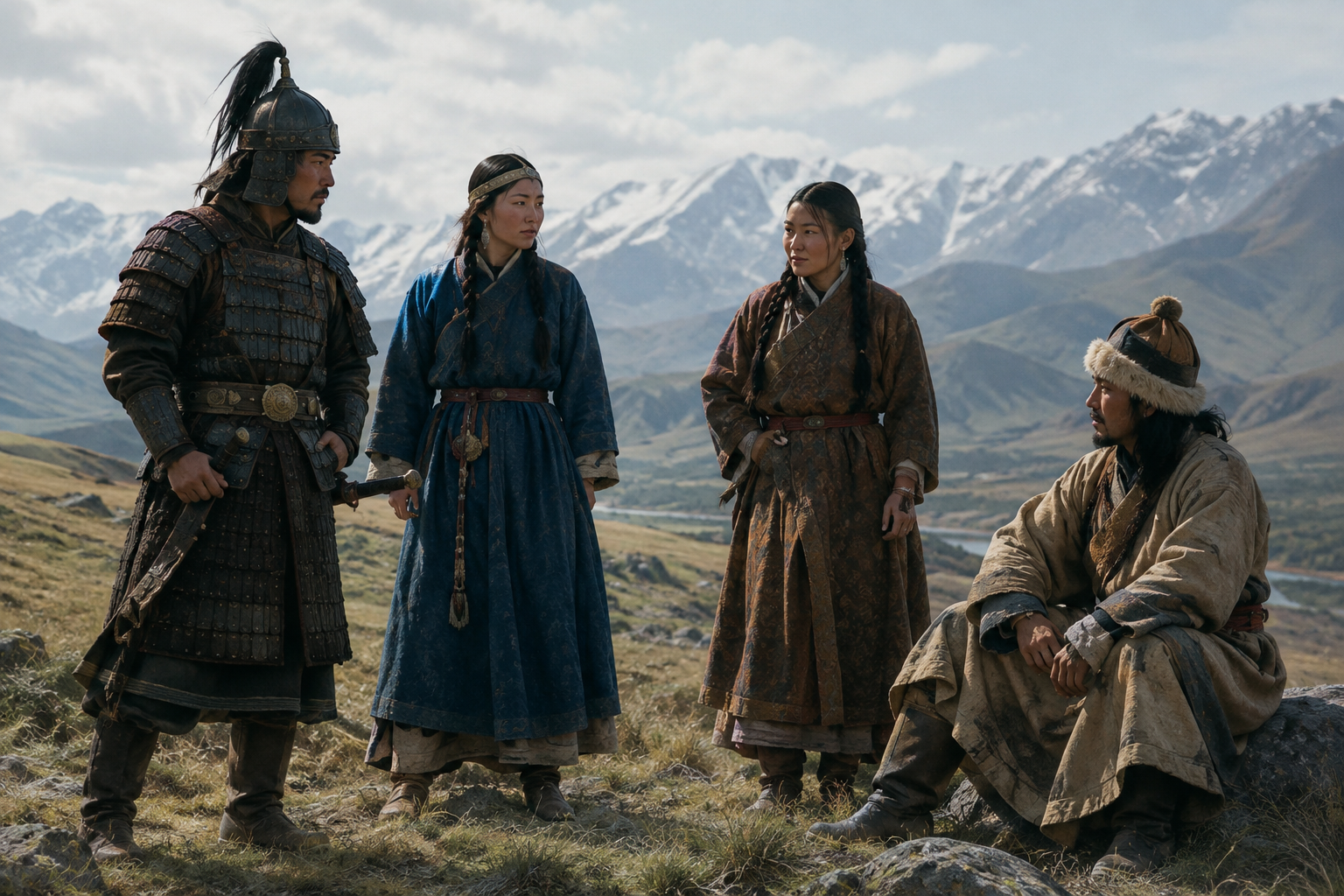
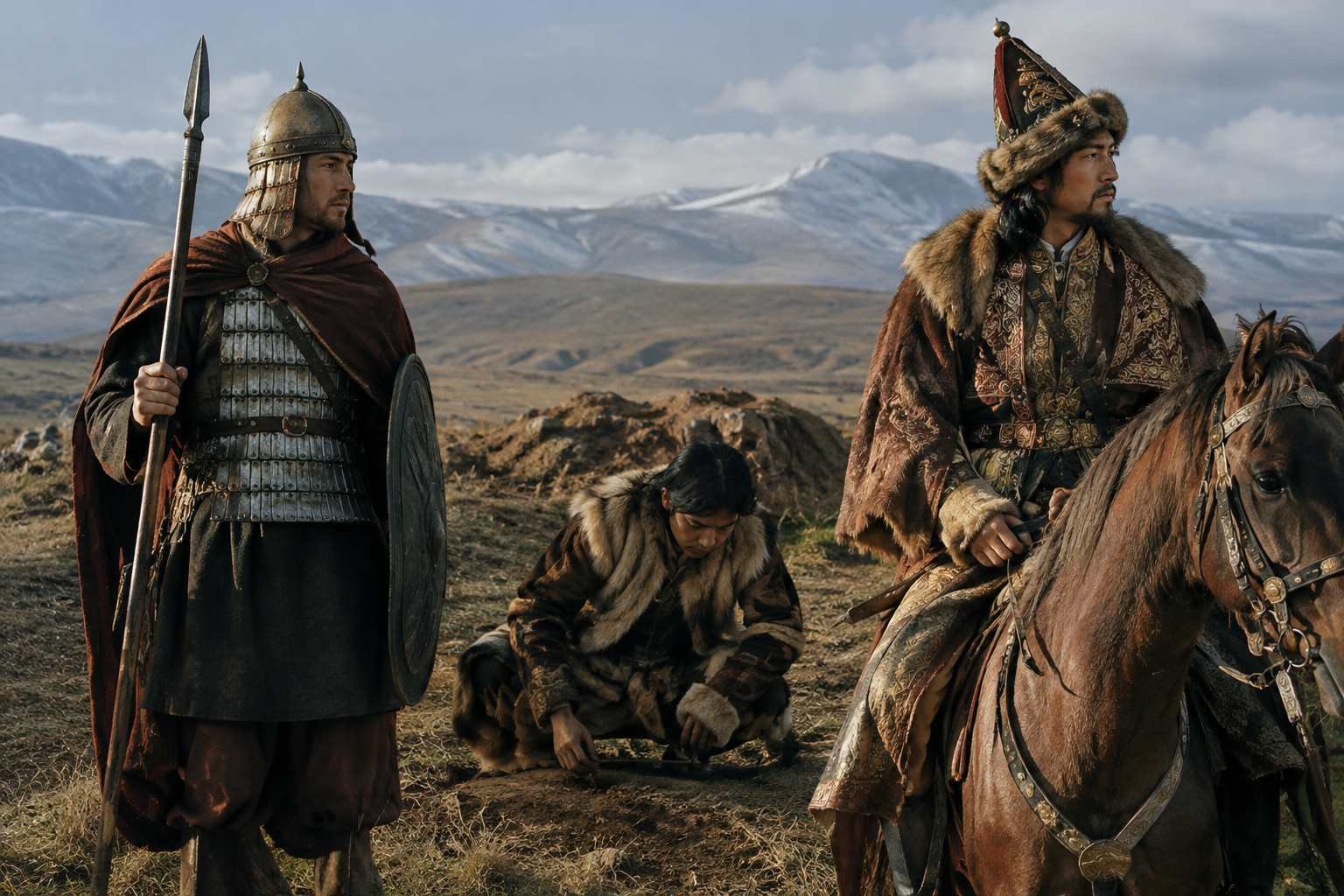
At Tavan Khailaast in Mongolia, three late medieval men dated around AD 1350 to 1410 - TK4-2, TK4-5, and TK5-2 - point to an unusually tight archaeological moment for Y-DNA haplogroup C2a1a3a6. Add a fourth individual, DAS001 from Lamt Mountain, described as a late medieval Mongol warrior around AD 1300, and the picture becomes more interesting still: this is not a vague prehistoric trail scattered across continents, but a cluster rooted in the Mongol world of the 13th to 15th centuries.
That matters because Y-DNA follows one direct paternal line only: father to son, and so on. It does not define a person's whole ancestry, language, or identity. But when the same paternal branch appears in several late medieval Mongolian burials, it gives us a sharp little window into how particular male lines endured within the steppe societies that outlived the great imperial conquests.
The strongest pattern here comes from Tavan Khailaast itself. Rather than a single isolated burial, we have multiple individuals from the same broad site and period: TK4-2 and TK4-5 around AD 1350, and TK5-2 around AD 1410. Even without inventing kinship or grave detail, that repetition is significant. Archaeologically, repeated Y-line evidence at one place hints that this paternal branch was present in the local population across more than one generation of late medieval life.
In historical terms, this is already after the explosive expansion usually associated with Chinggis Khan and the first century of Mongol imperial rule. By the 14th and early 15th centuries, the empire had fractured into successor polities, yet Mongolia remained a homeland of political memory, mobile pastoral life, and elite lineages whose authority still drew on steppe traditions. A lineage like C2a1a3a6 appearing here fits that setting rather well: not as proof of a dynasty, but as evidence for continuity within the male population of the Mongolian heartland.
A broader MyTrueAncestry discussion of the region's deep background helps place these medieval men in context: ancient DNA from the steppe repeatedly shows that Mongolia was never genetically static, even when cultural continuity could look strong from the archaeological side.
The haplogroup name in this article is quite specific: C2a1a3a6. That is a narrower branch within the broader Y-haplogroup C2, a lineage widely discussed in Inner Asian and East Eurasian population history. The caution is important. We should not simply pour the entire history of C2 into this smaller subclade as though every branch had the same story.
What the sample cluster does support is a practical observation: men associated with this branch were present in late medieval Mongolia, including at Tavan Khailaast and Lamt Mountain. That does not tell us where the branch first formed, nor does it prove membership in a famous ruling house. What it does offer is a documented medieval anchor point in the eastern steppe, and that is often far more useful than grand but sloppy claims.
Research on ancient East Asian and Inner Asian Y chromosomes has increasingly shown just how much historical movement can hide beneath neat labels. Some paternal lines spread with expansion, alliance, and prestige; others persist locally for centuries. For readers interested in the bigger paternal backdrop, this post on ancient Y chromosomes in East Asia is a useful companion.
DAS001, identified as a late medieval Mongol warrior from Lamt Mountain and dated around AD 1300, adds a different kind of setting. Tavan Khailaast gives us repetition at one site; DAS001 gives us a culturally labelled individual placed in the age when Mongol military traditions still shaped Eurasia from China to the western steppe. That does not mean every warrior belonged to a single paternal clan, of course. But it does remind us that male-line transmission mattered in societies where military followings, aristocratic households, and remembered descent could all carry political weight.
The phrase "Mongol warrior" should be handled carefully. It is a historical and archaeological description, not a genetic category. Still, in this case the Y-line is interesting precisely because it sits inside that recognisable world of mounted power, regional fragmentation, and post-imperial survival. One sample cannot stand for the whole army or the whole people, but paired with the Tavan Khailaast cluster it makes C2a1a3a6 look less like a one-off curiosity and more like part of the late medieval Mongolian paternal landscape.
An ancient DNA study circulated with supplementary material at https://www.biorxiv.org/content/10.1101/2020.03.25.008078v1.supplementary-material is one of the research leads connected with these Mongolian medieval remains. Even where sample-level interpretation must stay cautious, this kind of work is exactly what has made it possible to tie named burials and burial grounds to specific paternal branches.
There is a tendency, when people hear about Mongolian Y-DNA, to leap straight to the era of world conquest. But the dates here are especially valuable because they fall after the first imperial century. TK4-2 and TK4-5 around AD 1350, and TK5-2 around AD 1410, belong to a time when the Mongol political world had changed profoundly. The Yuan dynasty had fallen in China in 1368; other Mongol successor states had their own trajectories; and yet Mongolia itself remained a core zone of steppe power and memory.
That means C2a1a3a6, in this evidence, is not merely a conquest-era flash. It appears among men living in the long aftermath, when communities were reorganising, old claims were being reformulated, and regional populations were carrying forward both older and newer lineages. In historical terms, continuity after empire is often more revealing than expansion during empire, because it shows what stayed rooted when political maps changed.
For a wider look at how ancient DNA is beginning to refine these eastern steppe histories, the general archaeological discussion here gives a helpful overview without collapsing all Mongol-period lineages into one story.
These medieval Mongolian samples also matter because Mongolia was never isolated from neighbouring worlds. The steppe sat between forest, desert, mountain, and agrarian frontiers, linking Siberia, northern China, and Central Asia. Over very long periods, populations moved through these corridors in different directions, and paternal lineages could expand, contract, or become regionally concentrated.
That is why a branch such as C2a1a3a6 should be read at two scales. At the close scale, it is a late medieval Mongolian finding tied to identifiable individuals and sites. At the wider scale, it belongs to the complicated paternal history of East and Inner Asia, where archaeological cultures, political confederations, and genetic lineages do not map neatly onto one another.
Readers interested in the northern Chinese and steppe interface may also want to compare evidence from farther south and west, where ancient DNA has begun to clarify how frontier zones connected farming societies and mobile pastoral worlds.
For C2a1a3a6, the clearest ancient signal here is not a legendary founder but a real medieval concentration: several men from late medieval Mongolia, including three from Tavan Khailaast and one from Lamt Mountain, all tied to the Mongol world between about AD 1300 and 1410. That gives this paternal branch a historically meaningful foothold in the eastern steppe at a time when Mongol political traditions were still very much alive, even after imperial unity had broken apart.
If this is your Y-DNA line, the responsible takeaway is a connection to a paternal history that is well at home in Inner Asia and specifically documented in medieval Mongolia. That is already a substantial clue. The value lies not in forcing a royal pedigree, but in recognising that your direct male line belongs to a branch now visible in the archaeological record of the Mongol heartland.
Comments