Haplogroup C2a1a1b1a

– 5 min read


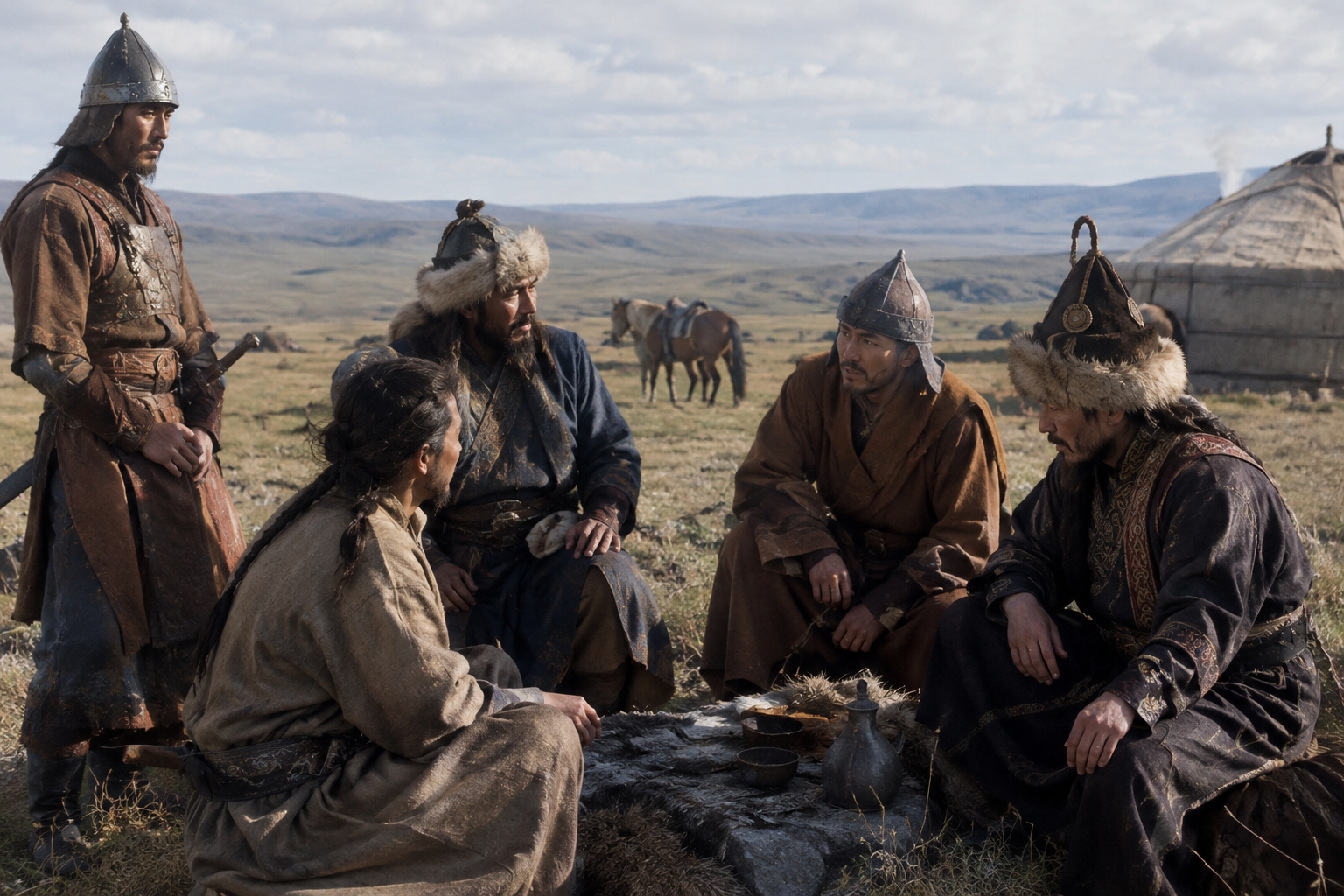
At Leobersdorf in Lower Austria, an early medieval grave dated to about AD 720 produced an individual known as LEO015. That is already an arresting setting: an Avar-period burial on the western edge of the steppe world, in a region where the old Roman frontier had long since fractured into new political and cultural landscapes. For the haplogroup C2a1a1b1a, LEO015 matters because it places this paternal line in a very specific historical moment, when eastern steppe connections were still visibly shaping central Europe.
This is the sort of lineage that becomes interesting not because it turns up everywhere, but because the finds we have cluster around mobile, high-contact worlds: the Rouran sphere in the 5th century, the Mongolian steppe, the Avar age in Europe, and a later Mongol-period burial. Y-DNA traces one direct paternal line rather than a person's whole ancestry, but that narrow line can still be extraordinarily revealing when it appears in well-dated archaeological contexts.
LEO015 comes from Baden, at Leobersdorf in Austria, and is dated here to around AD 720. In historical terms, that places him in the later Avar period, when the Carpathian Basin and its neighboring regions were tied into a steppe-derived political order that had lasted since the late 6th century. The Avars were never a simple, uniform people; archaeology and ancient DNA alike show them as a federation with mixed origins and changing local populations.
That is precisely why a paternal lineage such as C2a1a1b1a is so informative here. In broad terms, C2 branches are often associated with eastern Eurasian and Inner Asian histories, but one must be careful: that does not mean every C2 branch has the same story, nor that one Austrian grave can stand for the whole Avar realm. What LEO015 does suggest is that men carrying this branch, or a closely related one reported under this label, were present within the Avar-period population at the edge of central Europe.
A genetic study of Avar-period material has helped sharpen this wider picture of eastern connections in the Carpathian Basin, especially among some elite and migrant-associated burials, without reducing the whole society to a single origin story. The Leobersdorf find sits well within that larger archaeological conversation about how steppe-linked groups became part of European landscapes.
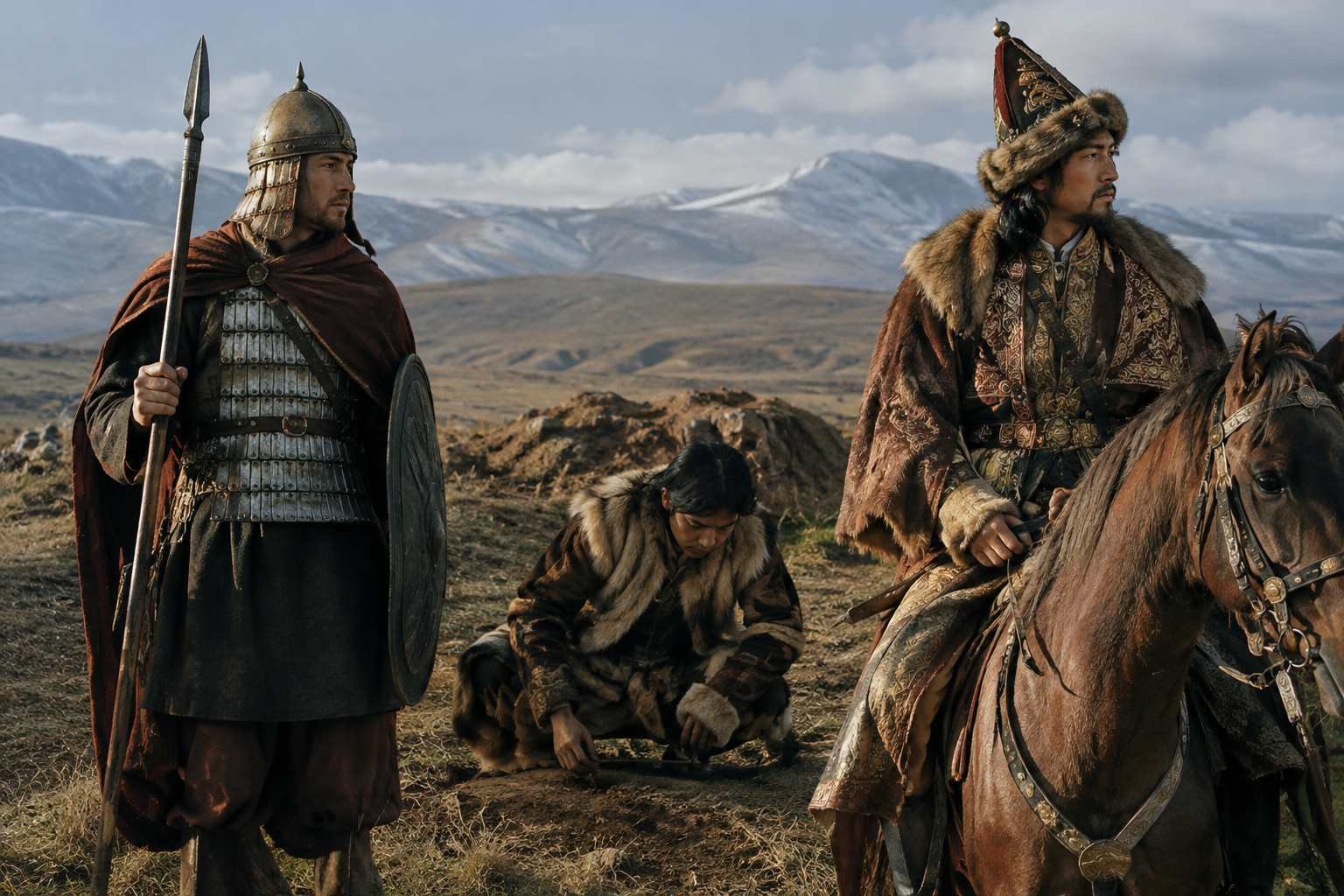
The older samples in this set push the story back into the 5th century, and that is where things become historically tantalizing. One sample, TL1, is associated with the Rouran Khaganate and dated around AD 440. Another, ZHS5, comes from the ancient nomadic Mongolian steppes and is dated around AD 460. These are not interchangeable labels. The Rouran Khaganate was a real imperial formation in eastern Inner Asia, while a broader "nomadic Mongolian steppes" designation signals a wider steppe context rather than a neat dynastic identity.
Even so, taken together they matter. They place the lineage associated here with C2a1a1b1a in Inner Asia centuries before the Leobersdorf burial in Austria. That does not prove an unbroken documented chain from TL1 or ZHS5 to LEO015, and it certainly does not allow us to identify any single migration route for one family line. But it does show that the paternal branch belonged to the same vast eastern world from which later steppe confederations emerged.
For historians of the 5th and 6th centuries, that wider eastern background is crucial. The Rouran, like other steppe powers, belonged to a political environment built on mobility, tribute, alliance, and shifting confederations. When related paternal signatures later appear far to the west, in Avar-period Europe, they become part of a larger pattern of long-distance steppe connections rather than isolated curiosities.
Readers interested in the deeper background to these eastern steppe populations may want to explore this related overview of ancient DNA research on the Mongolian steppe, which has helped frame how successive Inner Asian populations combined continuity with major demographic change.
The latest sample in the group, TSA001 from Tsagaan Chuluut, is dated to about AD 1350 and classified as late medieval Mongol. This is a very different historical setting from the Rouran world or the Avar frontier. By the 14th century, Mongolia and the wider post-imperial Mongol sphere had been transformed by the rise and fragmentation of the Mongol Empire, with its enormous military, political, and demographic reach across Eurasia.
TSA001 does not tell us that C2a1a1b1a was uniquely "Mongol," still less that every bearer of the haplogroup descends from famous imperial lines. That would be bad history and worse genetics. What it does show is persistence: this paternal branch, or a very closely reported form of it, remained present in Mongolian contexts long after the early medieval period. In other words, the evidence does not just point westward into Europe; it also stays rooted in Inner Asia.
That combination is what makes this haplogroup so striking in archaeological terms. We are not looking at a lineage that appears once in one dramatic burial and then vanishes. We are looking at a branch reported from multiple contexts stretching from 5th-century eastern steppe settings to 8th-century Austria and on into the later medieval Mongolian world.
It is tempting to attach every paternal lineage to one named people and be done with it. But the samples here resist that sort of tidy labeling. TL1 sits in a Rouran context, ZHS5 in a broader nomadic steppe setting, LEO015 in an Avar grave in Austria, and TSA001 in a late medieval Mongol context. These are connected worlds, yes, but they are not the same polity, the same ethnicity, or the same community repeated across a thousand years.
That is exactly what makes C2a1a1b1a historically useful. It seems to belong, in this ancient sample set, to the great corridor of Inner Asian mobility: horse-based polities, shifting confederations, and frontier societies where men, families, and retinues could move astonishing distances. When such a lineage appears in early medieval Austria, it is a reminder that central Europe was not merely reacting to steppe empires from afar. Steppe-linked people were physically present there, buried there, and part of the lived social world.
For a wider European comparison, there is an interesting parallel in how ancient DNA is revealing unexpected mobility and mixed origins in early medieval cemeteries far from the steppe proper, as seen in work on western sites such as 7th-century Madrid.
Diverse Origins in 7th-Century Madrid
With a branch this specific, caution is part of the job. The article haplogroup is C2a1a1b1a, but ancient assignments can vary in resolution from one study or database to another. Some samples may be securely placed only within a broader parent branch and then associated with this narrower label in later reporting. That is worth bearing in mind, especially when dealing with ancient remains from difficult burial environments or older publications with less complete Y-chromosome resolution.
Still, the archaeological pattern itself is robust enough to be meaningful. The relevant finds cluster in exactly the regions where one would expect eastern steppe paternal lines to matter: Mongolia and its neighboring steppe zones, then the Avar-period westward extension into central Europe. Research on early medieval and steppe-associated populations has repeatedly shown that these were not mythical wanderers from chronicles, but genetically diverse communities with real eastern and western links.
Khazar Frontier Grave Diversity
If your paternal line falls under C2a1a1b1a, the ancient evidence here points most strongly toward an Inner Asian and steppe-facing historical background rather than a narrowly local European one. The standout fact is not simply that the branch appears in Mongolia, but that it also turns up in an Avar-period grave in Austria, showing how far steppe-linked male lines could travel within the political worlds of late antiquity and the early Middle Ages. It is a lineage best understood through movement, frontier societies, and the long reach of Inner Asian history.

Comments