Haplogroup A1b

– 6 min read


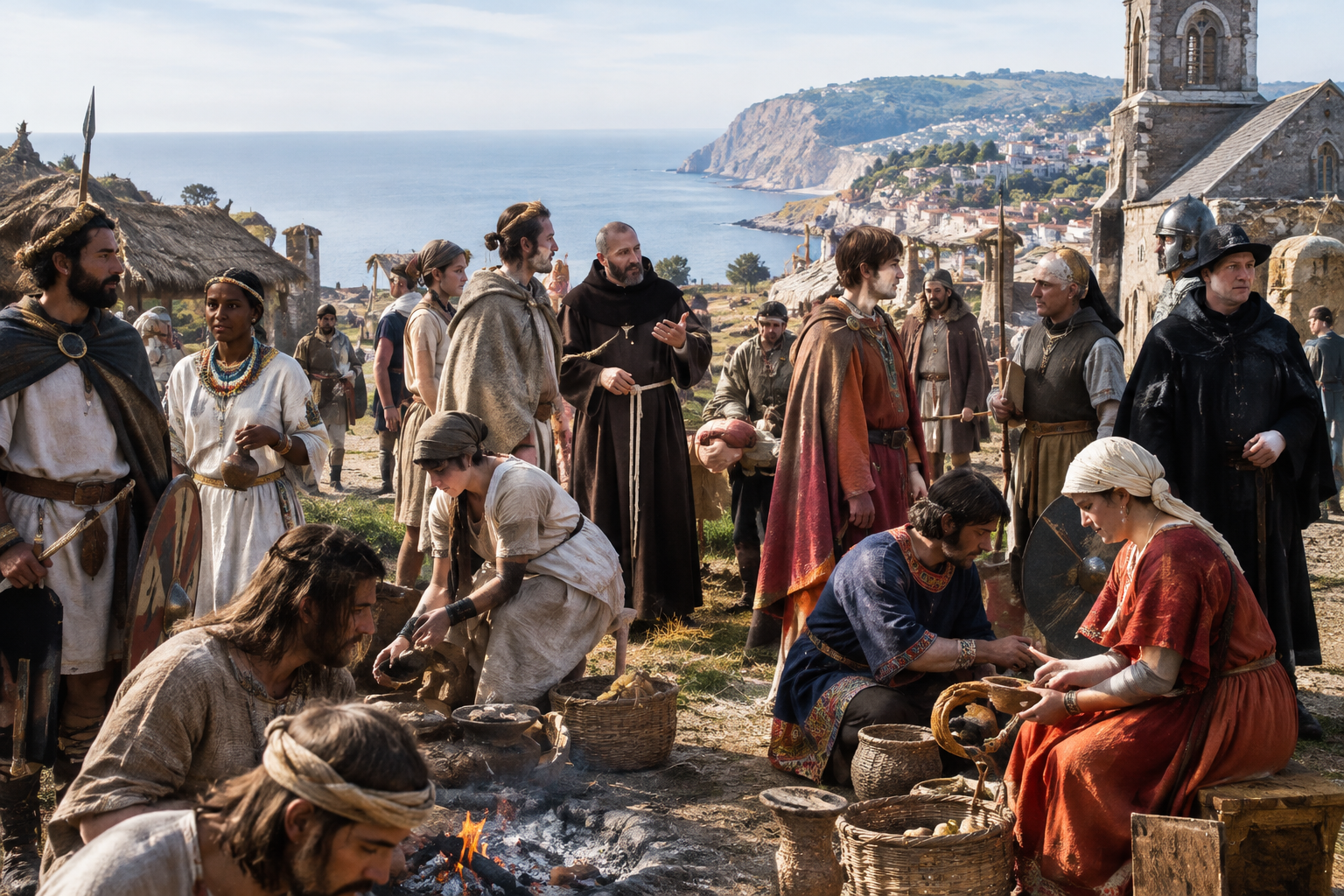
Haplogroup A1b is the sort of Y-chromosome lineage that reminds us, very quickly, that paternal ancestry is not the same thing as national identity, surname history, or the neat family trees people sometimes hope genetics will hand them. Y-DNA traces one direct male line only: father to father to father. That makes it powerful, but also narrow. And with a lineage as deep and unusual as A1b, the fascination lies precisely in how it turns up in unexpected places and periods, from prehistoric Africa to Neolithic Europe, from Iron Age Italy to medieval towns in England and Belgium.
What makes A1b especially interesting is that it sits very near the root of the wider human Y-chromosome tree. In other words, this is not a late-forming regional branch with a simple story attached to one kingdom or one migration. It belongs to an extremely old paternal framework in human history. The ancient DNA record supplied here suggests not one tidy route but a scattering of appearances across continents and millennia. That does not mean all these men were closely related in any recent sense. It means that an ancient paternal lineage, in different branches and contexts, persisted in human populations far longer and more widely than older models might once have imagined.
Because A1b is such a deep lineage, it should be approached with caution. We should not simply lift the history of all early African Y-chromosome diversity and paste it directly onto every later A1b sample. Still, the broad point is clear enough: this is a lineage with very ancient roots in human paternal history, and its later appearances matter because they show survival, movement, and continuity across very different worlds.
One striking feature of the sample set is how often A1b appears in contexts that challenge tidy historical categories. There is OAK014_A0101, from Ancient Oakhurst in the Western Cape of South Africa, dated to 3400 BC. There is THE006, from Ancient Egypt at Luxor in the Third Intermediate Period, dated to 690 BC. There is I10872 from Shum Laka Cameroon, dated to 1200 BC, and NYA003 from Nyarindi Rockshelter, Kenya, dated to 1500 BC. Even before we reach Europe, A1b is already telling us that old paternal lines were part of diverse African populations spread across very different ecological and cultural zones.
That alone makes A1b a useful corrective to simplistic stories about human ancestry.
Explore Archaeogenetics and Ancient DNA
The European evidence is where the story becomes particularly intriguing. Several Neolithic and later prehistoric samples in western and central Europe are associated with A1b, including I7010 from Mesolithic Belgium, Grotte de la Faille du Burin, dated to 6750 BC; TR94 and TR113 from Neolithic Germany, Trebur Grossgartach, dated to 4800 BC; and AD172, AD188, and AD197 from Altendorf in Baden-Wuerttemberg, dated to 3050 BC. We also see WB13a1, WB13b2, and WB17c1 from Warburg in Nordrhein-Westfalen, dated to 3000 BC, alongside SCH004 from Le Cres in Neolithic France, dated to 4300 BC.
That is a remarkable spread. It suggests that branches classified here under A1b were present among prehistoric communities in parts of Europe over a very long span, from hunter-gatherer contexts into farming landscapes. We should not jump from that to a claim of uninterrupted male-line continuity from the Mesolithic to the Middle Ages in every region. But it does show that A1b was not confined to one corner of the prehistoric world.
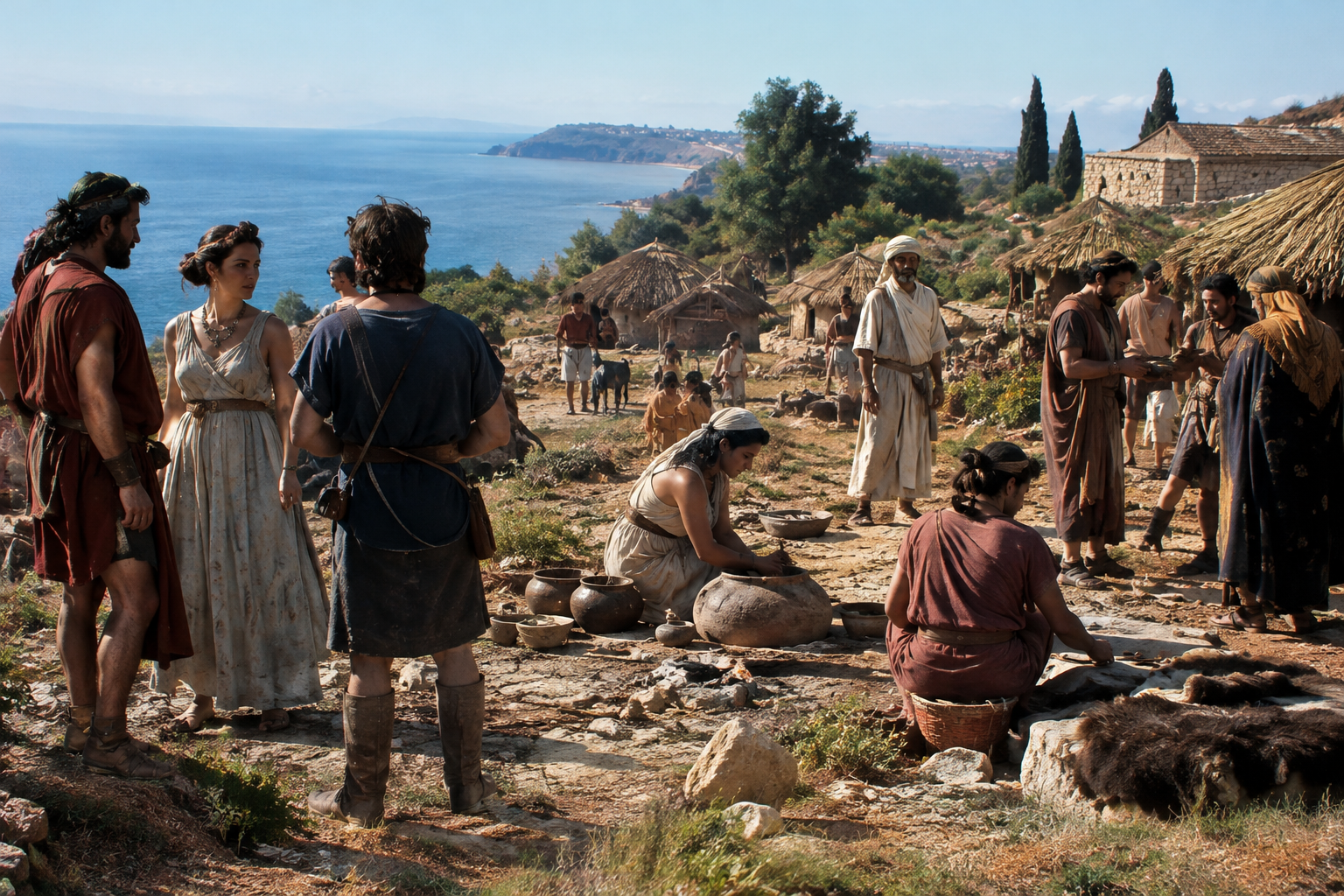
The Mediterranean samples add another layer. PSD4, from Piceni Italic Sirolo Numana in Iron Age Ancona, Italy, dated to 650 BC, places A1b in the world of pre-Roman Adriatic Italy. I22114, from Roman-era Sardinia at Tharros, dated to 297 BC, suggests another Mediterranean setting where this paternal line appears. And then there is I28503, an Ancient Carthage outlier from Tunisia, dated to 387 BC. That word outlier matters: it tells us this was not necessarily representative of the whole community, but it is exactly the kind of clue that shows how connected the ancient Mediterranean could be.
If you want a broader Mediterranean comparison, the Roman and pre-Roman Italian world has become increasingly vivid through archaeogenetics.
Read More on Ancient Italy and DNA
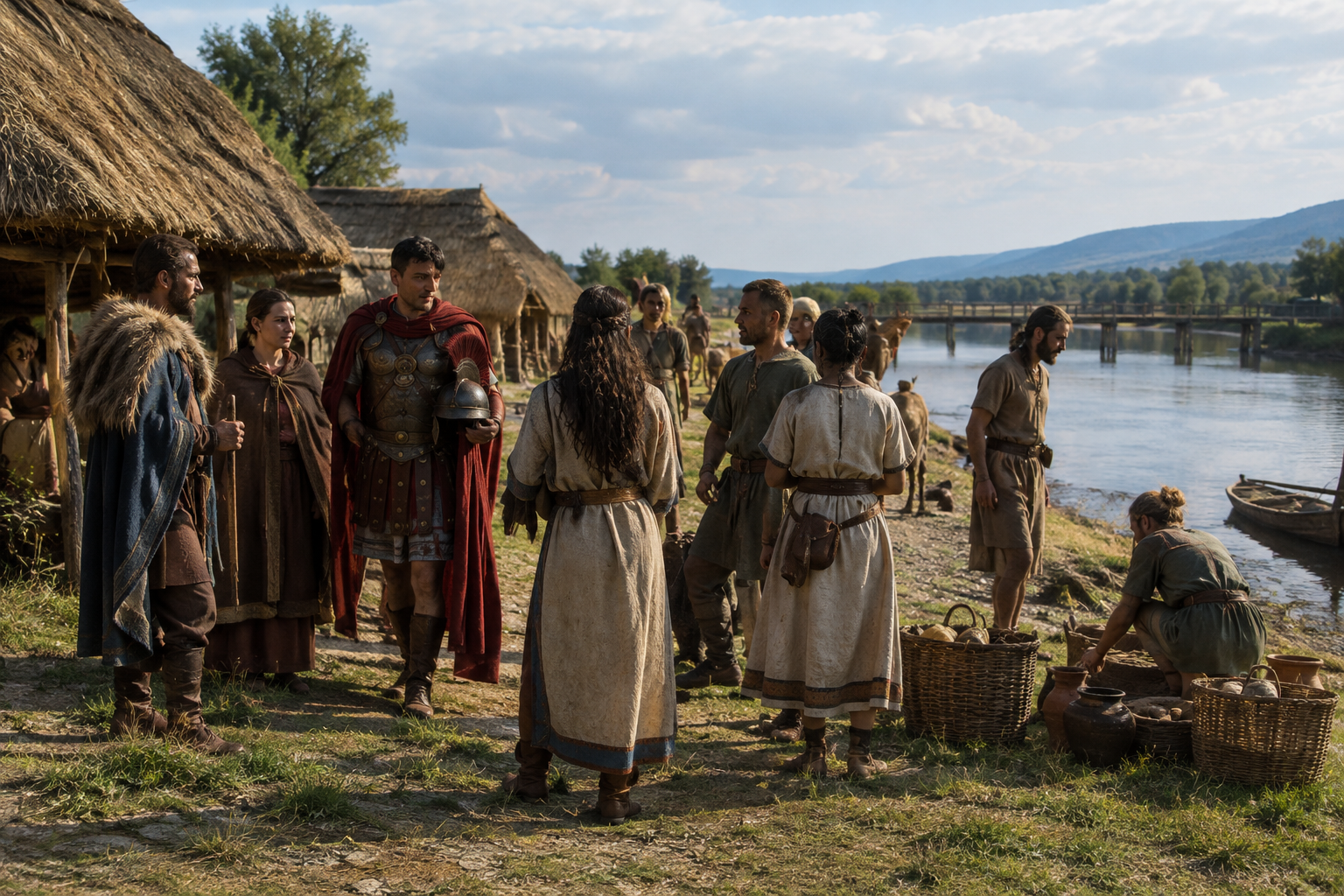
By late antiquity and the early medieval period, A1b turns up in settings shaped by migration, military movement, and local mixing. In the Carpathian Basin there are RKF119 and RKF252 from Migration Period Hungary, Rakoczifalva, both dated to 650 AD, and HNJ001 from Pannonian Hungary, Hajdunanas, also dated to 650 AD. These are precisely the kinds of contexts where archaeologists expect complex population histories rather than a single ethnic label.
The same applies further north and west. In Germany there are samples from Bruecken, Deersheim, and Obermoellern: BRC064x, BRC038x, DRH047, DRH049, DRH028, OBM050, OBM003, and OBM016, mostly dated to 500 AD, and associated in the dataset with Saxon, Thuringii, Sarmatian outlier, Nordic, and Roman-related contexts. That does not make A1b a "Saxon haplogroup" or a "Thuringian haplogroup." It does something more interesting: it shows this paternal lineage moving through, or persisting within, the mixed frontier societies of post-Roman Europe.
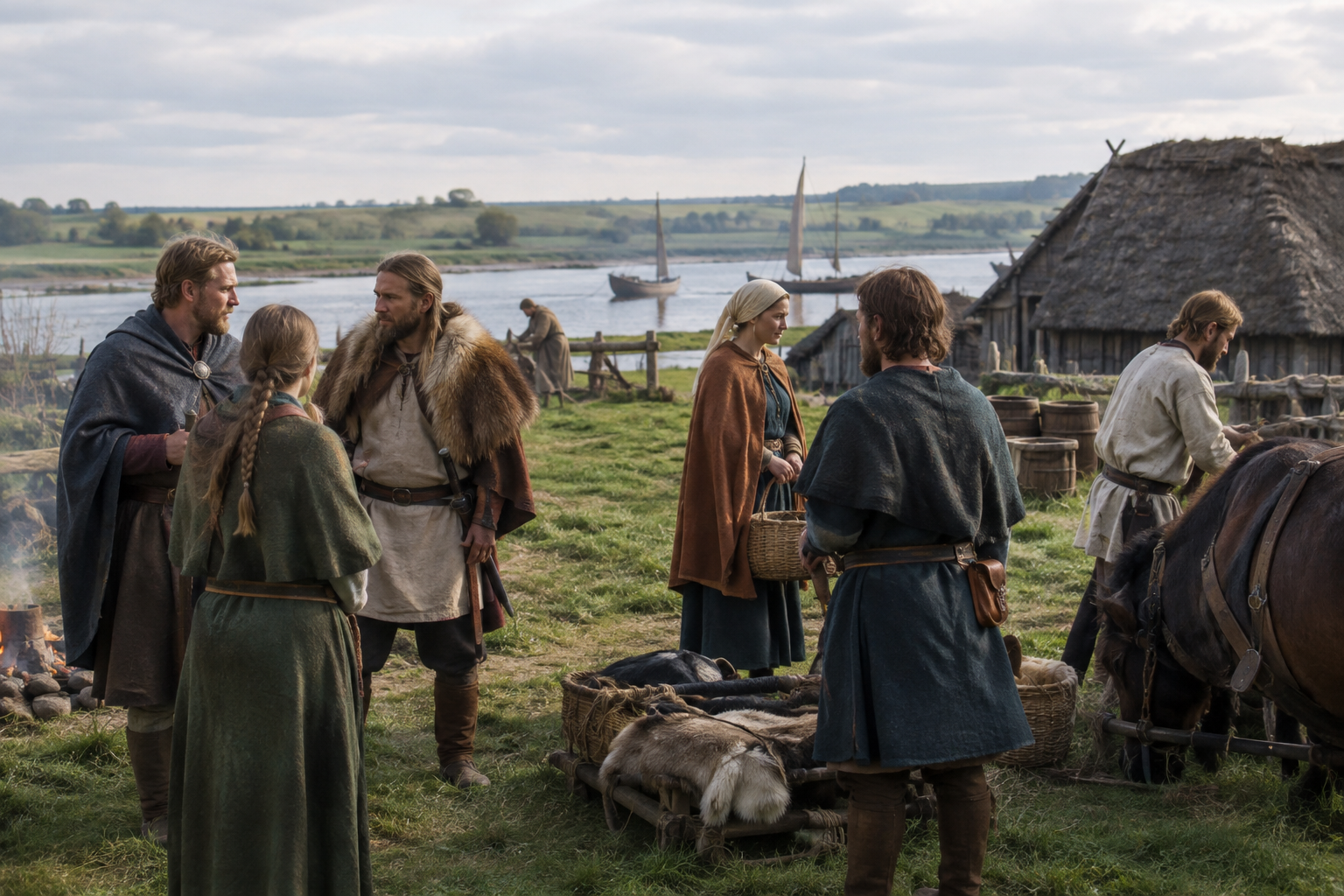
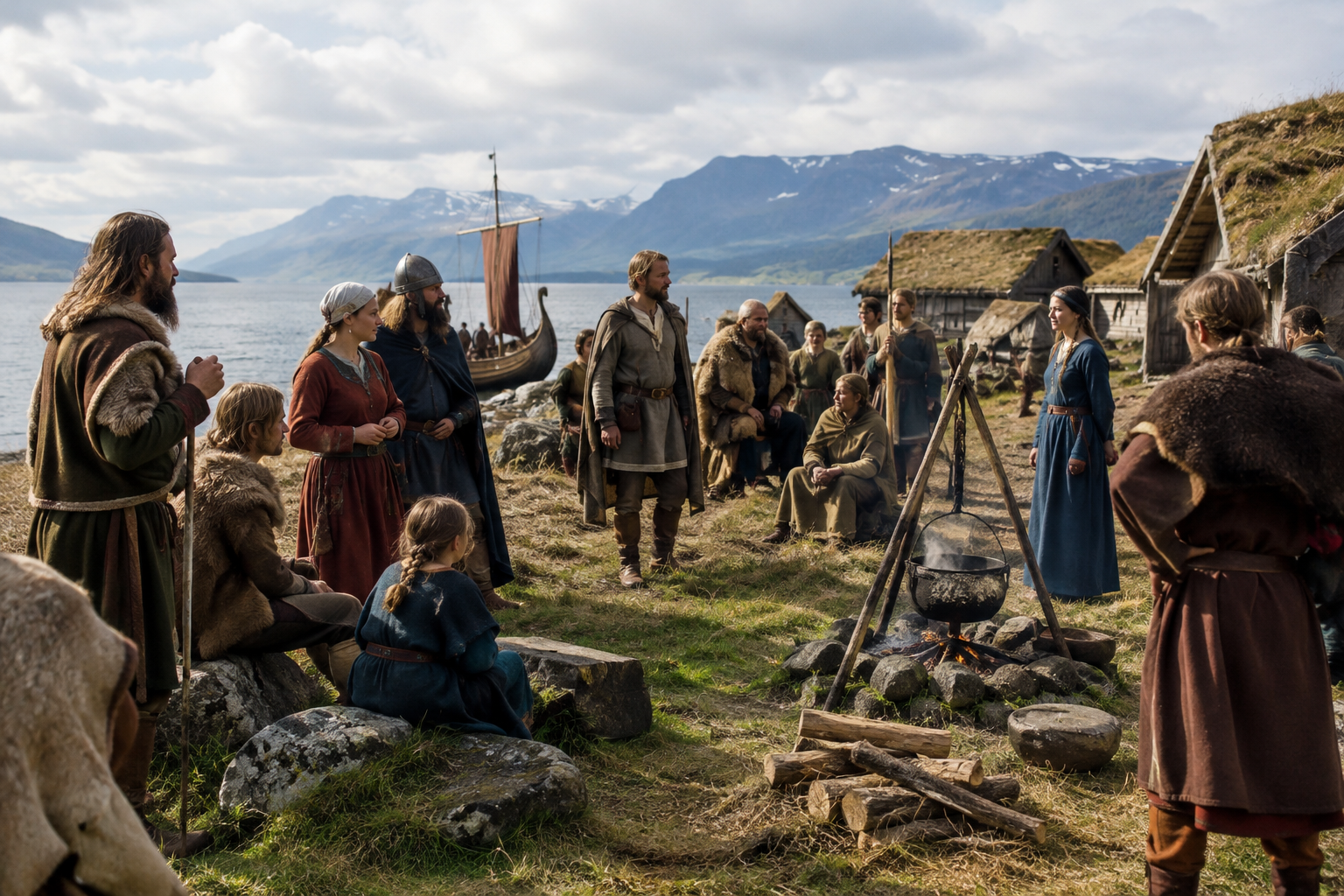
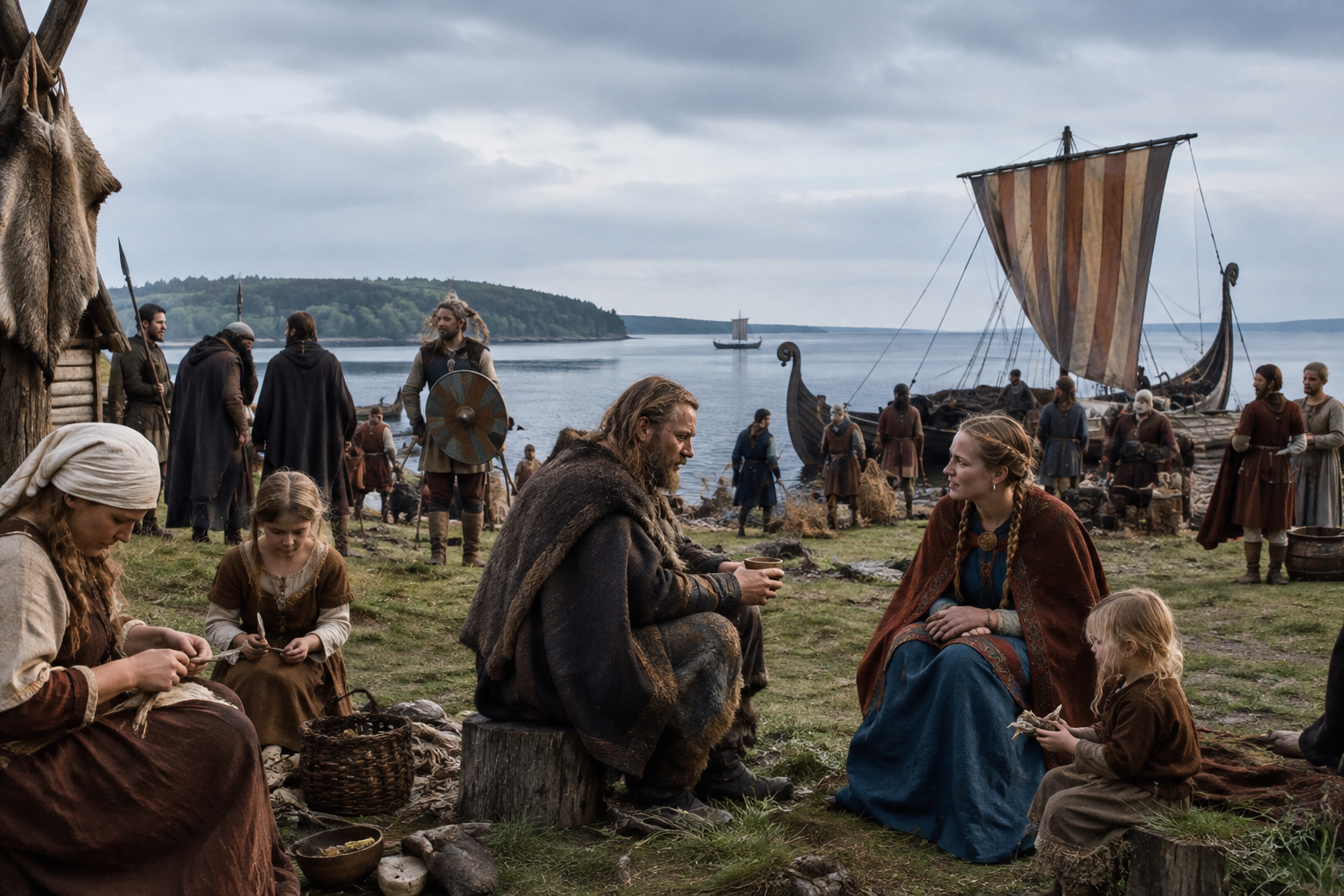
The Scandinavian material is equally striking. We have a long chronological spread: CGG105332 from Nordic Bronze Age Denmark, Vordingborg, dated to 1712 BC; CGG107525 from Nordic Bronze Age Jutland, dated to 1256 BC; Iron Age individuals such as CGG106740, CGG107481, CGG107420, CGG107410, and CGG107408; and Viking Age or near-Viking Age samples including CGG106529, CGG106785, CGG106781, CGG106826, VK304, VK467, and even VK182 and VK185 from the Viking settler site at Brattahlid Farm in Greenland, both dated to 990 AD.
That is not a minor footnote. It places A1b within the long northern story from Bronze Age Denmark to Viking expansion across the North Atlantic.
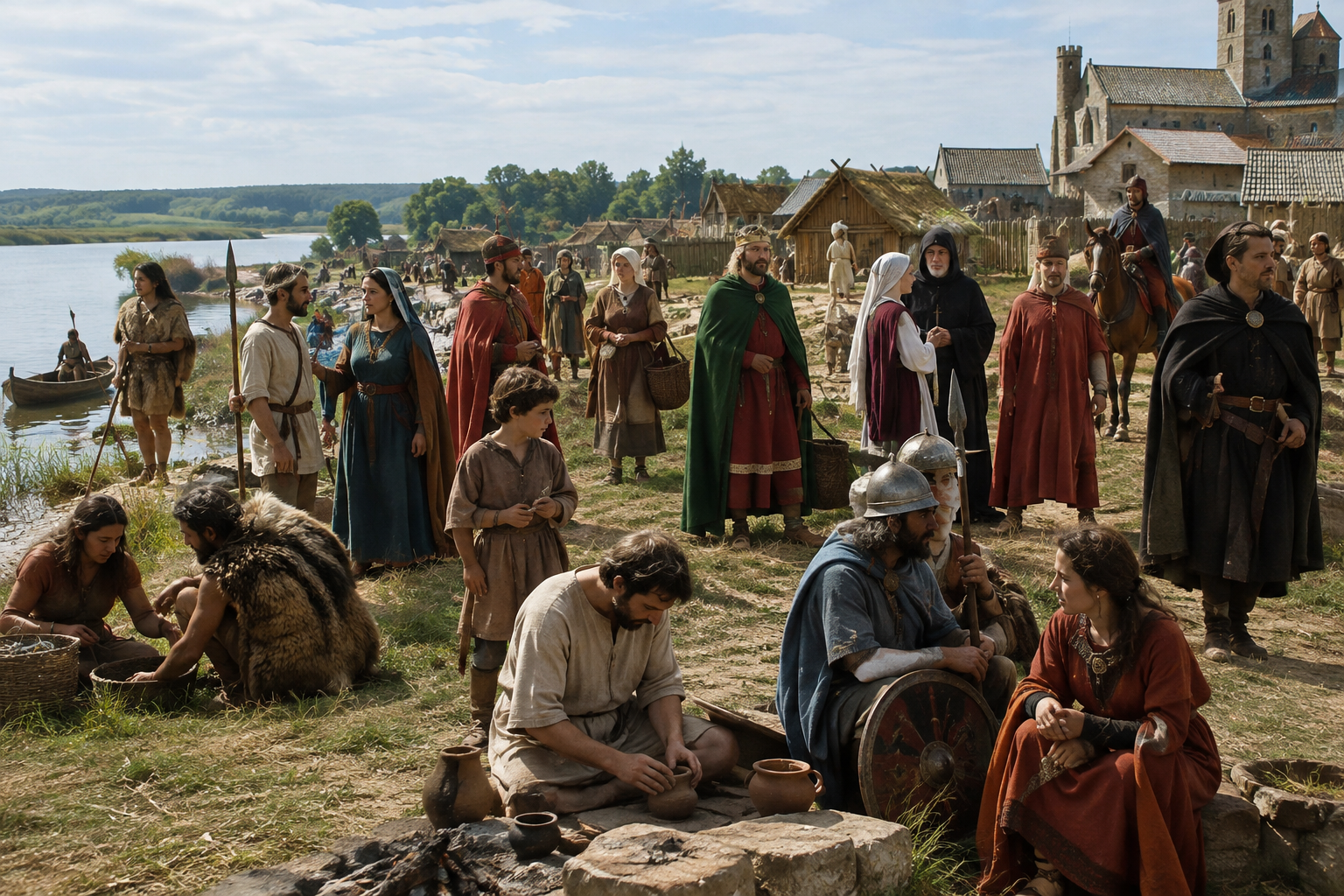
Some of the most humanly revealing A1b samples are not from grand burials at all, but from ordinary medieval communities. In England, the lineage appears in ATP_PSN_935 from Cherry Hinton, dated to 1055 AD; ATP_PSN_497 from Cambridge Benet Street, dated to 1250 AD; ATP_PSN_504 and ATP_PSN_524 from the Augustinian Friars, dated to 1290 AD and 1340 AD; and ATP_PSN_1203 from Clopton, Cambridgeshire, dated to 1561 AD. In Belgium, the Sint-Truiden sequence includes ST0146, ST1054, ST2023, ST2076, ST2104, ST2263, and ST0067, spanning roughly 900 AD to 1300 AD.
These men were not all knights, not all nobles, and certainly not all from one paternal kindred. But they show something important about A1b: it did not vanish into prehistory. It remained present in working towns, burial grounds, friaries, and local communities.
And that is where the supplied noble-family field becomes revealing in its own silence. No specific noble families or castles were actually provided alongside this haplogroup. That absence matters. It means we should resist the temptation to bolt a romantic castle story onto a lineage just because the wider MyTrueAncestry community contains many articles on noble houses. For A1b, the evidence given here points us less toward one famous dynasty than toward a broader truth: deep paternal lines can persist through all levels of society, from prehistoric burials to medieval parish landscapes, whether or not they ever become attached to heraldry or stone keeps.
If you want to see how urban communities can preserve that kind of long, mixed population history, medieval Belgium offers an especially good comparison.
Explore Medieval Sint-Truiden DNA
A1b is a good reminder that ancient DNA is often most valuable when it unsettles easy assumptions. It appears in Africa, in Neolithic and later prehistoric Europe, in Mediterranean contexts, in Migration Period frontier zones, and in medieval northern communities. That does not mean every A1b line followed the same route, or that all these individuals shared a recent common paternal history in historical time. It means the label captures a very old branch with many later stories inside it.
For family historians, that is worth dwelling on. A shared broad haplogroup is not proof of direct descent, shared ethnicity, or membership in a noble house. What it can do is place a paternal line inside a much larger historical frame. In the case of A1b, that frame is astonishingly wide. It reaches from Oakhurst and Luxor to Iron Age Italy, from Carthage to Viking Greenland, and from Belgian churchyards to medieval Cambridge.
That is the real excitement here. Not a fantasy pedigree, but a deeper sense of how one paternal lineage could survive across radically different worlds, political systems, and landscapes.
If your Y-DNA points toward a rare or ancient paternal lineage, MyTrueAncestry can help place it beside real archaeological individuals like PSD4, OAK014_A0101, THE006, VK182, or ATP_PSN_935. Those matches do not by themselves prove direct descent from a particular ancient person or membership in a noble family, but they can open an extraordinary window onto the populations and historical settings connected to your ancestry.
Upload your DNA to explore how your results compare with ancient samples and the deeper human past.
Comments