Clan Trotter
– 2 min read


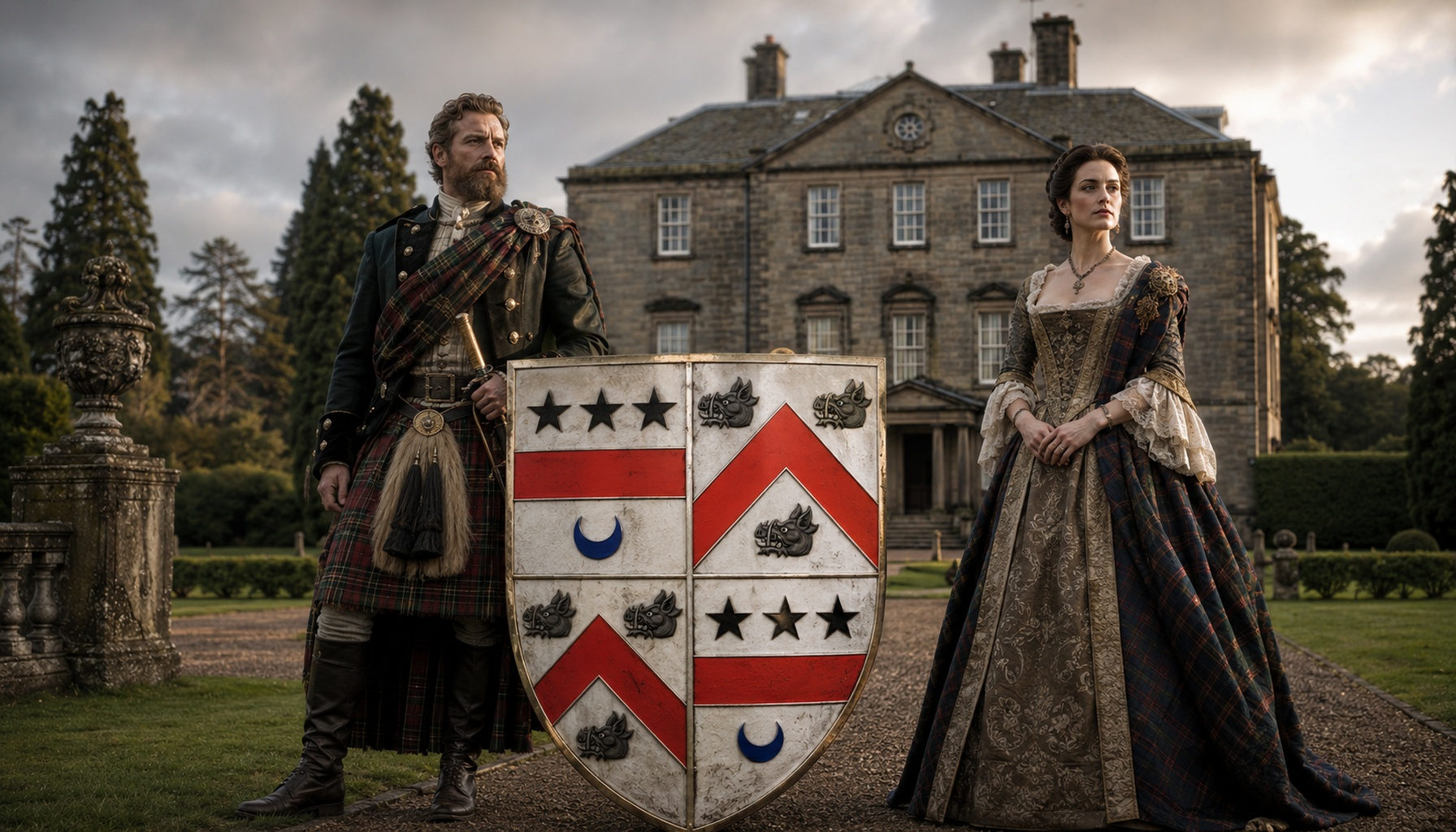
Clan Trotter was a Scottish Border family, rooted in the long, hard-edged world of southern Scotland, where surnames were shaped as much by service, travel, and local duty as by grand courtly drama. The name belongs to that distinctly Border pattern: people tied to place, but also to movement, negotiation, and resilience. In haplogroup terms, the primary family association here is R1b1a1b1a1a1c2b, a paternal line linked more broadly with many ancient and medieval men across western and central Europe.
The Trotters emerge historically as a family of continuity rather than theatrical conquest, and that is rather important. Border history is often told through raids and kings, but most families were remembered because they endured: they held land, served locally, carried a surname through turbulent generations, and preserved heraldic memory as a sign of identity. One early named figure is William Trotter of Catchelraw, recorded in 1437, placing the family firmly within the documentary life of late medieval Scotland. The Trotter story reflects the practical character of Border families, where mobility and rootedness lived side by side.
A key location anchor for the family is Mortonhall, in the south of Edinburgh, a place that helps situate Trotter heritage in a real and visitable landscape rather than a mist of romantic surname lore. Mortonhall is known today for its historic estate, later country house, and grounds, and the wider area preserves the sense of old landed continuity on the edge of the capital. Historically, it belonged to that belt of territory where Edinburgh's orbit met older local identities, with estates functioning not just as residences but as administrative, agricultural, and social centres. In other words, places like Mortonhall mattered because they tied family memory to land, improvement, obligation, and status in a changing Scotland. The estate area has remained known into modern times, and Mortonhall can still be visited in the broader sense of its surviving public landscape and surroundings, making it a useful stop for anyone tracing Trotter heritage on the ground.
From an ancient DNA perspective, the Trotter-linked haplogroup R1b1a1b1a1a1c2b appears across a strikingly wide historical spread, which is exactly what one might expect for a Border surname shaped by deep European layers rather than a single tidy origin story. Related or linked samples include the Elite Celtic Burial Germany Magdalenenberg Villingen-Schweningen (MBG002), the Bronze Age Unetice Thuringia Leubingen Sommerda Germany (LEU007), the Late Neolithic Vlaardingen/CordedWare Netherlands Mienakker (I12902), the Norman Dynasty England Lincolnshire Lincoln Castle (I3044), the Saxon England North Yorkshire West Heslerton Vale of Pickering (I11583), the Imperial Roman Viminacium Serbia Pecine Necropolis (I15527), and later early medieval and Viking Age examples such as Merovingian Period Bavaria Altheim Germany (Alh_268), Merovingian Period Frankish Moemlingen Germany (Mln28a), Viking Age Sigtuna Sweden (urm160), and Viking Age Denmark Bogovej (CGG106775). These are not claims of direct descent from any one excavated individual. Rather, they show that the same broader paternal line travelled through Celtic, Roman, Germanic, Anglo-Saxon, Frankish, Lombard, Norman, and Viking-connected worlds before surnames like Trotter ever settled into the records of Scotland.
If you carry the Trotter surname, or have Border ancestry more generally, this is precisely the sort of heritage that becomes richer the closer you look. Upload your DNA to MyTrueAncestry and see whether you match Clan Trotter's associated lineages or related ancient DNA samples from the wider world of Celtic, Saxon, Norman, and medieval Europe.
Comments