Clan Monteith

– 3 min read


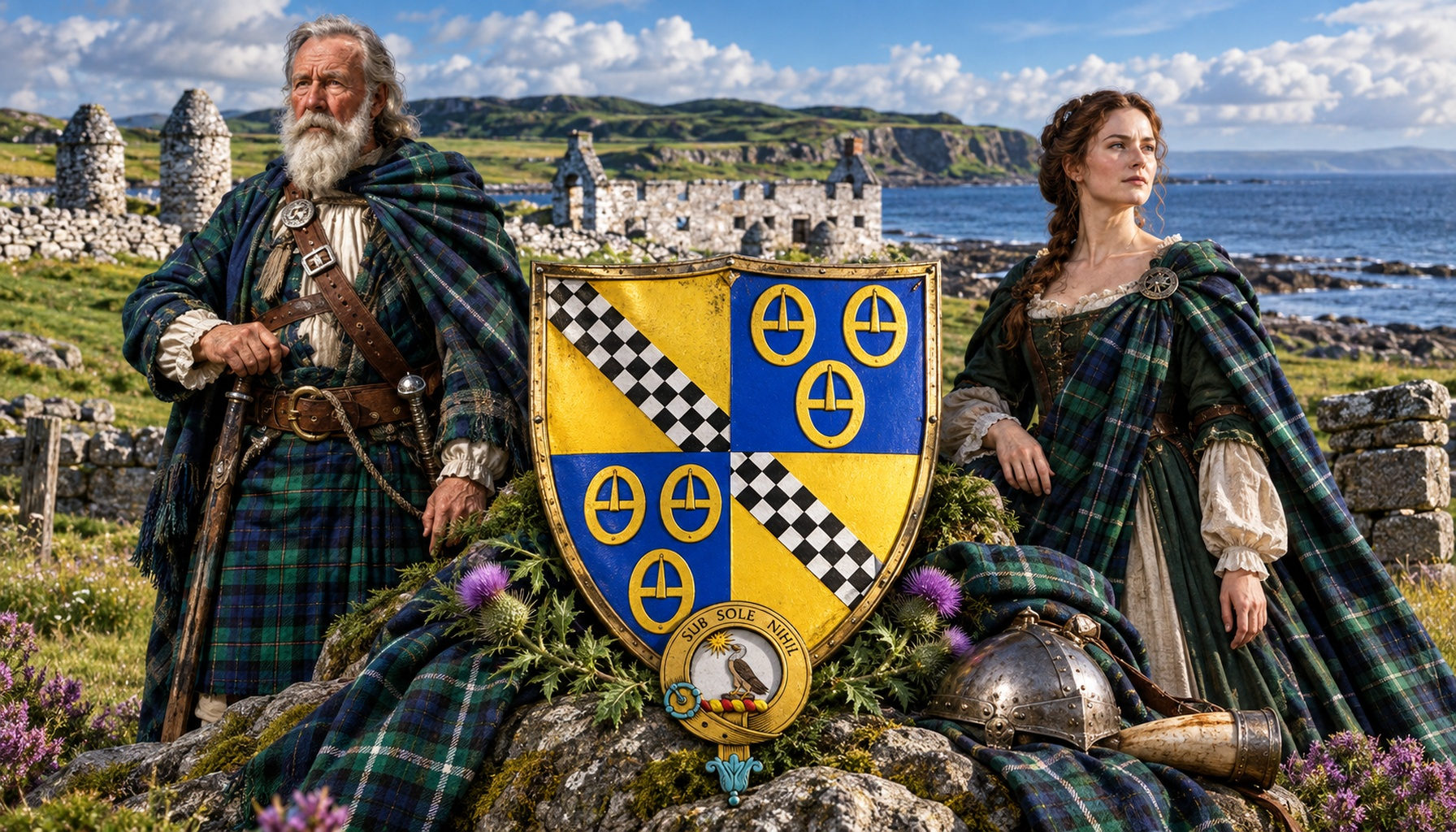
Clan Monteith, or Menteith, was one of the old territorial noble families of central Scotland, rooted in the ancient Earldom of Menteith around the Lake of Menteith. In historical terms, this was not simply a surname drifting through records, but a lordship tied to place, kinship, and power. The family is closely associated with the haplogroup tag R1b1a1b1a1a2c1a1d1a, which we list here as the primary family haplogroup. Their story belongs to that richly medieval Scottish world in which control of land, marriage alliances, castles, and royal favor mattered just as much as bloodshed in the field.
The earldom passed through several noble lines, but one of the most important was the Stewart Menteith branch descended through Walter Bailloch Stewart and Mary Countess of Menteith. That connection placed the family firmly within the wider Stewart aristocratic orbit, where regional lordship and royal kinship were deeply entangled. Figures such as Walter Bailloch Stewart, Earl of Menteith (1225-1294), John de Menteith (1275-1329), and Murdoch Stewart, Duke of Albany and Earl of Menteith (1362-1425), show how the family moved through the great themes of Scottish history: succession disputes, warfare, governance, and the hard practical business of ruling a strategically important district in the kingdom's heartland.
Read more about the Royal House of Stewart
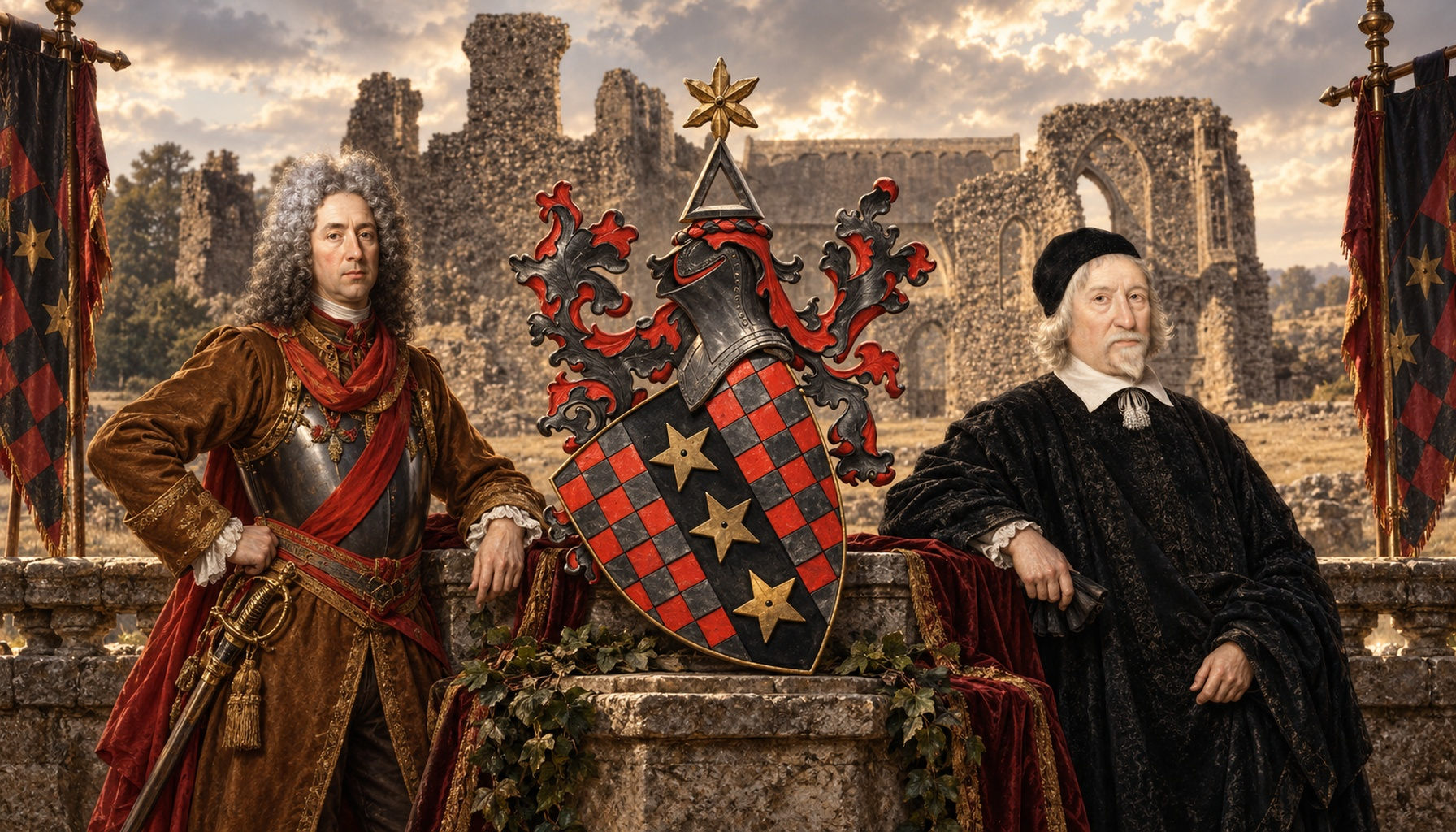
Talla Castle was one of the principal residences of the Earls of Menteith, and it captures rather beautifully the logic of medieval lordship in this region. The castle stood on Talla, an island in the Lake of Menteith, making use of water itself as a defensive barrier. According to the historical and archaeological summary, the site preserves remains of a fortified residence that once formed part of this island power-center, a place from which the earls could oversee movement, authority, and resources in the district. It was not some theatrical Highland ruin invented for postcards, but a practical seat of rule, reflecting how medieval elites used landscape to project status and security at once. The island setting also reminds us that lordship in Scotland was often intensely local and territorial: to hold the island, the lake, and the surrounding lands was to embody Menteith itself. The site can still be visited, with the island and its remains remaining a tangible link to the old earldom, though as ever with historic ruins, visitors should respect access conditions and the landscape.
From the ancient DNA side, the haplogroup tag R1b1a1b1a1a2c1a1d1a links Clan Monteith into a wider northwestern European genetic landscape rather than to one provable single medieval founder. Related or linked ancient samples include Medieval England Augustinian Friars ATP_PSN_512 and ATP_PSN_520, the Celtic Parisi individuals from Iron Age East Yorkshire at Wetwang Slack I36762 and I30965, the East Yorkshire Melton sample I28778, the Celtic Briton from Yarnton in Oxfordshire I21182, and the Late Bronze Age Raven Scar Cave individual from North Yorkshire I16469. These are not evidence of direct descent from Clan Monteith, and it would be wrong to pretend otherwise. What they do offer is a useful genetic backdrop: lineages connected with this haplogroup were present in Britain across deep time, from the Bronze Age and Iron Age into the medieval world, which helps place families like Monteith within the long population history of Britain and Scotland.
Explore ancient DNA in post-Roman Britain
If you are exploring Monteith or Menteith ancestry, this is where history and genetics become especially fun. You can trace the family's world through the earldom, the Stewarts, and sites like Talla Castle, then compare that historical picture with DNA evidence and related ancient samples. If you have tested your DNA, upload it to MyTrueAncestry and see whether you match the family story of Clan Monteith or any of the linked ancient DNA profiles from Britain.
Comments