Clan McKerrel
– 2 min read


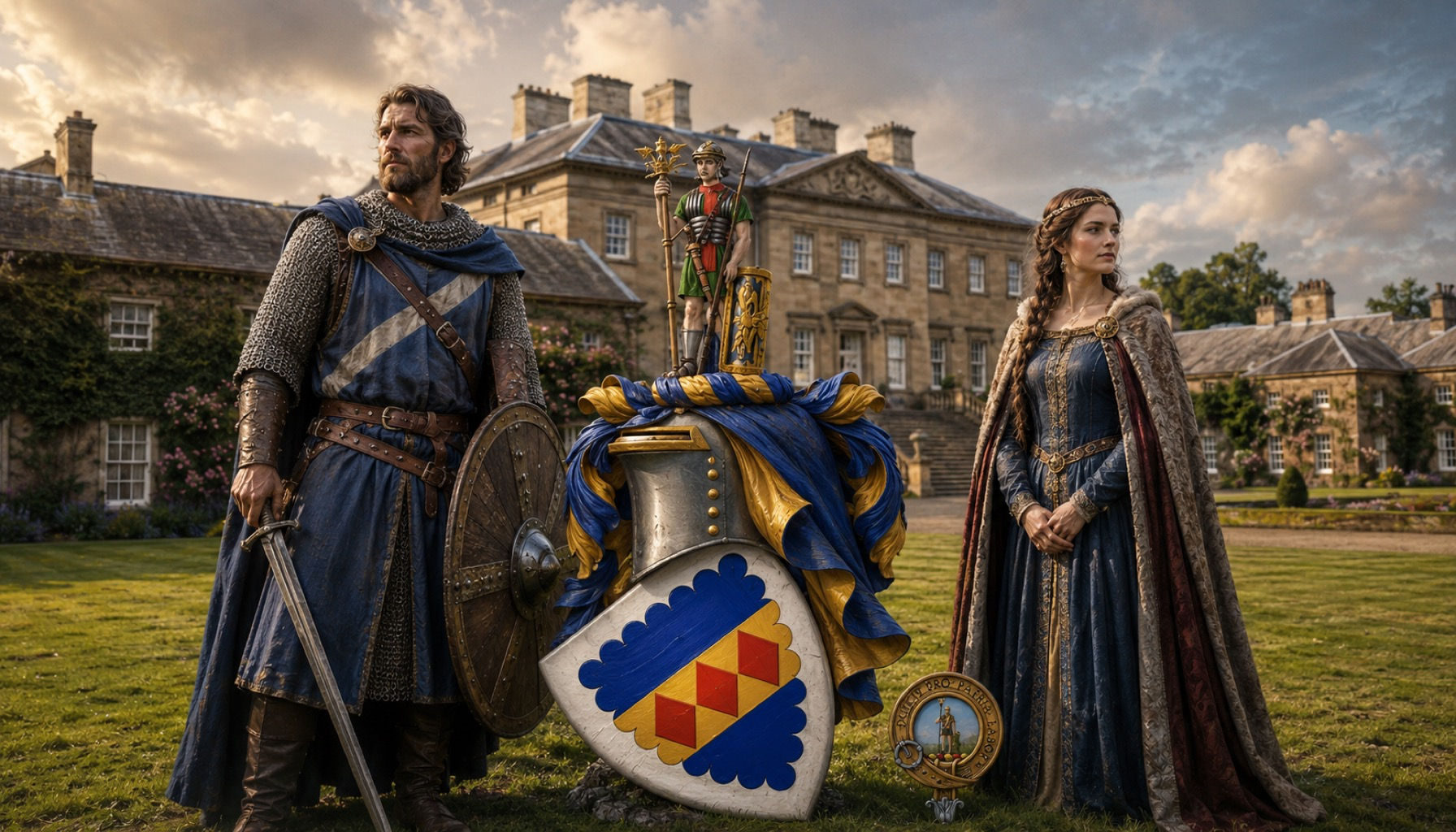
Clan McKerrel belongs to that deeply Scottish tradition in which family, place, and memory matter just as much as formal chiefly grandeur. The name is best understood as part of the wider Gaelic-rooted surname world of Scotland: a family shaped by kinship, local service, regional identity, and the stubborn continuity of inherited names across generations. In that spirit, McKerrel heritage speaks less of princely rank and more of something arguably more durable in Scottish history, the endurance of a family name carried through community life, migration, and remembrance. For DNA-tagging purposes, the primary family haplogroup linked here is R1b1a1b1a1a2c1a4b2c1a.
The family appears in historical record in forms that reflect the fluid spelling of medieval and early modern Scotland, where names were written as they sounded and shifted with time. Among the named figures associated with the line are Sir John Mckirel in 1388 and John Mckerrell, 1st Laird of Hillhouse, in 1490. Those references place the family firmly within the long Scottish pattern of local standing and landed continuity, not necessarily on the scale of the great headline clans, but very much in the real fabric of Scottish regional history. The McKerrels belong to that world of lairds, service, locality, and surname endurance, where identity was preserved not by spectacle but by belonging.
Hillhouse serves as an important location anchor for the McKerrel story. In Scottish family history, a place like this is never just an address. It is the physical setting in which memory, landholding, and identity gather together. The grounds at Hill House are known for their carefully shaped landscape, with woodlands, paths, garden features, and a broader setting that gives a strong sense of how estate life connected family, status, and region. Even when the visible landscape has changed over centuries, such places remain powerful markers of continuity, tying a surname to a lived environment rather than to an abstract pedigree. On the basis of its present heritage presentation, Hill House and its grounds can still be visited, making it a valuable stop for anyone wanting to place the McKerrel name back into its historical setting on the ground itself.
On the ancient-DNA side, the haplogroup R1b1a1b1a1a2c1a4b2c1a links the McKerrel story to a broader tapestry of northwestern European male-line ancestry rather than to any single proven individual ancestor. Related or linked samples include Late Medieval England from Clopton, Cambridgeshire, sample ATP_PSN_1268; the Bronze Age Tollense Valley battlefield in Mecklenburg-Vorpommern, Germany, sample WEZ59; Medieval Ireland at Kilteasheen, Roscommon, Bishops Seat, sample KIL020; the Belgic tribal world at Danebury hillfort in Hampshire, sample I17264; and Bronze Age Trumpington in England, sample I7640. These do not prove direct descent from the McKerrel family, of course, but they do help sketch the deep-time genetic backdrop of the same wider paternal lineage, stretching from prehistoric Europe into the medieval British and Irish world.
If you carry the McKerrel surname, or believe you may connect to this Scottish family tradition, DNA can add an intriguing extra layer to the documentary record. Upload your DNA to MyTrueAncestry to explore ancient samples, genetic links, and the deeper human story behind your family name.
Comments