Clan McCorquodale
– 3 min read


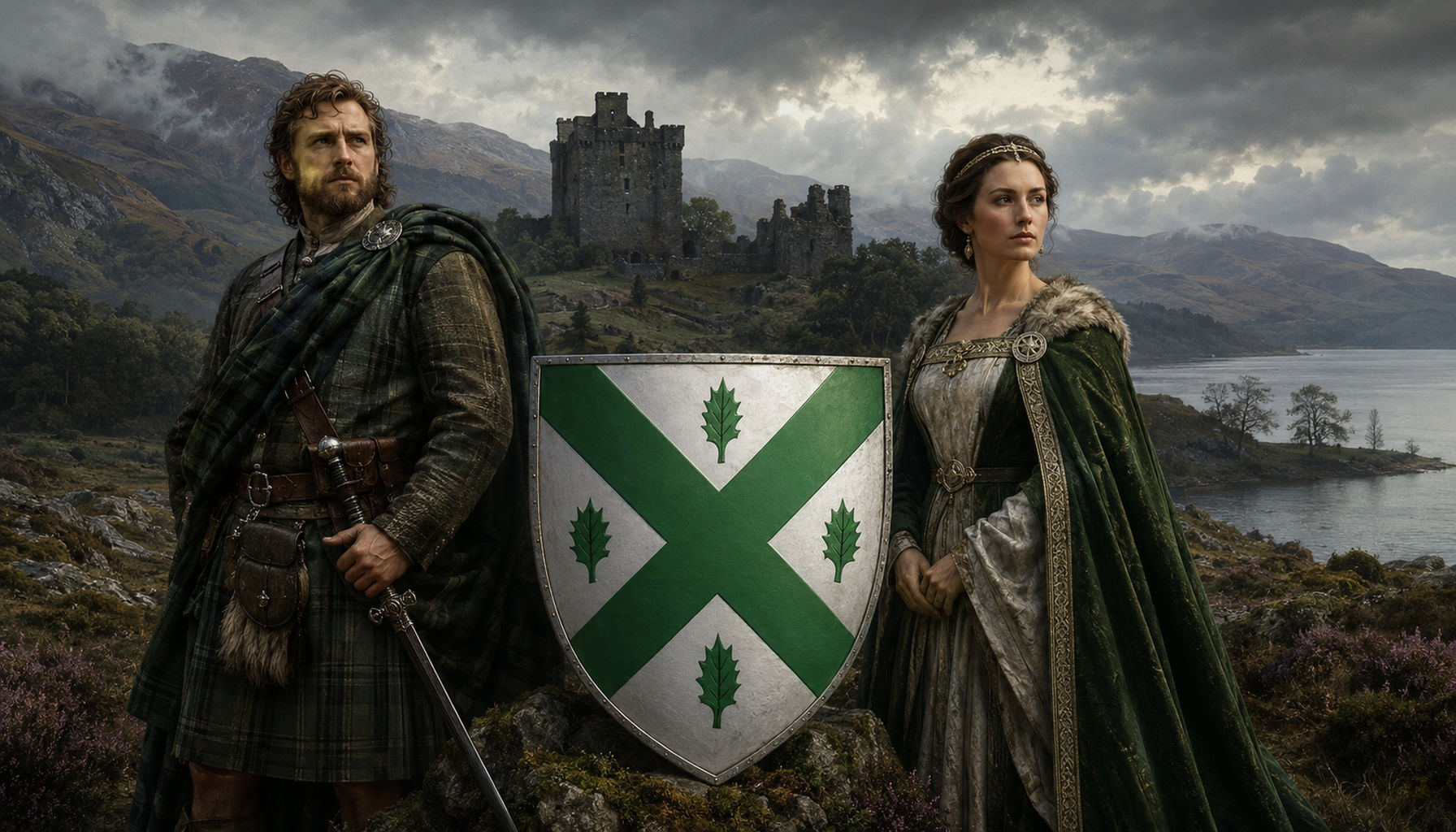
Clan McCorquodale was one of the smaller but deeply rooted Highland kindreds of Argyll, part of the Gaelic world that grew around Loch Awe and the western seaboard of Scotland. Their story is not one of vast kingdoms or endless conquest, but of something just as important in Highland history: family continuity, local authority, territorial memory, and the stubborn endurance of a name. In that sense, the McCorquodales stand for a very old Highland pattern, where identity rested on kinship, land, and the shared obligations of a regional community. The haplogroup most closely linked here is R1b1a1b1a1a2c1a5a2a1a3, a lineage that sits comfortably within the wider genetic landscape of Atlantic and western British ancestry.
The family is associated above all with Argyll and the Loch Awe district, where Gaelic traditions, Norse contact, and shifting local lordships shaped the medieval Highlands. The name itself has long been tied to western Scottish clan society, where even relatively small lineages could preserve a strong sense of distinction through heraldry, oral memory, and alliances with more powerful neighbours. A figure remembered in the early history of the kindred is Thorkil, dated to around 841-850, whose name hints at the mixed Norse-Gaelic atmosphere of the region in the early medieval period. That matters, because Argyll was never culturally simple: it was a place where Gaelic-speaking communities, sea routes, and Scandinavian influence all overlapped, and families like the McCorquodales emerged from that layered historical world.
A key location anchor for the family is Eilean-A-Bharain on Loch Tromlee, a small island site that preserves the feel of a Highland lordship in miniature. The island, also known in connection with Eilean Tighe Castle, appears to have held a fortified residence or island dwelling, exactly the sort of place that suited a family whose power was local, practical, and tied to landscape. These island sites in Argyll were not grand castles in the later baronial sense; they were strategic homes, symbols of status, and centres of immediate authority, watching water routes and nearby ground. The Loch Tromlee setting also reminds us how Highland power often worked through control of a loch, a glen, a crossing point, rather than through broad open dominion. The site is generally described as still extant as a visible historic place, and it can reasonably be regarded as visitable for those exploring the Loch Awe and wider Argyll area, though as with many such sites the experience is more about landscape and ruins than formal castle access. That is part of its appeal: it lets you see the McCorquodale world in its proper scale, intimate, defensive, and thoroughly embedded in the geography of western Scotland.
From a DNA perspective, the haplogroup tag linked here is R1b1a1b1a1a2c1a5a2a1a3. We should be careful, as ever, not to turn this into a fairy tale of direct descent from named ancient individuals. But there are ancient samples that are related or linked within this broader genetic branch and help sketch the deeper background of the populations from which Highland families ultimately emerged. These include Early Anglo-Saxon Cemetery, West Heslerton, Yorkshire, sample I11586; Celtic Briton Carsington Pasture Cave, Derbyshire, sample I12775; Celtic Briton Lechlade-on-Thames, Gloucestershire, sample I12783; Celtic Briton Bradley Fen, Cambridgeshire, sample I11156; Iron Age Greystones Farm, Gloucestershire, sample I12785; and the well-known Ireland Copper Age sample Rathlin1B. Taken together, these linked finds point to a long genetic presence in Britain and Ireland stretching from later prehistory into the historic era. They do not prove a straight line to Clan McCorquodale, but they do place the clan's paternal signature within an old and recognisably Insular context.
If you want to explore how your own DNA may connect with the deep population history behind families like Clan McCorquodale, upload your results to MyTrueAncestry and see which ancient samples and historical populations you match.
Comments