Clan Mag Samhradhain
– 2 min read


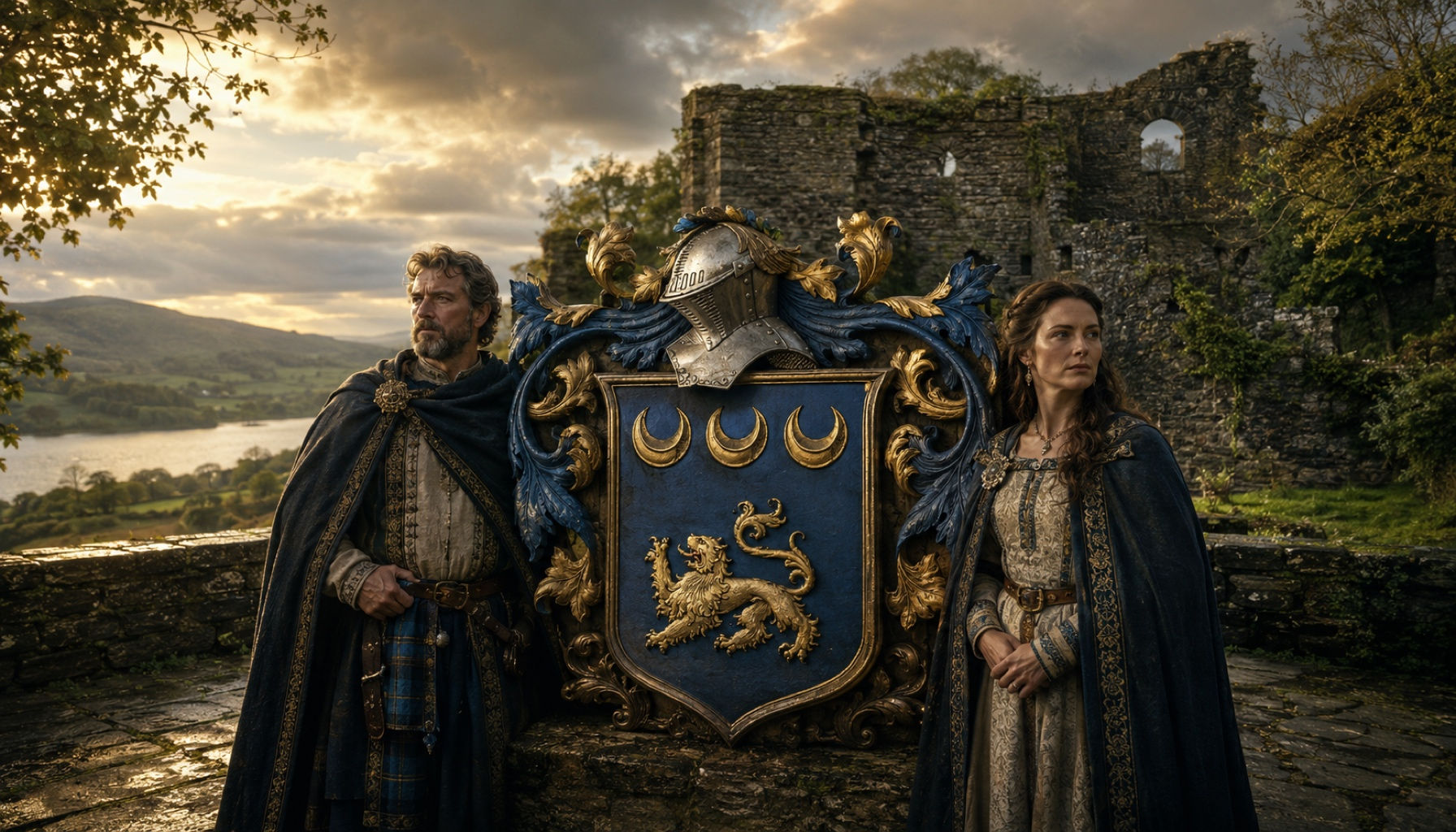
Clann Mag Samhradhain was a Gaelic Irish lordly family of Breifne, rooted in the borderlands of what is now County Cavan and its wider neighboring region. Their story belongs to the classic world of medieval Irish kin-groups: a ruling lineage whose power rested not on castles alone, but on ancestry, landholding, tribute, cattle, armed followers, and careful ties with other families. In that setting, the name Mag Samhradhain carried political weight as well as family memory, preserved through genealogy, learned poetry, legal custom, and oral tradition. Haplogroup tag: R1b1a1b1a1a2c1a1a1a1a1a1a3a.
The family emerges from the historical landscape of Breifne, one of the great Gaelic regional lordships of medieval Ireland, where branches of ruling dynasties held territory through both descent and negotiation. The Mag Samhradhains are associated especially with the eastern Breifne sphere and with the durable habits of Gaelic lordship that survived century after century, even under conquest and increasing anglicization. Among the named figures remembered in the record is Muireadhach mac Samhradhain, who flourished in the years 1115 to 1148, an early sign that this was already a lineage of standing. Like many Irish dynastic families, their importance was not only military or territorial, but cultural too: they belonged to a society in which remembering who your ancestors were was itself a form of power.
The clan's main geographic anchor lies in the Breifne region, especially around Tullyhaw in present-day County Cavan, a landscape of lakes, drumlins, and upland passages that suited a local lordship built on kinship and control of territory rather than urban power. This was a frontier-like zone in the best medieval Irish sense, connected to neighboring ruling families and shaped by both cooperation and rivalry. The Mag Samhradhains are often linked with the barony of Tullyhaw, long associated with their authority, and with the kind of dispersed settlement pattern that underpinned Gaelic rule. That landscape can still be visited today: the region remains identifiable on the map, and its old territorial framework survives in place-names, churches, earthworks, and the wider topography of Cavan. Even when the original political order has vanished, the setting still explains the family history brilliantly, because you can see how lordship here depended on commanding routes, local resources, and communities bound by loyalty and inheritance.
From a DNA perspective, the primary family haplogroup linked here is R1b1a1b1a1a2c1a1a1a1a1a1a3a. That does not prove a direct line from any excavated individual to the Mag Samhradhain family, and it is important not to overclaim. What it does offer is a wider genetic context within medieval Ireland. Related or linked samples assigned to this same broader line include a substantial group from Ballyhanna, County Donegal, such as Sk197an, Sk197y, Sk197q, Sk197am, Sk197s, Sk197ab, Sk197u, Sk197t, Sk197r, Sk197ad, Sk197x, Sk197n, Sk197aa, Sk197z, Sk197ak, Sk197w, Sk197ai, Sk197m, Sk197ah, Sk197ag, Sk197v, Sk197ac, Sk197al, Sk197af, Sk197ae, Sk197o, Sk197aj, HAN197x, Sk197a, Sk197b, Sk197c, Sk197d, Sk197e, Sk197f, Sk197g, Sk197h, Sk197i, Sk197j, Sk197k, Sk197l, Sk197p, and HAN197, as well as examples from Kilteasheen in Roscommon including KIL041, KIL044, KIL033, KIL037, KIL009, and KIL014. Taken together, these samples help sketch the genetic background of medieval Gaelic Ireland: not a single family tree, but a living population among whom lineages such as that associated with Mag Samhradhain moved, married, fought, ruled, and endured.
If you are curious whether your own DNA connects with the deeper population history of Gaelic Ireland, upload your results to MyTrueAncestry and explore how your ancestry compares with ancient and medieval samples from Ireland and beyond.
Comments