Clan MacCabe

– 3 min read


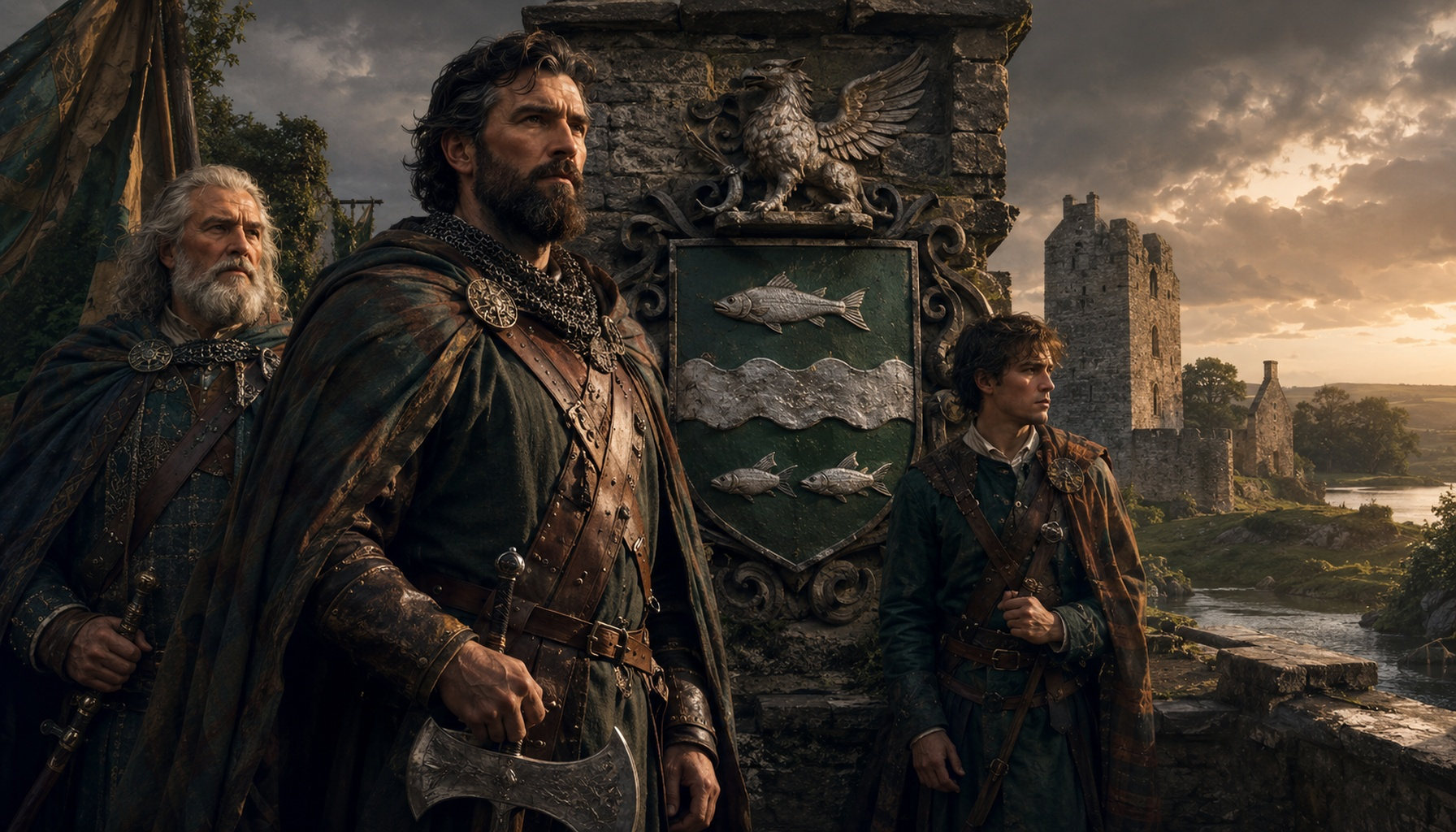
Clan MacCabe was a Gaelic family of martial reputation, remembered in Irish and Scottish tradition as a kin-group shaped by service, movement, and stubborn continuity. Their story belongs to that wider Gaelic world in which the sea between Ireland and Scotland was less a barrier than a roadway, carrying warriors, clerics, marriage ties, and surnames from one shore to the other. The MacCabe name is closely associated with military service, borderland life, and the preservation of family identity through centuries of political change. Haplogroup tag: R1b1a1b1a1a2c1a1a2a1, the primary family haplogroup linked here.
In historical terms, the MacCabes fit a very recognisable Gaelic pattern: a family rooted in kinship, known for martial roles, adaptable in migration, and resilient in memory. Their background points toward origins in the shared Irish-Scottish Gaelic sphere, where families could establish themselves through lordly service and local alliances. Over time, the surname became especially associated with Ireland, but its deeper character reflects the old traffic of people and power across the western seaways. Even when kingdoms shifted, lordships fell, and new political systems pressed in, families like the MacCabes carried identity forward through name, place, and story. The wider historical backdrop also reminds us how mixed and layered these islands were: one could think of figures such as Sigtrygg II Silkbeard Olafsson, the Norse-Gaelic king of Dublin, as part of the world that shaped the political and cultural environment in which Gaelic surnames and lordly networks developed. Much later, Cardinal Edward McCabe stands as another notable bearer of the name, showing how a family once associated with martial tradition could also rise to major prominence in the religious and public life of Ireland.
A strong location anchor for the MacCabe story is Cloughoughter Castle in County Cavan, a striking island fortress set on Lough Oughter. This is one of those places that looks almost too dramatic to be real: a tower house rising from a small crannog-like island, wrapped in the watery landscape of Cavan. Historically, it was an important stronghold in a region shaped by Gaelic lordship, contested authority, and shifting alliances. The castle is especially associated with the O'Reilly lords of East Breifne, but that is precisely why it matters in the orbit of families like the MacCabes, whose history is tied to the service networks, military obligations, and local power structures of Gaelic Ulster. Cloughoughter was not just a picturesque ruin before it became one; it was part of a working political landscape where kin-groups, fighting men, and regional dynasties held ground, negotiated loyalty, and defended prestige. It survived into the seventeenth century as a site of real strategic value and later entered memory as one of the emblematic strongholds of Gaelic Cavan. Yes, it can still be visited in the sense that the castle remains a visible historic site on the lake, though access conditions can vary, so it is sensible to check current local information before planning a close visit.
From a DNA perspective, haplogroup R1b1a1b1a1a2c1a1a2a1 places the MacCabe story within a wider northwestern European and Insular context rather than proving any single line of descent on its own. Related or linked ancient samples connected with this branch include Medieval England Cambridge St Johns Hospital, ATP_PSN_68; Iron Age Thame, Oxfordshire, I14807; Celtic Briton Broom Quarry, Bedfordshire, I16597; Celtic Iron Age Harlyn Bay, Cornwall, I16380; Iron Age East Lothian, North Berwick, Scotland, I16499; and Iron Age Orkney, Scotland, I2799. These do not demonstrate direct descent from any one ancient individual to the MacCabes, and it is important not to pretend otherwise. What they do show is that the broader paternal line linked with this haplogroup was present across Britain over a long span of time, from Iron Age communities to the medieval period. For a Gaelic family whose history sits in the connected Irish-Scottish world, that is a useful reminder that surnames are recent, but the deeper ancestry beneath them often reaches back into far older population histories.
If you carry the MacCabe name, or believe your family belongs to this wider Gaelic heritage, DNA can add another layer to the story alongside records, place history, and surname tradition. Upload your DNA to MyTrueAncestry to explore ancient samples, haplogroup links, and the deeper past behind your family history.
Comments