Clan Glen
– 3 min read


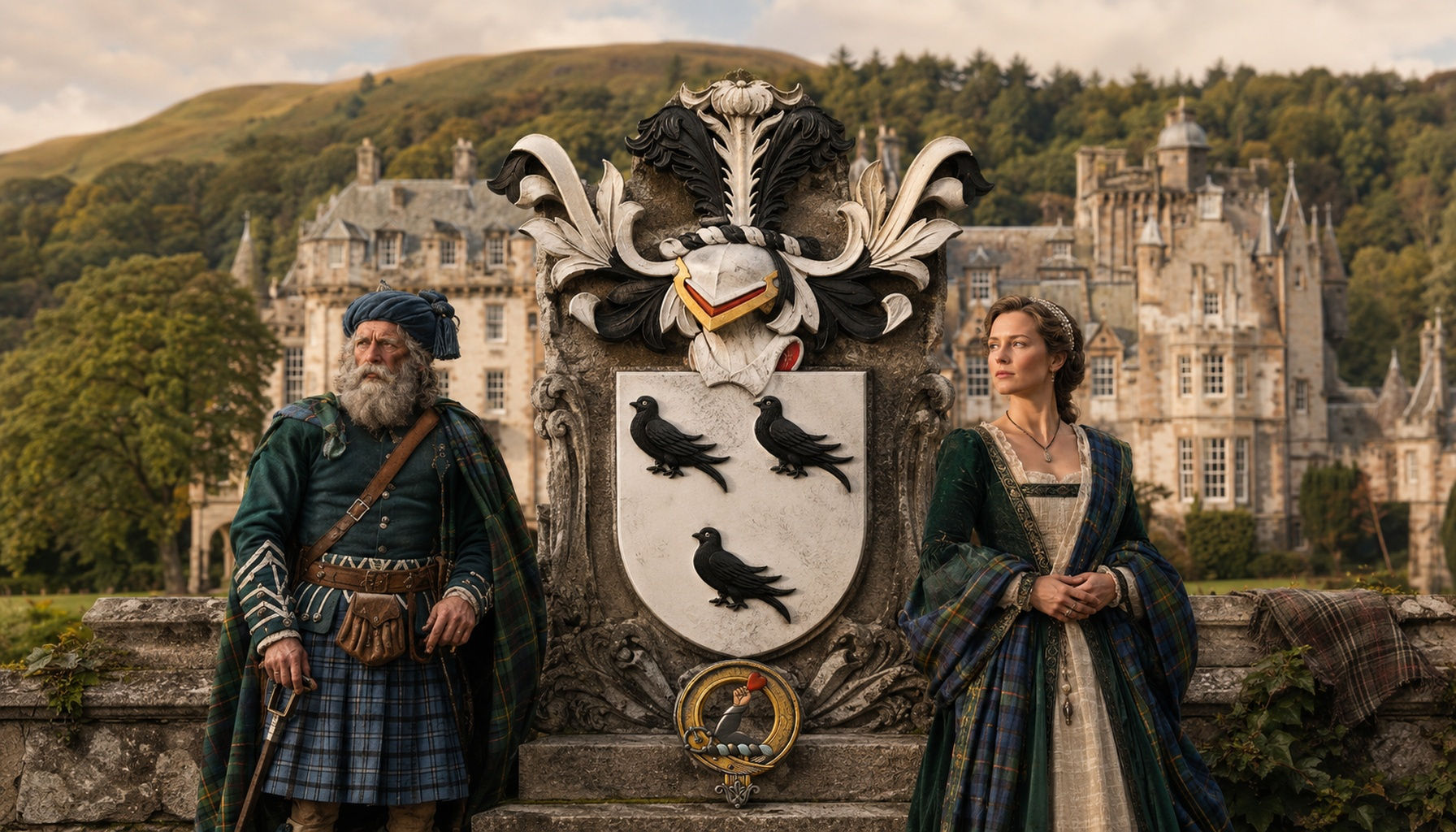
Clan Glen was a Scottish territorial family tradition rooted in the Lowlands, shaped less by princely rank than by place, service, and the stubborn continuity of a name tied to the landscape itself. The surname Glen belongs to that very Scottish habit of identity by ground underfoot: a family known from a glen, a valley, a settled district, and the local memory attached to it. In haplogroup terms, the primary family association here is R1b1a1b1a1a1c2b3c2a, a branch within the wider R1b line often seen across western and northern Europe.
Historically, Clan Glen fits the pattern of many smaller Scottish clan-style families whose standing came through regional belonging, landholding, public duty, and heraldic remembrance rather than through a spectacular royal origin story. That is often how Scottish history really works once you scrape off the romantic varnish. Families like Glen endured because they were anchored in a recognisable place and because their surname continued across generations. One early named figure is Colban del Glen, recorded in 1328, a neat example of the medieval habit of identifying a man through the territory from which he came or with which he was associated.
The family location anchor is The Glen in the Scottish Borders, near Innerleithen in the old county of Peeblesshire. This is exactly the sort of place that explains a surname better than any grand legend can. The Glen is a country estate and landscape setting in the valley of the River Leithen, surrounded by wooded slopes, watercourses, and the kind of terrain that gave names, boundaries, and loyalties their practical meaning in medieval and later Scotland. In historical terms, a place like this sits squarely in the Borders world: a region of estates, service networks, shifting local influence, and deep attachment to land. The estate became especially known in later centuries for its designed landscape, house, and gardens, but its older importance lies in how such a place could generate identity itself. Yes, it can still be visited today, which is one of the pleasures of Scottish family history: the map has not entirely swallowed the past, and the landscape still does a fair bit of the explaining.
From an ancient DNA point of view, the Glen haplogroup association R1b1a1b1a1a1c2b3c2a links the family to a wider web of ancient and medieval paternal lines found across Europe rather than to any single proven forefather. Related or linked samples in this branch include Lombard Warrior Elite Collegno Northern Italy (COL_069), Lombard Era Collegno Northern Italy (COL_069b), Lombard Warrior Elite Collegno Northern Italy (COL_069x), Medieval Belgium Sint-Truiden Onze-Lieve-Vrouwekerk (ST1237), Belgic Suessiones Iron Age France Bucy-le-Long (CGG022456, CGG022425, CGG022419), Early Anglo Saxon Cemetery West Heslerton Yorkshire (I20644, I20671, I20677), Carolingian Era Groningen Netherlands (GRO013), Longobard Haeven Mecklenburg-Vorpommern (HVN005), Norman Invasion Medieval Lincolnshire Lincoln Castle (S3044), Middle Bronze Age Westwoud-Binnenwijzend Netherlands (I11972), Post Medieval Plague Victim Ellwangen Germany (ELW003), Bell Beaker De Tuithoorn North Holland (I4070), and Medieval Upper Bavaria Germany (Petersberg). None of that proves direct descent from any one of these individuals, of course. What it does show is that the same paternal branch turns up in a striking range of contexts, from Bell Beaker and Iron Age horizons to Anglo-Saxon, Lombard, Norman, and later medieval communities. In other words, the Glen story sits within a much older northwestern European pattern of movement, settlement, and survival.
See the medieval Sint-Truiden DNA story
If you carry the Glen surname, have Glen family roots in the Scottish Lowlands or Borders, or simply want to see whether your DNA connects with Clan Glen and these related ancient R1b1a1b1a1a1c2b3c2a-linked samples, you can upload your DNA to MyTrueAncestry and explore the evidence for yourself.
Comments