Clan Forrester
– 3 min read


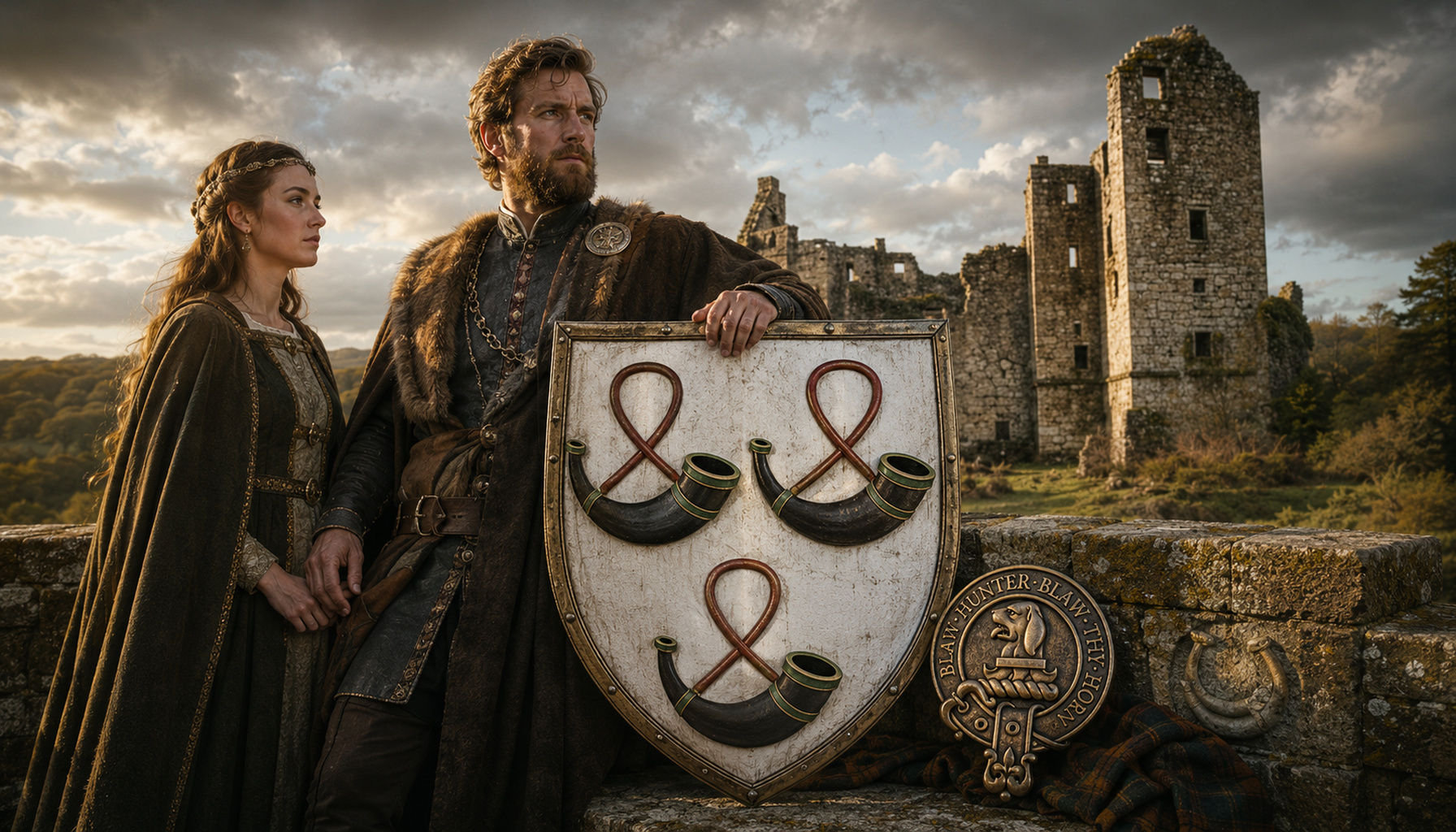
Clan Forrester was one of those distinctly Scottish Lowland service families whose identity grew out of office, land, and authority rather than the more romantic picture of a single Highland glen and a war-pipe on the hill. The name itself points to duty: a forester was a keeper or guardian of woodland, hunting ground, or estate, often tied to royal forests, noble lands, and local administration. In Scotland, that kind of role mattered enormously. It meant access, trust, and responsibility. Over time, Forrester families rose into the landed and armorial world, preserving their place through property, heraldry, public service, and regional standing. Their primary family haplogroup is tagged here as R1b1a1b1a1a4a, a lineage widely linked across Britain and Atlantic Europe. Haplogroups linked in this broader family context include R1b lineages associated with ancient and medieval Britain, Pict-era Scotland, Iron Age Celtic Europe, and later medieval western Europe.
Historically, the Forresters are anchored above all in the Lowlands, especially around Edinburgh and West Lothian, where office and estate made families durable. This was a world of charters, crown favor, legal rights, fortified houses, and long memory. Their story fits a very Scottish pattern: an occupational name becoming a hereditary surname, then a recognized landed house, then a family remembered through coats of arms, local power, and service to king and kingdom. One early named figure is Sir John Forrester, recorded in 1448, who stands as a reminder that by the fifteenth century the family was already established enough to appear in the documentary landscape of late medieval Scotland, that rich and quarrelsome world of lairds, burgesses, churchmen, and crown servants.
The great location anchor for the family is Corstorphine, now absorbed into the western side of Edinburgh but in the medieval and early modern periods a place with its own local weight and identity. Corstorphine Castle, associated with the Forresters, was once a substantial fortified residence and symbol of their standing. Corstorphine itself sits on an old route west from Edinburgh, which made it strategically and economically useful: close enough to the capital to matter, but still rooted in its own estate landscape. The castle was developed and held by the Forrester family over centuries and reflected exactly the kind of Lowland lordship they embodied - not remote tribal dominance, but tenure, office, influence, and proximity to power. The building does not survive as a complete standing castle today, but Corstorphine as a historic district absolutely can still be visited, and traces of its medieval heritage remain in the area, especially around old ecclesiastical and estate sites that preserve the memory of the family's long connection.
From a DNA perspective, the Forrester tagging to R1b1a1b1a1a4a places the family within a very broad and historically rich western European paternal landscape. That does not mean any named Forrester descends directly from any one excavated man, and it is important not to pretend otherwise. What it does mean is that related or linked ancient DNA samples carrying comparable lineage signals appear across a striking range of Celtic, Brittonic, Pictish, Roman-era, and medieval contexts. Among the most evocative are Pict-era Scotland samples from Rosemarkie Cave on the Black Isle such as KD001, KD001_2, KD001_3, KD001_4, KD001_6a, and KD001_6b, along with early medieval Pict-era Lundin Links individuals such as LUN004 and its related entries. There are also Roman and post-Roman British examples including NWC009 from Eddington in Cambridgeshire, ARB003 from the high-status wooden coffin burial at Arbury, DUX003 from Roman-era Duxford, and later medieval English samples from Cherry Hinton, Augustinian Friars, and St John's Hospital in Cambridge. Going further back into the Celtic world, linked examples include elite Iron Age and Hallstatt or La Tene-associated burials such as MBG013 from Magdalenenberg, HOC001, HOC001b, and HOC001c from Hochdorf, and LWB002_ss from Ludwigsburg Roemerhuegel, as well as Durotriges burials from Winterborne Kingston including WBK106, WBK17, WBK192, and WBK10. In other words, the haplogroup sits in a long corridor of ancestry stretching through Bronze Age Europe, Iron Age Celtic societies, Roman Britain, Pictish Scotland, and medieval northwestern Europe - exactly the sort of deep background one might expect behind a long-rooted Lowland Scottish family.
If you have Forrester ancestry, or simply want to see how your DNA connects with ancient Scotland, Britain, and the wider Celtic and medieval world, upload your DNA to MyTrueAncestry and explore the deeper story behind your family line.
Comments