Clan Dalton
– 2 min read


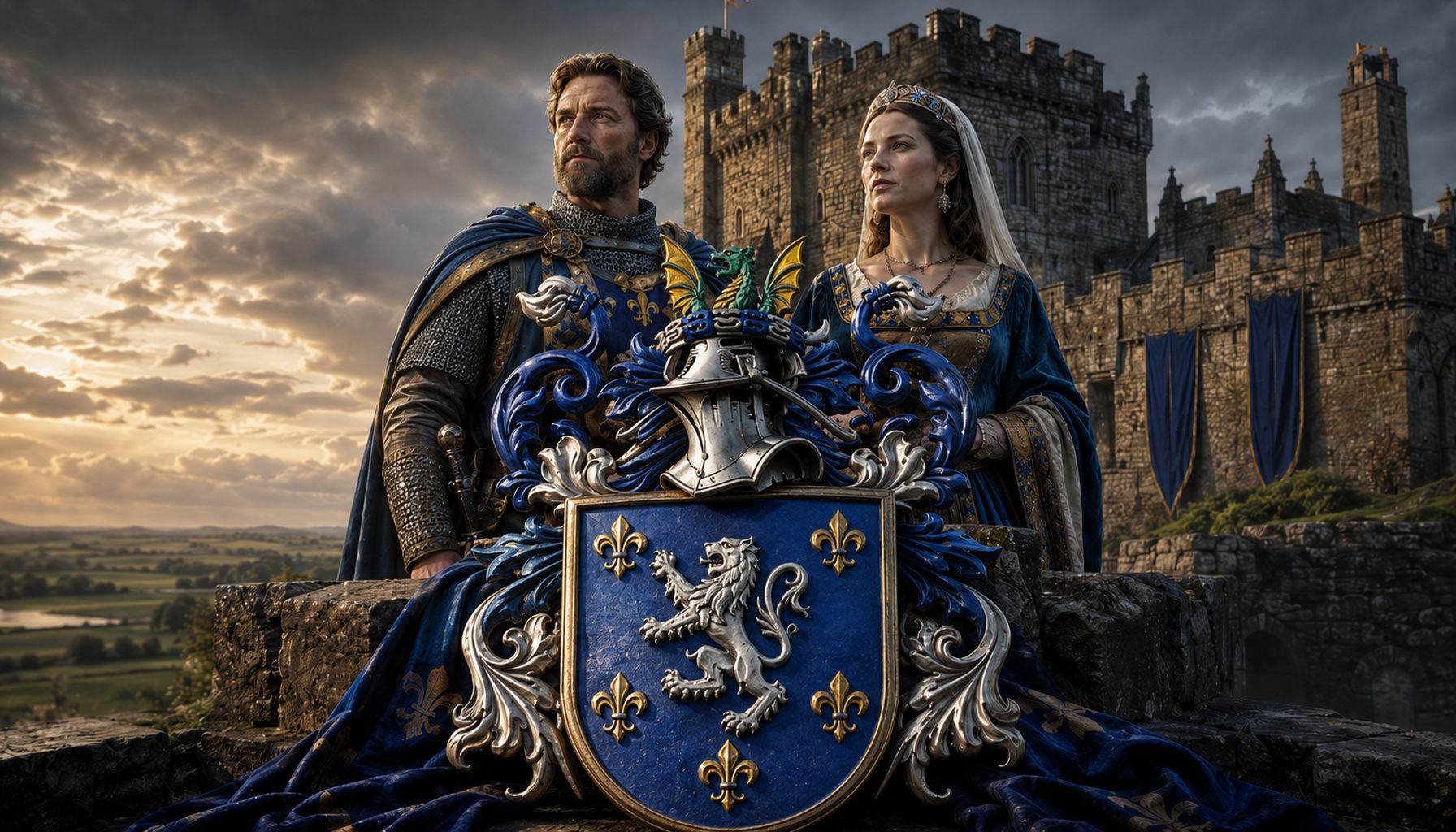
Clan Dalton belongs to that wide and fascinating world of Irish and English family history in which a surname carries the memory of conquest, settlement, service, and survival. The Dalton name is generally linked to Norman roots, and over time it became established in different parts of the British Isles, especially in England and Ireland, where branches of the family took on local importance as landholders, military men, and figures of community authority. In that sense, Dalton heritage is not just about one single line, but about a recognizable surname identity that endured through changing medieval and early modern circumstances. The primary family haplogroup linked here is R1b1a1b1a1a2c1a1a1a1a1c1.
The historical shape of the family reflects a very familiar Anglo-Norman pattern. A name rooted in place and lordship became, over generations, attached to regional settlement, local power, and family continuity. Daltons appear in records connected with land, administration, and military service, and the name remained visible because it adapted. Some branches became more distinctly English, some more distinctly Irish, but the surname itself kept its thread. Named figures help give that story a little texture: Sir Walter Dalton, recorded in 1150, stands near the earlier medieval horizon of the family, while Radekin Dalton, noted in 1309, shows the surname still active in the documented world of later medieval society.
A useful location anchor for Dalton heritage in Ireland is Birr Castle, in Birr, County Offaly, a place that wonderfully captures the long continuity of aristocratic and regional life. The site began as an earlier stronghold and was developed over centuries into the castle known today, with much of its later character shaped from the 17th century onward. Birr Castle is especially famous not only as a historic residence but also as a scientific landmark: in the 19th century it became home to the great telescope known as the Leviathan of Parsonstown, for a time the largest telescope in the world. The demesne, gardens, and castle setting make it one of those places where medieval inheritance, estate culture, and modern curiosity all sit together in plain view. While the castle itself remains a private residence, the grounds and gardens are well known as a visitor destination, so yes, it can still be visited in that practical sense and remains a strong geographical touchpoint for family memory in the region.
From a DNA perspective, the Dalton story fits into a wider northwest European landscape. The haplogroup R1b1a1b1a1a2c1a1a1a1a1c1 is linked with a set of related ancient and historic-era samples spread across Britain, Ireland, and the continent, showing the kind of deep population background from which later medieval surname families emerged. These linked samples include Medieval Jutland, Denmark, Vor Frue Kirkegard, Aalborg (CGG100512); Thuringii tribe Germany, Deersheim, Saxony-Anhalt (DRH026); Carolingian-era Groningen, Netherlands (GRO005); Medieval Ireland, Kilteasheen, Roscommon, Bishops Seat (KIL043); Merovingian grave, Alt-Inden, North Rhine-Westphalia, Germany (IND007); Anglo-Saxon Sedgeford, Norfolk, England (SED005); Iron Age Briton, Thornholme, East Riding of Yorkshire (I22060); Aquitani, Pech-Maho, France (PECH8); and later historical burials in Maryland connected with the Calvert family, including the son of Philip Calvert in a lead coffin (I2097) and Philip Calvert coffin (2099). These are best understood as related or linked genetic points within a broad paternal network, not as proof of direct descent from any one individual.
If the Dalton story speaks to you, the next step is simple: upload your DNA to MyTrueAncestry and see how your own results connect with the deeper history of Ireland, England, and the wider medieval world.
Comments