Clan Borthwick

– 3 min read


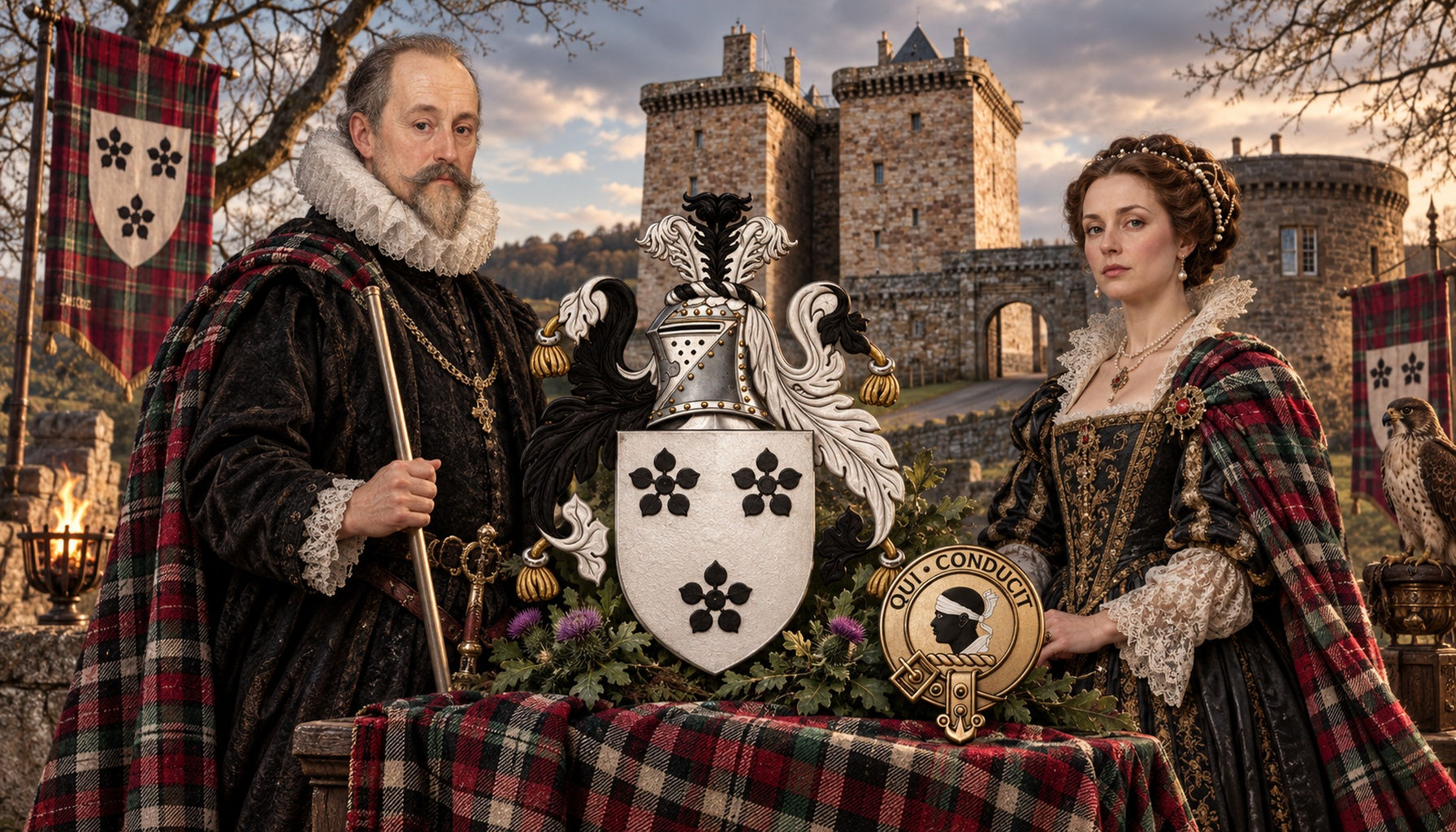
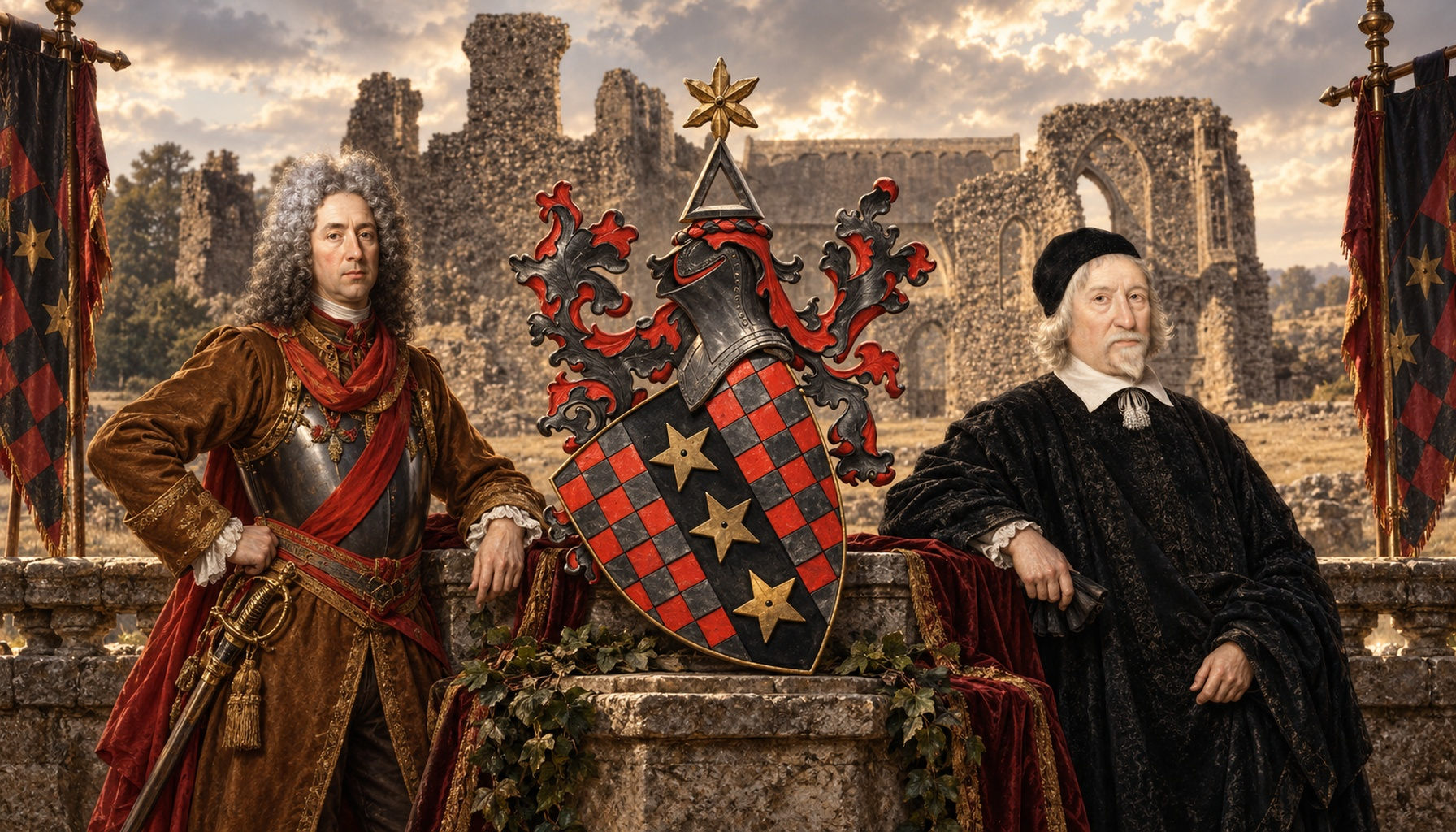
Clan Borthwick was a historic Scottish noble family of the Lowlands, rooted above all in Midlothian, and remembered through their great stronghold of Borthwick Castle. Their name comes from place, as so many medieval lordly names do, tying the family to the lands of Borthwick in southeastern Scotland and to the world of feudal landholding that took shape after the twelfth century. In genealogical tagging, the primary family haplogroup linked here is I1a2b1c1a, a paternal line with a long northern European story behind it.
The Borthwicks were not a wandering frontier clan in the Highland mould, but a powerful Lowland lordly house: landowners, royal servants, soldiers, parliamentarians, and peers of the realm. They rose in prominence in the later Middle Ages as Scotland's crown depended on families who could hold estates, provide armed support, and play their part in government. The title Lord Borthwick became one of the established peerages of medieval Scotland, and the family maintained a striking continuity of name, rank, and heraldic identity over centuries. Among the notable figures in that long line are James Borthwick, 7th Lord Borthwick (1570-1599), John Borthwick, 9th Lord Borthwick (1616-1675), and Archibald Borthwick, de jure 16th Lord Borthwick (1732-1815), each belonging to a story that stretches from late medieval lordship into the modern age.
Borthwick Castle is the great location anchor for the family, and it is one of those buildings that makes medieval power feel suddenly real. Built in the fifteenth century, south of Edinburgh near Gorebridge in Midlothian, it was begun for Sir William Borthwick, later the first Lord Borthwick. Architecturally it is one of the best surviving tower houses in Scotland, a massive fortified residence rather than a simple keep, with extraordinarily thick walls, lofty stone chambers, and the unmistakable air of a place designed both to impress and to endure. It was not just a family home but a statement in stone: this was a lordship with money, reach, and confidence, planted firmly in the political landscape of the kingdom.
The castle also had a life in national history beyond the family itself. It is famously associated with Mary, Queen of Scots, who took refuge there in 1567 before the crisis that followed Carberry Hill. That sort of episode reminds us that noble residences were not private retreats in the modern sense; they were active stages on which Scottish politics unfolded. Borthwick Castle still stands today in remarkable condition and, as a well known heritage site and hospitality venue, it can still be visited, giving modern visitors a rare chance to encounter a fifteenth century Scottish fortified residence at close quarters rather than merely imagine it from chronicles and charters.
The haplogroup tag I1a2b1c1a places Clan Borthwick within a wider paternal story that reaches deep into northern European population history. Related or linked ancient DNA examples include Post-Roman England, North Yorkshire, Vale of Pickering (I20638); Early Anglo Saxon Cemetery, West Heslerton, Yorkshire (I20639, I20646, I20661, I20656); Post Roman Era, Worth Matravers, Dorset, England (I20637); Neolithic Denmark, Karlstrup (CGG106702); and even the famous later historical case of Ludwig van Beethoven, Wiener Zentralfriedhof (lvb). These samples should not be read as proof of direct descent from the Borthwicks themselves, but they do help sketch the broader deep-time landscape of paternal lines related to I1a2b1c1a, showing connections across Scandinavia, early medieval England, and the North Sea world from which many later British lineages ultimately emerged.
Explore Ancient DNA in Post-Roman Britain
If you carry the Borthwick name, have Borthwick ancestors in your family tree, or simply want to see whether your own DNA connects with this Lowland noble tradition or with related ancient I1a2b1c1a-linked samples, you can upload your DNA to MyTrueAncestry and explore the results for yourself.
Comments