Clan Anderson
– 2 min read


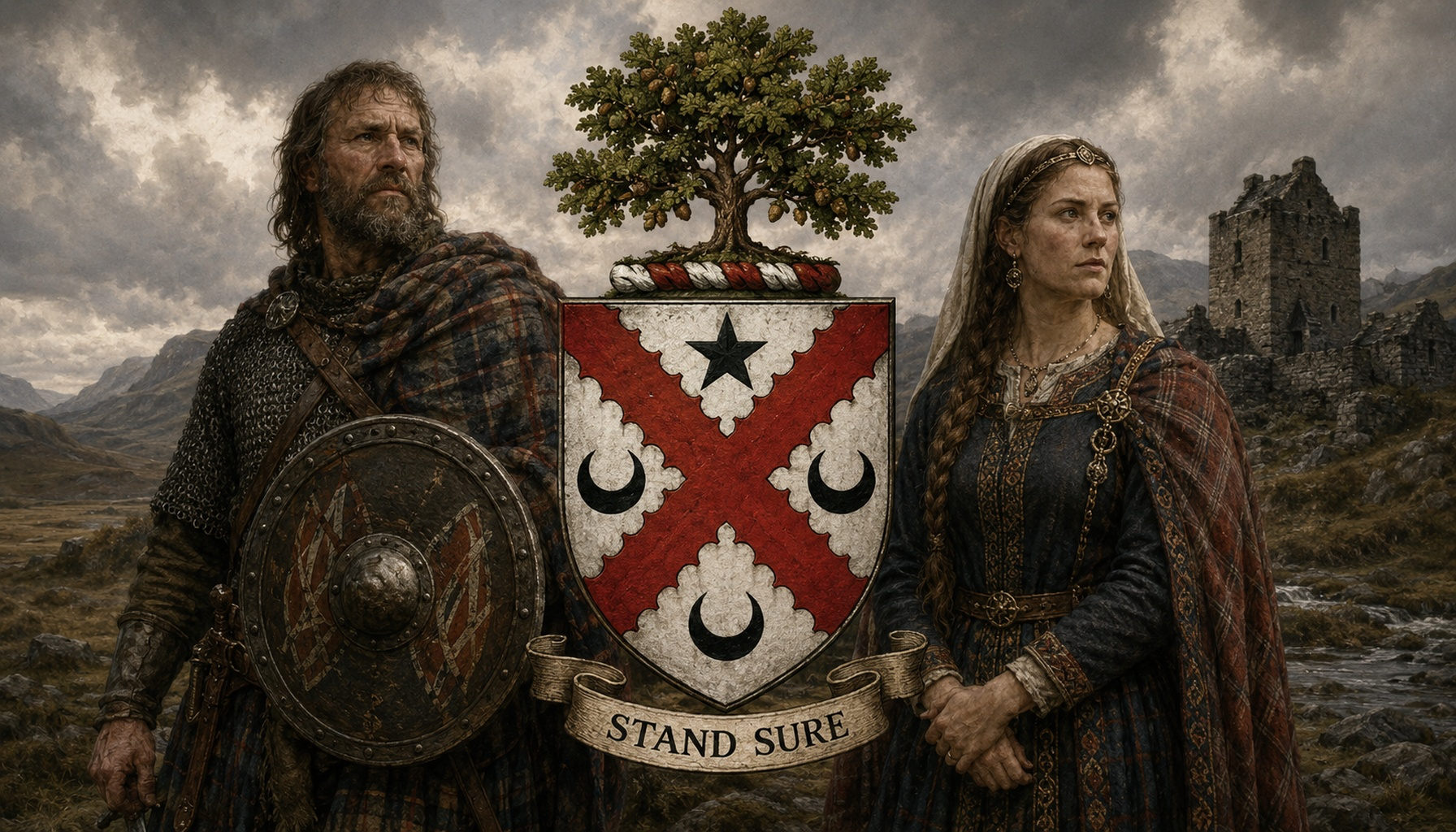
Clan Anderson was not a clan in the narrow Highland sense of one chief, one glen, and one tightly bounded territory. It grew instead from a patronymic surname, quite literally meaning "son of Andrew", and that tells us a great deal about how Scottish family identity often worked. The name appeared in different parts of Scotland, carried by families linked by kinship, local standing, service, and long surname memory rather than by a single place of origin. In that sense, Anderson is a very Scottish story: Christian personal names becoming hereditary surnames, then branching into regional lines that took root in burghs, parishes, and districts across the country. The primary haplogroup linked here is R1b1a1b1a1a2c1a5b1a1a, a lineage that sits within a much wider northwestern European genetic landscape.
Historically, Anderson families belonged to that broad Scottish pattern in which descent, loyalty, occupation, and locality all mattered. Over the generations they appear in military life, in civic affairs, in learned professions, and in the quieter record of ordinary local continuity. Two well-known figures help give the name some human shape. Alexander Anderson, born in 1582, was an early Scottish mathematician, part of that learned world in which Scots moved through universities and intellectual networks well beyond their birthplace. James Anderson, born in 1662, became a noted writer and minister, remembered for his work in historical and diplomatic scholarship. They remind us that the Anderson name was never confined to one social role. It was a surname that could be local and national at once.
One useful location anchor for the Anderson story is Peebles, in the Scottish Borders, a royal burgh set on the River Tweed. Peebles has deep historical roots as a market town and administrative centre, and its setting matters: this was border country, shaped by movement, trade, landholding, church life, and the long interaction of Lowland Scotland with the wider kingdom. The town grew as a practical hub for the surrounding countryside, and over centuries it developed churches, civic institutions, and a durable local identity that would have suited the kind of surname continuity seen in patronymic families such as the Andersons. Peebles can still be visited today, and it remains a very tangible place for anyone interested in family history, with its old street pattern, its Tweedside setting, and its place in the historic life of the Borders.
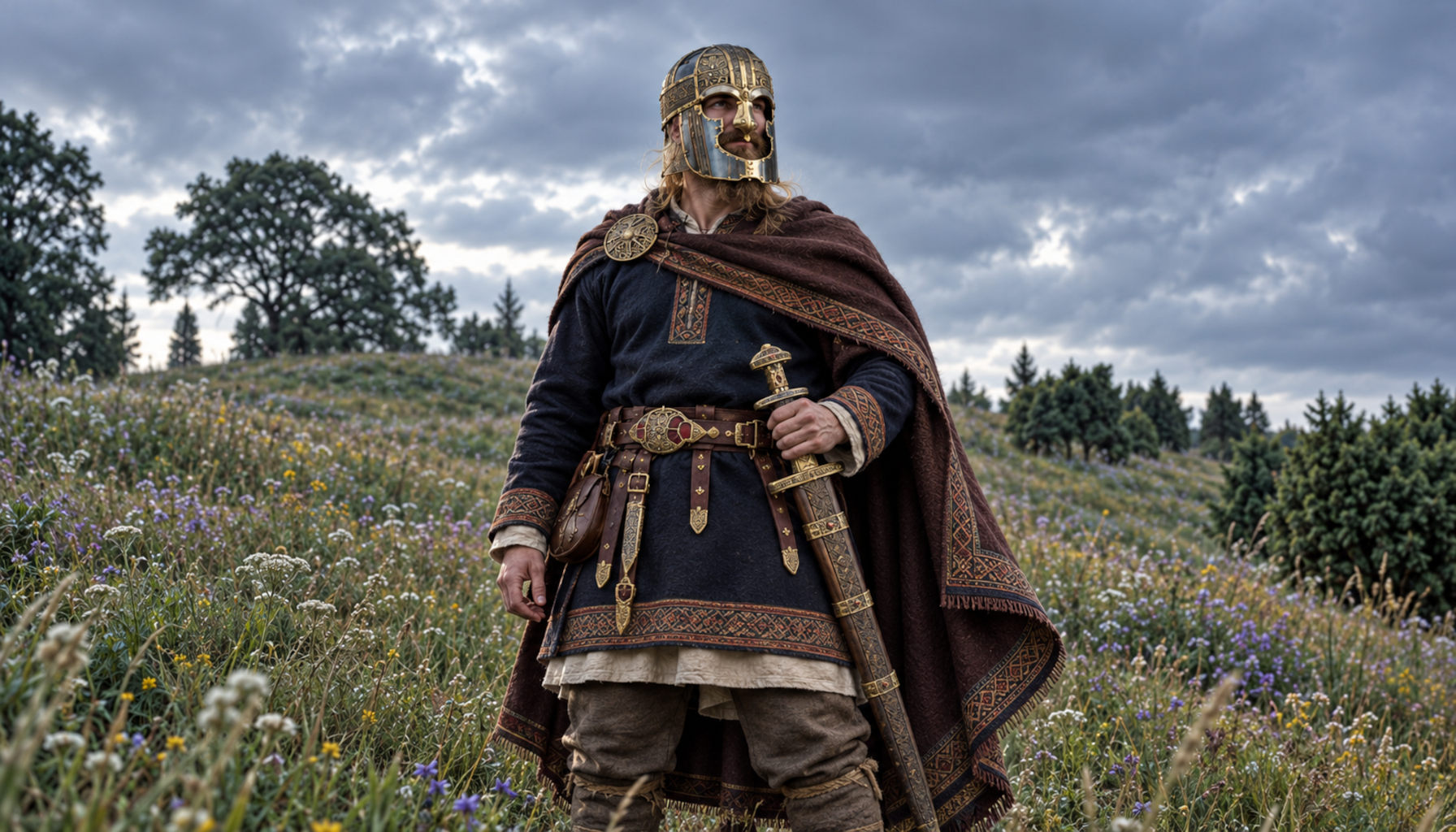
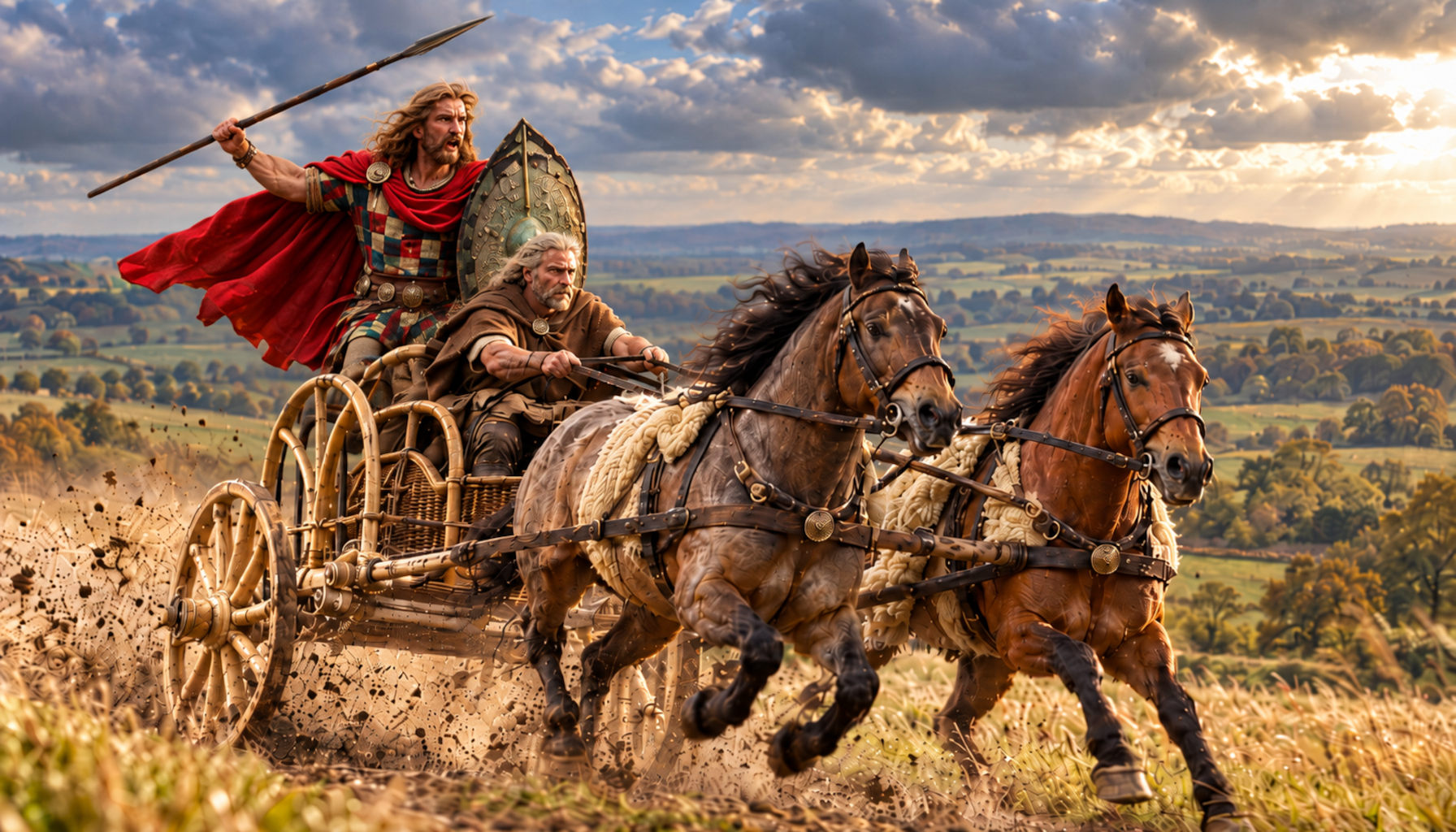
From the DNA side, the haplogroup tag R1b1a1b1a1a2c1a5b1a1a links the Anderson story to a broader tapestry of ancient and early medieval populations around Britain and the North Atlantic. Related or linked samples include Early Anglo-Saxon Cemetery, West Heslerton, Yorkshire, England (I11586); Celtic Briton Carsington Pasture Cave, Derbyshire, England (I12775); Celtic Briton Lechlade-on-Thames, Gloucestershire, England (I12783); Celtic Briton Bradley Fen, Cambridgeshire, England (I11156); Iron Age Middle Wallop, Suddern Farm, England (I16611); Iron Age Gloucestershire, Greystones Farm (I12785); Ireland Copper Age Rathlin1B; and Danish-Gaelic Viking Iceland (SSG-A2). These do not prove direct descent from any one ancient individual, and we should be careful not to pretend otherwise. What they do suggest is that the Anderson-associated lineage belongs within a long and complex genetic history stretching across Iron Age Britain, Celtic Brittonic communities, early medieval Anglo-Saxon settings, Ireland, and the Norse-Gaelic world.
If you carry the Anderson surname, or think your family may connect to this Scottish patronymic tradition, DNA can add another fascinating layer to the paper trail. Upload your DNA to MyTrueAncestry to explore ancient samples, regional matches, and the deeper background behind your family story.
Comments