The Noble House of Petty-Fitzmaurice

– 3 min read


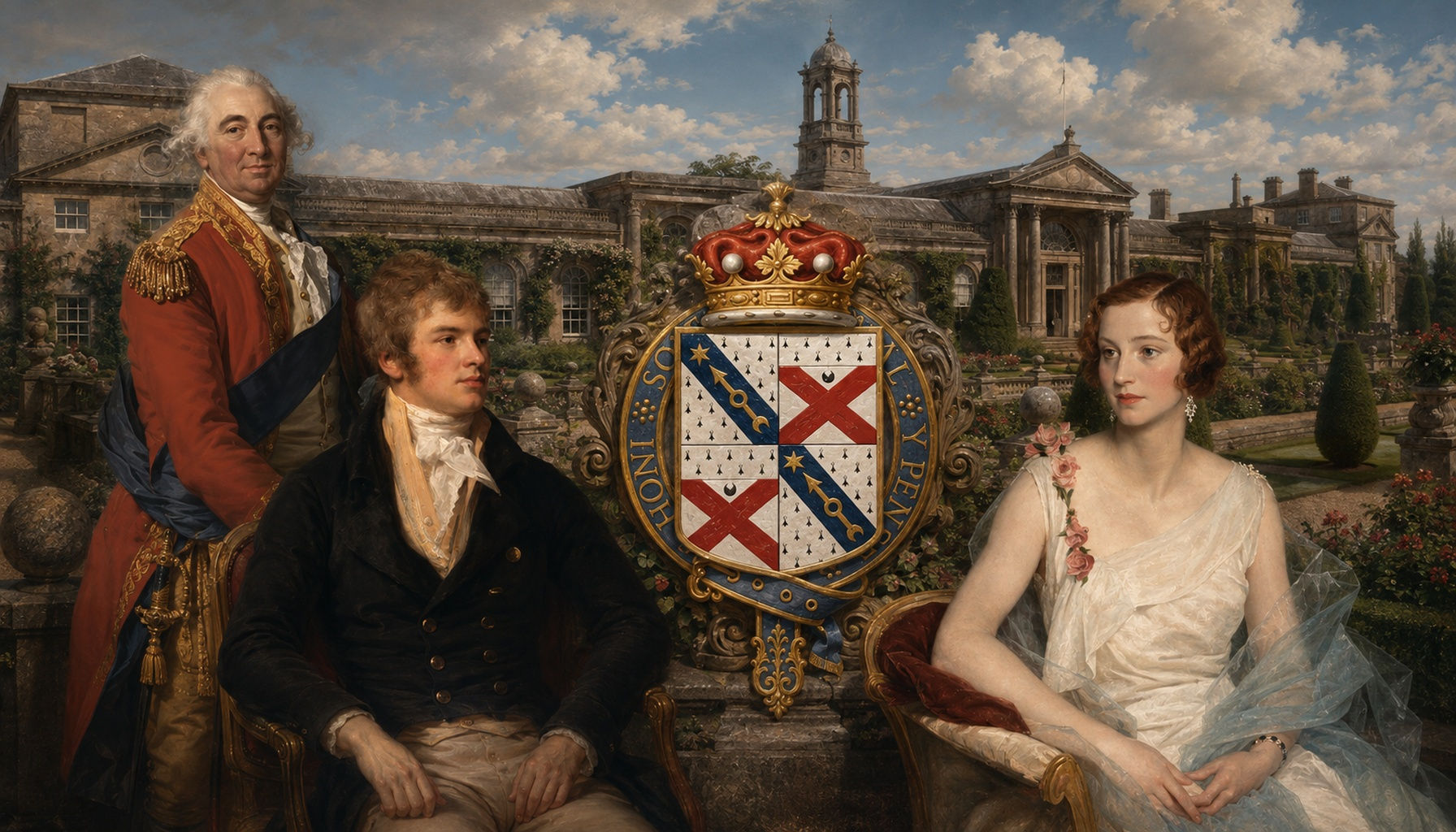
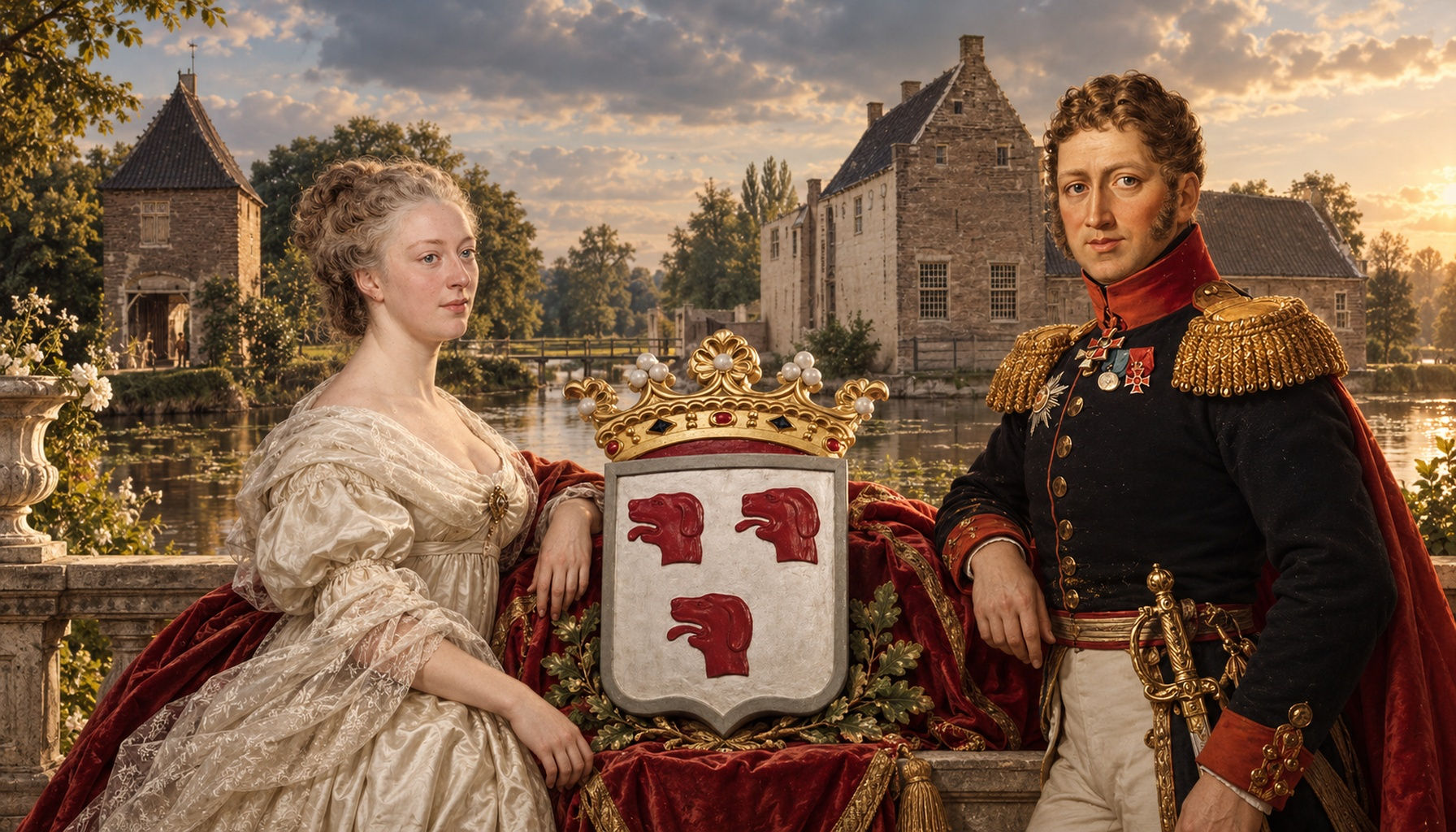
The House of Petty-Fitzmaurice was one of those great British and Irish noble families whose story is really about power made durable through land, marriage, office, and political skill. Linked here with the haplogroup I1a3a1c, the family emerged from the union of two important lines: the Pettys, who rose through wealth, administration, and political advancement, and the Fitzmaurices, an old aristocratic family rooted in Ireland, especially in County Kerry. What resulted was not just a surname of impressive length, but a dynastic machine: Irish landed influence fused with British parliamentary ambition.
That is what makes the Petty-Fitzmaurices so revealing historically. They fit a familiar high noble pattern in the British and Irish world: estates underpinning rank, rank opening the way to office, and office reinforcing family prestige across generations. John Petty-Fitzmaurice, 1st Earl of Shelburne (1706-1761), helped establish the family’s standing; his son William Petty-Fitzmaurice, 1st Marquess of Lansdowne (1737-1805), became one of the most important statesmen of his age and even served as Prime Minister; and Henry Petty-Fitzmaurice, 3rd Marquess of Lansdowne (1780-1863), carried that public role deep into the 19th century. In them you can see the house at full stretch: peerage titles, parliamentary influence, diplomacy, colonial administration, heraldic identity, and the calm confidence of a family that expected to help run the state.
Explore the House of Cavendish
If the family needs a physical anchor, it is Bowood House in Wiltshire. This became the great English seat of the Marquesses of Lansdowne and still carries the atmosphere of aristocratic command, though in that very British way where grandeur is softened by landscape, taste, and generations of alteration. Built in the 18th century and developed with the input of major designers including Robert Adam, Bowood was not simply a residence but a statement of status: a country house designed to express cultivated power. It stood within an extensive parkland setting shaped in part by the landscape movement associated with Capability Brown, and it served as the stage on which politics, hospitality, collecting, and family memory all met. Bowood is also famous for its scientific associations, since Joseph Priestley worked there and is said to have made discoveries relating to oxygen while in the house’s orbit. Although part of the original structure was later demolished, Bowood House remains a major heritage site, with gardens and public access, and it can still be visited today.
From a DNA perspective, the I1a3a1c tag connected with the Petty-Fitzmaurice profile belongs to a wider northern European and Germanic-associated paternal landscape rather than to any single dynasty on its own. It is best understood through related or linked ancient samples, not as proof of direct descent from any one burial. Among the relevant comparisons are Migration Period Hungary Rakoczifalva (RKO003), Longobard Period Pannonia Arrabona Gyirmot Barbaricum Hungary (GHD021), Kingdom of Mercia England Wolverton Buckinghamshire (I16508), Roman-period Germanic Warrior Mursa Croatia during the Third Century Crisis (OSIJ007), Germanic Tribe Denmark Lolland Oustrup Tonderup mose (CGG106735), Visigothic Migration Period Spain Estevillas Virgen de la Torre (CGG022053), Early Anglo-Saxon West Heslerton Yorkshire (I20674), Migration Period Liebenau Lower Saxony (LBU010), Byzantine Roman Zeytinliada Monastery Anatolia (I14832), Early Medieval Buckinghamshire Wolverton Radcliffe (S16508), Viking Age elite Bodzia Poland (VK157), and the mixed late Roman context of Crypta Balbi (R110). Taken together, these linked samples sketch a world of mobility around the North Sea, the Migration Period, post-Roman Britain, and elite warrior networks that later fed into the medieval populations from which many British and Irish noble lineages ultimately emerged.
Read about Roman and Early Medieval Britain
The Petty-Fitzmaurices are a fine reminder that noble history is never just a list of titles. It is about how families rooted themselves in place, married advantage to ambition, and turned estates into political power. If you have tested your DNA, you can upload it to MyTrueAncestry to see whether you match the House of Petty-Fitzmaurice or any of the related ancient DNA samples linked with I1a3a1c.
Comments