Haplogroup W

– 5 min read


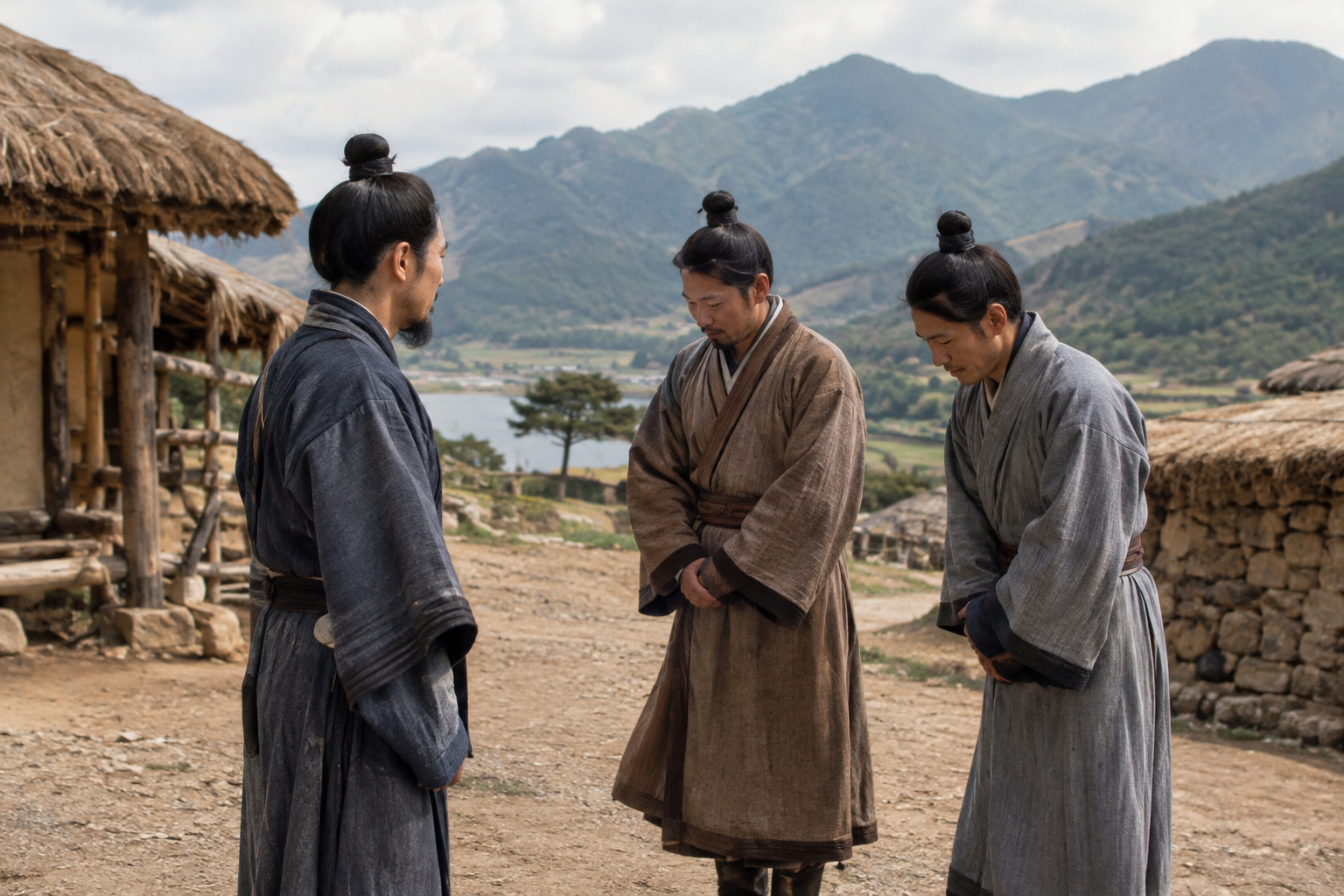
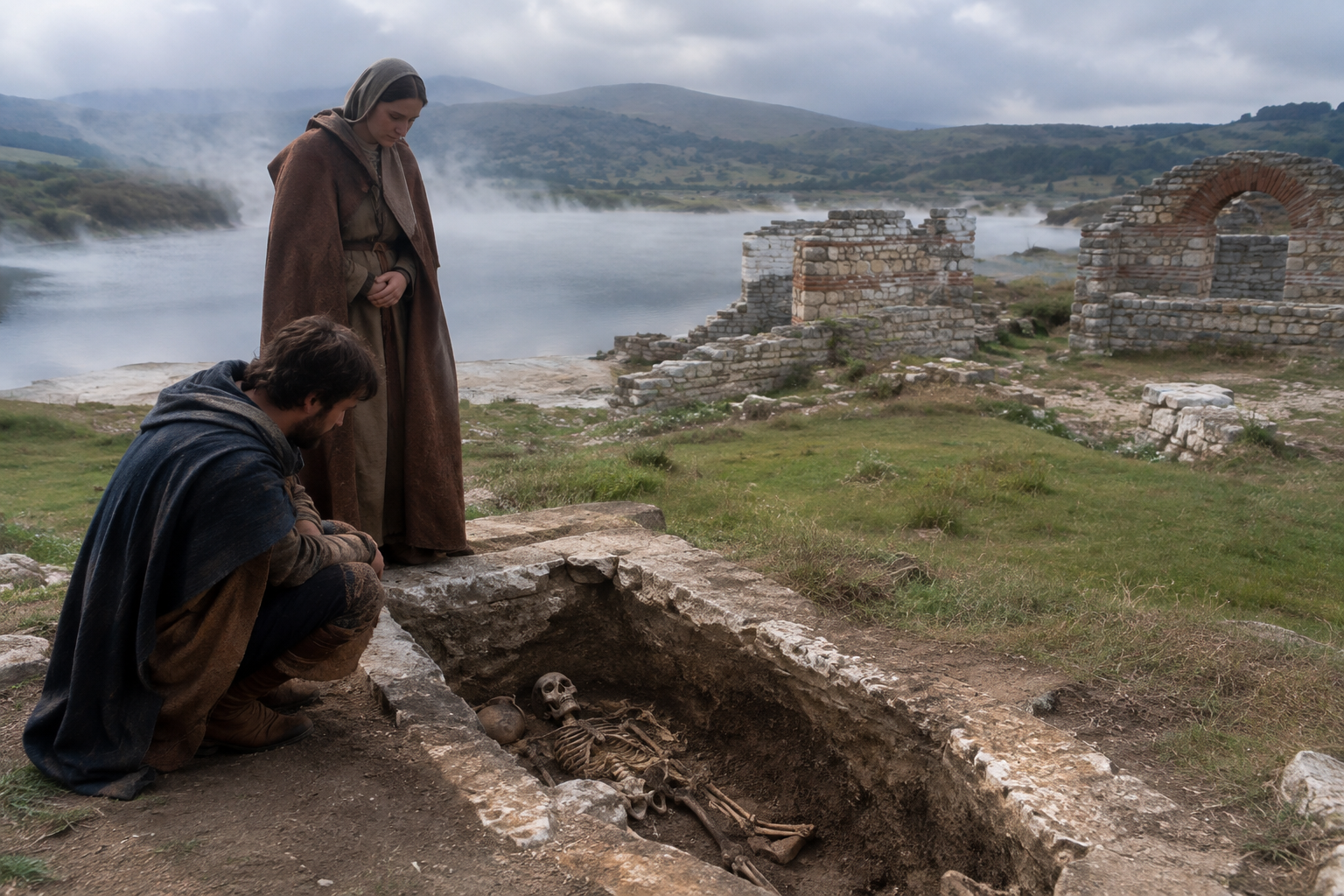
At Joyeong-dong in Gyeongsan, archaeologists recovered the remains of an individual dated to around AD 500, in the era we call the Three Kingdoms period of Korea. In MyTrueAncestry's ancient DNA records, that person appears as JOY073 and is associated with haplogroup W. That immediately catches the eye, because W is best known not as a Y-DNA lineage at all, but as a mitochondrial haplogroup, inherited through the direct maternal line.
That makes JOY073 interesting for two reasons at once. First, it places haplogroup W in a very specific archaeological setting: early historic southeastern Korea, at a time of intense political competition, regional exchange, and social change. Second, it is a useful reminder that ancient DNA evidence has to be handled carefully. A haplogroup label on its own is only as good as the lineage system behind it. In standard human genetics, W belongs to mtDNA, not the Y chromosome. So for anyone researching this result, the sensible approach is to treat W here as evidence for a direct maternal line found in an ancient Korean burial context, while keeping the archaeological story firmly in view.
Gyeongsan lies in the southeast of the Korean peninsula, close to the heartland of the Silla kingdom. Around AD 500, this was not a quiet backwater but part of a landscape being reorganized by emerging states, local elites, and increasingly formal burial traditions. The Three Kingdoms period was shaped by the rivalry of Goguryeo, Baekje, and Silla, but also by many smaller local communities whose lives do not survive in the written chronicles with anything like equal clarity.
That is exactly where ancient DNA becomes so valuable. A single excavated person such as JOY073 does not tell us the whole population history of Korea, of course. But one individual can anchor a lineage in a time and place that matter historically. Instead of discussing haplogroup W as an abstract marker drifting across a map, we can place it in a cemetery landscape tied to the making of early Korean states.
Because the article prompt names W as a Y-DNA haplogroup, it is worth being plain: in mainstream haplogroup nomenclature, W is a mitochondrial lineage. That means it traces one narrow line of descent, mother to child, rather than father to son. It does not represent a person's full ancestry, language, or political identity. Nor does it make JOY073 somehow less useful. Quite the opposite: once the lineage type is correctly understood, the result becomes easier to place in the broader picture of East Asian population history.
Mitochondrial W is comparatively uncommon in East Asia when set against the more frequent regional maternal lineages, which is part of what makes any securely identified ancient occurrence noteworthy. But rarity should not be turned into melodrama. One sample does not prove a migration event all by itself, and it certainly does not let us reconstruct an individual's life story. What it does show is that the maternal ancestry present in early historic Korea could be more varied than a neat textbook summary might suggest.
The difficulty with many ancient samples is that the genetic label travels further than the archaeological detail. Here, the firm points are modest but important: JOY073 comes from Joyeong-dong in Gyeongsan, dates to around AD 500, and belongs to the Three Kingdoms horizon in Korea. That is already enough to say something meaningful. Haplogroup W was present in a documented human burial from southeastern Korea during the formative centuries of Silla power.
What we should not do is pile speculation on top of that. There is no basis here for inventing grave goods, rank, cause of death, family ties, or some dramatic long-distance biography. Ancient DNA works best when it is allowed to stay close to the ground. The ground, in this case, is a real cemetery landscape in a politically important region of early Korea.
A related point is methodological. Archaeogenetics in East Asia has increasingly shown that historical populations were not static blocks. Communities could preserve local continuity while still incorporating new people and lineages over time. That is one reason why individual finds matter: they complicate any simple idea of a sealed, homogeneous past.
East Asian Y-Chromosome Migrations
The centuries around AD 500 saw Korea deeply connected to the wider world of northeast Asia. Technology, political models, religious ideas, and prestige goods moved across the peninsula and beyond it, especially through links with the Chinese mainland and the Japanese archipelago. Genetics does not map neatly onto those cultural exchanges, but it does help show that the people living through them were themselves part of long and complicated histories of mixture and continuity.
That broader setting is why even a single lineage assignment deserves attention. A maternal haplogroup like W in Three Kingdoms Korea may reflect much older population processes rather than one recent arrival. Maternal lines can persist for long periods and turn up in places where written sources are silent. They are often most interesting not because they announce some grand invasion, but because they quietly expose the fine-grained diversity of past communities.
Research resources connected with this sample include material deposited at https://datadryad.org/dataset/doi:10.5061/dryad.fj6q57489. Even without overselling what a repository link can tell us on its own, the existence of such associated data reflects the increasingly data-rich character of ancient DNA work in East Asia, where burial context, chronology, and genetics can now be studied together rather than in isolation.
There is a temptation in consumer DNA culture to see a haplogroup as a badge and the ancient person as a footnote. Archaeology rather insists on the reverse. JOY073 was not a code first and a human being second. This person lived in a region being drawn into the expanding institutions of an early Korean kingdom, was buried in a real local landscape, and now contributes one small but solid piece to the history of population diversity in that world.
That is also why comparison matters. Other MyTrueAncestry discussions of East Asian ancient DNA have shown how kinship, mobility, and community structure can be teased out when multiple burials are studied together. One sample like JOY073 cannot do all that by itself, but it belongs to the same larger transformation in evidence: the move from dynastic text and typological archaeology toward a more intimate history of actual people.
For MyTrueAncestry members connected with haplogroup W, the most defensible takeaway is not a sweeping migration legend but a precise historical foothold. JOY073 shows that this lineage was present in southeastern Korea around AD 500, in the age of the Three Kingdoms. Properly understood as a maternal haplogroup, W links one direct line of descent to a documented early Korean burial and reminds us that the populations behind famous historical kingdoms were often more varied, and more interesting, than later narratives make them seem.


Comments