Haplogroup U5a1

– 5 min read


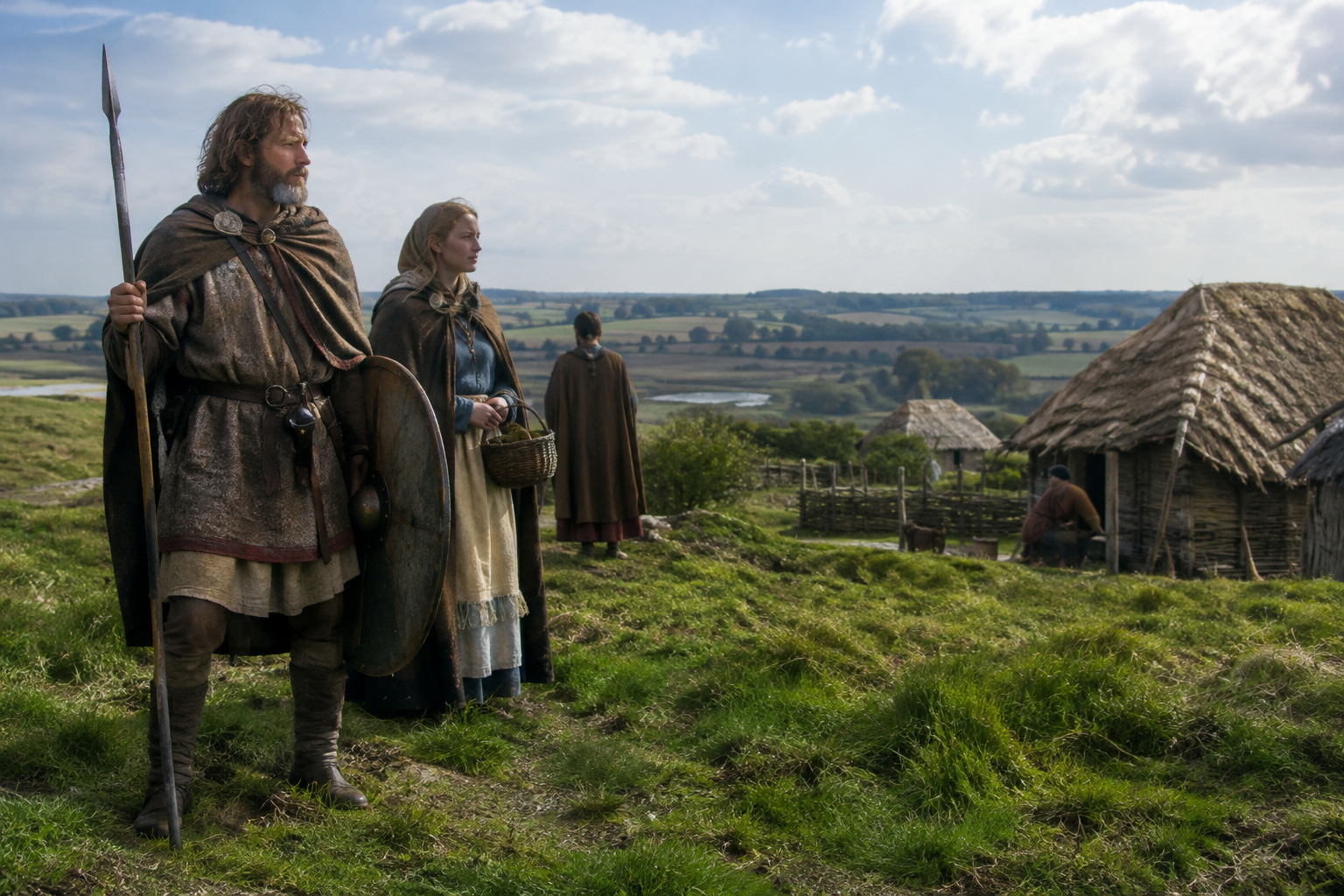
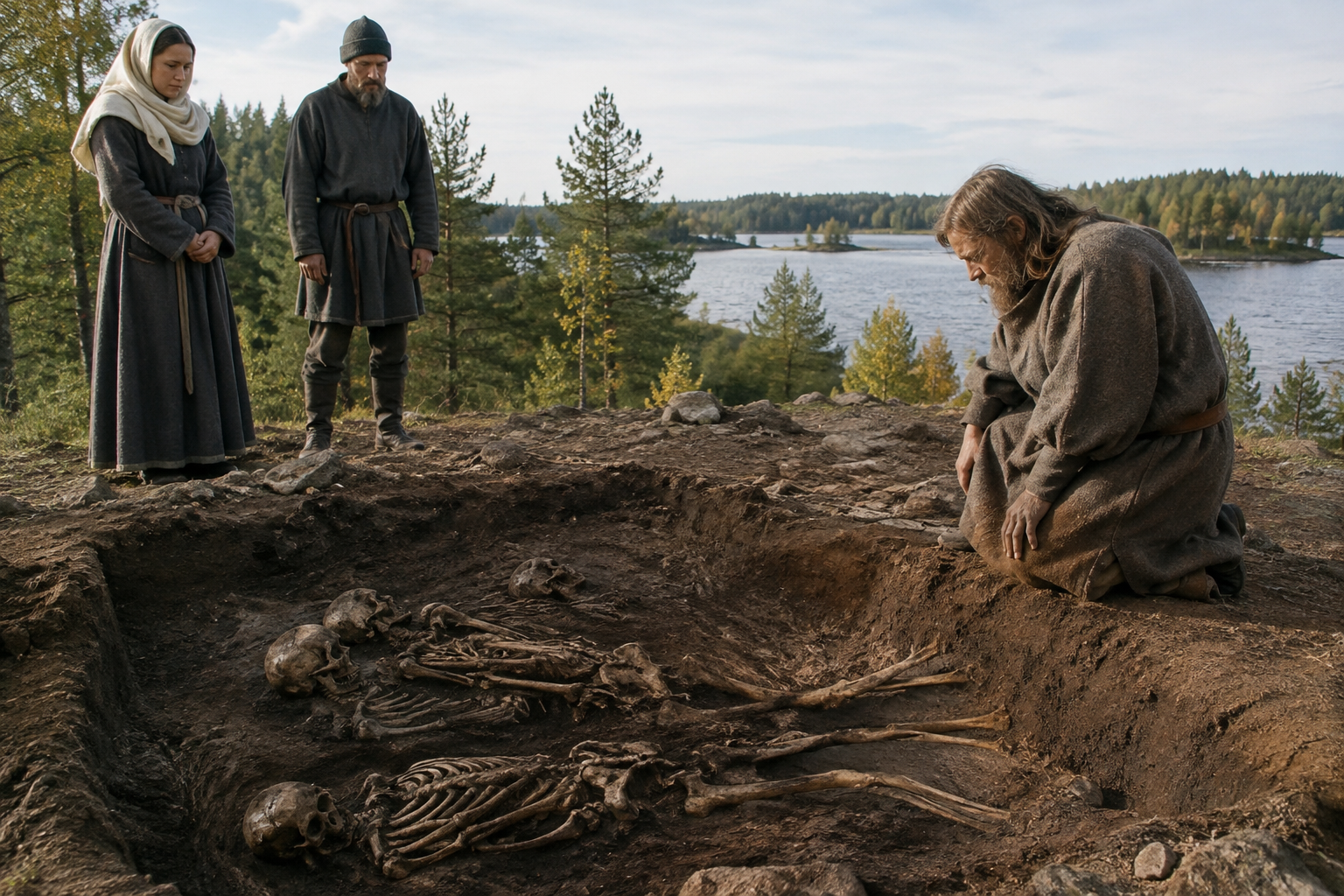
At Barrington in Cambridgeshire, one early medieval burial has become an unexpectedly useful waypoint for thinking about haplogroup U5a1. The individual known as EDI071, dated to around AD 600 and identified with the Anglo-Saxon period at Edix Hill, anchors this lineage in a landscape where burial archaeology and ancient DNA are both unusually informative. That matters because U5a1 is not a broad civilizational label. It is a specific maternal branch within the much older U5 family, and when it appears in a cemetery like Edix Hill it places one direct maternal line inside the making of early medieval England.
That distinction is important from the start. U5 is one of Europe's old mitochondrial lineages, with deep roots in prehistoric hunter-gatherer populations, but U5a1 is a narrower branch within that wider story. Mitochondrial DNA traces a direct maternal line only, so EDI071 does not tell us everything about ancestry, language, or identity. What it does offer is something more precise: a documented maternal thread running through a cemetery used in a time of migration, local continuity, and social change.
Edix Hill, near Barrington, is one of the best known Anglo-Saxon cemeteries in eastern England. Cemeteries of this kind are valuable precisely because they do not belong to abstract history-book peoples; they belong to real communities, buried over generations, in a region central to debates about post-Roman Britain and migration from the Continent. The sample EDI071 belongs to that world.
In broad historical terms, Cambridgeshire around AD 600 sat within a changing eastern English zone shaped by the end of Roman administration, the arrival and settlement of groups associated with Anglo-Saxon culture, and ongoing interaction with people already living in Britain. A maternal lineage such as U5a1 in this setting should not be forced into a simple "native" or "migrant" box. Ancient cemeteries repeatedly show that early medieval communities were mixtures of kinship, mobility, and local adaptation rather than neatly separate biological blocs.
An ancient DNA study connected with these burials is represented through the project archive at https://www.ebi.ac.uk/ena/browser/view/PRJEB97400, which links this cemetery to the larger genomic discussion of early medieval Britain. Even without overclaiming from one sample, EDI071 helps place U5a1 inside that discussion in a concrete archaeological context rather than as a free-floating haplogroup label.
Roman and Early Medieval Britain DNA
The wider U5 family is famous in archaeogenetics because it turns up again and again among Mesolithic and later European individuals. In plain terms, it is one of the maternal lineages most closely associated with Europe's deep pre-farming past. But that does not mean every later U5 lineage represents an unchanged survival from the Stone Age, still less that every bearer of U5a1 belonged to a single people.
What makes U5a1 interesting is its persistence. It appears in later prehistoric and historic populations across parts of Europe, which suggests not one dramatic migration story but repeated survival through many different social worlds: foragers, farmers, Bronze Age communities, Iron Age populations, and medieval societies. By the time we reach an Anglo-Saxon cemetery in Cambridgeshire, the lineage has already travelled through thousands of years of population change.
That is one of the quiet revolutions created by ancient DNA. Instead of imagining that each new archaeological period erased the last one, we can see maternal lines enduring through change. U5a1 at Barrington is therefore not just an "Anglo-Saxon" signal. It is also evidence that early medieval England included maternal ancestry with a much longer European history behind it.
There is a temptation, especially in popular discussions of the Anglo-Saxons, to treat cemeteries as ethnic scorecards. But archaeology is usually less tidy than that. Burial sites like Edix Hill contain people whose identities were shaped by household, status, belief, marriage networks, and local custom as much as by any distant origin story.
For a lineage like U5a1, this is especially worth stressing. A maternal haplogroup can move across regions very effectively through ordinary family history: women marrying into new communities, households relocating, children inheriting local language and culture while carrying older maternal ancestry. So when EDI071 appears in an Anglo-Saxon-period cemetery, the most responsible reading is not a grand claim about one tribe, but a reminder that early medieval England was built from layered ancestries.
That broader point fits well with other work on the period, including studies of migration and admixture in England after Rome. The early medieval gene pool was not made in a single event. It emerged from interaction over generations, and maternal lineages like U5a1 are part of that texture.
Barrington also matters because Cambridgeshire sits in a region where Roman, post-Roman, and early medieval histories overlap. Eastern England was tied into the Roman world, then into North Sea networks that linked Britain with the Low Countries, northern Germany, and Scandinavia. That made it a place where ancestry could be old, local, newly arrived, or all three at once.
Seen in that light, U5a1 is a useful example of continuity within change. The branch belongs to a maternal family with deep European antiquity, yet it appears here not in a Mesolithic cave or a Neolithic tomb but in an early medieval burial ground. The archaeology of England often works exactly like this: old lineages inside new political worlds.
The same lesson has emerged in other British studies that look closely at kinship and maternal descent rather than only broad ancestry categories. Maternal lines can reveal continuity that sits alongside major shifts in culture and power. In one period the setting is an Iron Age community, in another an Anglo-Saxon cemetery, but the line itself keeps moving through history.
Matrilineal Kinship in Iron Age Britain
With EDI071, the strength of the evidence is also its limit. We have a real individual, a real place, and a clear early medieval date, but only one explicitly supplied ancient sample tied here to U5a1. That means the article should stay close to what is secure. We can say that U5a1 was present in an Anglo-Saxon-period burial community at Barrington around AD 600. We can also say that this branch belongs to a much older maternal family well known in European population history.
What we should not do is turn that into a claim that U5a1 was uniquely Anglo-Saxon, uniquely British, or the marker of a single migration. Ancient DNA has made those simpler stories much harder to defend. In fact, one reason the evidence is so interesting is that it resists neat categories. A direct maternal line may be very old, while the cultural setting in which we find it is historically quite new.
That is also why even a single cemetery individual can be valuable. Ancient DNA works cumulatively. One sample may not tell the whole story, but it helps pin a lineage to time and place, and that is how larger historical pictures are built.
For someone exploring U5a1 today, the most useful historical insight is not a promise of one famous origin, but something subtler and more interesting. This lineage appears in an early medieval English cemetery at Barrington in the individual EDI071, showing that one branch of a very old European maternal family was part of the communities living through the transformation of post-Roman Britain. U5a1, in other words, carries a long memory: not of one people alone, but of continuity across many different European worlds.
Comments