Haplogroup R2a2b1b2b2a2
– 5 min read


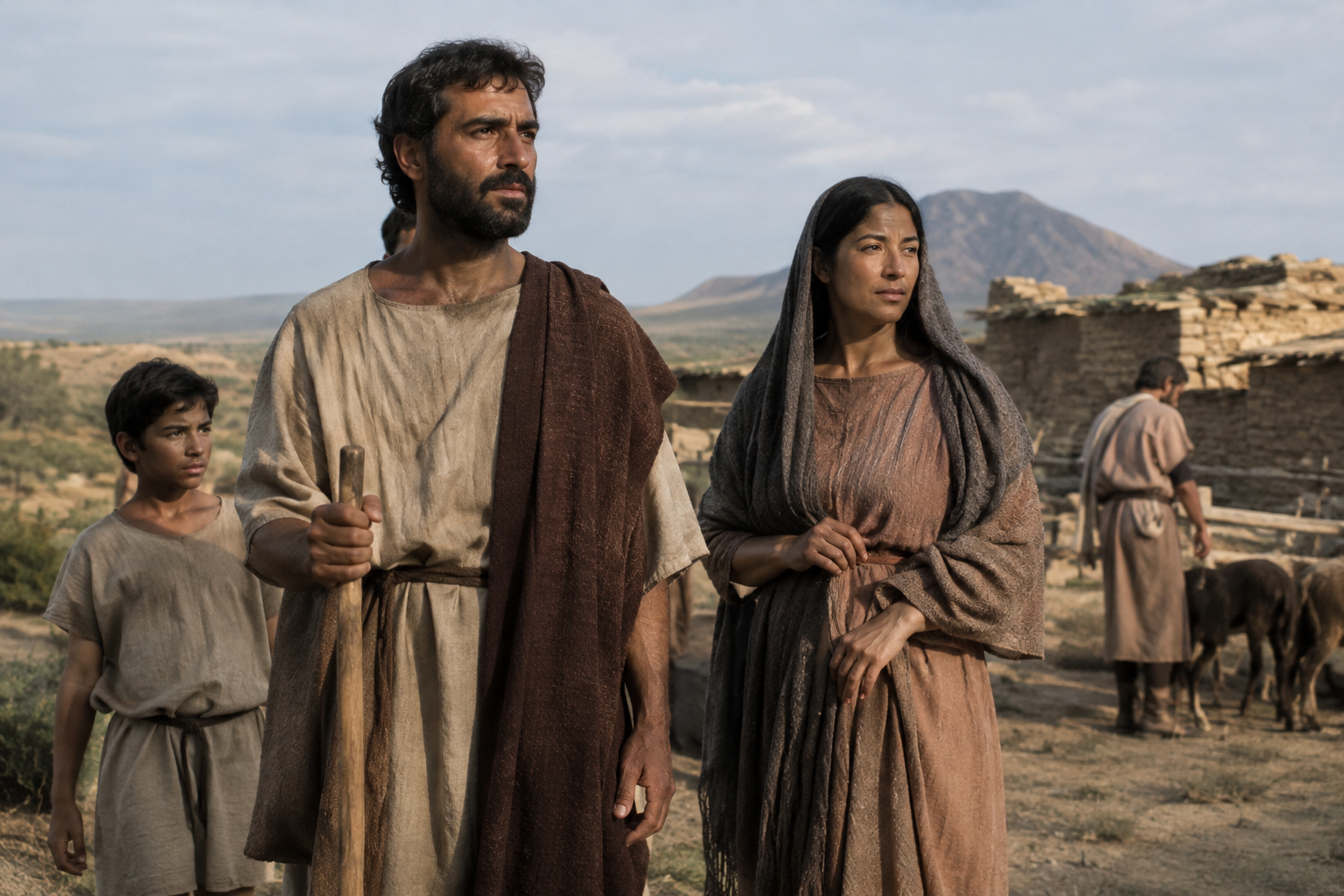
In the late Iron Age settlement zone of Aligrama, in the Swat Valley of present-day northern Pakistan, one ancient male sample stands out for MyTrueAncestry users following a very specific paternal line: I8245, dated to around 240 BC. He is, at least from the evidence here, a rare ancient signpost for the Y-DNA haplogroup R2a2b1b2b2a2.
That may look like an intimidating string of letters and numbers, but the historical point is quite simple. A Y-DNA haplogroup traces one direct paternal line only: father to son, and so on, across many generations. It does not describe a person's whole ancestry, language, social identity, or culture. Even so, when a lineage appears in a securely dated ancient individual from a well-known archaeological region, it gives us something precious - a real human anchor in time and place.
Aligrama belongs to a region with an unusually rich archaeological importance. The Swat Valley sat at a crossroads between the mountains of Inner Asia, the northwestern subcontinent, and the wider Iranian and Central Asian worlds. By around the third century BC, this was not an isolated backwater but a landscape shaped by local traditions, long-distance contacts, and the political aftershocks of the Achaemenids, Alexander's campaigns, and the Hellenistic successor states.
That is what makes I8245 so interesting. He is not just an abstract genetic code. He represents a paternal line present in the Swat region during a period when communities there were part of a deeply connected ancient world. The exact subclade in this article is R2a2b1b2b2a2, but the wider point is that this branch sits within haplogroup R2, a lineage long associated in broad terms with South Asia and adjoining regions. What we must not do, however, is lazily project the whole history of R2 onto this narrower branch without direct evidence.
An ancient DNA study examining the wider Swat Valley material helped draw attention to how informative this region is for understanding population history in northern South Asia, even when individual paternal lines remain only one strand of the story. For readers who want the research context behind these ancient individuals, the relevant study material is linked here: genetic research on ancient individuals from the region.
There is a temptation, when only one clearly supplied ancient individual is available for a branch, to shrug and move on. But archaeology often works like this. A single excavated person, properly dated, can matter enormously if he appears in the right place and period. I8245 gives us a documented ancient occurrence of this paternal line in the late Iron Age Swat sphere, which is already more historically useful than a thousand vague guesses about "where the haplogroup must have come from".
And Swat is exactly the sort of place where such a find carries weight. This was a region of settlement continuity mixed with contact and movement. Valleys like these could preserve older local paternal lines while also receiving newcomers through trade, marriage, military service, and shifting political control. So the presence of R2a2b1b2b2a2 here does not reduce the population to one origin story; rather, it shows that this branch was part of the male landscape of northwestern South Asia by around 240 BC.
The date attached to I8245 places him in an age of remarkable transition. In the wider region, the old imperial frameworks had fragmented, and new powers were forming. Gandhara and the greater northwest were tied into routes linking the Indian subcontinent with Bactria and beyond. This is why a Swat Valley male lineage from this period is so evocative: it belongs to a world where local communities were not sealed off from history, but actively living through it.
Still, caution matters. Around 240 BC is an archaeological estimate for the individual, not a detailed biography. It does not tell us whether I8245 was elite or ordinary, local-born or recently descended from migrants, or what language he spoke at home. Y-DNA simply cannot answer those questions on its own.
What it can do is place a paternal line firmly in a late Iron Age context. That matters for men today who carry related branches, because it ties their line not merely to "South Asia somewhere", but to a concrete region that was central to ancient exchanges between the subcontinent and the highland corridors to the northwest.
Modern readers can underestimate valleys like Swat because they imagine the great stories of antiquity happening elsewhere - in imperial capitals, on famous battlefields, or along the better-known stretches of the Silk Road. But frontier regions are often where genetics becomes especially illuminating. They are where populations meet, mix, persist, and sometimes hold onto lineages for centuries beneath changing political labels.
Aligrama, in that sense, is part of a larger archaeological lesson. Ancient identities were layered. A man could belong to a local community, live under the influence of distant states, participate in exchange networks crossing mountains, and yet still carry a paternal lineage whose deeper roots lay in older regional histories. The discovery of I8245 reminds us that genetic history in northern Pakistan cannot be flattened into one conquering wave or one neat ethnic category.
This broader point sits comfortably beside other MyTrueAncestry work on regional complexity across Inner Asia and adjacent zones. The same general lesson keeps returning: ancient DNA often reveals not simple replacement, but long-term coexistence of different lineages and ancestries in historically busy places.
There is another reason this article has to stay disciplined. The haplogroup name here is extremely specific: R2a2b1b2b2a2. The narrower the branch, the greater the danger of overclaiming. Without a broader cluster of securely published ancient men on exactly the same terminal line, it would be rash to spin a grand saga of expansion, tribe, caste, dynasty, or kingdom from this alone.
What we can say is more modest and more useful. This branch, or a lineage directly associated with it in MyTrueAncestry's classification, appears in a late Iron Age male from Aligrama. That places the line in a region famous for cultural layering between South Asia, the Iranian world, and Central Asia. For descendants today, that is not a trivial clue. It suggests that this paternal ancestry can belong to the old northern subcontinental borderlands where movement and continuity lived side by side.
The real value of haplogroup R2a2b1b2b2a2 is not that it unlocks some fantasy of a single ancient people. Its value is that it appears, however sparsely, in a documented man from the Swat Valley at a historically charged moment. I8245 gives this paternal line a foothold in the late Iron Age archaeology of northwestern South Asia - a place where local communities were connected to much larger worlds without losing their own depth of history.
For someone researching this haplogroup today, that is the sensible takeaway: your direct paternal line may connect into an old northern South Asian landscape shaped by both persistence and contact. One ancient man cannot stand for everyone, but he can make the lineage feel suddenly, arrestingly real.
Comments