Haplogroup R1b1a1b1a1a2d1

– 5 min read


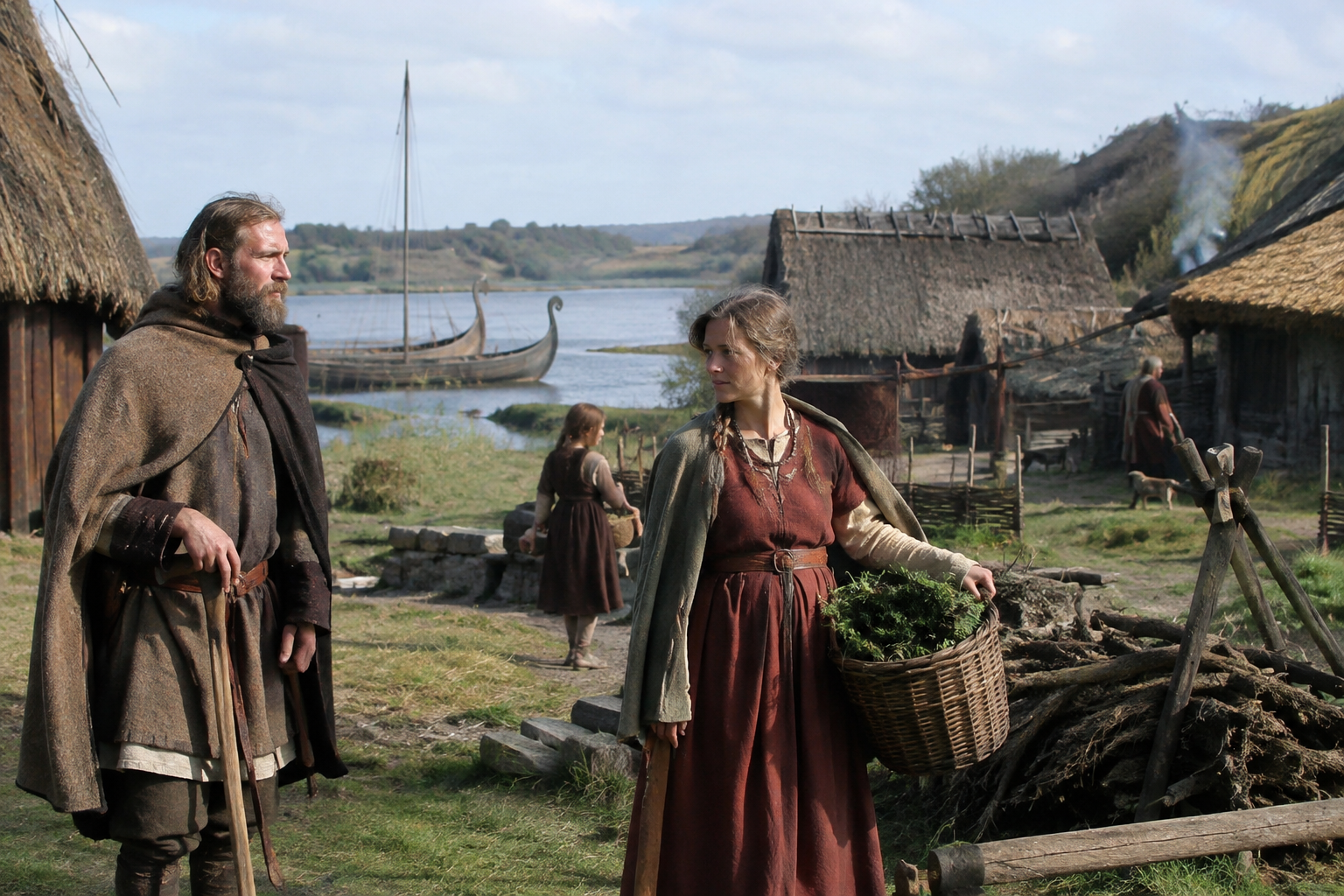
In Jutland, at Tjaerby near Randers, one Viking Age man has become an unexpectedly useful signpost for tracing a very specific paternal line. The individual identified as CGG100918, dated to around AD 1050, belongs to the closing generations of the Viking world in Denmark, when raiding, trade, Christianization, and regional kingship were all reshaping society at once. He is the clearest ancient anchor here for the Y-DNA branch R1b1a1b1a1a2d1.
That may sound forbiddingly technical, but the historical point is simpler. Y-DNA follows one direct male line only: father to son to son, across many generations. In this case, the ancient evidence does not give us a sweeping saga of all men in Viking Denmark. What it gives us is something more precise and, in its way, more interesting: proof that this paternal branch was present in late Viking Age eastern Jutland, in a landscape tied into the wider Scandinavian world.
Tjaerby sits in a part of Denmark that was anything but isolated. Randers and the east Jutland coast faced the Kattegat and the sea-lanes linking Denmark to Norway, Sweden, the southern Baltic, Frisia, and England. By about AD 1050, the old Viking Age patterns of movement had not vanished, but they were increasingly entangled with church organization, royal authority, and more settled local communities.
That makes CGG100918 valuable even though the surviving summary is brief. The sample is not a legendary king, not a saga hero, and not a conveniently over-explained burial. He is better than that for historical purposes: a documented man from a real community at a real moment of transition. If he is correctly associated with R1b1a1b1a1a2d1, then this sub-branch belongs in the lived paternal landscape of Viking Age Denmark rather than only in modern surname projects or speculative family traditions.
A major ancient DNA study of Viking Age populations, published in Nature, helped establish just how interconnected Scandinavia was in this period. Even without turning one Jutland burial into a grand migration drama, that broader research matters: it reminds us that a man buried in Denmark around AD 1050 stood within a world of mobility, local continuity, and constant contact across the North Sea and Baltic.
The branch name R1b1a1b1a1a2d1 places this lineage inside the very large Y-chromosome family known as R1b, one of the major paternal groupings in western Eurasia. But that broad fact should not be confused with the history of this exact subclade. A huge parent haplogroup can spread across continents and millennia; a much narrower descendant branch may have a far more local and much later story.
So the responsible way to read this evidence is not to say that every deep history ever associated with R1b automatically belongs to R1b1a1b1a1a2d1. Rather, the sample from Tjaerby shows that one fine-grained offshoot of that wider paternal family had reached, or remained present in, Denmark by the late Viking Age. For genealogists, that is often the most useful scale: not the broad prehistoric umbrella, but the historically visible branch.
There is a temptation, especially with Viking material, to imagine neatly bounded peoples: Danes here, Norwegians there, Swedes elsewhere, all marching through history under tidy labels. Ancient DNA has made that picture much messier, and therefore much more believable. Viking Age Scandinavia was full of regional variation, repeated movement, and contact with neighboring populations.
That wider setting matters for CGG100918. A paternal line found in Jutland around AD 1050 could reflect long local roots, migration from another part of Scandinavia, or older connections with populations around the North Sea world. The point is not that we can choose one of those stories with confidence from a single grave. The point is that late Viking Denmark was precisely the sort of place where such lineages could persist, mix, and spread.
For the same reason, haplogroup evidence should not be mistaken for language, ethnicity, or political loyalty. A Y-line is one thread in the historical fabric. Yet one thread can still tell us something important. Here it tells us that R1b1a1b1a1a2d1 had a place in the male ancestry of medieval Denmark at the edge of the Viking Age.
Germanic languages and genomics
The date around AD 1050 is worth dwelling on. This is not the era of the earliest ship burials or the first explosive Scandinavian expansions. It is the endgame: the period after the conversion of Harold Bluetooth, after generations of overseas settlement, and during the consolidation of medieval kingdoms. In Denmark, that means old identities and newer institutions were overlapping rather than replacing one another overnight.
A man like CGG100918 therefore belongs to a fascinating threshold in history. He lived in a society still recognizably Viking in many of its inherited connections, but increasingly medieval in its structures. If your own paternal line falls within R1b1a1b1a1a2d1, this sample does not prove descent from a famous raider or noble house. It does something more grounded: it places your branch among the male lines actually present in Denmark during this transition.
That kind of evidence is especially useful because it avoids the trap of turning genetics into costume drama. Too often, people want a haplogroup to deliver a ready-made identity. Ancient DNA is usually subtler. It shows that lineages moved through ordinary communities as well as through armies and dynasties, and that some of the best witnesses to the past are not celebrated names but excavated individuals with secure archaeological contexts.
One ancient individual is never the whole map. Still, one well-placed sample can matter enormously when it sits in a historically important region. Eastern Jutland was part of the corridor joining inland Denmark to maritime exchange routes, and it participated in the networks that carried people, goods, and ideas across northern Europe.
Seen in that light, CGG100918 gives R1b1a1b1a1a2d1 a credible foothold in a world of North Sea and Baltic interaction. That is a useful corrective to overly national stories of ancestry. Medieval and late Viking populations were not frozen blocks. They were communities shaped by movement, marriage, inheritance, and local continuity over generations.
It also helps explain why modern descendants of a narrow Y-line may appear in places far from Jutland. Once a branch is attested in a region as connected as Viking Age Denmark, later dispersal into other Scandinavian zones, the British Isles, or North Atlantic settlements becomes historically plausible, even when it is not provable from this sample alone.
The strongest evidence for R1b1a1b1a1a2d1 in the ancient record presented here is the man from Tjaerby, Randers, sample CGG100918, dated to about AD 1050. That is enough to say something concrete and worthwhile: this paternal branch was present in late Viking Age Denmark, in one of the key regions of Scandinavian history. For anyone researching this haplogroup today, the value lies not in inflated claims of heroic descent, but in having a real archaeological foothold in a world where local Danish life and wider Viking connectivity met.
Comments