Haplogroup R1b1a1b1a1a2c1b2a1a1
– 5 min read


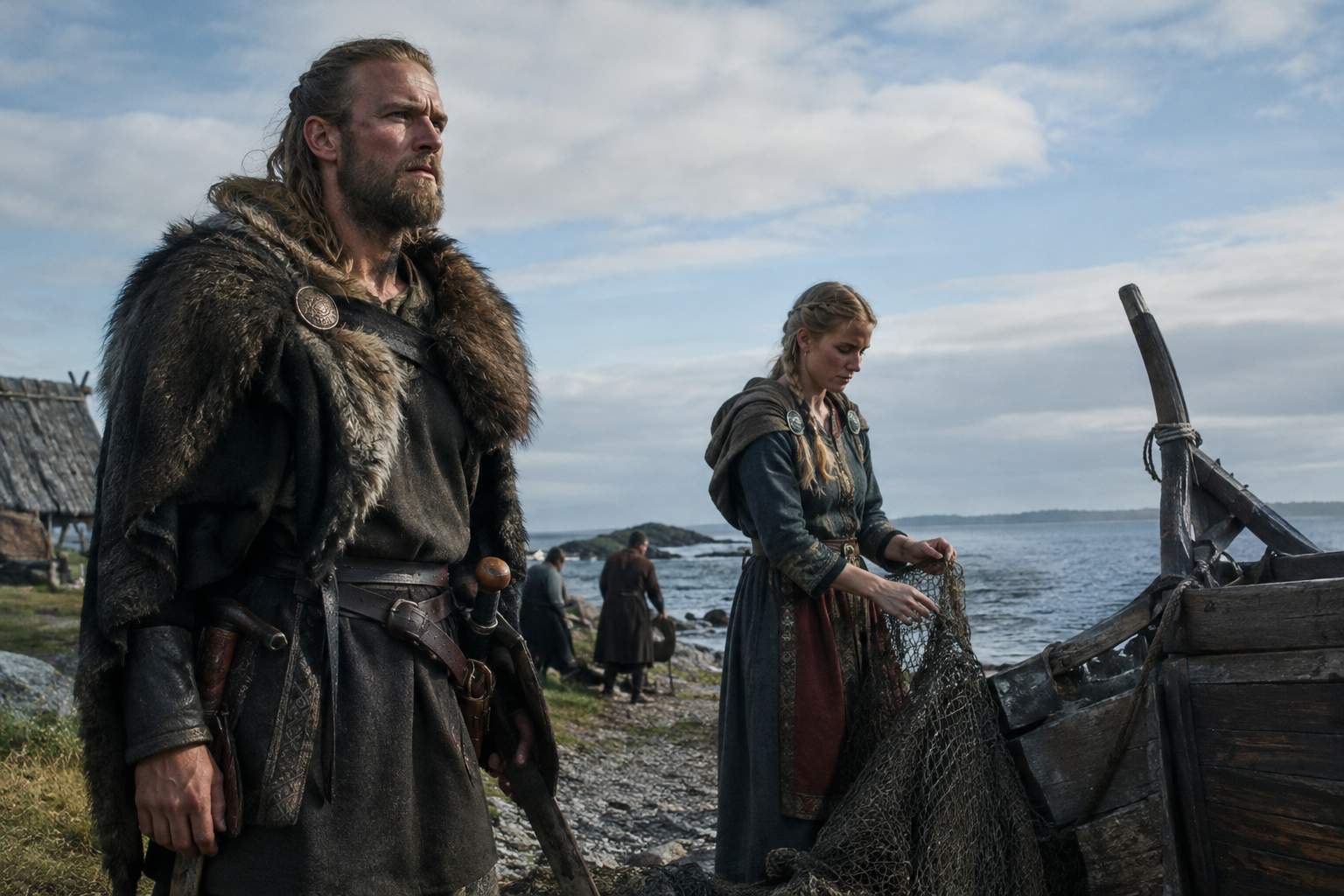
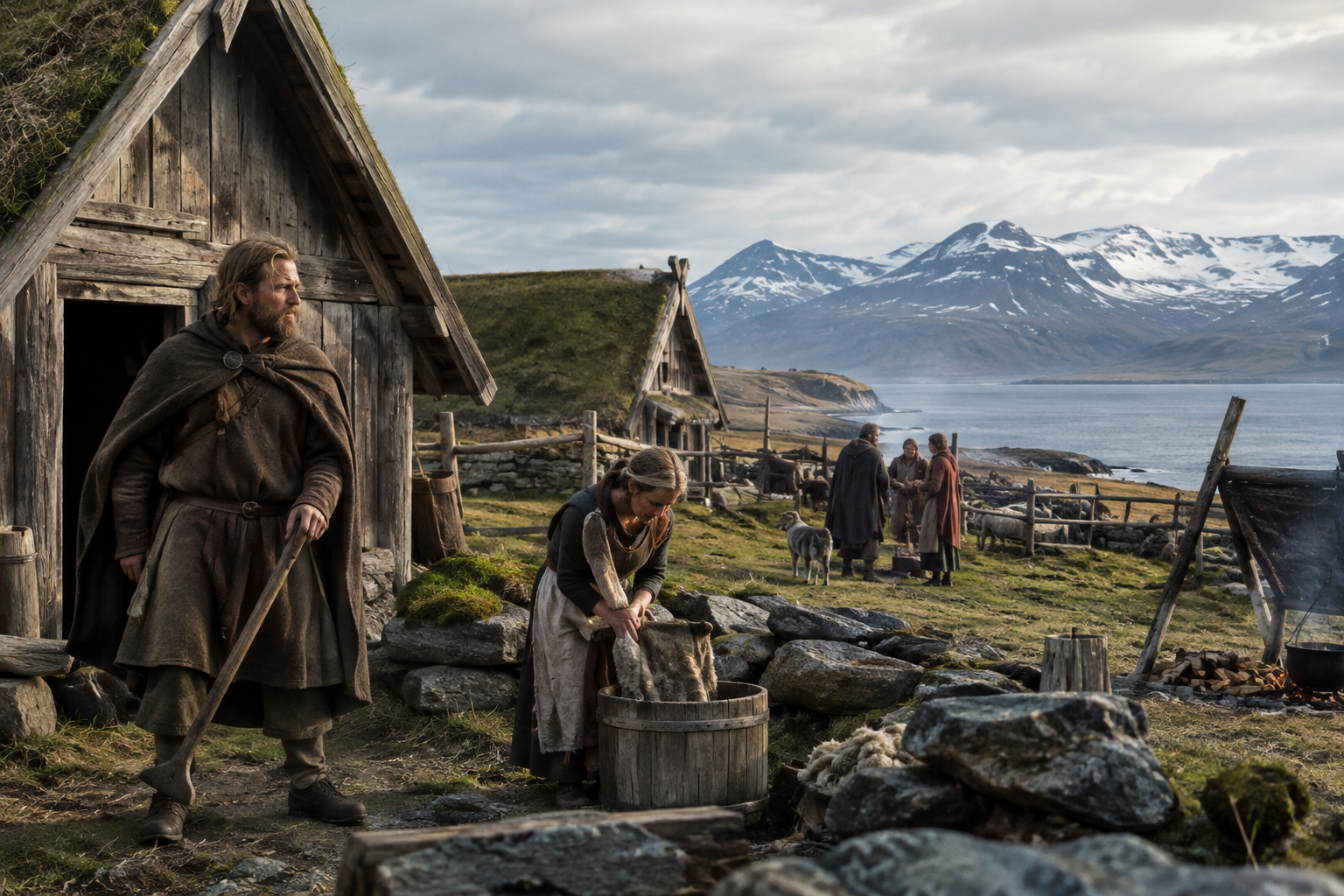
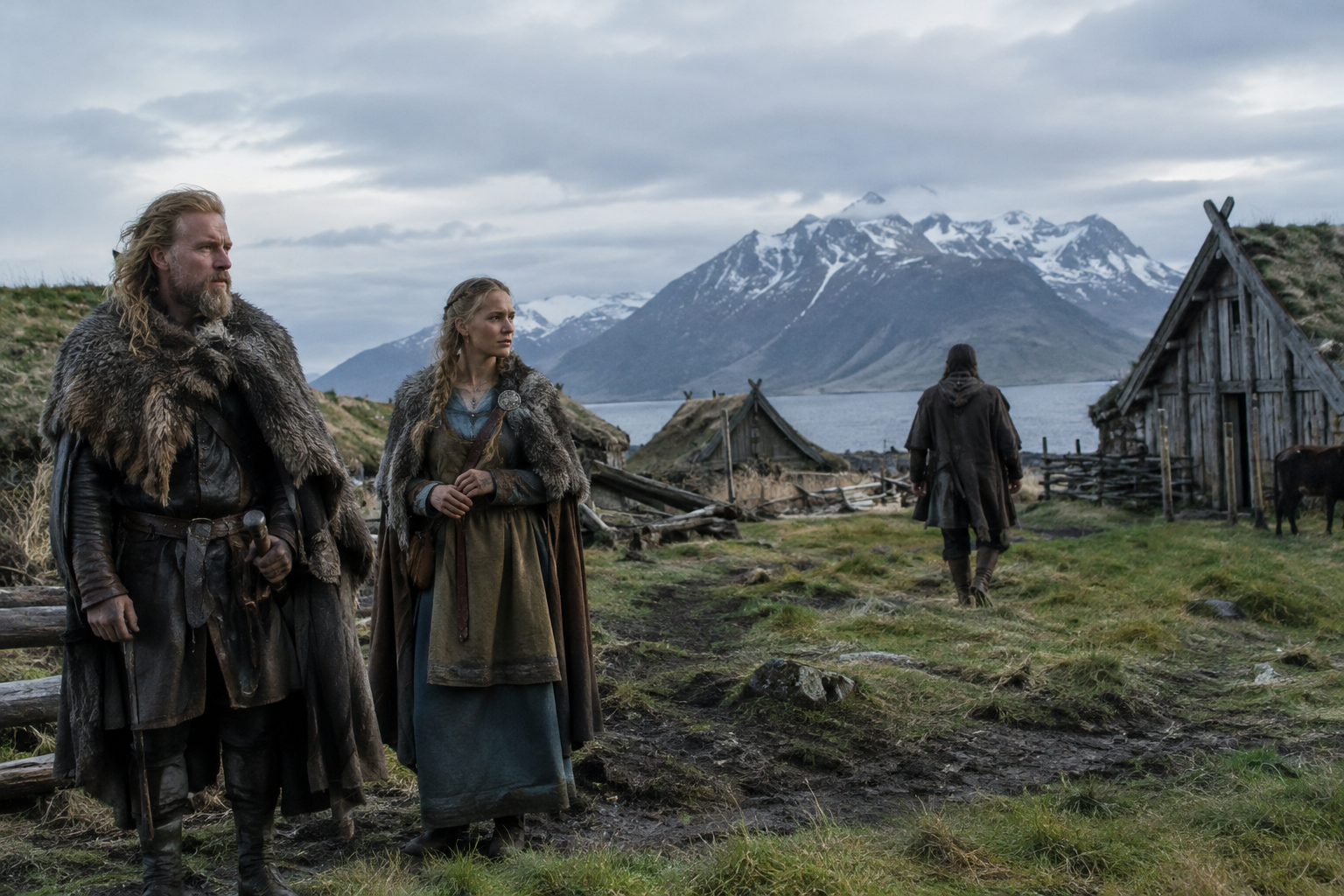
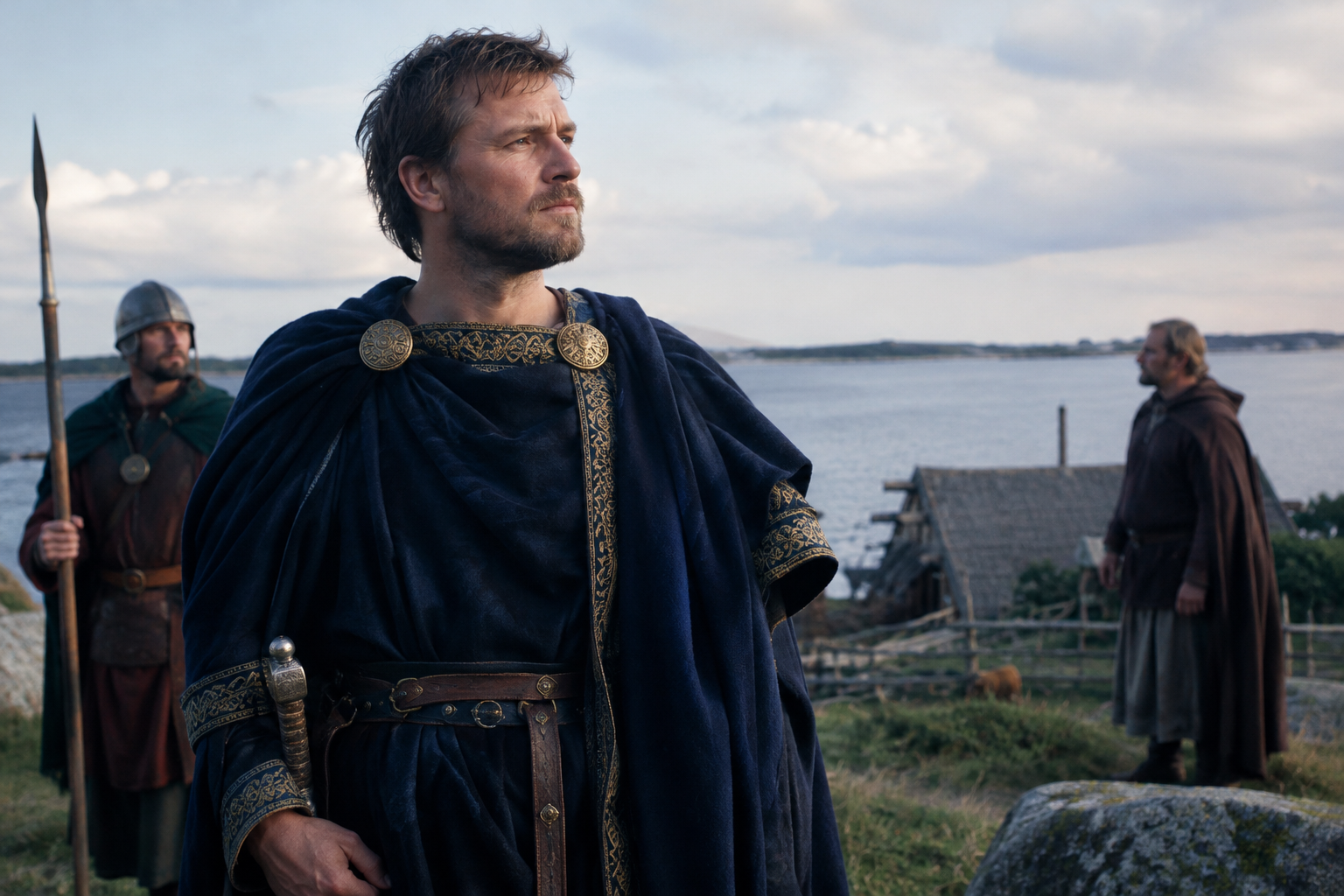
On Oland, the long Swedish island that sits like a stone ship off the Baltic coast, one Viking Age man appears in the ancient DNA record as sample VK345, dated to around AD 950. That is already enough to place him in an unusually vivid historical world: late pagan and early Christian Scandinavia, Baltic trade, seafaring mobility, and a society that was connected not just to nearby coasts but to river routes reaching deep into eastern Europe.
His reported Y-DNA line is R1b1a1b1a1a2c1b2a1a1, a very specific branch within the much larger R1b family. In other words, we are not looking at "all R1b men" in some sweeping sense, but at one narrow paternal line carried by one documented Viking Age individual from Oland. Y-DNA tracks a direct male line only, not a person's whole ancestry, but even a single line can tell us something valuable when it turns up in a well-dated archaeological setting.
Oland was no backwater. In the late first millennium AD it stood close to major Baltic sailing lanes, with Scandinavia on one side and routes toward the eastern Baltic and beyond on the other. A man buried there around AD 950 lived in a period when Swedish-linked Viking activity was especially tied to exchange, raiding, and settlement across the Baltic world.
That makes VK345 interesting for two reasons at once. First, the island setting gives us a concrete regional anchor for this paternal lineage. Second, the date places the sample in a century when Scandinavian societies were visibly changing: political power was hardening, trade networks were expanding, and local communities were increasingly entangled with wider currents reaching from Denmark and Norway to the Gulf of Finland, the eastern Baltic, and the river systems of the Rus'.
An ancient DNA study of Viking Age populations, available here as a research preprint, helped establish just how varied these communities could be. Even without claiming more for VK345 than the evidence allows, the broader lesson is clear enough: Viking Age Scandinavia was not a sealed genetic box. People moved, and paternal lines moved with them.
The haplogroup name R1b1a1b1a1a2c1b2a1a1 is a deep address on the Y-chromosome tree. That matters because broad parent labels can be misleading. R1b as a whole is spread widely across western Eurasia and has a very long history; a narrow branch such as this one belongs to a much more specific paternal thread, and it should not simply inherit every grand claim ever made about R1b in general.
So the responsible reading is a modest one. We can say that this paternal line is represented by a man on Viking Age Oland around AD 950. We can also say that its presence fits a Scandinavian world shaped by movement across the Baltic. What we cannot do, from this evidence alone, is turn VK345 into the founder of a people, the marker of a kingdom, or proof of a single ethnic identity.
That caution is not dull; it is actually where the history gets sharper. Ancient DNA works best when it is tied to real places and real dates. Here, the place is Oland, the date is the Viking Age, and the lineage becomes part of a landscape of island communities, shipping routes, and changing political worlds.
If this sample had turned up almost anywhere in Europe, one might be tempted to discuss R1b in very broad continental terms. Oland pushes the story in a more interesting direction. Islands are often treated as isolated, yet in archaeology they are just as often hubs. In the Baltic, coastlines and islands were connectors. They linked farms to markets, elites to followers, and local burial grounds to remarkably long chains of contact.
That is why a single paternal lineage on Oland can matter historically. It is not because one Y-chromosome defines the island. It matters because the island sat inside a maritime system where ancestry, language, alliances, and objects were constantly crossing the water. The Viking Age was not only an age of famous raids; it was also an age of ordinary and repeated movement.
Baltic connections in early medieval Finland
Seen in that light, VK345 belongs to the same bigger historical conversation as other Scandinavian and Baltic ancient DNA finds: who was local, who had more distant ancestry, and how far maritime society blurred those distinctions. Oland's archaeology has long shown the island's importance across many periods, and the Viking Age genome record now adds another tool for tracing that importance through people rather than objects alone.
There is another reason this sample deserves attention. Y-DNA is especially useful for asking whether particular male lines persist through time in a region, or whether the picture is one of continual replacement and reshuffling. One man cannot answer that alone, of course, but each securely placed sample improves the map.
For Sweden, that matters because the region's history is layered. Earlier prehistoric Scandinavia saw major shifts associated with foragers, farmers, and later Bronze and Iron Age populations. By the Viking Age, those older processes were long over, but their descendants were living in a world newly opened by trade and expansion. A lineage like R1b1a1b1a1a2c1b2a1a1 on Oland may therefore reflect both deep regional history and more recent social mobility within the Baltic world.
That balance between continuity and movement is one of the recurring themes of northern European archaeogenetics. Studies of medieval and earlier Scandinavian populations repeatedly show that local communities could preserve continuity in some lines while also absorbing newcomers and far-flung contacts.
Post-Viking Christian burials in Scandinavia
There is a tendency, when faced with a long haplogroup label, to think that the value lies in technical precision alone. But the real force of ancient DNA comes from context. VK345 is not interesting because the haplogroup string is long. He is interesting because that lineage appears in a known place, in the Viking Age, at a moment when the Baltic was one of Europe's most active contact zones.
That lets us say something quite concrete. This branch was present in the male population of Viking Age Oland, in a setting tied to Swedish and Baltic networks. For someone researching the same paternal line today, that does not promise descent from any named warrior, trader, or dynasty. It does, however, place the lineage inside a documented Scandinavian historical landscape rather than in the realm of vague legend.
Viking settlers and archaeology
The most distinctive thing about R1b1a1b1a1a2c1b2a1a1 in this case is not that it can be made to stand for all Vikings, but that it gives us a precise paternal foothold in late Viking Age Sweden. Through VK345 on Oland, the branch enters history in a place defined by ships, exchange, and Baltic-facing horizons. For descendants exploring this line today, that is the useful takeaway: one direct male lineage, firmly tied to a real Scandinavian island community at the end of the first millennium AD.
Comments