Haplogroup I1a1b1a4a2f1a1a7b
– 5 min read


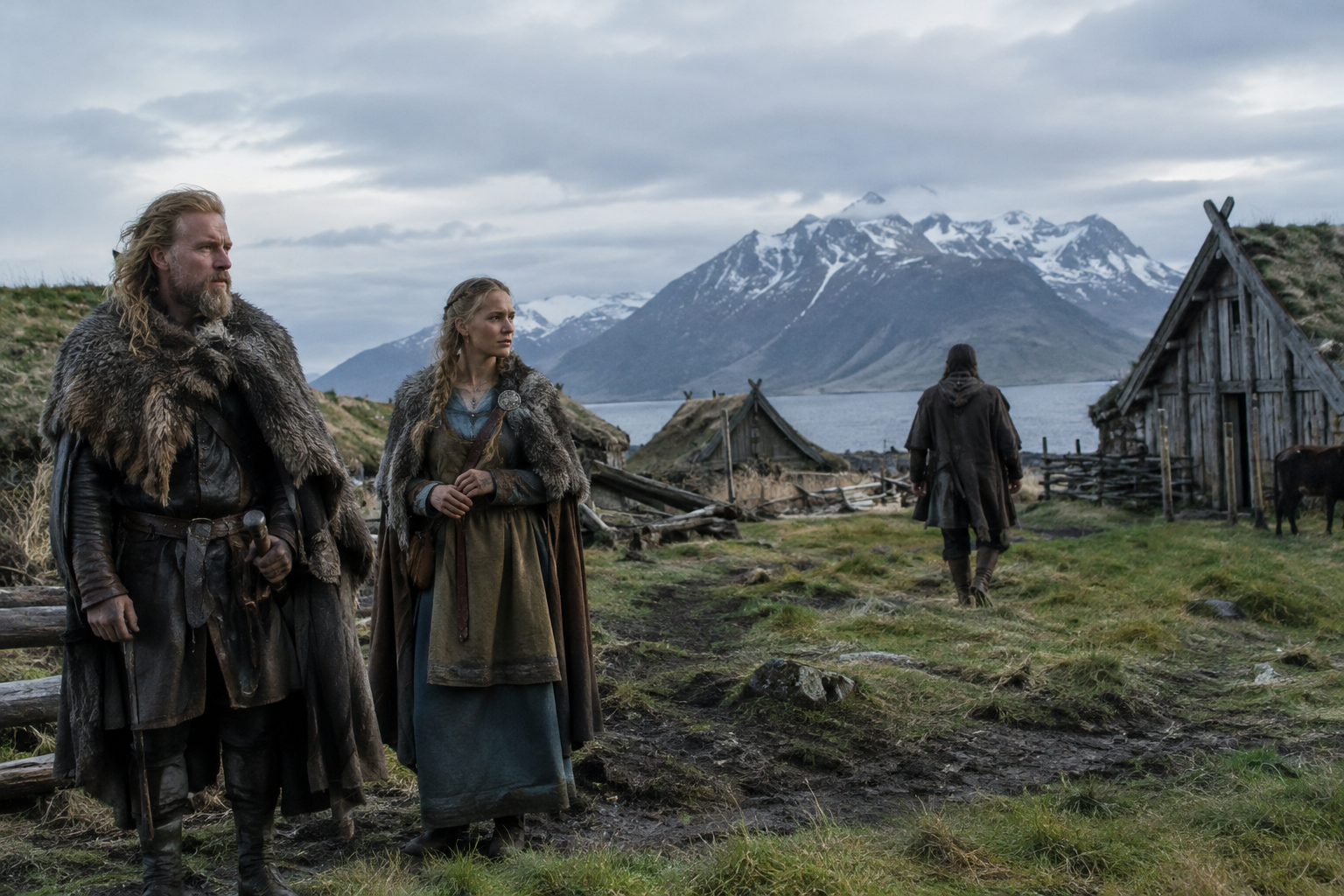
At Hofstadir in Iceland, one excavated man from about AD 1050, identified as VK98, gives this very narrow Y-chromosome branch a firm archaeological foothold. The haplogroup in question here, I1a1b1a4a2f1a1a7b, is an extremely specific twig on the broader I1 tree, and that matters because Iceland in the Viking Age was not an abstract "North Atlantic world" but a real settlement society formed by migration, household building, conversion, and local continuity.
That single burial does not tell us everything about the branch. But it does place it, quite concretely, in Viking Age Iceland at the moment when the island had already been settled for generations and was moving through one of the most important cultural changes in its history: the transition from a pagan-age settler world into a Christian medieval society. Y-DNA tracks one direct paternal line only, not a person's whole ancestry, yet even one securely placed male can anchor a lineage in time and place in a way family legend rarely can.
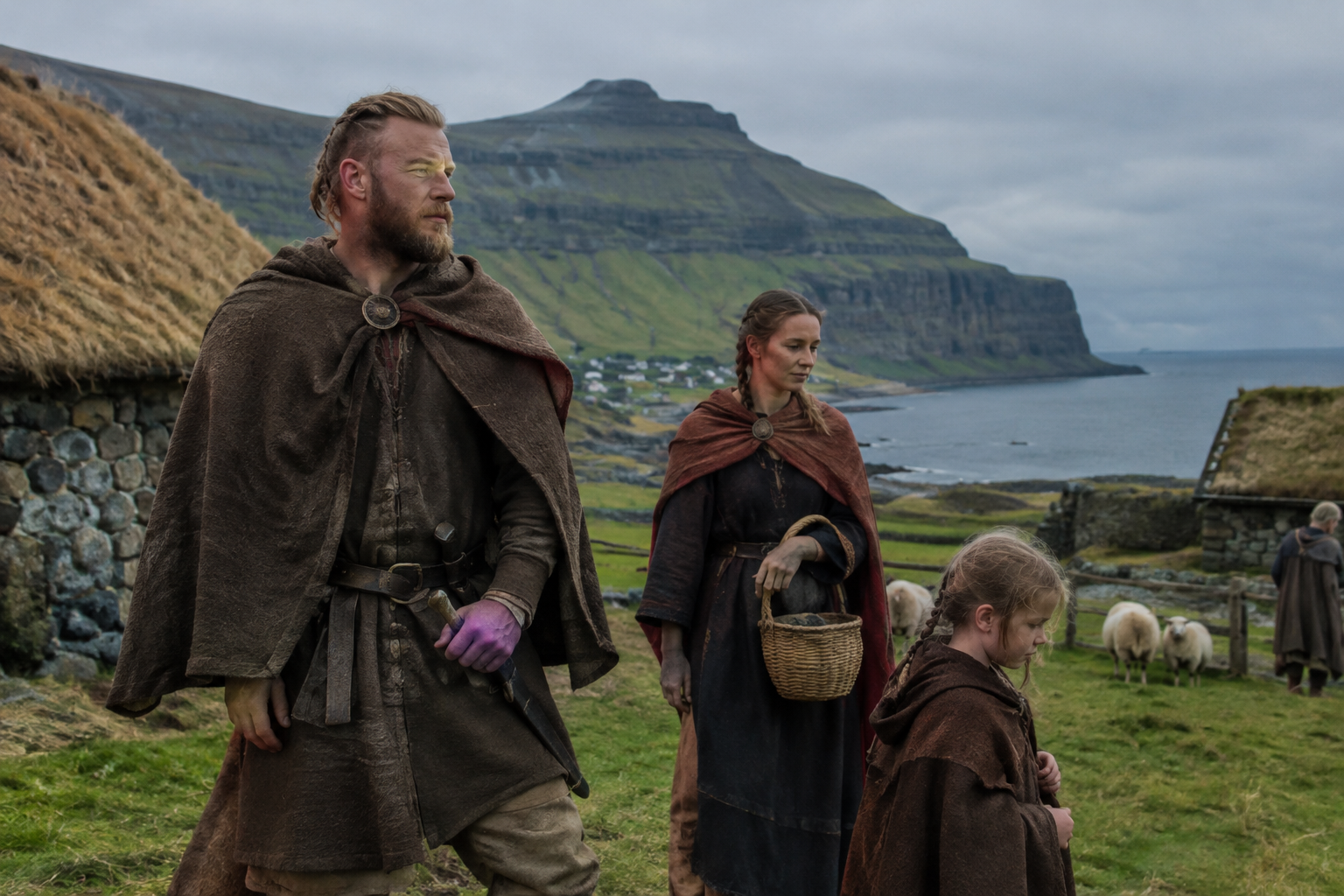
Hofstadir is one of the best-known Viking Age sites in Iceland, and that is why VK98 is more interesting than a bare sample label might suggest. The site belongs to the period when Iceland was no longer a frontier of first arrival, but a lived-in landscape of farms, chieftaincies, churches, and family memory. By around AD 1050, people buried there stood only a few generations away from the age described in the sagas, yet they were already part of a recognizably medieval North Atlantic community.
For a lineage like I1a1b1a4a2f1a1a7b, this context is useful because broader haplogroup I1 is strongly associated with northern Europe, especially Scandinavian paternal history. Still, we must be careful: that does not mean every tiny downstream branch had the same spread, the same age, or the same social story. What VK98 shows is not "all of I1 in the Viking world," but one late, fine-grained paternal line present in Iceland during the later Viking Age.
A genetic study of Viking Age populations, circulated at https://www.biorxiv.org/content/10.1101/703405v1, helped make exactly this kind of question newly visible: not just where broad ancestry clusters lay, but how individual burials across the Viking diaspora could preserve much narrower paternal histories.
The long name I1a1b1a4a2f1a1a7b signals a lineage defined far downstream from its better-known parent haplogroup I1. In practical terms, that means we are not dealing with a vast prehistoric umbrella, but with a lineage that represents many generations of branching within northern European male lines. The deeper one goes into such naming, the more tempting it becomes to tell overconfident stories. Archaeology is the antidote to that temptation.
With VK98, the defensible claim is modest but important: a man associated with this branch, or with a classification reported under it, was living and buried in Iceland around the middle of the 11th century. That makes the branch relevant to the settlement history of the North Atlantic and to the later phases of Viking mobility, when movement was no longer only about raiding or first colonization, but also about marriage, inheritance, church organization, and regional integration.
There is also a useful historical point here. By AD 1050, Iceland had already accepted Christianity at the assembly a half-century earlier, and its society was increasingly tied into Norwegian, British-Irish, and wider European networks. A paternal lineage found there might ultimately reflect Scandinavian roots, but the man who carried it belonged to a community already shaped by several generations of mixing and adaptation in a new island environment.
Iceland is unusually revealing because it sits at the end of a migration chain we can partly reconstruct from archaeology, history, and genetics. Settlers reached the island mainly from Scandinavia, especially western Norway, but they did not come alone or from one simple source. The colonization process involved people with different backgrounds drawn from across the Norse world, including the British Isles.
That broader story makes a lineage like I1a1b1a4a2f1a1a7b especially interesting. In mainland Scandinavia, a narrow Y-branch can disappear into the noise of a very large population history. In Iceland, by contrast, later demographic bottlenecks and the island's unusually rich historical record can preserve lineages in a way that sharpens their visibility. One excavated male line from Hofstadir cannot stand for all Icelandic founders, but it reminds us that the settlement of Iceland was carried by specific families and paternal lines, not just by anonymous "Vikings."
This is where archaeology improves genetics. A haplogroup on its own can suggest connections; a burial at a dated Icelandic site places a real person into a known historical landscape. Hofstadir is not merely a dot on a map. It belongs to the world of longhouses, church-building, legal assemblies, and remembered ancestry that made Iceland one of medieval Europe's most literate frontier societies.
Readers often imagine Viking Age DNA as evidence for constant motion alone, as if every Scandinavian-linked lineage must reflect seaborne adventure in the dramatic sense. Yet VK98 belongs to a later phase, when expansion had already produced settled communities from the North Atlantic islands to the Irish Sea and beyond. By the 11th century, continuity mattered as much as movement.
That makes this haplogroup a good example of how ancient DNA can quietly shift the emphasis of history. A lineage found in Viking Age Iceland is not only evidence of migration; it is also evidence of establishment. Someone carrying this paternal branch was part of a society rooted enough to leave formal burials in a settled landscape and late enough to belong to a world changing under Christian influence.
The linguistic backdrop is relevant too. The spread of Norse speech across the North Atlantic did not happen separately from the people who carried families, farming practices, law, and memory into these islands. Genetics cannot by itself map language, but studies connecting ancient genomics with the expansion of Germanic-speaking populations offer an important wider frame for how such paternal lines came to be distributed across the north.
Germanic languages and genomics
There is a pleasing discipline in an article built around a single ancient man. Modern Y-DNA discussions often balloon into maps of continents and millennia; the evidence here insists on scale. VK98 is one individual from one Icelandic site around AD 1050. That is not a weakness. It is exactly how responsible archaeogenetics begins.
From that starting point, the wider interpretation becomes clearer. The broader I1 background places the lineage in a northern European paternal sphere, while the very specific subclade name reminds us that lineages continue to divide over time within that sphere. What the archaeological setting contributes is a securely medieval Scandinavian-world context, and specifically an Icelandic one, rather than a vague claim about "Viking blood."
For people researching their own paternal ancestry, this is often the most valuable lesson. A close or matching branch does not make anyone the descendant of VK98 himself, nor does it assign a fixed ethnic identity. It does something more grounded: it places part of a paternal story within the society that grew out of Norse settlement in Iceland during the later Viking Age.
The most distinctive thing about I1a1b1a4a2f1a1a7b in the present evidence is not grandeur but precision. It has, through VK98, a real historical address: Hofstadir, Iceland, around AD 1050. That ties this paternal line to the lived world of late Viking Age settlement, at the point where colonization had become community and Scandinavian expansion had become local history.
For descendants exploring this branch today, that is a solid and worthwhile anchor. It points toward the North Atlantic Scandinavian world, not as myth, but as archaeology: one excavated man, one medieval island society, and one paternal line still legible across nearly a thousand years.
Comments