Haplogroup G2a2b2a1a1c1a2a1a
– 5 min read


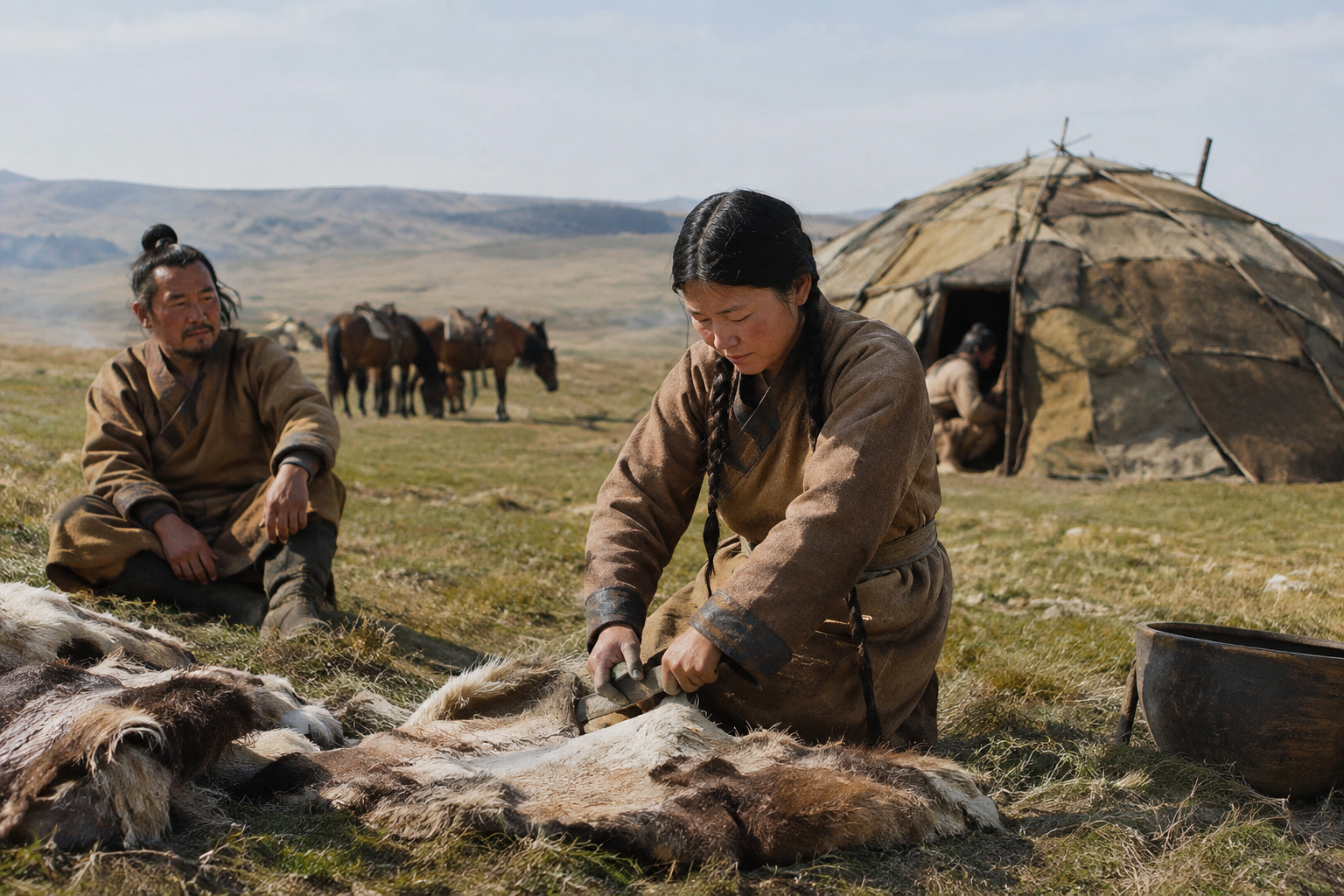
At Ulaanzuukh in eastern Mongolia, one Middle Bronze Age man, sample BUL002, offers a surprisingly specific glimpse into paternal ancestry on the steppe around 1000 BC. He is reported in connection with the Y-DNA lineage G2a2b2a1a1c1a2a1a, a very narrow branch of a much wider haplogroup better known from far older and often very different archaeological settings across Eurasia.
That contrast is what makes BUL002 interesting. Haplogroup G, in broad terms, has deep roots in western and central Eurasian prehistory, yet here we find a highly derived branch associated with a man from Bronze Age eastern Mongolia. Y-DNA tracks only one direct paternal line, not a person's whole ancestry, but even so, this is exactly the sort of finding that reminds us how mobile and entangled ancient populations could be.
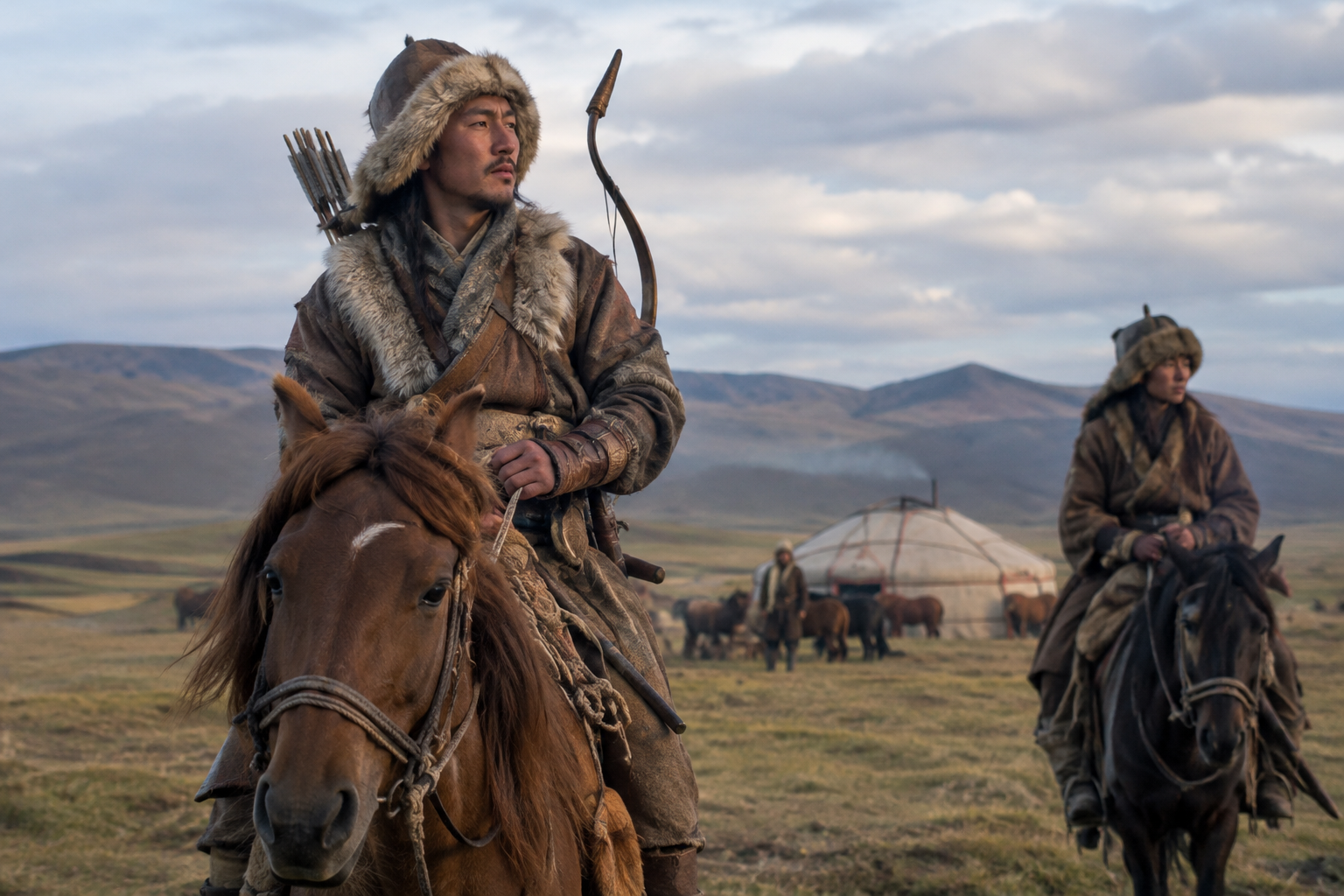
The name Ulaanzuukh belongs to a landscape that sat within one of Eurasia's great contact zones. Eastern Mongolia was never an isolated cul-de-sac. It was part of a broad belt of grasslands, seasonal movement, exchange, and shifting communities linking Siberia, the Altai, northern China, and the wider steppe. By the Bronze Age, people here were living in a world shaped by herding, regional interaction, and long-distance cultural transmission.
In that setting, BUL002 matters because he pins this paternal branch to a real place and period rather than to an abstract phylogenetic tree. We are not dealing with a legendary founder or a later dynasty claiming antiquity, but with one excavated ancient individual. The evidence is modest in quantity, yet quite strong in kind: a dated man from eastern Mongolia tied to a specific Y-chromosome line.
A broader ancient DNA investigation of the Mongolian steppe helped frame how variable these Bronze Age populations could be, and why single paternal lineages sometimes appear far from where readers might expect them. For that regional background, see this research supplementary material, which is associated with the steppe ancient DNA record discussed here.
The key point is not that all men in Bronze Age Mongolia belonged to haplogroup G, because they plainly did not. Steppe populations were genetically mixed, and their paternal lineages were varied. What stands out is that G2a2b2a1a1c1a2a1a is such a fine-grained designation. When a branch this specific appears in an ancient burial from the eastern steppe, it hints at earlier movements and connections that may have stretched across enormous distances before the man himself ever lived.
One must be careful here. It would be wrong to take the long-known history of the wider haplogroup G and simply project all of it onto this exact subclade. A parent haplogroup may have a broad prehistoric distribution, while a much narrower descendant branch can have a later and more localized history. So the responsible reading is not "this proves a direct migration from one famous ancient culture to Ulaanzuukh," but rather that eastern Mongolia by the Middle Bronze Age could include paternal lines with deep western Eurasian associations.
That matters archaeologically because the Bronze Age steppe was full of such surprises. Mobility did not always mean mass replacement; sometimes it meant the steady arrival, absorption, and persistence of smaller lines within wider populations. A single Y-line can survive through generations even when language, material culture, and most other ancestry components shift around it.
It is tempting to imagine eastern Mongolia as the far end of the map, but Bronze Age evidence increasingly shows the opposite. The steppe connected communities rather than separating them. Herding lifeways, exchange networks, and repeated movement across open terrain created conditions in which people, animals, technologies, and genes could travel great distances over many centuries.
That is why a lineage like G2a2b2a1a1c1a2a1a can appear there without requiring a melodramatic one-off migration story. The more plausible historical picture is cumulative contact: generations of marriages, relocations, alliances, and local continuity within a landscape that was never still. Ancient DNA has been particularly good at puncturing the old habit of treating archaeological cultures as sealed biological containers.
Steppe and North China Interactions
This is also where genetics and archaeology have to be kept in proper proportion. A Y-haplogroup is not a tribe, not a language, and not a complete identity. BUL002 may carry a paternal line with one sort of deeper history, while his total ancestry, community ties, and cultural world were shaped by the eastern Mongolian Bronze Age environment in which he actually lived.
The fascination of BUL002 lies partly in how he complicates simple east-west maps. Ancient Eurasia was not divided into neat blocks in which one lineage belonged permanently to one side and another lineage to the other. Instead, paternal branches could travel far beyond the regions where they are most familiar to modern hobbyists.
That lesson appears again and again in steppe archaeology. Communities that look local in burial practice or economy can still contain lineages with distant histories. Equally, men carrying different Y-lines could be living side by side within the same broad cultural horizon. The Bronze Age was not only a time of expansion; it was also a time of mixing, retention, and reassembly.
Readers who want a broader sense of how ancient DNA keeps revealing movement and diversity across northern Eurasia may also find this useful:
For eastern Asia more specifically, one of the growing themes in recent research is that paternal history is often more complex than older textbook narratives allowed. Some lineages expanded dramatically; others persisted quietly in scattered places; still others show up in ancient individuals well outside their expected modern distributions.
If your own paternal line falls under G2a2b2a1a1c1a2a1a or a nearby branch, BUL002 does not make you "Mongolian" in any simple sense, nor does it place your family in a single Bronze Age migration. What it does offer is something subtler and, in its way, more interesting: proof that this paternal line, or a reported association close to it, was present in eastern Mongolia by the Middle Bronze Age.
That makes the branch historically real in a steppe context. It suggests that the ancestry behind this lineage was already part of the wide human traffic of Bronze Age Eurasia, where local communities could include paternal lines with deep and geographically tangled backstories. For family historians, that is often the most valuable sort of ancient DNA result: not a tidy legend, but a firmly dated sign that your direct male line participated in a far larger prehistoric world.
Ancient East Asian Y-Chromosomes
BUL002 from Ulaanzuukh is a small piece of evidence, but a vivid one. He anchors G2a2b2a1a1c1a2a1a in Bronze Age eastern Mongolia and reminds us that paternal lineages could travel, persist, and resurface in places that upset our tidy categories. In other words, the real history of this haplogroup is not a straight line on a map, but a story of survival within the busy human world of the Eurasian steppe.
Comments