Haplogroup N1a2b2a1c
– 5 min read


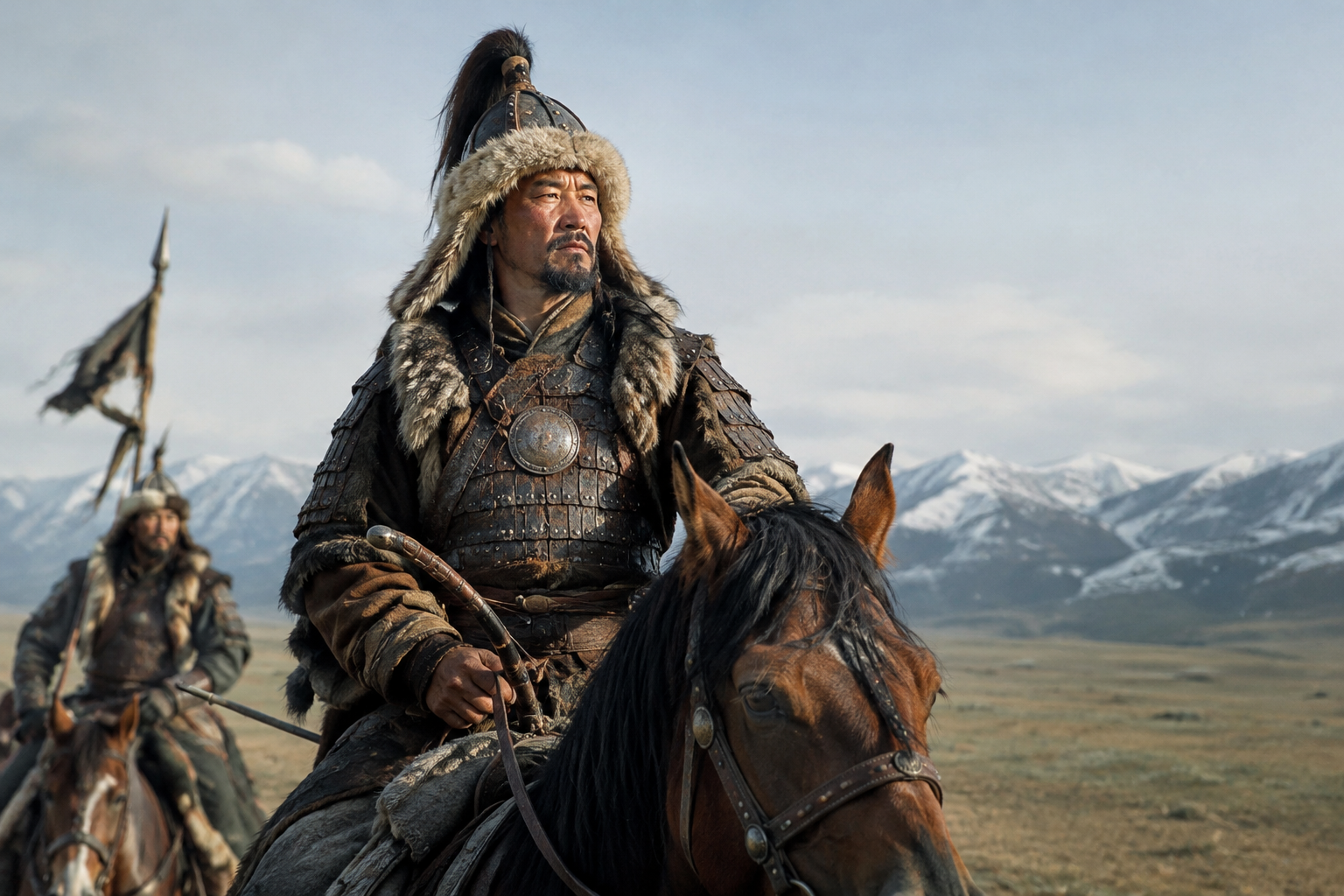
At Burgaldain Khundii in Mongolia, one late medieval burial stands out not because it lets us tell a heroic tale, but because it gives us something rarer and more useful: a firm point of contact between a living paternal lineage and the world of the Mongol Empire. The individual known as BRG005, dated to around AD 1300 and described as a Late Medieval Mongol Warrior, has been associated here with the Y-DNA haplogroup N1a2b2a1c.
That matters because N1a2b2a1c is not a grand label for an entire people. It is a very specific paternal branch, one small twig on the much broader Y-chromosome tree. Y-DNA follows a direct male line only, so it does not sum up a person's whole ancestry, language, rank, or ethnic identity. But when a branch like this appears in a documented medieval burial on the Mongolian steppe, it gives the lineage a historical setting that is both concrete and unusually evocative.
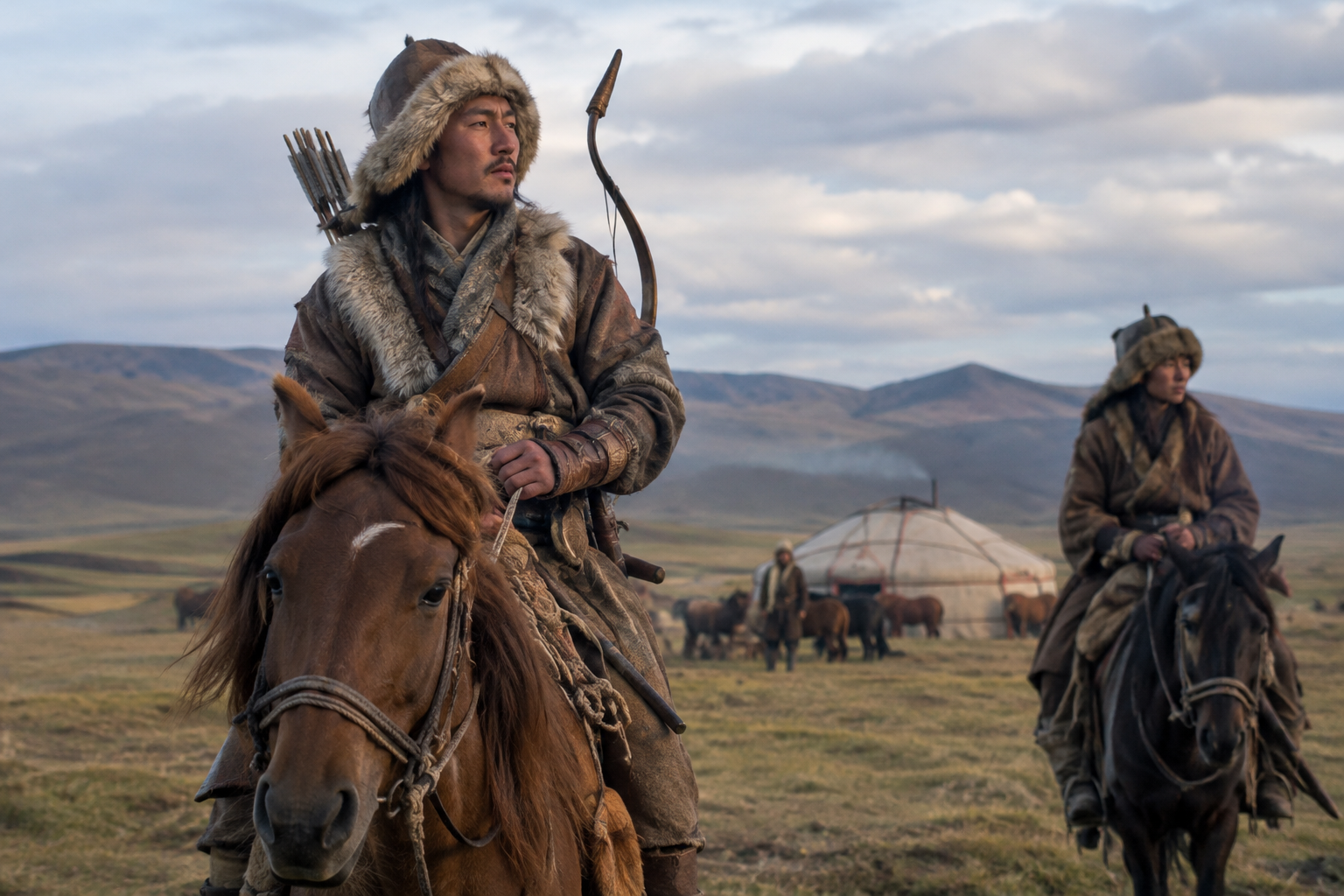
The site name alone places us in the steppe zone of Mongolia, and the date places BRG005 in the centuries after Chinggis Khan, when Mongol political power had remade much of Eurasia. The label "warrior" tells us how archaeologists or database compilers understood the burial context, but we should be careful not to embroider that into a saga of campaigns, horse trappings, or battlefield death unless the excavation report actually says so. What we can say is simpler and stronger: this was a man buried in a late medieval Mongol setting, and his paternal line has been connected with N1a2b2a1c.
Even one such sample is important. Ancient DNA articles often deal in sweeping maps and colored clusters, but history is built from individuals in graves, not from abstractions. Here the lineage is anchored to a real person, from a real site, at a real moment in the history of Inner Asia.
A broader MyTrueAncestry discussion of steppe population history is worth reading alongside this case:
The wider haplogroup N is one of the important paternal lineages of northern Eurasia, with branches found across Siberia, parts of East Asia, and among several Uralic-speaking and other northern populations farther west. But that broad history should not simply be pasted onto N1a2b2a1c as if every sub-branch shared the same route and date. The narrower branch in this article needs to be treated on its own evidence.
What the Burgaldain Khundii sample suggests, cautiously, is that one line within this wider northern Eurasian paternal world was present among people living in the orbit of the medieval Mongol steppe. That is historically plausible and archaeologically useful. It does not mean that everyone carrying N1a2b2a1c descends from a Mongol warrior, nor that the branch itself originated in the empire period. Haplogroups are older than the states and confederations through which they later passed.
This distinction may sound fussy, but it is exactly the sort of fussiness ancient DNA needs. If we are not careful, a very precise subclade gets flattened into a vague story about "Mongol blood" or "steppe ancestry", and both the genetics and the history become poorer.
By around AD 1300, Mongolia sat at the center of an immense imperial network. People, animals, goods, technologies, and diseases moved across astonishing distances. Men buried in Mongol-period cemeteries might have had local steppe roots, more mixed regional backgrounds, or family histories shaped by earlier centuries of movement across Inner Asia. That is one reason a Y-lineage such as N1a2b2a1c is interesting: it belongs to that larger human traffic without explaining all of it.
In other words, BRG005 is best understood not as a mascot for an empire, but as one data point within a highly connected medieval world. His Y-DNA marks a paternal thread; the rest of his ancestry, cultural life, and historical identity would have been more complicated. That complexity is precisely what makes Mongol-period archaeology so compelling. The empire created political unity on a vast scale, while individual burials still preserve the stubborn particularity of place, family, and local custom.
For readers interested in how genetics is reshaping our picture of medieval and earlier East Asia, this related post offers a useful wider frame:
East Asian Y-Chromosome Migrations
There is a tendency to think that one sample is too little to be meaningful. Sometimes that is true. But in ancient DNA, a single securely contextualized burial can matter enormously, especially for a rare or narrowly defined paternal lineage. BRG005 gives N1a2b2a1c a medieval archaeological foothold in Mongolia rather than leaving it floating as a purely modern testing result.
That foothold is especially valuable because medieval Inner Asia was a meeting ground of older steppe populations, eastern forest-zone lineages, and expanding imperial networks. A lineage found there may reflect deep regional continuity, more recent integration into Mongol society, or patterns of male-line survival that only become visible when graves are sampled. At present, with the evidence given here, the responsible answer is not to choose one of those explanations too confidently, but to recognize that all are part of the historical landscape in which this branch appears.
The scientific trail attached to this sample points to ancient DNA research on Inner Asian populations. Even without forcing details the source does not explicitly provide here, that link matters because it places BRG005 within the growing body of archaeogenetic work that is turning Mongolia and the steppe from a land of sweeping historical generalizations into one of named cemeteries, dated individuals, and testable population histories.
One of the perennial difficulties in steppe history is that written labels can be broad, political, and sometimes retrospective. "Mongol", like "Scythian", "Hun", or "Turk" in other periods, can describe a ruling formation, a cultural horizon, or a political allegiance rather than a single biological population. Ancient DNA is useful here precisely because it refuses to collapse all men in one empire into one paternal line.
So the value of N1a2b2a1c is not that it lets us claim a simple essence of Mongol identity. The value is almost the opposite. It shows that when we reach an actual burial, with an actual individual such as BRG005, we are dealing with one lineage among many that helped make up the human fabric of the late medieval steppe.
A related MyTrueAncestry article explores this wider issue from another angle:
If your paternal line belongs to N1a2b2a1c, this evidence gives you something both modest and substantial. Modest, because one medieval burial cannot define the whole branch. Substantial, because it places the lineage in a documented late medieval Mongolian context, tied to BRG005 at Burgaldain Khundii around AD 1300. That is not a mythic origin story, but it is exactly the kind of grounded historical clue that makes ancient DNA so valuable.
The most sensible picture, for now, is of a paternal branch linked to the broader northern Eurasian world and attested in the Mongol steppe during the empire's mature centuries. It is a reminder that family lines often survive great political upheavals quietly, carried not by dynastic chronicles but by ordinary burials and the fragments of DNA they leave behind.
For a broader regional backdrop on ancient population change across northern Eurasia, this is also worth exploring:
Comments