Haplogroup N1a1a2
– 4 min read


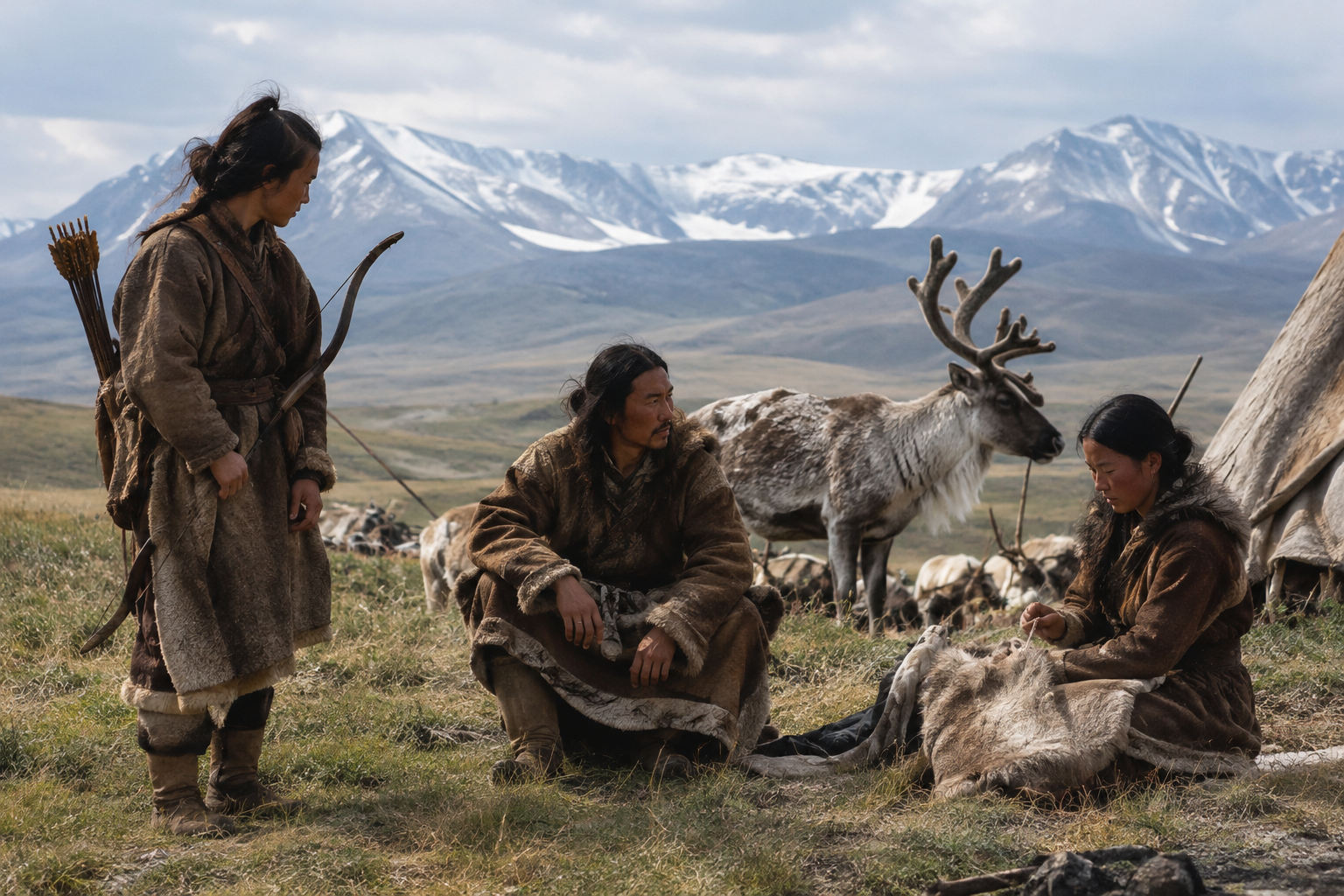
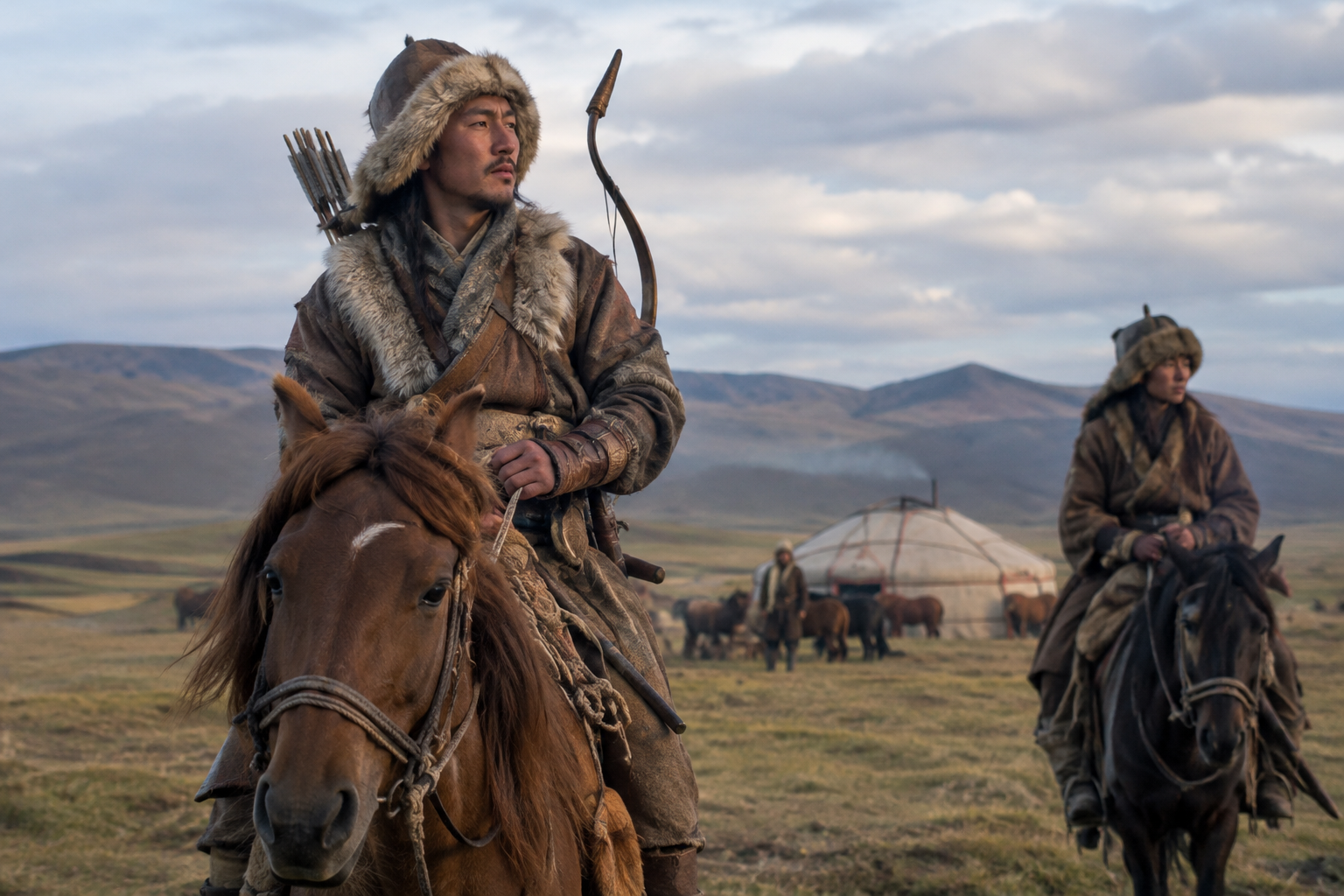
One of the clearest ancient signposts for Y-DNA haplogroup N1a1a2 in this set is a man identified as BER002, dated to around 1000 BC in the Altai-Sayan Mongolia region. That is already enough to make him historically interesting. The Altai-Sayan zone sits at one of Eurasia's great crossroads, where steppe herders, mountain communities, and eastern forest-linked populations met, traded, moved, and sometimes merged.
For anyone exploring this paternal branch today, BER002 matters because Y-DNA follows a direct male line: father to son to grandson, one thread among many in a person's ancestry. In this case, the thread appears in a Bronze Age to early Iron Age world on the eastern steppe, in a landscape that would later become central to some of the biggest mobility stories in Eurasian history.
The date attached to BER002 places him in a period of transition rather than stillness. Around 1000 BC, the Altai-Sayan and adjacent Mongolian regions were not an isolated corner of the map. They were part of a broad zone where pastoral lifeways, seasonal movement, contact across long distances, and changing cultural traditions shaped everyday life. A paternal lineage found here cannot be read as the signature of one tribe, one language, or one political identity. But it does anchor N1a1a2 in a real archaeological landscape.
That landscape matters because the Altai-Sayan region has repeatedly appeared in ancient DNA work as a meeting ground between populations with different eastern and western Eurasian ancestry profiles. A study connected with ancient populations of the Mongolian steppe and surrounding regions has helped show just how dynamic this zone was, even when archaeology once seemed to divide communities into neat cultural boxes. Where the evidence is strong, genetics keeps reminding us that frontiers on maps are often much messier on the ground.
N1a1a2 is a branch within the broader Y-DNA haplogroup N, a major paternal lineage with deep importance across northern Eurasia. That larger family has often been discussed in connection with populations stretching from Siberia into parts of northeastern Europe and the forest-steppe belt. But the caution is important: the history of the broad haplogroup N is not automatically the history of every one of its smaller branches.
So the most careful reading here is a modest one. BER002 shows that a lineage reported as N1a1a2, or associated with that branch in classification, was present in the Altai-Sayan-Mongolia sphere by about 1000 BC. That does not mean every later carrier came from exactly this place, nor that one sample defines the entire origin of the branch. What it does provide is a valuable ancient waypoint in a region long suspected to be important in the wider history of northern Eurasian paternal lines.
The Altai and Sayan mountains are not simply scenic backdrop. Historically, they form a hinge between the Siberian forest world, the Inner Asian steppe, and routes leading toward the eastern Tianshan and beyond. That geography helps explain why lineages connected with northern and eastern Eurasian history so often appear in this zone. It is a place where mobility was normal, not exceptional.
Ancient DNA has been especially useful here because material culture alone can mislead. Similar burial traditions can be adopted by different populations, while genetically related groups can look archaeologically distinct. In that sense, BER002 is a reminder that paternal lineages may persist through changing cultural labels. A man living around 1000 BC in this region could belong to a community shaped by local continuity, incoming connections, or both.
Research associated with these ancient steppe populations has also encouraged a broader rethink of Inner Asia. Rather than a simple parade of replacements, the picture often looks like repeated mixtures, local survivals, and shifting social networks. That makes a haplogroup like N1a1a2 historically interesting not because it solves the whole story, but because it adds one more fixed point in a very mobile world. One research lead tied to this material can be found here: https://www.biorxiv.org/content/10.1101/2020.03.25.008078v1.supplementary-material.
Because broader haplogroup N has such a strong modern presence in parts of northern Eurasia, it is tempting to tell a very straight-line story: origin here, migration there, modern people everywhere. Real evidence is less accommodating. Different N branches expanded at different times, and some became prominent in regions far from where earlier ancient samples are currently known. The ancient record is still patchy, and every new burial can rearrange the map a little.
That is especially true for a branch as specific as N1a1a2. With only limited ancient examples in view here, the responsible approach is to treat BER002 as evidence of presence, not a universal founding figure. Even so, presence in the Altai-Sayan sphere around 1000 BC is no trivial thing. It places this paternal line within one of the most historically consequential corridors of Eurasia, a region later involved in the formation and movement of pastoral confederations, exchange networks, and populations spreading both eastward and westward.
The significance of BER002 is not that he can be made to stand for every later N1a1a2 carrier. It is that he shows how far back this branch can be traced into an archaeological world we can actually locate in time and space. The eastern steppe was not peripheral to history. It was one of the engines of it.
That matters for family historians because modern Y-DNA results can sometimes feel abstract, a string of letters and numbers detached from lived history. An ancient sample like BER002 restores the human scale. Somewhere in the Altai-Sayan-Mongolia region around 1000 BC, a man carrying this paternal line lived within a society of movement, adaptation, and contact across enormous distances.
On present evidence, N1a1a2 points toward a paternal history tied to the wider northern Eurasian story, with at least one documented ancient appearance in the Altai-Sayan Mongolian world around 1000 BC through sample BER002. That does not assign a single ethnicity, language, or royal pedigree. What it does suggest is that this line belonged to the same broad historical arena that linked Siberian, steppe, and Inner Asian populations long before written chronicles begin to say much about them.
For a modern tester, that is the real value of the ancient evidence. It places your direct paternal line not in myth, but in a specific and archaeologically important region where Eurasian history was being made in motion.
Comments