Haplogroup R1b1a1b1a1a2a1a

– 5 min read


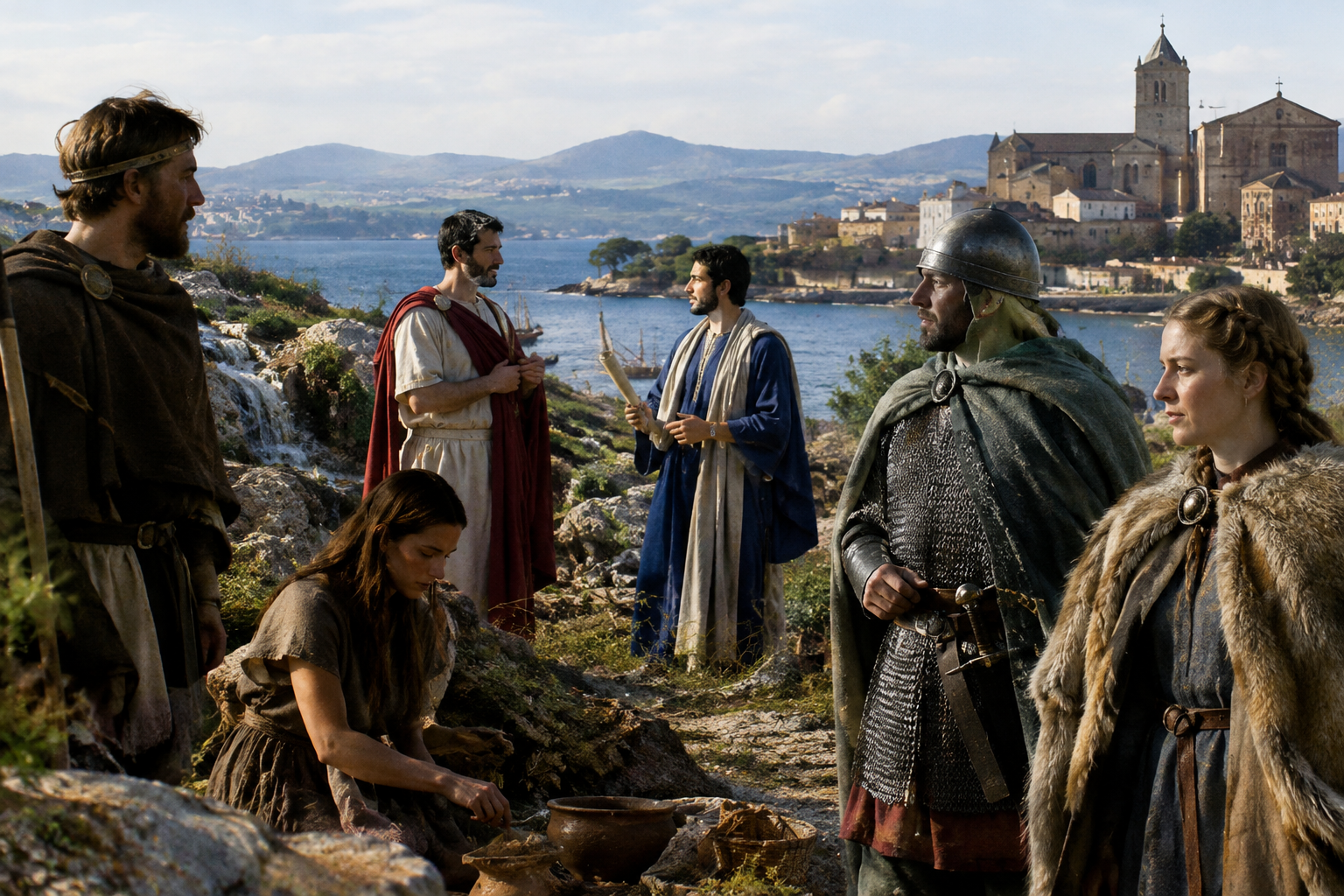
At Cherry Hinton in medieval England, one male dated to about AD 1055, sample ATP_PSN_950, carries the paternal line reported here as R1b1a1b1a1a2a1a. That bare fact is more interesting than it first appears. This is not a haplogroup pinned to one neat people, kingdom, or migration tale; instead, the ancient matches supplied for this branch turn up in very different places, from Bronze Age Iberia to Iron Age Bohemia, Punic Sicily, medieval England, and late medieval Sardinia.
That spread is a useful reminder of what Y-DNA can and cannot do. A Y-chromosome lineage tracks one direct paternal line only, not a whole ancestry or an ethnicity. But when the same branch appears in several well-dated archaeological settings, it can still tell us something important about continuity, movement, and the very mixed worlds in which ancient men lived.
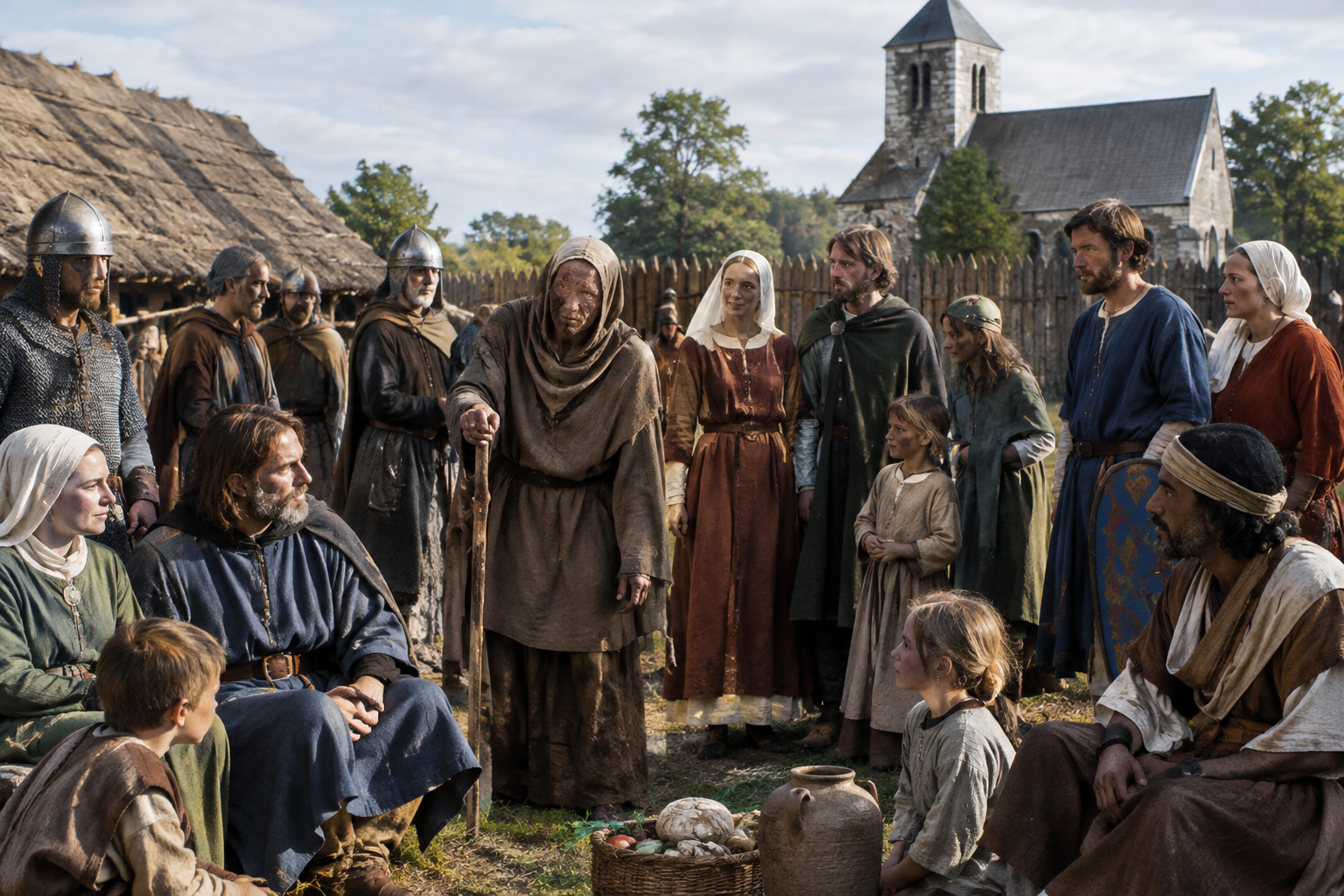
Cherry Hinton, near Cambridge, belongs to one of the best-studied regions in ancient DNA work on early and medieval England. Sample ATP_PSN_950, dated around AD 1055, places this paternal line in an English setting after the main centuries of Anglo-Saxon settlement and before the full social transformation of the high Middle Ages. In other words, this is a lineage present in England not in some legendary deep past alone, but in a documented medieval community.
That matters because English Y-line histories are rarely simple. By the 11th century, eastern England had already absorbed layers of ancestry from earlier Iron Age populations, Roman-period mobility, post-Roman migrants, and Scandinavian influence in some regions. A genetic study of Britain across the Roman and early medieval periods has shown just how varied those population histories could be, even within relatively small areas of the country https://www.nature.com/articles/s41586-021-04287-4. Cherry Hinton fits that broader lesson: a paternal line may endure locally for centuries while the population around it changes repeatedly.
Roman and Early Medieval Britain
So the medieval English evidence does not tell us that R1b1a1b1a1a2a1a is "English" in any exclusive sense. It shows something subtler and historically more plausible: this branch could be part of the paternal landscape of England by the 11th century, within a population shaped by long-term mixing rather than a single founding event.
Two of the most striking samples in this set come from western Sicily in the Carthaginian world: I21859 from the Necropoli Monumentale at Lilybaeum, Marsala, dated about 144 BC, and I21858, dated about 120 BC, from the Carthaginian-era context of Mozia or western Sicily-Lilybaeum. These are not obscure inland burials. They belong to a part of Sicily that sat at the crossroads of Punic, local Sicilian, and wider Mediterranean connections.
Lilybaeum was one of the great Punic strongholds of Sicily, and Mozia before it was a famous Phoenician and Punic center. By the 2nd century BC, this was already a world of merchants, soldiers, settlers, local families, and imperial pressure. A man buried in such a place might have had ancestors from Sicily itself, from North Africa, from Iberia, or from elsewhere around the sea. The site label "outsider" attached to I21859 is especially suggestive, though it should be handled carefully: it points to mobility or non-local ancestry in an archaeological sense, not to a simple ethnic label.
What these Sicilian samples add to the story is not proof of a single origin for the branch, but evidence that men associated with this paternal line were present in one of the most cosmopolitan zones of the ancient Mediterranean. Research on ancient populations of the Italian islands has repeatedly underlined just how mixed those island histories were, especially in periods shaped by seaborne contact and conquest https://www.science.org/doi/10.1126/sciadv.abi7038.
For anyone carrying this haplogroup today, the Punic Sicilian evidence is a warning against tidy myths. Western Mediterranean history was full of movement, and Y-lineages often traveled through trade, war, settlement, and local marriage long before written family names existed.
The oldest sample in this group is ZAP002, dated around 1500 BC from Lorca-Zapeteria Falls in Iberia. That places the branch, or at least a reported association with it, in Bronze Age southeastern Spain. This is a very different setting from medieval England or Punic Sicily: not a port of empire, but a prehistoric Iberian landscape already shaped by major social and demographic changes following the Bronze Age spread of steppe-derived ancestry into western Europe.
Iberia is crucial for understanding many R1b lineages at broad scale, though one must be careful not to collapse a very precise subclade into the entire history of R1b. Still, this sample shows that a paternal line linked here with R1b1a1b1a1a2a1a had reached, or persisted in, Iberia by the mid-2nd millennium BC. That makes the branch archaeologically deep in the west, not merely a product of medieval movement.
The Lorca region also matters because southeastern Iberia was never isolated. Even in prehistory, it connected inland and coastal zones, and later it would be drawn into Phoenician, Carthaginian, Roman, and Islamic worlds. A Bronze Age occurrence here helps explain why later western Mediterranean appearances need not represent fresh arrival every time. Some paternal lines may have had a long local history before new political labels were ever attached to the people carrying them.
Sample I20522, dated around 300 BC from Prague-Jinonice in central Bohemia, adds another piece entirely. Here the branch appears not on an island and not at the Atlantic edge, but in the continental interior of Iron Age central Europe. This is useful because it breaks any temptation to see the lineage as purely insular, purely Iberian, or purely Mediterranean.
Central Bohemia in the 3rd century BC stood within a dynamic Iron Age world often associated archaeologically with Late Hallstatt and La Tene horizons. That does not mean we can assign this individual to a named tribe from classical texts, nor should we pretend one burial defines the region. But the Prague evidence does show that this paternal line belonged to the human background of Iron Age central Europe as well.
And that is really the pattern across these samples: not a single imperial expansion, not a single "Celtic" or "Phoenician" signature, but recurrence in several connected European zones. That recurrence is precisely what makes the lineage historically interesting. It suggests a branch able to persist through shifting languages, political systems, and burial customs.
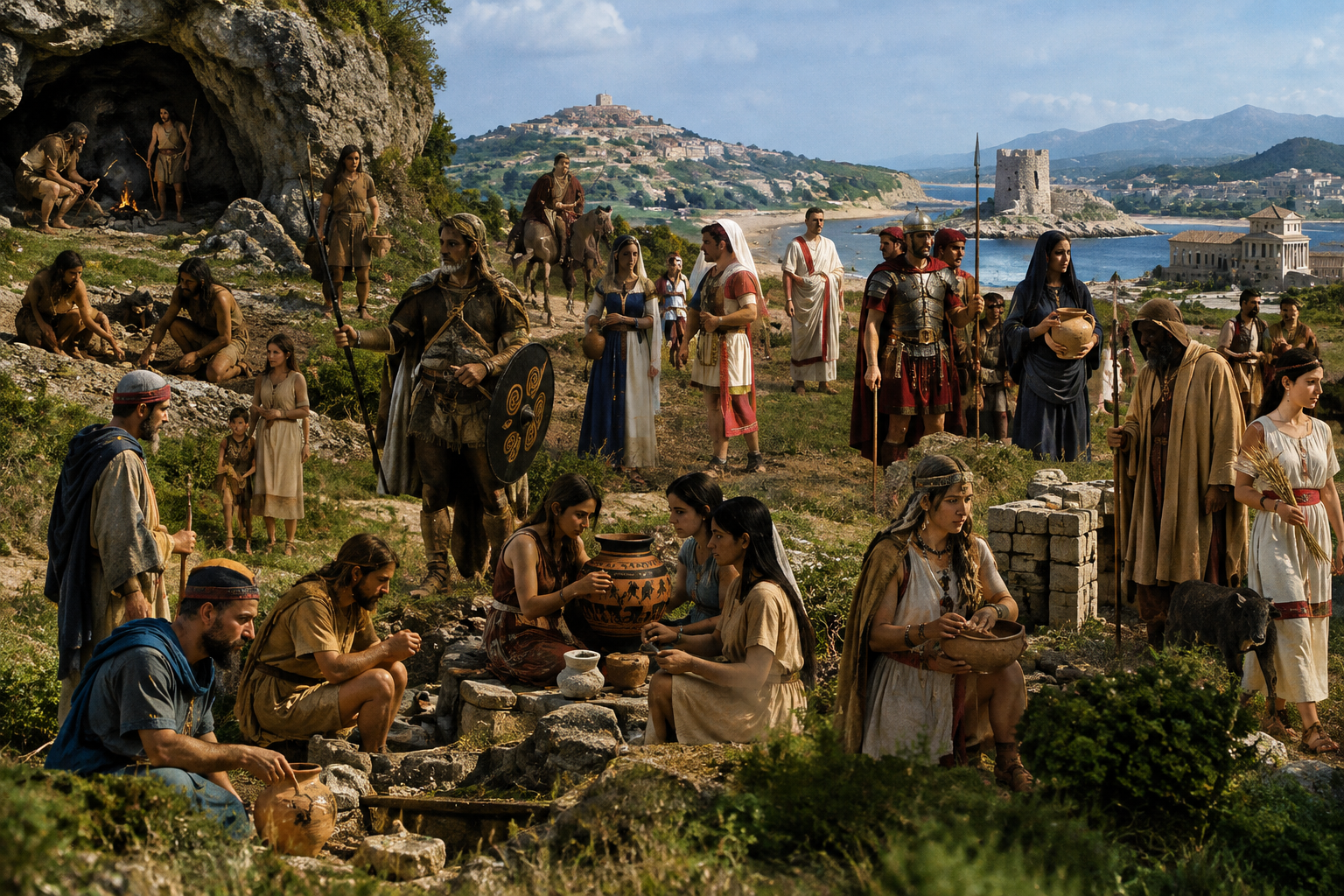
The latest sample listed here besides Cherry Hinton is SNN002, dated about AD 1500 from the Duomo di San Nicola in Sardinia and described as Germanic medieval. Sardinia is a splendid place for watching layers of history pile up: prehistoric island populations, Phoenician and Punic contact, Roman rule, Byzantine links, and later medieval powers from Pisa, Genoa, Aragon, and beyond.
A late medieval man from San Nicola associated with this haplogroup shows that the branch remained part of European paternal diversity well into the historical period. The "Germanic" label should be treated as a contextual description, not as a claim that the haplogroup itself was inherently Germanic. In medieval Mediterranean societies, cultural identity and paternal lineage were often very different things.
This Sardinian appearance also works rather well with the Sicilian evidence. Islands are sometimes imagined as genetic time capsules, but in historical reality many were busy crossroads. The recurrence of this branch in island settings hints less at isolation than at repeated incorporation into maritime worlds.
On present evidence, R1b1a1b1a1a2a1a looks like a paternal line with a broad western and central European archaeological footprint, showing up in contexts that range from Bronze Age Iberia to Iron Age Bohemia and from Punic Sicily to medieval England and Sardinia. That is not a royal certificate, and it is not a shortcut to one named people. It is something better grounded: a sign that your direct paternal line may belong to the long, complicated human traffic of Europe and the western Mediterranean.
If this branch is yours, the ancient matches point toward durability across many centuries and adaptability across very different societies. Men carrying related lines could be living in prehistoric Iberia, buried in Punic Sicily, settled in central Europe, or part of medieval English and Sardinian communities. That is the real historical value of the haplogroup: not exclusivity, but reach.
Comments