Haplogroup R1b1a1b1a1a1c2b2a1b6a

– 5 min read


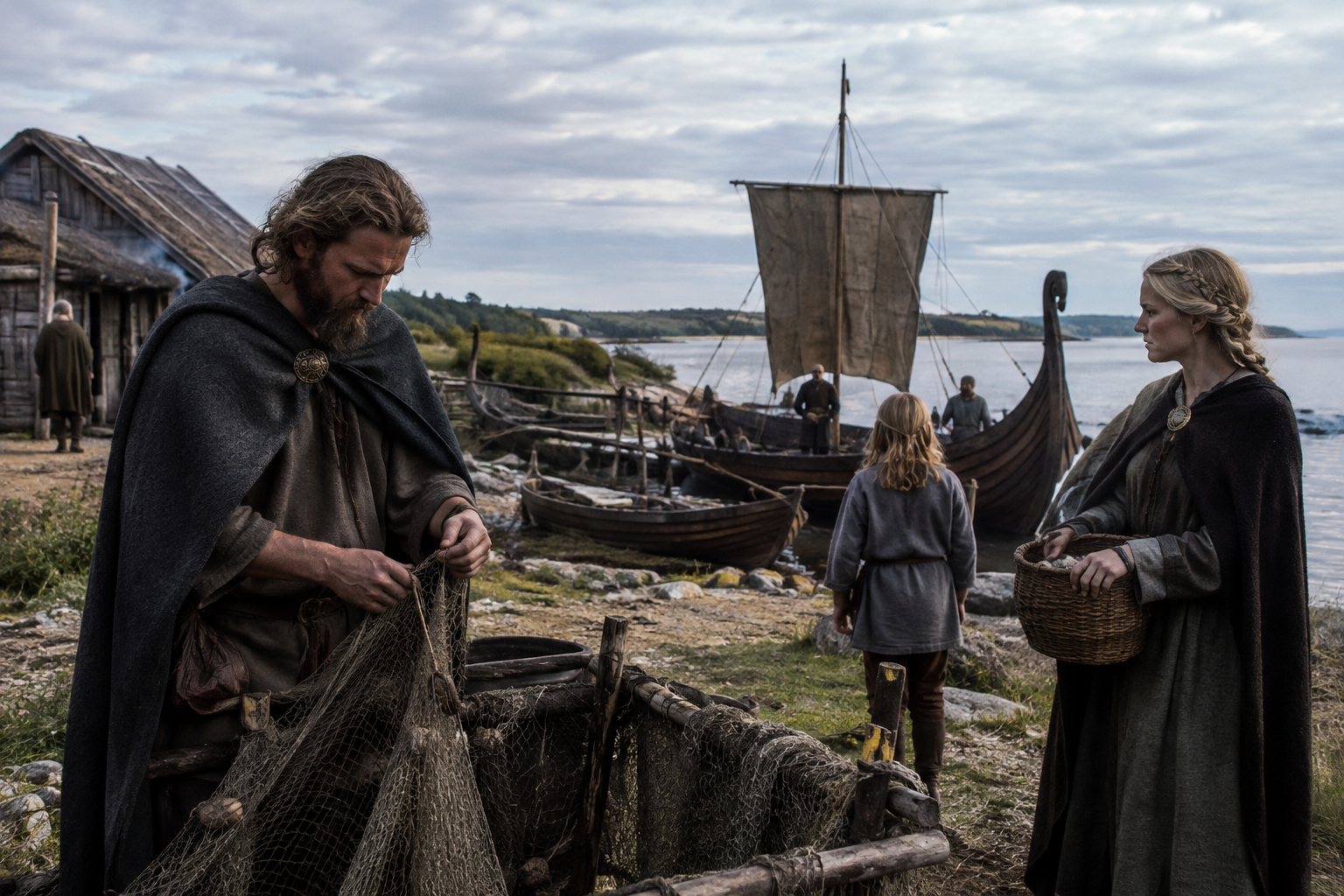
At Kopparsvik on Gotland, one Viking Age male identified as VK232 offers a particularly sharp glimpse of how a paternal line can surface in the archaeology of the Baltic world. He is dated to around 975 AD, a moment when Gotland sat at the centre of trading, travel, and cultural contact across the eastern Scandinavian sphere. In this case, the Y-DNA branch associated with him is the very specific lineage R1b1a1b1a1a1c2b2a1b6a.
That long string of letters and numbers matters because it is not simply "R1b" in the broad, familiar sense. It is a much narrower paternal branch nested inside that wider family. Y-DNA tracks one direct male line only, so it does not describe the whole ancestry of VK232 or of anyone living today, but it can show that a particular paternal lineage was present in Viking Age Gotland at a documented archaeological site.
Kopparsvik lies on Gotland, the great island in the Baltic Sea whose archaeology repeatedly reminds us that the Viking Age was not just a tale of raiders and kings. It was also about merchants, mariners, household networks, and communities tied into wide exchange systems. Gotland in the late 10th century was especially well placed: close enough to mainland Scandinavia, but equally oriented toward the eastern Baltic and the river routes leading deeper into Europe.
That setting gives VK232 significance beyond a single burial label. A man carrying the paternal lineage R1b1a1b1a1a1c2b2a1b6a was living on Gotland in a period when the island was deeply involved in regional mobility. This does not tell us his language, occupation, or personal origin on its own, but it does place this branch within a real Viking Age community rather than in an abstract haplogroup tree.
An ancient DNA study investigating Viking Age populations, available at https://www.biorxiv.org/content/10.1101/703405v1, helped establish how genetically varied Scandinavian-era populations could be. That broader lesson is useful here. Even a single Y-line from Gotland sits within a world of movement, marriage, and contact that was often much more mixed than older national stories liked to admit.
Because the lineage name is so precise, it is worth slowing down for a moment. R1b1a1b1a1a1c2b2a1b6a is a terminal-level or near-terminal style designation in a branching paternal tree. The wider haplogroup R1b has a vast history across Europe and beyond, but that huge story cannot simply be poured into this one narrow branch as if nothing changed along the way.
In practical terms, VK232 shows that this particular paternal line, or a classification associated with it, appears in Viking Age Gotland. What it does not prove is that every earlier R1b expansion in prehistory belongs to this exact subclade, or that all later men with related surnames or regional identities descend from this one islander. Ancient DNA is powerful precisely because it forces us to be more exact, not less.
That exactness is especially important in Scandinavia, where modern discussions of "Viking DNA" can become misleading very quickly. Viking Age communities were social worlds, not biological castes. A man buried on Gotland may have had local roots, family ties across the Baltic, or ancestors from elsewhere in northern Europe; the Y chromosome alone cannot decide among those possibilities.
It is tempting to picture islands as remote, but Viking Age Gotland was anything but. The island was plugged into exchange routes that linked Sweden, the eastern Baltic, river systems leading toward the Black Sea, and markets further west. Archaeology has long shown Gotland's importance through its settlement pattern, imported goods, and strategic location. Genetics adds another layer by showing that the people moving through and living in these places were not all cut from one paternal mould.
VK232 therefore matters less as a lone heroic ancestor and more as evidence of a living population. When a highly specific lineage turns up at a known site and date, it anchors the branch in a particular historical landscape: not vaguely "medieval northern Europe", but late 10th-century Gotland. For family historians, that is often the real value of archaeogenetics. It gives a lineage a place in human history rather than leaving it floating in a technical report.
One sample cannot stand in for all of Gotland, still less for all Scandinavia. But it fits a larger archaeological reality: the Viking Age Baltic was a zone of circulation. People, objects, beliefs, and probably childhood homes did not always stay put. That is one reason Scandinavian ancient DNA studies have been so illuminating. They often reveal local continuity in some places, mobility in others, and a recurring mismatch between tidy historical labels and messier human lives.
Gotland is an especially good case for that sort of complexity. The island had deep prehistoric roots long before the Viking Age, yet it also participated in medieval transformations, including changing trade patterns and the spread of Christianity. A paternal line like R1b1a1b1a1a1c2b2a1b6a appearing there around 975 AD belongs to that dynamic world, not to a frozen ethnic snapshot.
For comparison, other MyTrueAncestry discussions of northern Europe show how often mobility complicates older assumptions about identity, whether in Scandinavia proper or around the Baltic rim. The useful question is not "was this haplogroup Viking?" in some timeless essence, but "where and when do we actually find this paternal line in archaeological context?" In the case of VK232, the answer is clear: Viking Age Gotland.
Baltic Connections in the Early Middle Ages
There is a curious discipline in working from sparse but solid evidence. We are not dealing here with a grand royal pedigree, a named saga figure, or a cemetery full of same-lineage men. We have one identified individual, one place, one approximate date, and one very narrow Y-DNA branch. Yet that is enough to say something worthwhile: this paternal lineage was present in the population of Viking Age Gotland.
That matters because many paternal branches are discussed today as if they existed only in modern testing databases. Ancient individuals like VK232 remind us that these lineages belonged to real men who lived in historically intelligible places. They traded, travelled, formed families, and were buried within communities that archaeology can still recover.
If you belong to haplogroup R1b1a1b1a1a1c2b2a1b6a, VK232 provides a tangible ancient point of reference: a man living on Gotland around 975 AD in the Viking Age Baltic world. That does not make every modern carrier a "Gotlander" or prove descent from this exact individual. But it does place your direct paternal line, or a very closely associated branch, within a documented Scandinavian setting at a historically vivid moment.
For many people, that is the real excitement: not fantasy genealogy, but the sudden nearness of the past. A narrow Y-line stops being a code and becomes part of a human landscape - in this case, an island at the heart of Viking Age exchange.
Comments