Haplogroup R1b1a1b1a1a1c2b1b4d1

– 4 min read


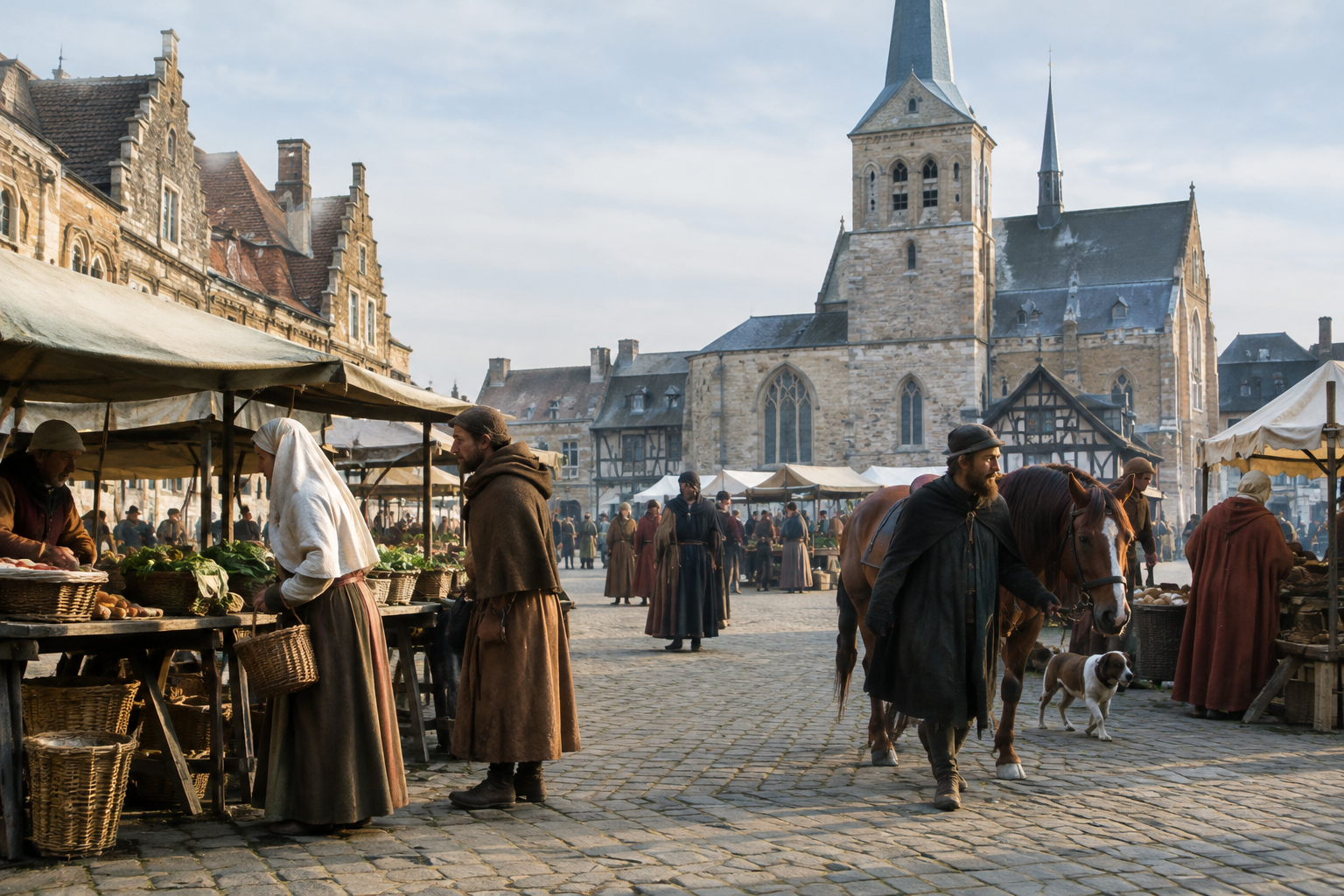
At Sint-Truiden in medieval Belgium, one excavated individual offers a very precise glimpse of a paternal line that is usually discussed only in the abstract. The sample ST2397, dated around AD 1050 from Sint-Truiden Groenmarkt, has been associated with the Y-DNA haplogroup R1b1a1b1a1a1c2b1b4d1. That makes this man interesting not because he can stand in for all of medieval Flanders, but because he gives us one firmly placed bearer of a very narrow branch in a town that was growing, trading, and reorganising itself in the central Middle Ages.
That is often how ancient DNA is most useful. A Y-chromosome lineage traces one direct paternal line only, not a whole identity, language, or people. But when such a lineage turns up in a dated burial from a known town, it helps anchor family-history questions in a real historical landscape: streets, churches, markets, monasteries, and the slow making of medieval Europe.
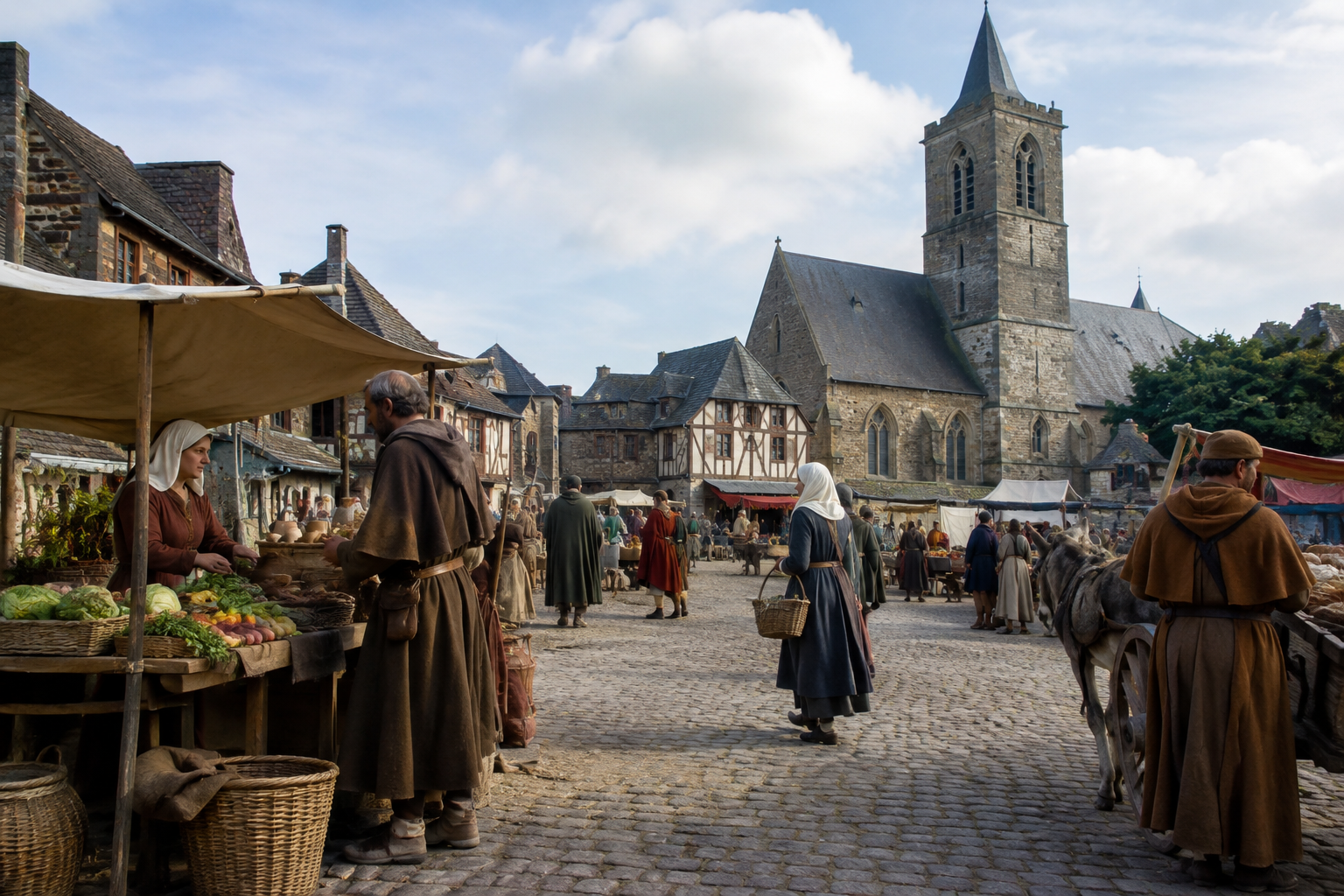
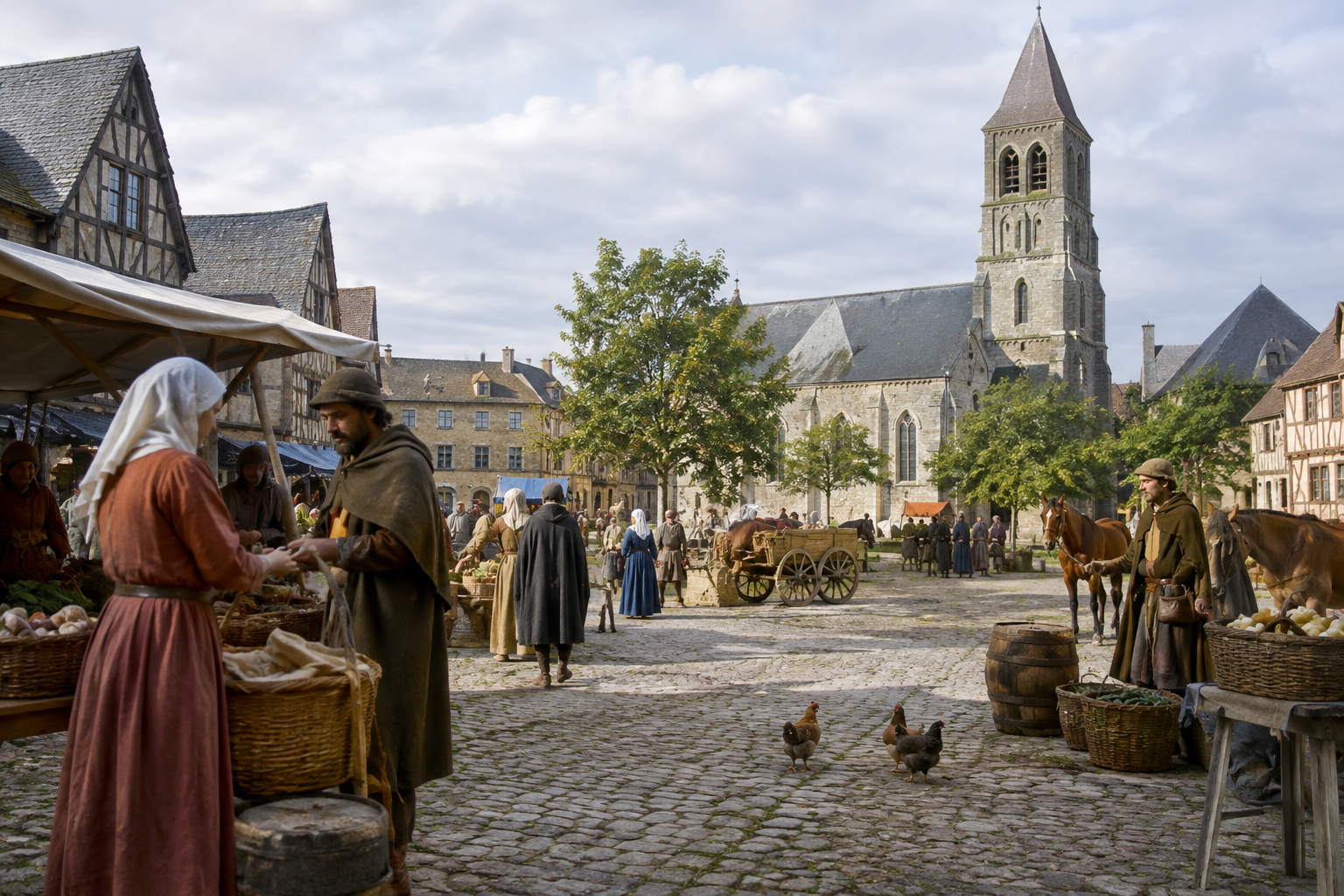
Sint-Truiden was no obscure hamlet. It was an important settlement in the region of present-day Limburg, shaped by the influence of the abbey of Saint Trudo and by the commercial life of the Low Countries. By the 11th century, this was a world of expanding towns, tightening lordship, and increasingly dense networks of movement between villages, market centres, and ecclesiastical institutions.
ST2397 comes from Groenmarkt, literally the Green Market, a place-name that already hints at an urban setting rather than an isolated rural cemetery. Even with only limited sample detail in hand, that context matters. A man buried here belonged to a community living through the transformation of the post-Carolingian world into a more recognisably medieval one, with local ties but also wider regional connections.
Research on medieval Sint-Truiden has drawn attention to the population history of the town and the way urbanisation could smooth out local differences over time. One relevant study of the site and region can be found here, and it helps frame these burials as part of a broader investigation into how medieval communities formed and mixed.
The name is formidable, but the basic point is simple enough. R1b1a1b1a1a1c2b1b4d1 is a very narrow twig on the much larger R1b tree, one of the major paternal lineages found in western Europe today and in many ancient European populations. The larger family is old and widespread; the exact branch here is much more specific, and one ancient identification does not let us write a grand migration saga for that tiny subclade on its own.
What we can say is that a lineage this specific is historically useful when it turns up in a well-dated medieval context. It shows that by around AD 1050 this paternal branch, or a line reported as belonging within it, was present in the Meuse-Low Countries zone. That is a modest claim, but a valuable one. Ancient DNA advances not only through spectacular royal burials, but through ordinary townspeople who pin lineages to real places and times.
If you were looking for a region where paternal lines might accumulate long histories, the Low Countries would be a good candidate. This was a landscape of Roman frontiers, early medieval kingdoms, monasteries, trading routes, and market towns. It sat between the North Sea world and the inland river systems, between Germanic-speaking zones and older Gallo-Roman provincial traditions.
That does not mean ST2397 can be labelled with a neat ethnic tag. Medieval people in this region inherited the results of many earlier centuries of movement and mixture. Roman soldiers and civilians had passed through; post-Roman communities had formed and re-formed; elites, clerics, craftspeople, and merchants crossed political boundaries with some regularity. A single Y-line from Sint-Truiden belongs inside that layered history.
This is one reason medieval Belgian evidence is so useful. It sits in a region where continuity and mobility are both plausible at once. Some paternal lines may have been local for many generations; others may have arrived only a few centuries earlier through war, settlement, marriage, trade, or ecclesiastical networks. The archaeology of towns like Sint-Truiden helps us resist the temptation to flatten that complexity.
The centuries before ST2397 were not quiet. The old Roman order in northwestern Europe had fractured, and new powers emerged across the former imperial frontier. Yet the frontier itself did not simply vanish. Roads, river routes, estates, and church foundations preserved older geographies, even as political authority changed hands.
By the 10th and 11th centuries, towns in the region were being pulled into new forms of organisation. Markets became more important, ecclesiastical centres accumulated wealth, and burial grounds recorded communities that were increasingly urban in character. In that setting, a paternal lineage such as R1b1a1b1a1a1c2b1b4d1 is less a badge of one famous migration than a thread in the fabric of settlement history.
That thread also fits well with wider ancient-genomic discussions of northwest Europe, where language shifts, political change, and ancestry do not always move in lockstep. For readers interested in the broader relationship between genetics and the spread of Germanic-speaking populations, this companion article is useful.
There is a tendency, when a haplogroup is very specific, to wish for a dramatic founder, a castle, or a named dynasty. But the more revealing historical picture often comes from somewhere quieter. ST2397 does not need a crown to matter. He was part of a living town in a period when Europe's local communities were being reshaped by commerce, church power, and regional integration.
For people researching their own paternal ancestry, that matters a great deal. A narrow Y-line found in medieval Sint-Truiden suggests not some vague prehistoric fog, but an actual male presence in the Low Countries during the high medieval period. It places this branch within a documented urban community, among people whose lives were shaped by market exchange, Christian institutions, and the practical business of belonging to a town.
It also reminds us that genetic history is often strongest when it stays close to the archaeology. We know the sample ID, the place, and the approximate date. That is enough to say something solid: this paternal line was present in medieval Belgium, in a settlement important enough to be part of wider regional change.
The distinctive value of R1b1a1b1a1a1c2b1b4d1 here is not that it unlocks a mythic origin story. It is that, through ST2397, it appears in a real medieval town at a real historical moment. If this is your paternal branch, the most responsible reading is that one line of its history runs through the urbanising Low Countries by about AD 1050, in a world shaped by abbeys, markets, and regional mobility rather than by simple tribal labels.
Comments