Haplogroup R1b1a1b1a1a1c2

– 5 min read


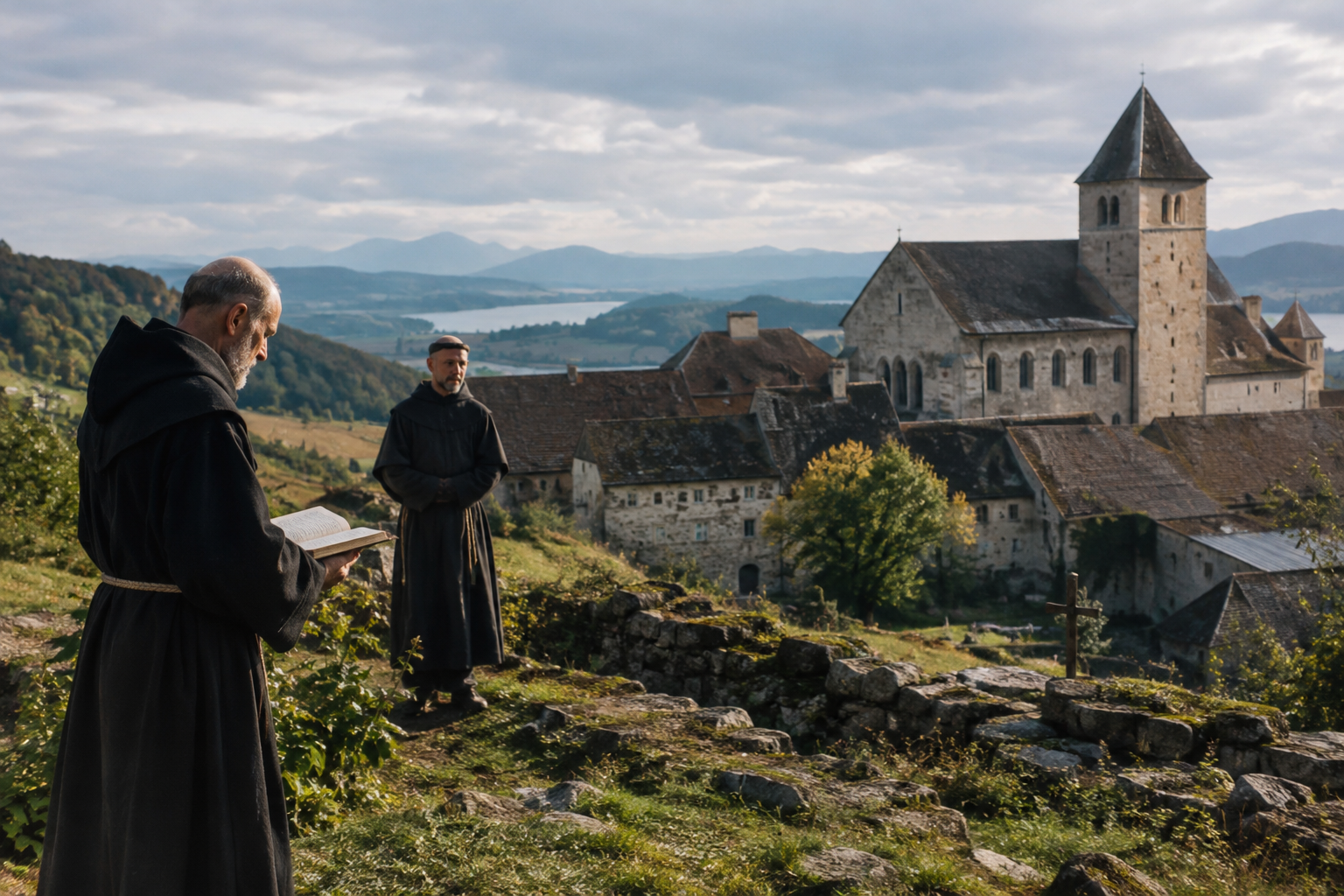
In Upper Bavaria, at Petersberg, one medieval man dated to around AD 1068 offers the clearest fixed point here. He is identified simply as Petersberg, but even that spare label is enough to make him interesting: a named ancient individual, from a known place, living in the centuries when the old Roman world had long gone and the political map of southern Germany was being reshaped by churches, local lordship, and movement across the countryside. He is also associated in MyTrueAncestry's reporting with the Y-DNA haplogroup R1b1a1b1a1a1c2.
That does not mean this one man somehow stands for all medieval Bavarians, nor that a paternal haplogroup can tell us his whole identity. Y-DNA tracks one direct male line only. But when a specific branch appears in a real archaeological individual from early medieval Germany, it gives that branch a human setting: not an abstraction on a tree, but a life once lived in the heart of Europe.
The Petersberg sample matters precisely because the evidence is modest and grounded. We are not dealing here with a legendary king, a conveniently over-explained dynasty, or a grand claim stretched across millennia. We have a medieval male burial from Upper Bavaria and a reported paternal assignment linked to the article's branch, R1b1a1b1a1a1c2. In archaeology, that kind of restraint is often more useful than fantasy.
Upper Bavaria in the 11th century sat within the Holy Roman Empire, in a region shaped by monasteries, episcopal centers, landed estates, and growing Christian burial traditions. A man buried there around AD 1068 belonged to a world that was local in daily life but connected in wider networks of power, pilgrimage, trade, and disease. Southern Germany was not an isolated pocket; it was a zone where older regional populations, post-Roman developments, and medieval mobility met one another.
That context matters for haplogroup interpretation. A branch like R1b1a1b1a1a1c2 should not be treated as if it were an ethnicity in its own right. What the Petersberg individual shows is that this paternal line, or a reported assignment to it, was present in medieval Upper Bavaria. That is already valuable evidence.
The long name tells you immediately that this is not a broad umbrella lineage but a narrow downstream branch. In practical terms, that means it sits inside the much larger R1b family, one of the major Y-chromosome groupings in western Eurasia, but it is not interchangeable with R1b as a whole. The history of a huge parent lineage cannot simply be pasted onto one fine-grained subclade.
That distinction is worth insisting on because R1b has deep and complicated prehistoric and historic associations across Europe. A very specific branch like R1b1a1b1a1a1c2 may have had a much more limited or regionally particular story. With the evidence provided here, the most responsible statement is that this branch is represented, or at least reported in association, in a medieval Bavarian individual from Petersberg. Anything more ambitious would need additional securely published ancient comparanda.
Still, narrow branches are exactly what make genetic genealogy useful for family historians. Broad haplogroups sketch the continent; finer branches begin to map neighborhoods, clusters, and lines of descent. When an ancient sample can be tied to one of those finer branches, the result is not a complete biography, but it is a rare chronological anchor.
The medieval centuries in Germany are often flattened into a picture of stable villages and inherited identities. Ancient DNA has been steadily correcting that. Research on early medieval burials in Germany has shown a population world that included both local continuity and striking mobility. Some individuals look genetically close to nearby populations; others reveal movement over considerable distances.
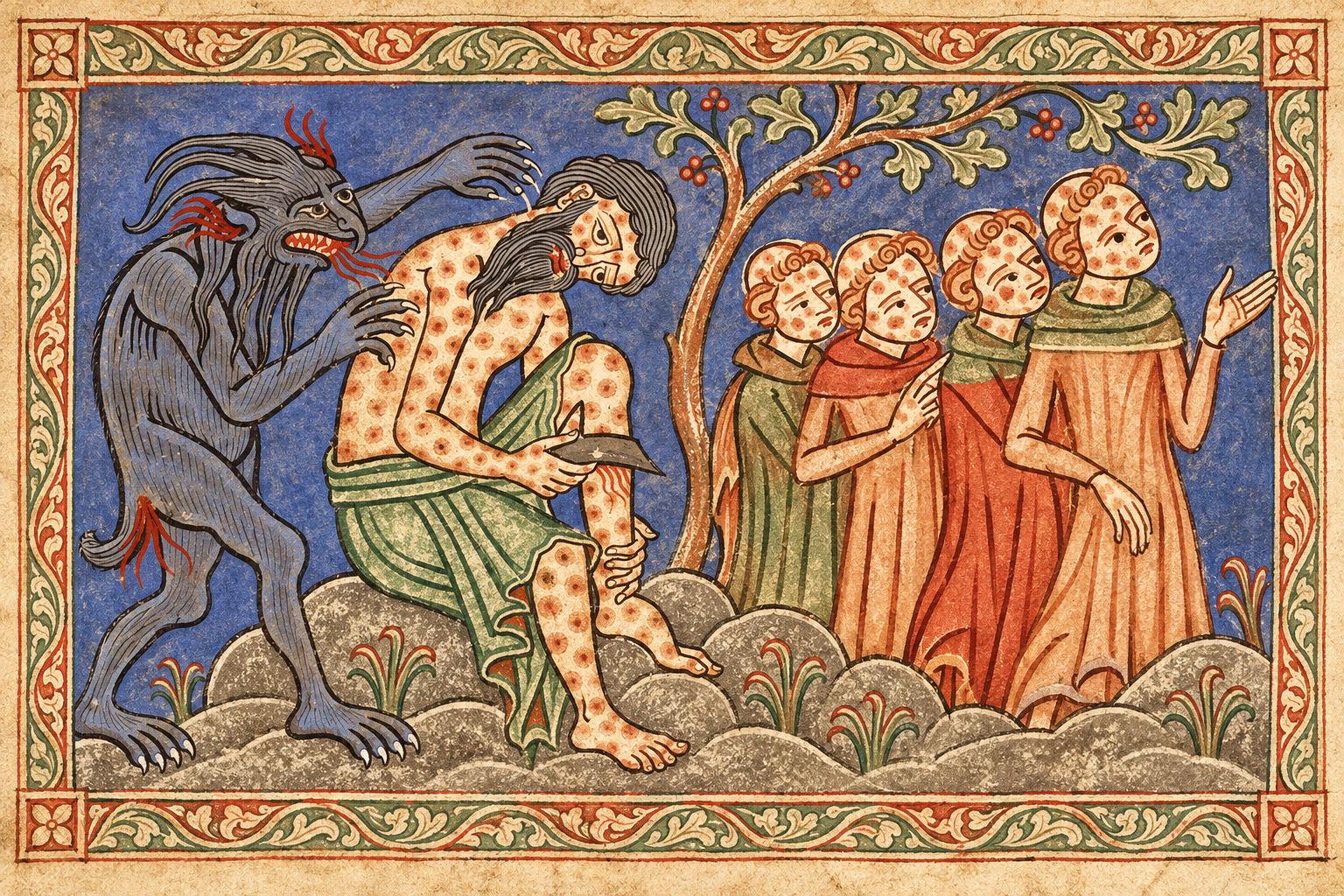
A useful example comes from broader ancient-DNA work on early medieval Germany, including material discussed in MyTrueAncestry's own coverage of migration and disease. These studies remind us that a burial in Bavaria need not represent someone whose ancestors had all lived in the same valley forever. A medieval churchyard could contain locals, newcomers, and families whose histories had already been mixed for generations.
That is the right frame for Petersberg. The presence of R1b1a1b1a1a1c2 in Upper Bavaria does not prove a single migration event, but it fits a historical landscape in which paternal lines could persist locally, spread through ordinary family growth, or arrive through movement between neighboring regions of central and western Europe.
Upper Bavaria in the 11th century was part of a region with long demographic layers behind it. Prehistoric settlement, Roman influence to the south and west, the political transformations of late antiquity, and the formation of early medieval Bavarian society all left their mark. By the time of Petersberg, the men carrying local Y-chromosome lineages were living in a thoroughly medieval order, but some of those paternal lines may have been rooted much deeper in central European history.
That does not entitle us to assign this specific subclade to Celts, Romans, Bavarians, or any other label without direct evidence. Archaeology is full of such temptations. What can be said is simpler and better: the paternal line represented by Petersberg belonged to a population living in a historically layered landscape, one where language, political allegiance, ancestry, and burial custom did not always line up neatly.
This is one reason medieval Germany is so rewarding for genetic history. It is close enough to the documentary period to feel familiar, yet ancient DNA keeps showing that familiar worlds were built out of long, uneven, and sometimes surprising demographic processes.
A broader ancient DNA study connected with early medieval Germany has helped underline just that point: mobility, disease history, and community formation can all be recovered from burials that once seemed archaeologically ordinary. Even when one sample is all we have for a particular branch, it becomes more meaningful when placed in that larger regional picture.
One of the most persistent misunderstandings in public genetics is the urge to equate a Y-haplogroup with a language family. The Petersberg individual lived in a German-speaking region, but that does not mean R1b1a1b1a1a1c2 is a "Germanic haplogroup" in any simple sense. Languages can spread through elite power, community networks, trade, migration, and intermarriage; paternal lines follow only one thread through that much larger social fabric.
That said, genomic work on the spread of Germanic-speaking populations has shown that early medieval central Europe was not created by one biologically uniform people expanding like ink across a map. It was a patchwork. Some regions show continuity, others more mixture, and many reveal both at once. A single paternal branch found in Bavaria belongs inside that patchwork, not above it.
Germanic Languages and Genomics
It is easy to be dazzled by royal tombs and mass sampling projects, but small pieces of evidence often do the quiet heavy lifting. Petersberg gives R1b1a1b1a1a1c2 a documented place in medieval Europe: Upper Bavaria, around AD 1068. For someone researching this haplogroup today, that does not provide a surname, a coat of arms, or a guaranteed homeland. What it does provide is something more solid: an attested medieval bearer in a real archaeological setting.
That is the distinctive value of this branch at present. Its story, on the evidence here, is not one of theatrical conquest or dynastic spectacle, but of continuity and presence in the lived world of medieval southern Germany. Sometimes that is exactly what ancient DNA is best at revealing: not mythic origins, but the stubborn, traceable reality of one paternal line surviving in history.
Comments